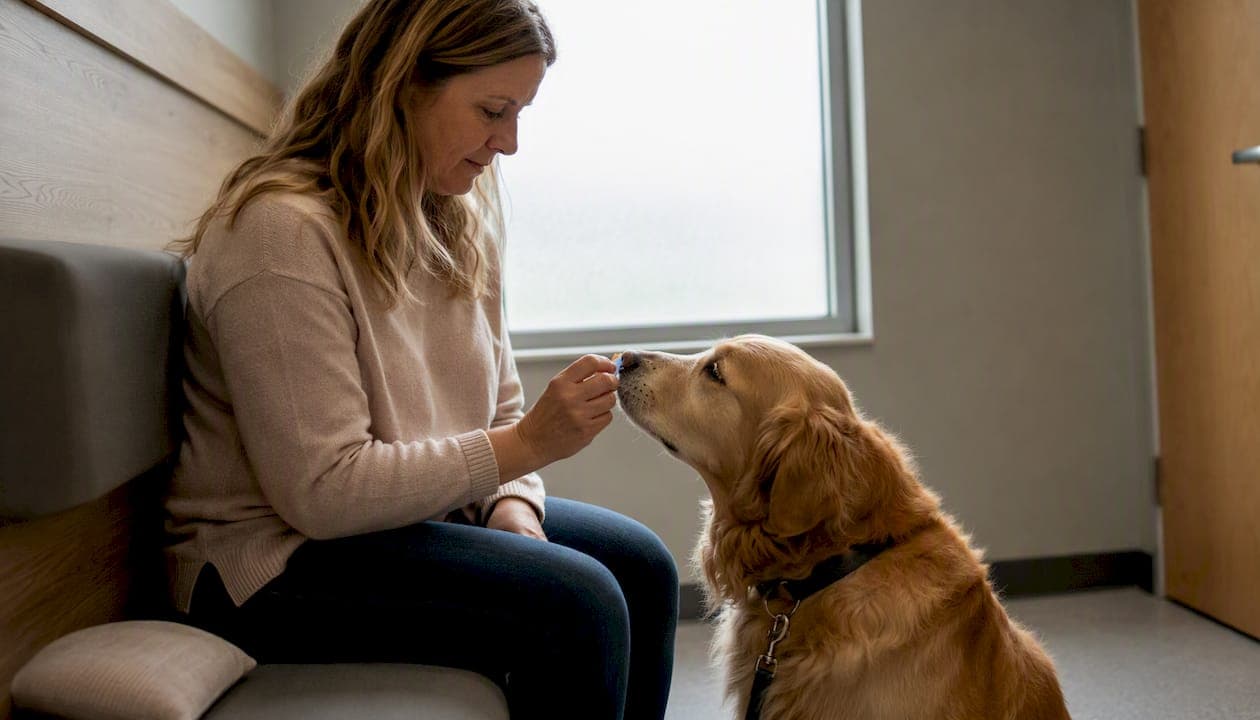
You can reduce your dog's vet anxiety through short counterconditioning sessions at home, low-stress handling at the clinic, and pre-visit medication when training alone isn't enough. Start today with two things: run a two-minute relaxation session with high-value treats, and call your clinic to request a quiet appointment slot or a curbside check-in. For dogs who shake, freeze, or snap before the exam even starts, ask your vet about medications like gabapentin or trazodone. They work, and the evidence backs them up.
- Do today: Five minutes of treat-paired car sitting, then call the clinic to request a low-stress slot.
- This week: Begin staged handling exercises at home (paws, ears, muzzle) using a marker word and small, high-value treats.
- If training stalls: Ask your vet about pre-visit pharmaceuticals. A 2022 JAVMA study found trazodone given 90 minutes before transport significantly reduced behavioral and physiologic stress signs.
Table of Contents
- How does dog vet anxiety actually show up?
- Why do vet visits trigger fear in dogs?
- Before the visit: how to desensitize your dog step by step
- What medications do vets use to calm dogs before a visit?
- Day-of visit tactics that actually reduce stress at the clinic
- When anxiety is severe: sedation, safety, and when to call a behaviorist
- Are there alternatives to a traditional clinic visit?
- How long does it take to see real improvement?
- Your vet visit checklist (use before every appointment)
- Key Takeaways
- What actually works, and what the conventional wisdom gets wrong
- City Animal Veterinary Center helps anxious dogs in Brooklyn
- Useful sources and further reading
How does dog vet anxiety actually show up?
Most owners know something is wrong, but they often misread the signals. A dog who goes quiet and still in the waiting room isn't calm. That freeze response is one of the clearest signs of high stress.
Body language and behavioral cues to watch for:
- Panting when the temperature doesn't explain it
- Lip-licking, yawning, or repeated nose-licking (displacement behaviors)
- Shaking or trembling before or during the exam
- Ears pinned flat, tail tucked, crouching low
- Refusing treats they'd normally take instantly (a reliable stress indicator)
- Avoidance: turning away, hiding behind you, pulling toward the exit
- Submissive urination on the exam table
- Growling, snapping, or lunging when touched
Physiologically, a stressed dog may have a heart rate and blood pressure elevated well above baseline, which can skew diagnostic readings and make a routine exam harder to complete accurately. High patient stress reduces diagnostic accuracy and increases sedation needs, so catching these signs early isn't just about comfort.
Your own behavior matters here too. Owners who talk in a high, anxious voice, grip the leash tight, or rush through the waiting room transfer that tension directly to their dog. Slow down, loosen the leash, and keep your voice neutral.
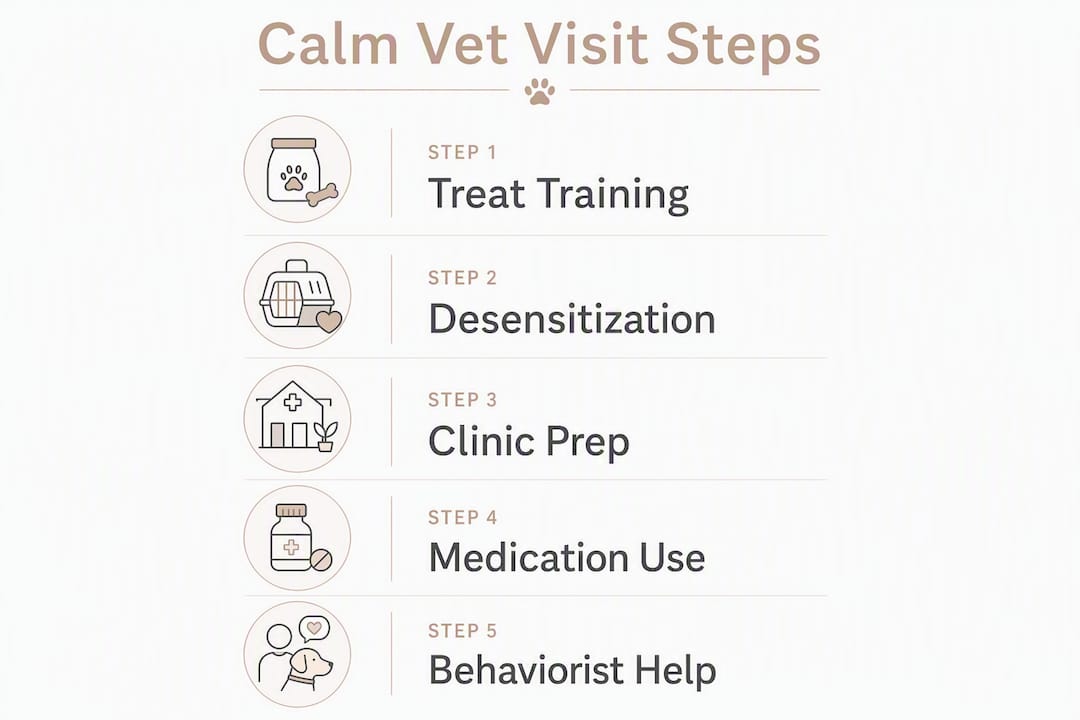
Pro Tip: If your dog stops taking treats at any point during the visit, that's a clear signal they've crossed their stress threshold. Note exactly where it happened so you can target that specific trigger in training.
Why do vet visits trigger fear in dogs?
The clinic itself is rarely the whole problem. Fear at the vet usually builds from a chain of associations that starts long before your dog walks through the door.
Common triggers, in order of exposure:
- The car ride. For many dogs, the car only goes to the vet or the groomer. They learn the pattern fast. Panting and drooling in the car often signals anticipatory anxiety, not motion sickness.
- The waiting room. Strange dogs, unfamiliar smells, slippery floors, and the sounds of other animals in distress create a sensory overload that's hard to manage.
- Handling on the exam table. Being lifted onto a raised surface, restrained by strangers, and examined in sensitive areas (ears, mouth, abdomen) can feel threatening even without pain.
- Prior painful or startling experiences. A single bad experience, a needle that hurt, a restraint that felt rough, can create a conditioned fear response that persists for years.
Individual risk factors amplify all of this. Puppies who weren't socialized to handling early, dogs with noise sensitivity, and dogs managing underlying pain are all more likely to develop strong fear responses at the clinic. Separation anxiety also plays a role: a dog who struggles when left alone tends to find any unfamiliar, uncontrollable environment more distressing.
Before the visit: how to desensitize your dog step by step
Systematic desensitization paired with counterconditioning is the most evidence-backed approach for reducing fear at the vet. The goal is to replace the "car = vet = bad" association with something neutral or positive, one small step at a time.
Short, frequent sessions accelerate learned calm: aim for 2–5 minutes, two to three times daily. Even a single 30-second session per day produces measurable results over time. The key is consistency, not duration.
- Week 1: Car desensitization. Open the car door and let your dog sniff around it. Reward with high-value treats (chicken, cheese, hot dog). Don't go anywhere. Repeat until your dog approaches the car without hesitation, then practice sitting calmly inside with the engine off, then on.
- Week 2: Happy visits to the clinic. Drive to the vet's parking lot, give treats, and leave. No exam, no waiting room. Cornell University's guidance recommends staging these visits: start outside the building, then brief indoor reward sessions, progressing at your dog's pace.
- Week 3: Handling exercises at home. Practice touching paws, ears, gums, and the belly while your dog eats treats from your other hand. Use a marker word ("yes") the moment your dog tolerates the touch, then reward. This directly mimics what happens during an exam.
- Week 4: Combine and rehearse. Drive to the clinic, walk inside, let a staff member offer a treat, and leave. No exam. This is the closest rehearsal to a real visit.
Success criteria: Your dog takes treats readily at each stage. If they won't eat, you've moved too fast. Back up one step and repeat until treat-taking returns.
Troubleshooting: Refusal to take treats usually means the exposure level is too high. Increase distance from the trigger or reduce the intensity. If your dog growls, snaps, or shows escalating avoidance at any stage, stop and consult a certified applied animal behaviorist (CAAB) or a veterinary behaviorist before continuing.
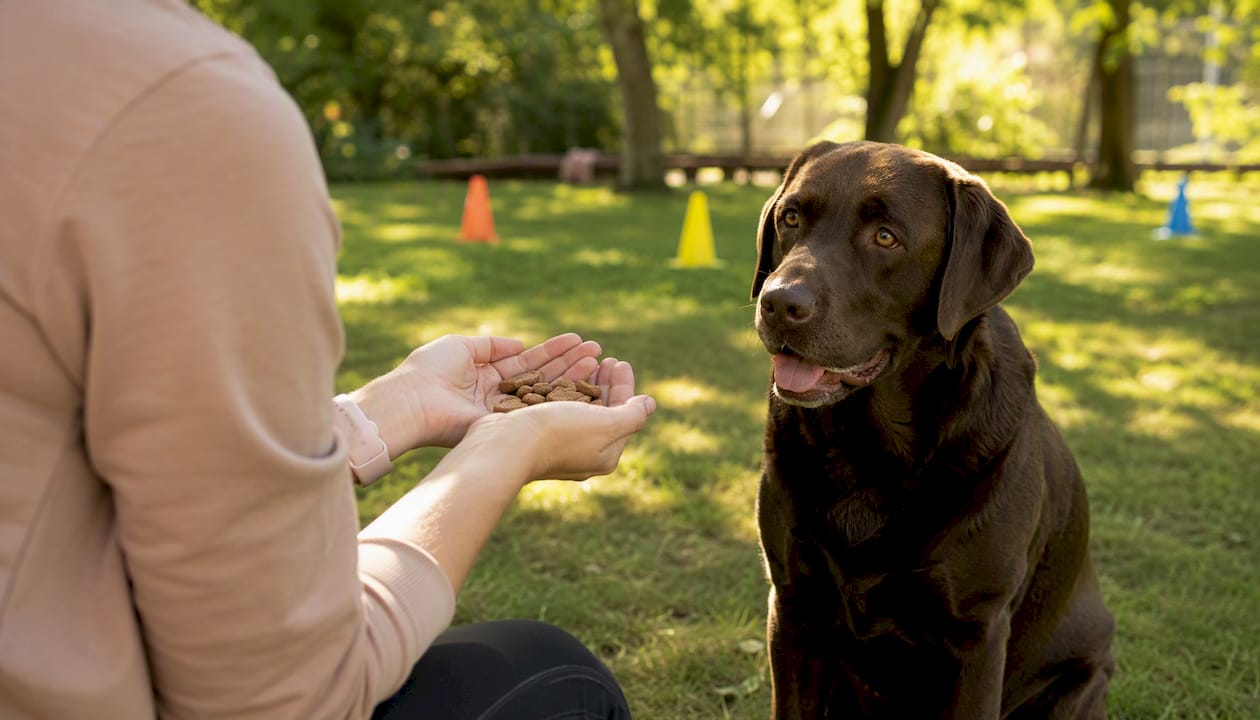
Pro Tip: Use a treat your dog only gets during training sessions. The novelty increases its value and makes the association between "scary thing" and "amazing reward" much stronger.
What medications do vets use to calm dogs before a visit?
Pre-visit pharmaceuticals are not a last resort. For many dogs with moderate to severe anxiety, medication makes the difference between a completed exam and a traumatic one that sets the dog back months in training.
A 2021–2022 literature review identified four medication classes used for situational veterinary anxiety in dogs:
| Medication | Typical timing before visit | Notes |
|---|---|---|
| Trazodone | 90 minutes before transport | Gabapentin; a randomized trial showed reduced behavioral and physiologic stress |
| Gabapentin | 90 minutes before (some protocols add an evening-prior dose) | Commonly combined with other agents; extra-label use |
| Oral-transmucosal dexmedetomidine (Sileo) | 20–30 minutes before | Fast onset; favorable effects in controlled trials |
| Alprazolam | 30–60 minutes before | Benzodiazepine; used situationally; requires prior trial at home |
Melatonin is sometimes added to protocols for its mild sedative and anxiolytic properties. Acepromazine, an older tranquilizer, is still used but has fallen out of favor as a standalone agent because it reduces motor activity without addressing the underlying fear. It works best as part of a combination protocol.
A 2023 clinical study found that a protocol combining gabapentin (20–25 mg/kg), melatonin (3–5 mg), and acepromazine (0.05 mg/kg) reduced stress scores in 91.1% of anxious and aggressive dogs tested, allowing exams that would otherwise have been impossible.
Safety matters here. None of these medications should be combined or dosed without your vet's guidance. Side effects vary: trazodone can cause sedation or, rarely, serotonin syndrome if combined with other serotonergic drugs; gabapentin may cause ataxia. The practical takeaway for your next vet conversation: ask specifically whether a pre-visit medication trial makes sense for your dog, and which agent fits their health history.
Day-of visit tactics that actually reduce stress at the clinic
The morning of the appointment sets the tone. A rushed, chaotic departure followed by a tense car ride undoes a week of careful training.
Before you leave:
- Keep your departure routine low-key. Avoid the usual cues that signal "we're going somewhere stressful" (grabbing the leash dramatically, loading the car in a hurry).
- Administer any prescribed pre-visit medication at the correct time. For trazodone, that's 90 minutes before transport.
- Pack high-value treats, a familiar blanket or toy, and a LickiMat or treat puzzle for the waiting room.
At the clinic:
- Call ahead and ask for the first or last appointment slot, when foot traffic is lowest.
- Wait outside or in the car until the exam room is ready. Sitting in a crowded waiting room with other animals is one of the highest-stress parts of the visit for most dogs.
- Ask staff to conduct the exam on the floor rather than on the table if your dog is large or table-averse. Floor exams and minimal restraint are recommended by behavioral researchers as effective ways to reduce fear and aggression during handling.
- Keep the leash loose. A tight leash communicates tension.
- Let your dog sniff and investigate the room before the exam starts.
Clinic request script: When you call to book, say: "My dog has significant anxiety at the vet. Can I request a quiet appointment slot, a room away from the waiting area, and a staff member comfortable with low-stress handling? I'd also like to discuss pre-visit medication options." Most clinics will accommodate this without hesitation.
Pro Tip: Bring a worn T-shirt or blanket from home. A familiar scent on the exam table gives your dog one predictable thing in an unpredictable environment.

When anxiety is severe: sedation, safety, and when to call a behaviorist
Some dogs are past the point where treats and training alone can get them through an exam safely. Recognizing that threshold early protects both your dog and the clinic staff.
Red flags that indicate a higher level of intervention:
- Aggression that risks injury to staff or the dog itself during routine handling
- Panic-level escape attempts (throwing themselves against doors, injuring themselves trying to flee)
- Procedures that cannot be completed because the dog's stress level makes it unsafe to proceed
- No improvement after four to six weeks of consistent counterconditioning
Options for severe cases:
- In-clinic sedation: For necessary procedures, sedation allows a complete and safe exam. It is not a failure. For some dogs, it's the most humane option available.
- Short-term medical support during behavioral modification: A vet may prescribe a daily anxiolytic (like fluoxetine or clomipramine) alongside situational pre-visit medications while training continues. This lowers the dog's overall anxiety baseline, making training more effective.
- Veterinary behaviorist referral: A board-certified veterinary behaviorist (Dip. ACVB) offers a full behavioral assessment and a multimodal treatment plan. Expect an initial consultation of 60–90 minutes, a written behavior modification protocol, and possible long-term medication management.
To request a referral, ask your primary vet directly: "I'd like a referral to a veterinary behaviorist for a formal behavior consult." Your vet can also contact the American College of Veterinary Behaviorists to locate a specialist near you.
Are there alternatives to a traditional clinic visit?
For dogs whose anxiety is primarily triggered by the clinic environment itself, removing that environment is sometimes the most practical solution.
Home and mobile veterinary visits eliminate the car ride, the waiting room, and the exam table entirely. Many routine services translate well to a home setting: wellness exams, vaccinations, blood draws, and medication management. The limitation is equipment. Advanced diagnostics like digital X-rays, ultrasound, and certain lab procedures typically require a clinic setup.
Quiet clinic options are a middle ground. Requesting a separate exam room from the moment of arrival, choosing first or last appointment slots, or specifically booking with a Fear Free–trained staff member can dramatically reduce the sensory load without changing the location. Fear Free™ and Low Stress Handling® certified practices adapt their environment and handling protocols specifically for anxious patients.
Teletriage and phone nurse check-ins work when the question is "does this need an in-person visit?" rather than "what's wrong?" For owners whose dogs react strongly to travel, a quick phone or video triage call can determine whether the trip is necessary before committing to it.
The honest answer is that home visits and quiet clinic options handle most routine care well. For anything requiring imaging, surgery, or advanced diagnostics, a clinic visit is unavoidable, which is exactly why building positive associations over time still matters.
How long does it take to see real improvement?
Owners often expect results in a week and give up in two. The realistic picture is more nuanced.
What to expect, and when:
- Days 1–7: Small reductions in reactivity during car rides and short happy visits are possible within the first week of consistent counterconditioning. Don't mistake this for a solved problem.
- Weeks 2–8: Measurable improvement with daily short sessions is typical for dogs with mild to moderate anxiety. Deeply conditioned fear responses, especially those tied to prior painful experiences, take longer. Cornell University's behavioral guidance emphasizes that anxiety rarely resolves with a single intervention and that multimodal approaches produce the best long-term results.
- Beyond 8 weeks: If you're not seeing any change, reassess. Are sessions consistent? Is the treat value high enough? Has the dog plateaued at a specific trigger? That's the point to bring in a trainer or ask your vet about adding medication support.
Signs to escalate:
- Stress responses are intensifying rather than decreasing
- Your dog refuses treats even at the earliest stages of exposure
- Aggression has appeared where it wasn't present before
Pro Tip: Keep a simple log. After each session, note the date, what you practiced, and whether your dog took treats freely. Patterns in that log will tell you exactly where the training is stalling.
Your vet visit checklist (use before every appointment)
48 hours before:
- Call the clinic to request a quiet slot, a separate room, and low-stress handling
- Confirm whether pre-visit medication has been prescribed and check the timing
Morning of the appointment:
- Administer prescribed medication at the correct time (trazodone: 90 minutes before transport; OTM dexmedetomidine: 20–30 minutes before)
- Pack: high-value treats, familiar blanket or toy, LickiMat or treat puzzle
Traveling:
- Keep the departure calm and unhurried
- Use a harness rather than a collar for better control and less pressure on the neck
- Drive calmly; avoid sudden stops
At the clinic:
- Wait outside or in the car until the room is ready
- Keep the leash loose; let your dog sniff and settle
- Ask for a floor exam if your dog is table-averse
- Feed treats continuously during the exam if your dog will take them
After the visit:
- End with a calm, positive reward (a short walk, a favorite game)
- Note your dog's stress level and where it peaked for next time
Key Takeaways
Reducing dog vet anxiety works best when you combine consistent counterconditioning at home, low-stress handling at the clinic, and pre-visit medication for dogs whose fear exceeds what training alone can address.
| Point | Details |
|---|---|
| Start with short sessions | Two to five minutes, two to three times daily; even one 30-second session per day can help. |
| Pre-visit medication works | Trazodone (dose varies; 90 minutes before transport) and gabapentin are evidence-backed options to discuss with your vet. |
| Clinic environment matters | Floor exams, quiet slots, and minimal restraint reduce fear and improve exam accuracy for anxious dogs. |
| Severe cases need professional help | Aggression, panic-level escape, or no improvement after six weeks warrants a veterinary behaviorist referral. |
| City Animal Veterinary Center | Offers Fear Free–style visits, house-call appointments, and behavioral consultations for anxious dogs in Brooklyn. |
What actually works, and what the conventional wisdom gets wrong
The standard advice for a dog scared of the vet is "bring treats and stay calm." That's not wrong, but it's incomplete in a way that sets owners up to fail. Treats without a structured desensitization plan are just bribes. They don't change the underlying association. A dog who takes a treat in the waiting room and then freezes on the exam table hasn't been helped. The treat just masked the fear long enough to get through the door.
The bigger gap in conventional guidance is the reluctance to discuss medication early. Many owners feel like requesting pre-visit pharmaceuticals means they've failed at training. The research says the opposite. Medication lowers the dog's anxiety baseline enough for training to actually work. A dog who is flooded with cortisol cannot learn new associations. Gabapentin, trazodone, and combination protocols like the GMA approach don't replace behavioral work. They create the neurological conditions under which behavioral work becomes possible.
The other thing most guides understate is how much the clinic itself can do. Asking for a floor exam, a quiet room, and a staff member trained in low-stress handling isn't a special request. It's a reasonable expectation. Clinics that have adopted Fear Free™ practices have built these accommodations into their standard workflow, and the difference for an anxious dog is significant. If your current clinic can't or won't accommodate basic low-stress handling requests, that's worth knowing.
City Animal Veterinary Center helps anxious dogs in Brooklyn
Anxious dogs need more than a standard appointment. City Animal Veterinary Center in Brooklyn is built around exactly this problem, with Fear Free–style visits, house-call services for dogs who do better at home, and behavioral consultations to build a plan that fits your dog's specific triggers.
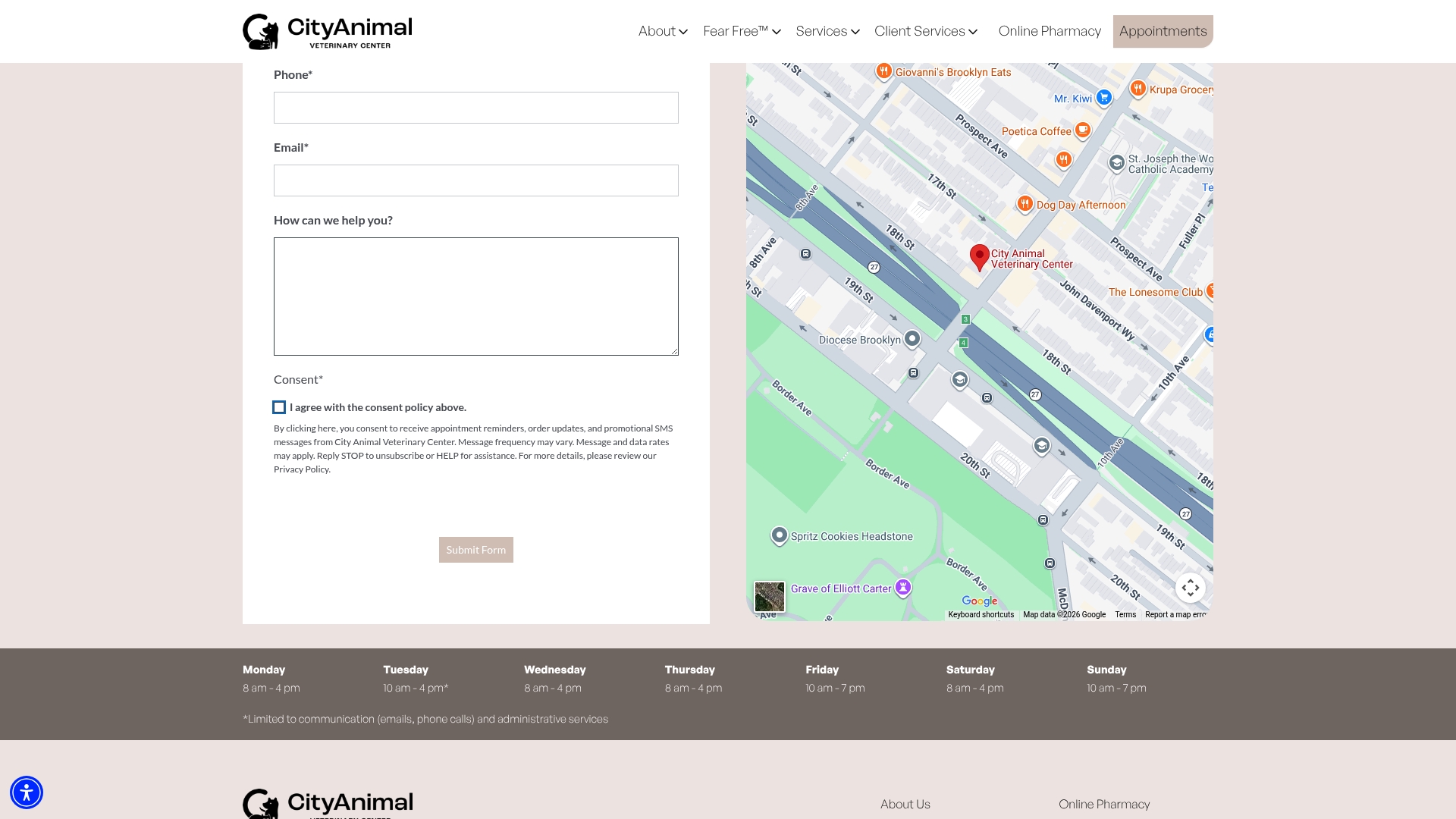
For dogs who can't tolerate a clinic environment, a house-call appointment removes the waiting room, the exam table, and the car ride entirely. For dogs who need a structured pre-visit medication plan, the team can discuss options like gabapentin or trazodone and coordinate timing with your training protocol. Behavioral consultations are available for owners who want a formal assessment and a written plan rather than general advice.
To book a low-stress appointment or ask about a house call, contact City Animal Veterinary Center directly. Tell them your dog has significant anxiety and ask what accommodations they can arrange before your first visit.
Useful sources and further reading
The studies and resources below are the primary evidence behind this guide. Bring the clinical studies to your next vet appointment if you want to discuss pre-visit medication options.
- Effects of trazodone on behavioral and physiological signs of stress in dogs during veterinary visits (JAVMA, 2022) — the primary randomized trial on trazodone dosing and timing for vet-related stress.
- A review of pre-appointment medications to reduce fear and anxiety in dogs and cats at veterinary visits (PMC) — comprehensive review of gabapentin, trazodone, OTM dexmedetomidine, and alprazolam; covers pharmacokinetics and clinical evidence.
- GMA protocol study: gabapentin, melatonin, and acepromazine in anxious dogs (PubMed, 2023) — the 91.1% stress-reduction finding; useful when discussing combination protocols with your vet.
- A Review on Mitigating Fear and Aggression in Dogs and Cats in a Veterinary Setting (PubMed) — covers environmental modifications, floor exams, and minimal restraint as clinical best practices.
- How to make veterinary visits less stressful for dogs (Cornell University) — practical happy-visit protocols and clinic-handling guidance from Cornell's Riney Canine Health Center.
- Anxious behavior: how to help your dog cope with unsettling situations (Cornell University) — multimodal approach guidance including routine, training, and medical support.
- Teaching relaxation exercises to dogs (Today's Veterinary Practice, 2025) — session-length recommendations and the minimum effective dose for relaxation training.
This article is general information, not veterinary or behavioral advice. Confirm medication options and behavior plans with a licensed veterinarian or certified veterinary behaviorist before implementing them.