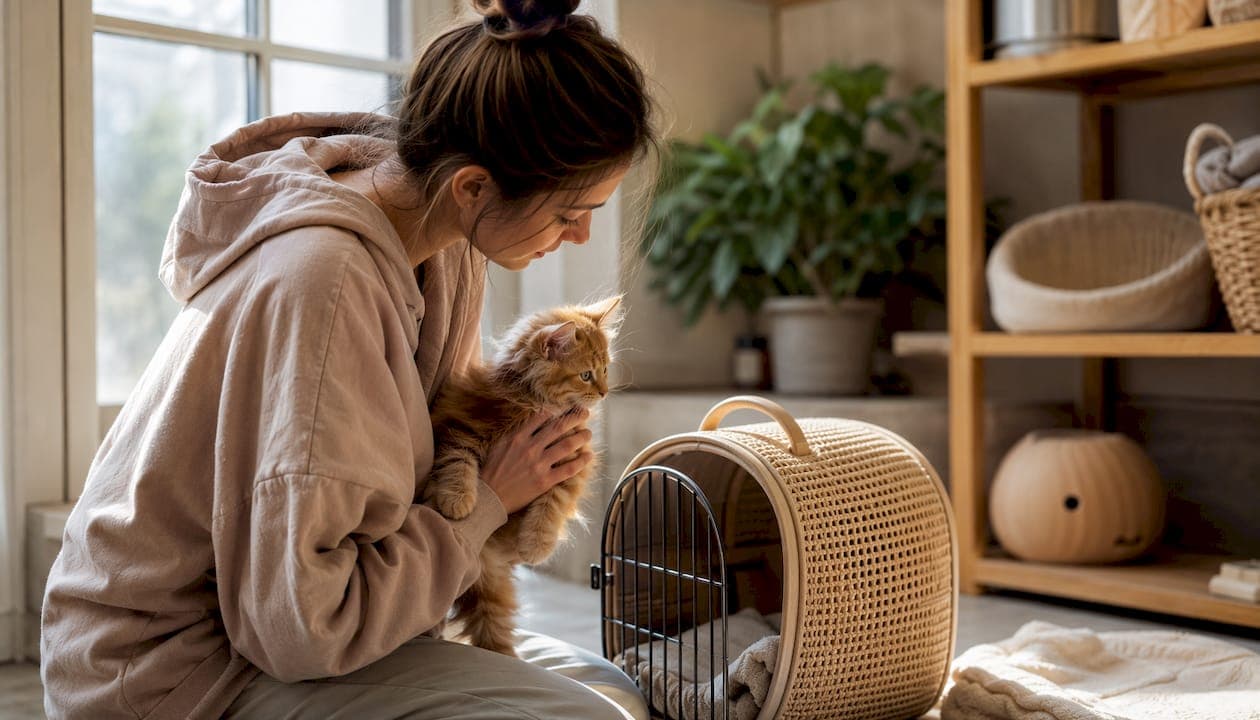
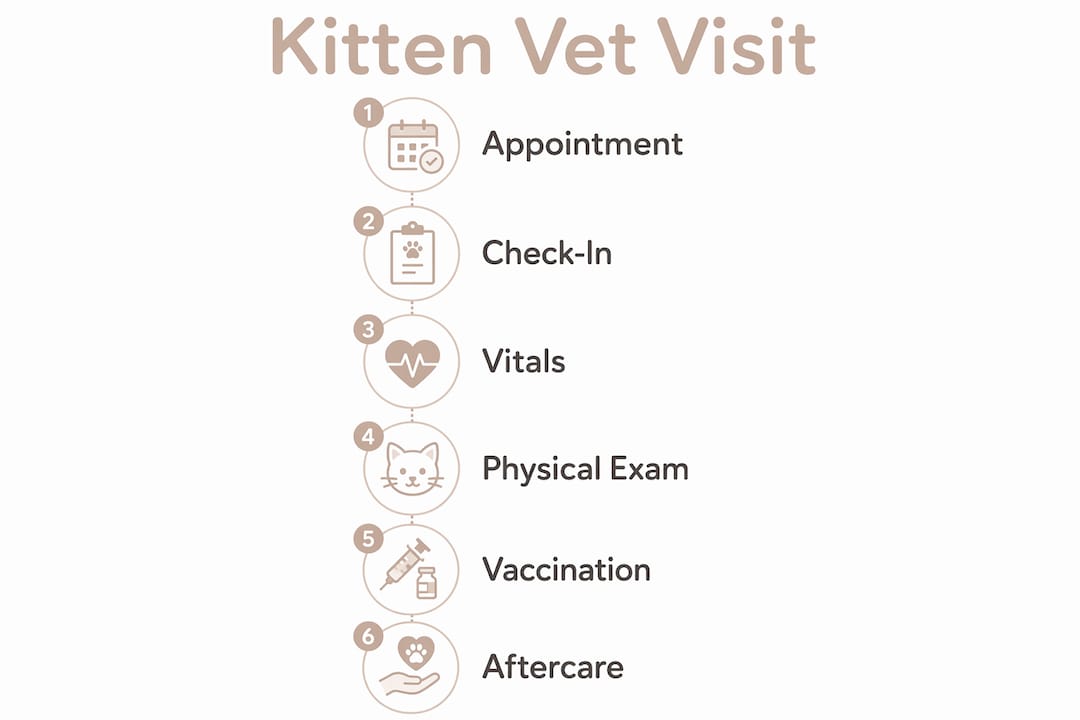
Schedule your kitten’s first vet visit within the first week you bring them home, or by around six to eight weeks of age if you’ve had them since birth. That single appointment accomplishes more than most new owners expect:
-
Full head-to-tail physical exam to catch congenital issues (heart murmurs, hernias, cleft palate) before they become serious problems
-
Baseline weight and vitals so future changes are measurable, not guesswork
-
FVRCP vaccine series start timed against maternal antibody levels
-
Parasite screening via fecal test, plus deworming if indicated
-
Individualized preventive-care plan covering nutrition, spay/neuter timing, and follow-up schedule
Come prepared: bring the kitten in a secure carrier, any records from the shelter or breeder, and a fresh stool sample collected within 12–24 hours if your clinic requests one. Write down 2–3 questions before you go. The visit typically runs from half an hour up to an hour, and you’ll leave with a written schedule for the next several months.
Table of Contents
When should you take a new kitten to the vet?
The answer shifts depending on where the kitten came from and how old they are. Here’s how to read your situation:
-
Standard adoption (kitten 8 weeks or older): Schedule within the first week at home, even if the shelter or breeder provided records. The goal is to confirm prior care and create a clinic-tailored plan so nothing falls through the cracks.
-
Shelter or rescue adoptee with no records: Book within 48–72 hours. Bring any paperwork the shelter gave you. Without vaccination history, the vet needs to assess where to start the series.
-
Breeder or retail purchase: Confirm exactly which vaccines and dewormings were already given, then still plan a clinic visit soon after arrival to establish a baseline and verify the records are accurate.
-
Stray or orphaned kitten: Contact a vet immediately. Kittens under 6 weeks have urgent needs around feeding, warmth regulation, and parasite risk that go well beyond a routine wellness visit.
-
Neonates (under 3–4 weeks, not nursing): This is an emergency situation, not a scheduled appointment. Call your clinic or an emergency animal hospital the same day.
A few things worth knowing regardless of origin:
-
Rabies vaccine timing is governed by state law, not just clinic preference. Discuss the local legal requirement during the first visit.
-
The 3-3-3 behavioral timeline (3 days to decompress, 3 weeks to learn the routine, 3 months to feel fully at home) is a useful frame for socialization planning, but it does not delay the first vet visit. Health screening comes first.
-
If your kitten is sneezing, has diarrhea, seems lethargic, or isn’t eating, don’t wait for a scheduled slot. Call the clinic and describe the symptoms.
New kitten vet checklist: what to bring and how to prepare
Getting organized the day before saves real time at intake. Here’s what to pull together:
Must-haves:
-
Kitten secured in a hard or soft carrier (never loose in the car)
-
Adoption papers, prior vaccine records, or deworming history
-
A written summary of diet and behavior — age estimate, what you’re feeding, litter habits, any symptoms you’ve noticed
-
Fresh stool sample in a sealed container, collected within 12–24 hours of the appointment
Helpful extras:
-
A small towel or blanket from home placed inside the carrier (familiar scent reduces anxiety)
-
A favorite toy or a few treats
-
A small sample of the kitten’s current food if you want dietary advice
-
A written list of your questions so you don’t forget them mid-exam
Logistics:
-
Call ahead to confirm whether the clinic wants a stool sample, has specific parking, or has any check-in policies
-
Plan to arrive 10 minutes early; first visits often involve more paperwork than follow-ups
-
Budget extra time in case the waiting room runs behind
Pro Tip: Leave the carrier open in your living space for several days before the appointment with bedding and a treat or two inside. Kittens that explore the carrier on their own terms are noticeably calmer during transport and at the clinic — this is one of the core recommendations in Fear Free handling guidance.
What happens at your kitten’s first vet appointment?
The visit has a predictable flow, and knowing it in advance makes the whole thing less stressful for you and the kitten.
Check-in and history intake
A technician or receptionist starts by collecting background: the kitten’s estimated age, where they came from, prior vaccines or deworming, current diet, litter habits, and any behavioral observations. If you don’t have formal records, a concise written history you prepared at home speeds this up considerably and helps the vet avoid unnecessary repeat vaccinations.
Technician baseline checks
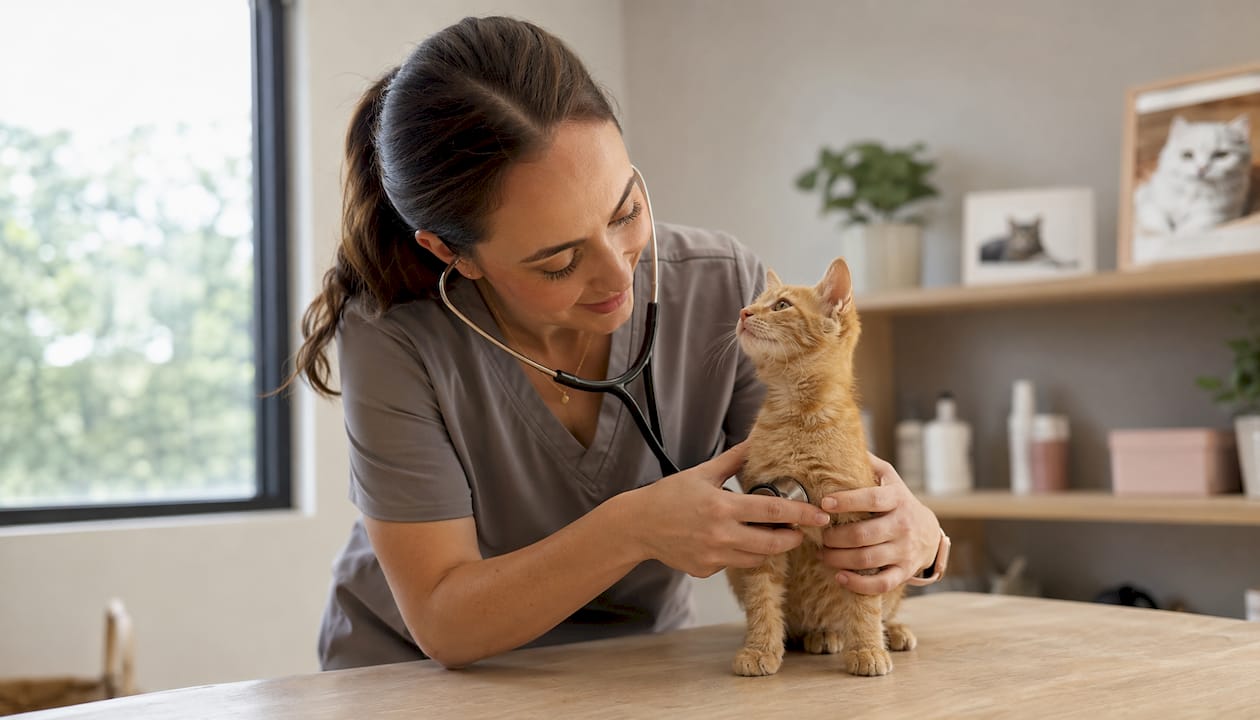
Before the vet enters, a technician records weight, temperature, heart rate, and respiration rate. They’ll often walk you through parasite prevention options, discuss diet basics, and explain the vaccine choices coming up. This is a good time to ask logistical questions.
The head-to-tail physical exam
The veterinarian examines eyes, ears, mouth and teeth, skin and coat, lymph nodes, abdomen, heart, and lungs. They’re checking for congenital issues — a heart murmur, umbilical hernia, or cleft palate — as well as signs of infection, parasites, or dehydration. The first wellness visit establishes what’s normal for this kitten, which is what makes future changes detectable early.
Diagnostics
The standard diagnostics at a first visit include:
-
Fecal flotation test for intestinal parasites (roundworms, hookworms, coccidia, giardia)
-
FeLV/FIV blood test if the kitten has outdoor exposure or unknown history
-
Additional bloodwork or imaging only if the physical exam flags something specific
Vaccination decisions and wrap-up
The vet reviews whatever records exist and prescribes the appropriate first or next vaccine. You’ll leave with a written preventive plan that shows the follow-up schedule for the next several months, including booster timing and when to discuss spay or neuter.
Kitten vaccination schedule and parasite prevention
The timing of vaccines isn’t arbitrary. Kittens are born with maternal antibodies that provide temporary protection but also interfere with vaccines. The series is designed to catch the kitten as those antibodies fade.
Core vaccine series (FVRCP):
-
First dose: no earlier than 6 weeks of age
-
Boosters: every 3–4 weeks until 16–20 weeks of age
-
Follow-up: consider revaccinating around 6 months to cover any kitten that still had maternal antibody interference at 16 weeks
-
Adult schedule: every 3 years for low-risk cats after the initial series is complete
This schedule follows AAHA/AAFP feline vaccination guidance, which recommends the booster series specifically to overcome maternal antibody interference — the reason one early shot is never enough.
Rabies vaccine:
Per UC Davis School of Veterinary Medicine guidance, a single rabies vaccine is recommended at 12–16 weeks, with revaccination one year later, then every 3 years using a vaccine approved for that interval. State law governs the legal minimum timing, so confirm with your clinic.
FeLV (feline leukemia virus):
Test first, then vaccinate FeLV-negative kittens, particularly those with outdoor access or exposure to cats of unknown status. Vaccination is most effective in kittens and young adults; acquired resistance develops after 16 weeks, though older cats can still be infected with sufficient exposure.
Parasite prevention:
Bring a fresh stool sample collected soon before the appointment, ideally within a day of the visit. Fecal flotation testing can identify intestinal parasites immediately, often preventing a second visit and speeding up treatment. Many kittens receive deworming at the first visit or are placed on a repeat schedule regardless of test results, because prevalence in young cats is high.
For external parasites, ask your vet which flea and tick prevention products are labeled safe for your kitten’s specific age and weight. Never use dog flea products on cats.

Questions to ask and red flags to watch for
Ask your vet:
-
What vaccines does my kitten need, and when exactly are the follow-up doses?
-
When should we discuss spaying or neutering, and what factors affect that timing?
-
Which parasite prevention do you recommend for this kitten’s age and lifestyle?
-
How much food should I feed, and should I transition to a different diet?
-
What’s the next visit for, and what will be done then?
-
How do I handle socialization, and what kitten behaviors are normal versus worth calling about?
Red flags that need same-day or emergency care:
-
Persistent vomiting or diarrhea (more than one or two episodes)
-
Difficulty breathing or open-mouth breathing
-
Severe lethargy or collapse
-
Refusal to eat for more than 24 hours
-
Pale or white gums
-
Continuous bleeding from any site
-
Severe eye or nasal discharge with crusting
Post-vaccine, watch for mild soreness at the injection site and low energy for 24–48 hours. Those are normal. Facial swelling, hives, vomiting within an hour of vaccination, or difficulty breathing are not normal and warrant an immediate call to the clinic.
How Fear Free visits and house calls make a real difference
A kitten that arrives terrified is harder to examine accurately. Tense muscles make abdominal palpation less reliable; a racing heart rate from fear looks the same as a cardiac issue on initial assessment. Clinics trained in Fear Free handling use calm voices, minimal restraint, pheromone sprays, and strategic treat placement to keep the kitten’s stress response low enough that the exam actually reflects the animal’s true health.
The single most effective thing an owner can do before the visit is carrier acclimation. Leave the carrier open at home with familiar bedding and treats for several days. Kittens that have chosen to sleep in their carrier before the appointment arrive at the clinic in a fundamentally different state than those pulled from under a bed and stuffed into a box ten minutes before departure.
Pro Tip: Spray the inside of the carrier with a feline pheromone product (such as Feliway) about 30 minutes before loading the kitten. The combination of familiar scent and pheromone support is more effective than either alone.
For kittens who are genuinely difficult to transport, or for owners who can’t easily travel, a house-call appointment is worth considering. At-home visits eliminate the car ride, the waiting room, and the unfamiliar smells that trigger most feline stress responses. Services available during house calls typically include physical exams, vaccine administration, and basic diagnostics.
Cityanimalvet offers both Fear Free in-clinic visits and house-call services for Brooklyn clients. If your kitten is particularly anxious or you have mobility constraints, a home visit may be the more practical first step.
Key Takeaways
The single most important thing a new kitten owner can do is schedule a wellness visit within the first week at home, before symptoms appear, so the vet establishes a true health baseline.
| Point | Details | |
|---|---|---|
| Book within the first week | Schedule the first appointment within 7 days of bringing the kitten home, or by 6–8 weeks of age. | |
| Bring records and a stool sample | Prior vaccine records prevent unnecessary repeat doses; a fresh fecal sample collected within 12–24 hours enables immediate parasite testing. | |
| Cityanimalvet offers Fear Free and house-call options | Brooklyn kitten owners can book an in-clinic or at-home wellness visit at cityanimalvet.com. |
What early care actually gets right
The conventional framing around kitten vet visits focuses almost entirely on vaccines. That’s understandable — the FVRCP series is time-sensitive and the schedule is specific. But the more consequential thing that happens at a first visit is the baseline. A vet who has examined your kitten at 8 weeks, recorded a heart rate, noted a mild murmur, and documented body condition has something to compare against at 16 weeks, at 6 months, and at 2 years. A vet seeing the cat for the first time at age 3 with a problem is working without that context.
Prevention is also cheaper than treatment in a way that’s easy to underestimate. Catching a parasite burden early costs a deworming treatment. Missing it until the kitten is visibly ill costs diagnostics, supportive care, and sometimes hospitalization. The first visit isn’t just about ticking the vaccine box. It’s about giving the kitten a documented starting point that makes every future visit more useful.
The Fear Free piece matters more than most owners expect, too. A kitten that has a calm, positive first clinic experience is easier to examine for the rest of its life. One that’s traumatized at 8 weeks learns to associate the carrier, the car, and the clinic with fear, and that association is genuinely hard to undo.
Book a kitten wellness visit with Cityanimalvet in Brooklyn
New kitten owners in Brooklyn get a first visit that covers everything in one appointment: a full physical exam, a personalized vaccine plan, fecal parasite testing, and a clear written schedule for the next several months. Microchipping and FeLV/FIV testing are available if indicated. The team at Cityanimalvet uses Fear Free handling throughout, which means calm voices, minimal restraint, and an exam room designed to keep your kitten’s stress response low.
If travel is difficult or your kitten is particularly anxious, a house-call appointment brings the same quality of care to your Brooklyn home. No waiting room, no car ride, no unfamiliar smells. Book your kitten’s first wellness visit online or by phone, and come in knowing exactly what to expect.
Useful sources and further reading
The guidance in this article draws on the following authoritative clinical and educational sources. Each is worth bookmarking if you want citation-level detail or want to share specific recommendations with your veterinarian.
-
New kitten checklist | AAHA — practical owner checklist from the American Animal Hospital Association, covering exam scope, carrier prep, and Fear Free handling
-
AAHA/AAFP Feline Vaccination Guidelines — the clinical standard for kitten vaccine timing, including FVRCP booster intervals and maternal antibody interference
-
Vaccination guidelines for dogs and cats | UC Davis School of Veterinary Medicine — detailed protocol for FVRCP, rabies, and FeLV vaccine timing and administration site recommendations
-
Kitten vaccination schedule and costs | PetMD — cost ranges and schedule overview for new owners budgeting for the first year
-
What to expect during your kitten’s first vet visit | Chewy — owner-facing walkthrough of visit flow, stool sample preparation, and scheduling timing
-
How to prepare for your kitten’s first vet visit | Petco — preparation checklist including paperwork, written history, and transport tips
-
Your kitten’s first vet visit | IDEXX Pet Health — clinical perspective on why baseline wellness visits matter for long-term health detection
-
When should kittens see a vet? | AV Veterinary Center — guidance on urgent-care exceptions for neonates, orphaned kittens, and strays