
Your puppy's immunization schedule starts at about 6–8 weeks of age with the first DA2PP/DHPP dose, continues every few weeks until at least 16 weeks (sometimes extended longer in high-risk situations), adds rabies per your state's law typically in the 12–16 week range, and wraps up with boosters during the first year. That's the core plan, recommended by both AAHA and the AVMA, and it applies to virtually every puppy in the U.S.
Here's your quick-start checklist before you read the details:
- Schedule your first vet visit at 6–8 weeks (or as soon as you bring your puppy home, if older)
- Core vaccines at each visit: DA2PP/DHPP series, every few weeks until at least 16 weeks
- Rabies: given per your state or local law; ask your vet for the exact timing
- Lifestyle vaccines (Leptospirosis, Bordetella, Lyme, Canine influenza): discuss with your vet based on where you live and how your puppy will spend time
- Keep your puppy away from unknown dogs, dog parks, and high-traffic areas until the full series is complete
- High-risk areas or medically fragile puppies: your vet may extend the series longer or build a custom plan
- Fear Free or home-visit options are available at City Animal Veterinary Center for puppies who find clinic visits stressful
Table of Contents
- What shots does your puppy actually need?
- What does the puppy shot timeline look like, week by week?
- Why does your puppy need so many shots?
- When is it safe to walk and socialize your puppy?
- What reactions should you watch for after vaccination?
- Can titers replace vaccines for your puppy?
- How to prepare your puppy for a vaccination visit
- What vaccine records do you need to keep?
- Key Takeaways
- The case for getting the schedule right from the start
- Puppy wellness visits at City Animal Veterinary Center
- Useful sources for further reading
What shots does your puppy actually need?
Not every vaccine is created equal, and understanding the difference between core and non-core vaccines helps you have a smarter conversation with your vet rather than just nodding along.
Core vaccines: the non-negotiables
The DA2PP or DHPP combination shot protects against four diseases at once: canine distemper, adenovirus (hepatitis), parvovirus, and parainfluenza. These are recommended for virtually all puppies regardless of lifestyle, because the diseases they prevent are widespread, often fatal, and have no reliable treatment once a puppy is infected. Parvovirus alone can kill an unvaccinated puppy within days.
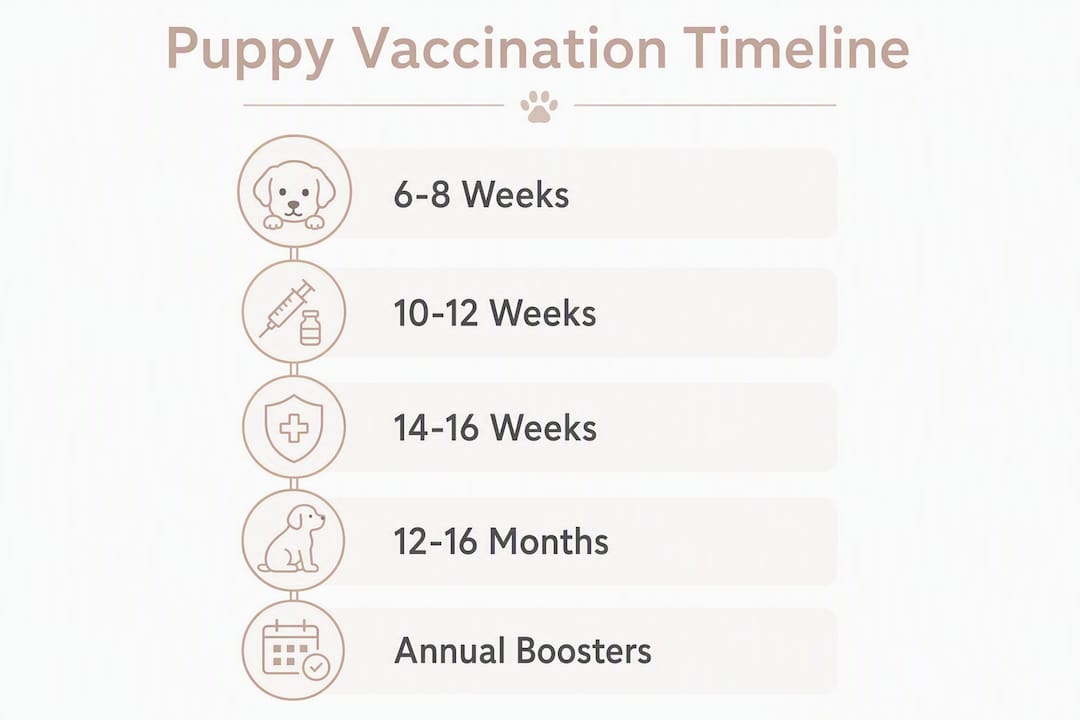
Rabies sits in its own category. It's not classified as "core" or "non-core" in the traditional sense because it's legally mandated across the U.S. Timing varies by state, but most require the first dose between 12 and 16 weeks. After that, your puppy will need a booster at one year, then typically every one to three years depending on the product label and local law. The CDC notes that rabies vaccination is a critical public health measure, not just a pet health one.
Lifestyle (non-core) vaccines: based on your puppy's world
These vaccines are recommended when your puppy's environment or habits create real exposure risk. Your vet should assess this annually, not just once.
- Leptospirosis: A bacterial infection spread through contaminated water and wildlife urine. It's zoonotic, meaning it can infect people too. Many urban practices, including those in cities like Brooklyn, now treat it as strongly recommended or near-core because of that dual risk. The UC Davis VMTH guidelines note the initial series requires two doses given 2–4 weeks apart, typically starting around 12 weeks.
- Bordetella (kennel cough): Recommended for any puppy who will be boarded, groomed, attend puppy classes, or visit dog parks. It spreads easily in close-contact settings.
- Lyme disease: Recommended for puppies in tick-endemic regions. Cornell University's Animal Health Diagnostic Center describes Lyme as a significant concern in the Northeast, upper Midwest, and parts of the Pacific Coast.
- Canine influenza (H3N2 and H3N8): Recommended for dogs with frequent exposure to other dogs. The CDC's canine flu resource notes that both strains circulate in the U.S. and spread readily in kennels and shelters.
The framework to follow: always complete the core DA2PP/DHPP series plus rabies. Then add non-core vaccines after a real risk conversation with your vet, factoring in your location, your puppy's lifestyle, and any planned travel or boarding.
Pro Tip: Ask your vet specifically about Leptospirosis if you live in an urban area or near parks, rivers, or wildlife. Many owners skip it assuming it's a rural concern, but city dogs that sniff puddles or grass where wildlife passes through face real exposure.
What does the puppy shot timeline look like, week by week?
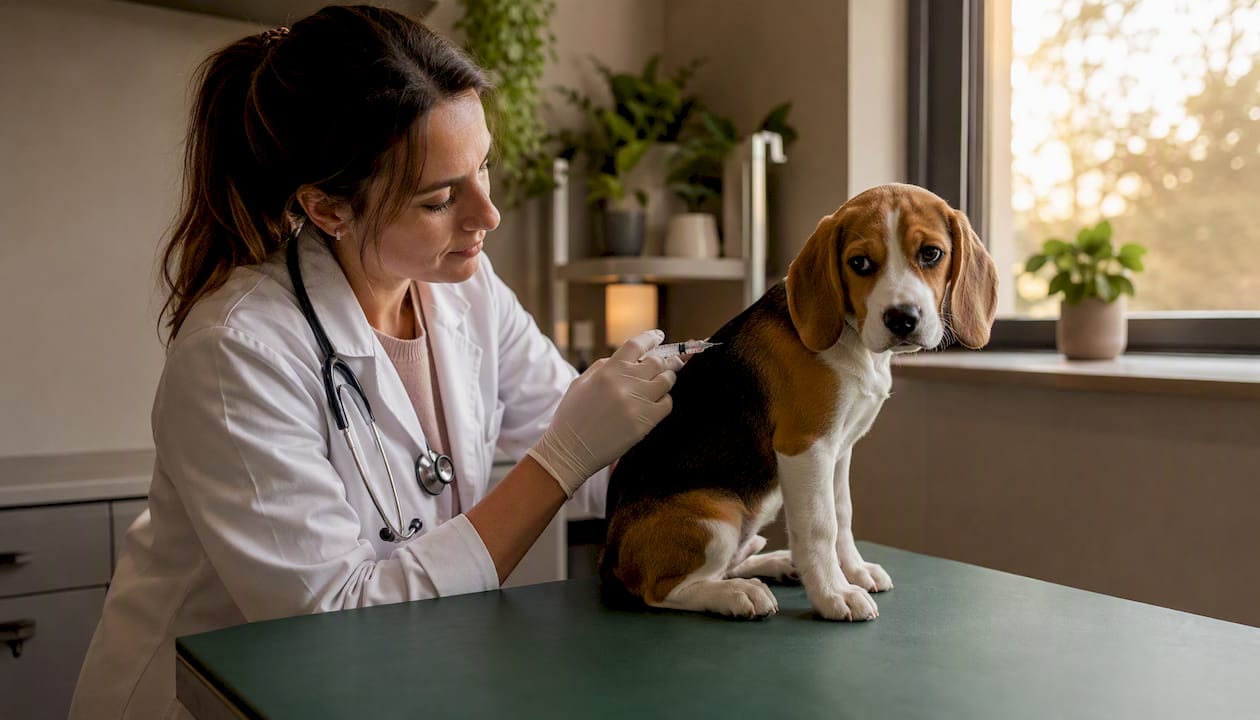
The table below lays out the standard first-year schedule. Your vet may adjust it based on your puppy's health, local disease risks, and which products they carry, but this is the framework AAHA and AVMA guidelines support.
| Age | Vaccines typically given | Notes |
|---|---|---|
| 6–8 weeks | DA2PP/DHPP (dose 1) | First visit; start as early as about 6 weeks |
| 9–12 weeks | DA2PP/DHPP (dose 2); Leptospirosis (dose 1 if indicated); Bordetella (if indicated) | A few weeks after first dose |
| 12–16 weeks | DA2PP/DHPP (dose 3); Leptospirosis (dose 2 if indicated); Rabies (per state law); Lyme (if indicated); Canine influenza (dose 1 if indicated) | Final puppy core dose; rabies timing per local law |
| 14–16 weeks | Canine influenza (dose 2 if indicated) | A few weeks after first influenza dose |
| Up to about 20 weeks | DA2PP/DHPP additional dose | High-risk situations only, per vet guidance |
| Around 6 months | DA2PP/DHPP booster (recommended in many cases) | Closes immunity gaps from maternal antibody interference |
| 12–16 months | DA2PP/DHPP booster; Rabies booster; Leptospirosis annual booster; other non-core boosters as indicated | One-year boosters; confirm rabies product label |
After the first year, many core vaccines shift to a three-year interval for dogs with documented immunity, though some products and local laws require annual rabies. The WSAVA vaccination table supports revaccination at about six months in certain circumstances and three-year intervals for many antigens thereafter.
Your calendar checklist
Copy these into your phone or planner:
- Week 1 home: Book first vet visit (target 6–8 weeks of age)
- 2–4 weeks later: Second DA2PP/DHPP dose
- 2–4 weeks later: Third DA2PP/DHPP dose + rabies
- 6 months: Booster visit (recommended in many cases)
- 12–16 months: Full one-year booster appointment
Pro Tip: At every vaccination visit, ask your vet to write down the vaccine brand, lot number, and date administered. You'll need this if your puppy ever has a reaction, requires a health certificate for travel, or needs proof of vaccination for boarding.
Why does your puppy need so many shots?
One dose isn't enough, and the reason is biological, not commercial. Puppies are born with maternally derived antibodies (MDA) passed through their mother's colostrum. These antibodies provide early protection but also interfere with vaccines. When a vaccine is given while MDA levels are still high, the antibodies neutralize the vaccine before the puppy's own immune system can mount a response.
The problem is that MDA levels vary between litters and even between puppies in the same litter. There's no reliable way to know exactly when a given puppy's maternal immunity has dropped low enough for a vaccine to work. So the solution is a series of doses given every 2–4 weeks, increasing the probability that at least one dose lands during the window when MDA is low enough to allow a real immune response. As the Merck Veterinary Manual explains, puppies need frequent vaccines through about four months of age for exactly this reason.
The key insight: finishing the series at 16 weeks (or later in high-risk cases) isn't about giving more vaccines than necessary. It's about making sure at least one dose succeeds.
AAHA's 2022 guidelines set the standard: core vaccines in a series of at least three doses, starting no earlier than six weeks, with boosters every 2–4 weeks until the puppy reaches at least 16 weeks. In high-risk situations, that endpoint extends to 20 weeks.
Puppies with compromised immune systems or underlying health conditions may need a modified plan. If your puppy has been ill, is on immunosuppressive medication, or has a known health issue, talk to your vet before the first vaccine visit. The schedule can be adjusted; it doesn't have to be abandoned.
When is it safe to walk and socialize your puppy?
This is one of the most common questions new puppy owners get wrong, usually by waiting too long. Behavioral research is clear that the critical socialization window closes around 12–16 weeks. Waiting until the full vaccine series is complete before exposing your puppy to the world can leave lasting behavioral gaps that are harder to fix than a missed vaccine dose.
The goal is managed risk, not zero risk.
What's safe before the series is complete
- Puppy classes that require proof of vaccination for all attendees (even partially vaccinated puppies benefit from these)
- Playdates with vaccinated, healthy dogs you know personally
- Carrying your puppy in areas with heavy dog traffic (they get exposure to sights and sounds without ground contact)
- Your own yard, if it hasn't been frequented by unknown dogs recently
- Friends' and family members' homes with vaccinated pets
What to avoid
- Dog parks and off-leash areas with unknown dogs
- Pet store floors and shelter areas
- Sidewalks or grass in high-traffic dog areas, especially if parvovirus is known to be active locally
- Any setting where you can't verify the vaccination status of other dogs
Local disease prevalence matters. In areas with active parvovirus outbreaks, your vet may recommend stricter precautions. In lower-risk environments, earlier ground-level socialization may be appropriate. This is exactly the kind of individualized guidance a veterinarian who knows your area can provide.
Pro Tip: Start socialization at home first: different surfaces, sounds, people wearing hats or glasses, handling of paws and ears. These exposures carry zero disease risk and build the foundation for a confident adult dog. Pair every new experience with a high-value treat.
What reactions should you watch for after vaccination?

Most puppies handle vaccines without any notable reaction. Mild responses are normal and typically resolve within 24–48 hours.
Normal, expected reactions
- Soreness or mild swelling at the injection site
- Low-grade lethargy or decreased energy for 1–2 days
- Reduced appetite the day of vaccination
- Low-grade fever
These are signs the immune system is responding. They don't require treatment, just monitoring and rest.
Red-flag signs that need immediate attention
These reactions are rare but can be life-threatening. They typically appear within 30 minutes to a few hours after vaccination:
- Facial swelling, hives, or swelling around the muzzle and eyes
- Severe vomiting or diarrhea
- Difficulty breathing or wheezing
- Sudden collapse or extreme weakness
- Pale gums
If you see any of these, don't wait. Call your vet immediately or go directly to an emergency clinic.
Your post-vaccination monitoring checklist
- Go to an emergency clinic — if your vet is unreachable and symptoms are severe
Pro Tip: If your puppy has had a reaction to a vaccine before, tell your vet before the next visit. They may pre-treat with an antihistamine, split vaccines across separate visits, or observe your puppy longer before you leave. Never skip this disclosure.
Can titers replace vaccines for your puppy?
A titer test measures the level of antibodies in your dog's blood for a specific disease. A positive result suggests prior exposure or a previous vaccine produced an immune response. Titers are a legitimate tool in veterinary medicine, but they have real limits that owners should understand before assuming they can replace vaccines.
For adult dogs, titers are commonly used to decide whether revaccination is necessary for core diseases like distemper and parvovirus. A dog with a protective titer may not need a booster that year. This is where titers genuinely shine: reducing unnecessary revaccination in dogs with documented immunity.
For puppies completing their initial series, titers are generally not a substitute. The series exists to overcome maternal antibody interference, and a titer drawn too early may reflect maternal antibodies rather than the puppy's own immune response. Finishing the series is the more reliable path.
Rabies is a separate matter entirely. Titer testing does not replace legally required rabies vaccination in most U.S. jurisdictions. UC Davis VMTH guidelines are explicit on this: owners must follow state and local rabies laws and present vaccination certificates as proof. No titer result substitutes for that certificate when it comes to licensing, boarding, or crossing state lines.
Titers are also worth considering for dogs with a history of vaccine reactions, where the risk of revaccination needs to be weighed against the benefit. Turnaround time for titer results varies, and not every clinic runs them in-house, so plan ahead if this is part of your puppy's care strategy.
Pro Tip: Ask your vet to document titer results in your puppy's medical record alongside vaccine history. This creates a complete immunity profile that's useful for future decisions, travel health certificates, and any specialist who sees your dog later.
How to prepare your puppy for a vaccination visit
The vaccination visit itself can be stressful for puppies, and that stress isn't trivial. A puppy that associates the vet with fear is harder to examine, harder to treat, and more likely to develop lasting anxiety around veterinary care. Getting the visit right from the start matters.
What to bring
- Prior vaccine records (if your puppy received any doses before you got them)
- A washable blanket or item with a familiar scent
- High-value treats your puppy doesn't get at home
- A secure carrier or well-fitted leash and collar
Fear Free techniques that actually help
Start car acclimation before the appointment. Take short trips that don't end at the vet so your puppy doesn't associate the car with something stressful. Use calming pheromone sprays (like Adaptil) on the blanket or carrier 15–30 minutes before travel. Feed a light meal a few hours before the visit so your puppy is food-motivated but not nauseous.
At the clinic, let your puppy sniff and explore rather than holding them tightly from the moment you walk in. Reward calm behavior with treats. City Animal Veterinary Center's Fear Free approach extends this philosophy throughout the entire visit: low-stress handling techniques, minimal restraint, and a calm environment designed to keep your puppy's stress response from spiking.
For puppies who find any clinic visit genuinely distressing, or for owners who have difficulty traveling with a pet, home visits are a real option. City Animal Veterinary Center offers house-call veterinary care, which removes the travel stress entirely and lets your puppy be examined and vaccinated in the environment where they feel safest.
Pro Tip: Book morning appointments when the clinic is quieter and your puppy is well-rested. Afternoon slots often run late, which means more waiting room time and a more tired, less patient puppy.
What vaccine records do you need to keep?
Vaccine records are not optional paperwork. They're legal documents, proof of compliance, and a medical safety net.
Every entry in your puppy's vaccine record should include:
- Vaccine name and manufacturer
- Lot number
- Date administered
- Route of administration (injection site, intranasal, etc.)
- Clinic name and administering veterinarian
Rabies certificates deserve special attention. Most states require a signed rabies certificate from a licensed veterinarian, and many boarding facilities, groomers, and dog parks won't accept your puppy without one. Local laws govern the exact timing and renewal requirements, so check your city and state regulations rather than assuming a general rule applies. The AVMA recommends that vaccination plans be individualized, and that includes staying current with local legal requirements.
Store records in two places: a physical copy in a folder at home and a scanned digital copy in your phone's photos or a cloud service. Many veterinary practices also maintain records in a client portal, but don't rely on that as your only copy. Clinics change software systems, and records can be lost.
If your puppy's vaccination history is unknown, perhaps because they were adopted or came from a rescue without complete records, the standard veterinary approach is to re-establish protection. Your vet will assess the situation and build a catch-up schedule rather than automatically restarting the entire series from scratch.
Key Takeaways
A puppy's first-year vaccine series requires starting core vaccines at 6–8 weeks, repeating every 2–4 weeks until at least 16 weeks, adding rabies per state law, and completing one-year boosters to build lasting protection.
| Point | Details |
|---|---|
| Start early, finish the series | Core vaccines begin at 6–8 weeks and continue every 2–4 weeks until at least 16 weeks of age. |
| Rabies follows local law | Give rabies at 12–16 weeks per your state's requirement; keep the signed certificate for boarding and licensing. |
| Non-core vaccines need a risk conversation | Leptospirosis, Bordetella, Lyme, and canine influenza are added based on your puppy's lifestyle and geography, not automatically. |
| Watch for reactions after every dose | Mild lethargy and soreness are normal; facial swelling, vomiting, or collapse require immediate veterinary attention. |
| City Animal Veterinary Center | Offers Fear Free puppy wellness visits and house-call vaccination services in Brooklyn for a lower-stress first-year experience. |
The case for getting the schedule right from the start
Puppy vaccination is one of those topics where the conventional wisdom is mostly correct but the execution is where things fall apart. Owners understand they need to vaccinate. What they underestimate is how much the timing and the experience of those early visits shape everything that follows.
A puppy who completes the full series on schedule arrives at adulthood with documented immunity, a vet who knows their history, and a medical record that actually works when you need it. A puppy who misses doses, gets vaccinated late, or has a traumatic early clinic experience often ends up harder to examine, harder to treat, and with gaps in protection that require more intervention later, not less.
The Fear Free philosophy isn't a marketing angle. It's a recognition that a puppy's first few veterinary visits are formative. If those visits involve fear, restraint, and stress, the puppy learns that the vet is a threat. If they involve calm handling, treats, and a low-pressure environment, the puppy learns the opposite. That second outcome is better for the puppy, better for the owner, and frankly better for the veterinarian trying to do a thorough exam.
The other thing owners consistently underestimate is the value of individualized planning. The standard schedule is a starting point, not a prescription. A puppy in a Brooklyn apartment who will attend puppy classes and visit dog parks has a different risk profile than one who lives in a rural home with no dog contact. AAHA's guidelines are explicit that vaccination plans should be reassessed annually to reflect lifestyle changes, travel, and regional disease trends. That annual conversation with your vet is where the real value of a good veterinary relationship shows up.
Puppy wellness visits at City Animal Veterinary Center
Puppies in Brooklyn deserve a first-year experience that sets them up for a lifetime of calm veterinary care. City Animal Veterinary Center offers puppy wellness visits built around the Fear Free framework, meaning low-stress handling, a calm environment, and a team that treats the visit as a positive experience rather than something to get through.
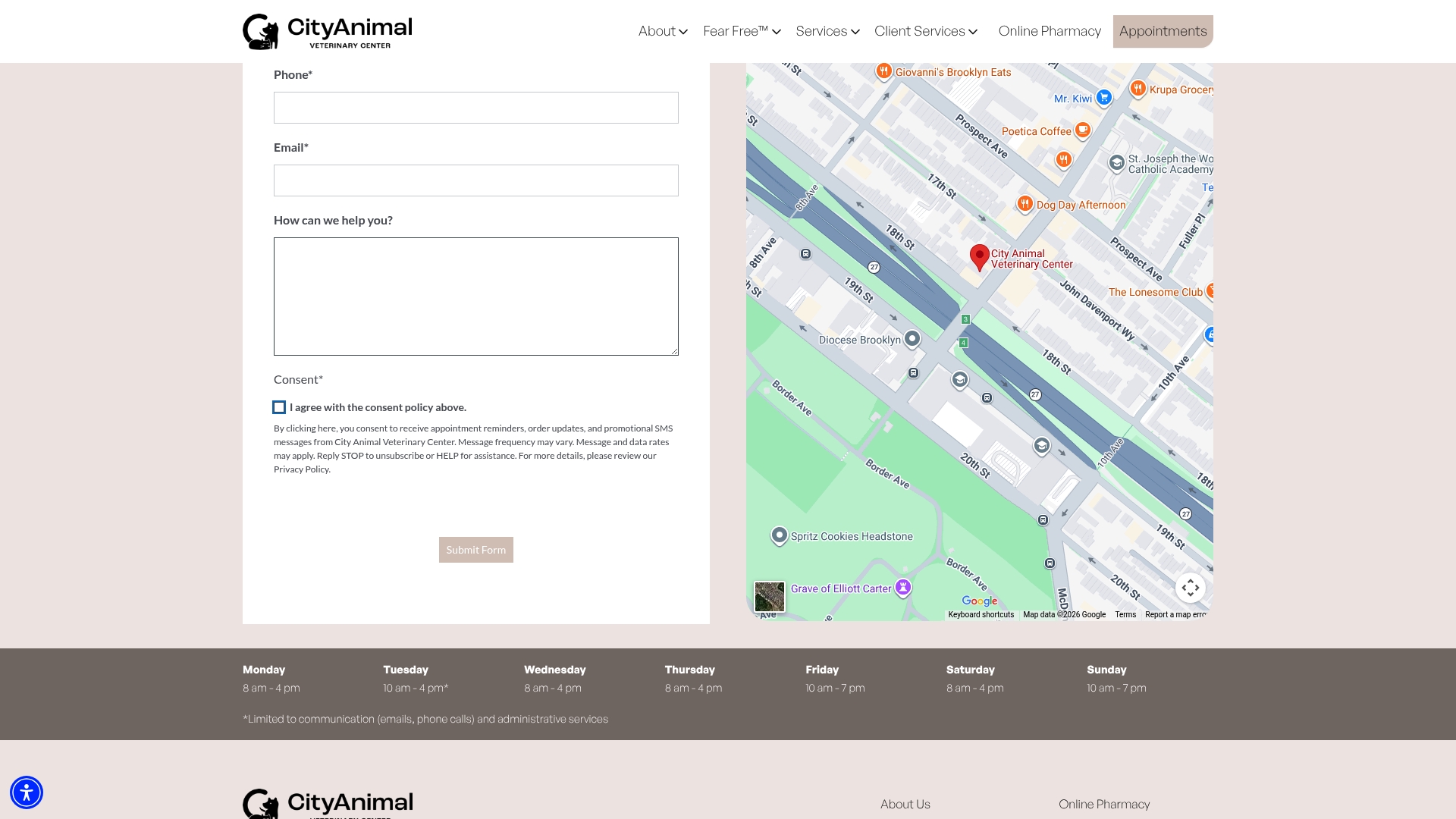
For puppies who find any clinic setting difficult, or for owners who can't easily travel with a new pet, City Animal Veterinary Center's house-call service brings the vaccination visit to you. The same thorough care, the same vaccine documentation, and the same individualized planning, without the car ride or the waiting room.
At every visit, the team records vaccine names, lot numbers, dates, and administering vet information in your puppy's medical record and provides you with a copy. Vaccine records are maintained accurately from the first dose so you're never scrambling to prove compliance for boarding or travel.
Ready to get your puppy's first-year schedule on track? Book a puppy wellness visit with City Animal Veterinary Center in Brooklyn, and bring any prior records you have. The team will build a personalized vaccine plan from there.
Useful sources for further reading
These are the authoritative resources behind the guidance in this article. Each is worth bookmarking for reference as your puppy grows.
- 2022 AAHA Canine Vaccination Guidelines — The most current expert-consensus document on core and non-core vaccine timing, intervals, and risk-based decision-making for U.S. veterinary practice.
- AVMA Vaccination Guidance for Pet Owners — Plain-language overview of why vaccines matter, how schedules are individualized, and what to expect at each visit.
- WSAVA Core Vaccine Table for Dogs — International expert consensus on core vaccine definitions, dosing notes, and long-term booster intervals.
- CDC: Rabies and Public Health — Explains why rabies vaccination is a legal and public health requirement, not just a veterinary recommendation.
Ask your veterinarian for individualized recommendations, and check your state and local regulations for rabies vaccination timing and certificate requirements. General guidelines are a starting point; your puppy's specific situation is what determines the final plan.
This article provides general information about puppy vaccination and is not a substitute for professional veterinary advice. Consult your veterinarian and your local or state regulations for guidance specific to your puppy's health and your jurisdiction's legal requirements.