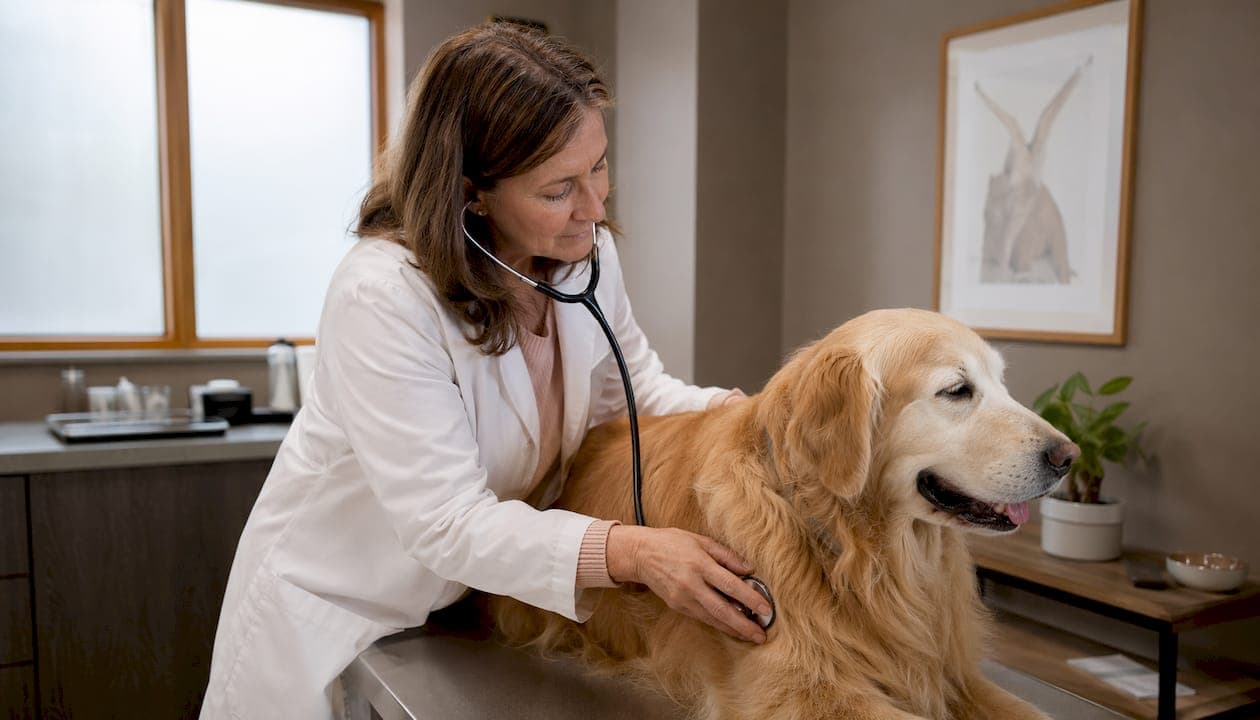
A senior dog wellness exam is a structured veterinary visit designed to detect age-related disease before symptoms appear, often conducted more frequently than annual visits. Most dogs qualify as “senior” at around middle age, though large and giant breeds often reach that threshold earlier than smaller breeds. Dogs managing chronic conditions like kidney disease or diabetes may need visits every three to four months.
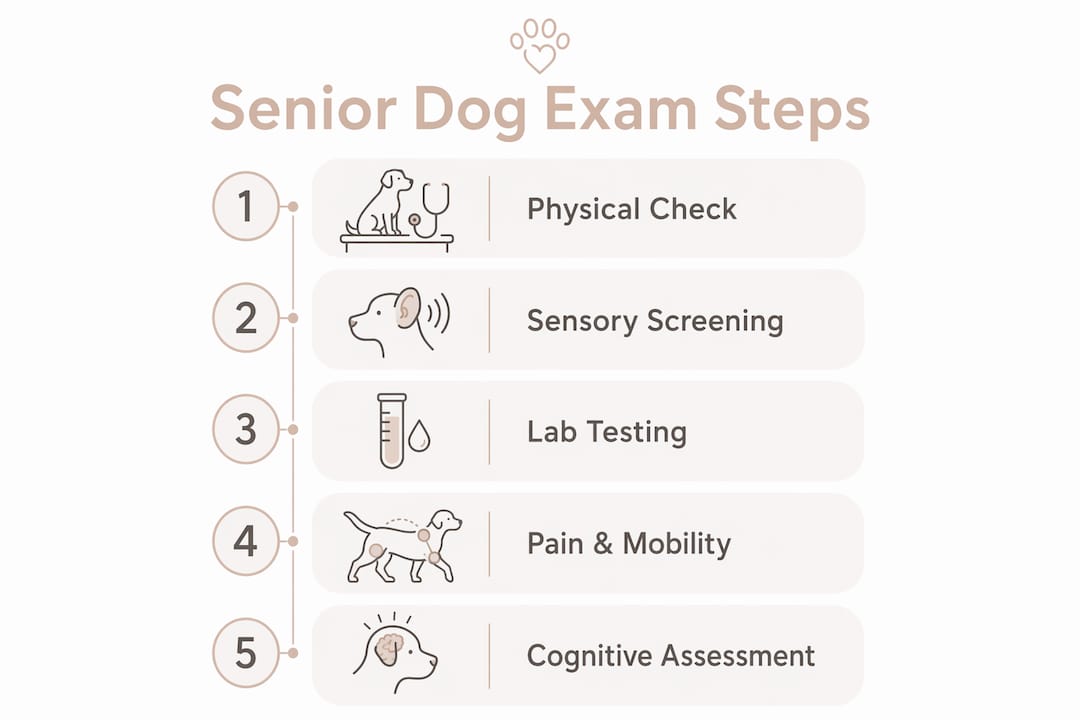
The exam rests on four core pillars:
-
Comprehensive head-to-tail physical exam covering eyes, ears, teeth, heart, lungs, abdomen, joints, and neurologic function
-
Minimum lab database: complete blood count (CBC), comprehensive chemistry panel, and urinalysis with specific gravity
-
Thyroid screening (when clinical signs or breed history suggest it)
-
Additional diagnostics as indicated: blood pressure, digital X-rays, abdominal ultrasound, and cardiac markers
The entire point is early disease detection — catching kidney disease, dental disease, thyroid dysfunction, hypertension, cognitive dysfunction, arthritis, heart disease, and cancer while the dog still looks and acts healthy. Treatment options are almost always broader at that stage.
Table of Contents
-
What additional screenings do vets commonly add for senior dogs?
-
How does Cityanimalvet approach senior exams, and why does it matter?
What does a senior dog wellness exam cover head to tail?
The physical exam is where the visit starts, and it covers more ground than most owners expect. Your vet works systematically from nose to tail, and each area is a potential early-warning system.
Eyes and ears get checked for cataracts, retinal changes, discharge, and infection. Hearing loss is common in older dogs and often goes unnoticed at home. Oral cavity and dental grading matter enormously: dental disease is among the most prevalent conditions in senior dogs, and grading the severity guides decisions about professional cleaning and dental radiographs.
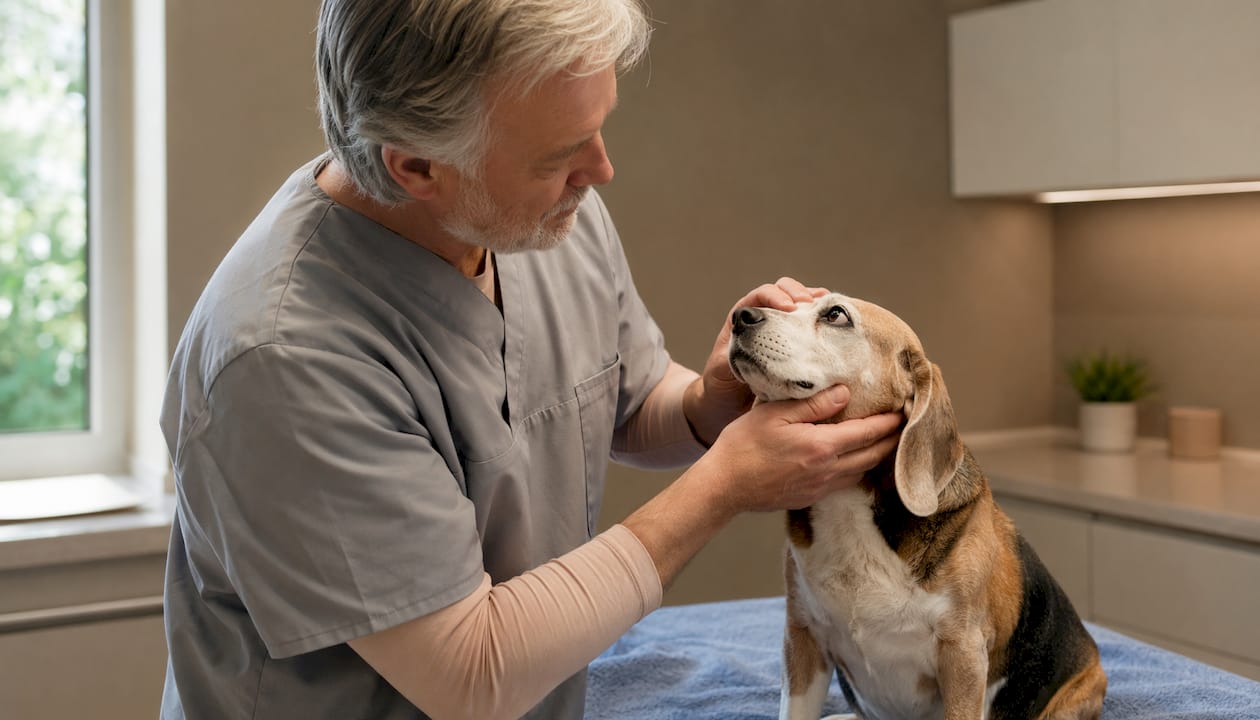
Lymph nodes are palpated for enlargement, which can signal infection or cancer. Auscultation of the heart and lungs detects murmurs, arrhythmias, and abnormal breath sounds. A new murmur in a senior dog typically triggers follow-up: NT-proBNP blood testing, chest X-rays, or an echocardiogram. Abdominal palpation checks organ size and any masses; an unexpected finding there usually means imaging the same day or within days.
Musculoskeletal and gait assessment is where many owners are surprised by what a vet notices. Watching a dog walk into the room, rise from a down position, and navigate a short hallway reveals asymmetry, stiffness, and compensatory postures that owners have normalized over months. Body condition scoring and muscle condition scoring are both recorded, since muscle wasting over the spine and hindquarters is an early sign of pain or metabolic disease.
Pro Tip: Record a 15–30 second video at home before the visit: your dog rising from sleep, walking down the hall, and climbing one step. Clinic floors are slippery and unfamiliar, so dogs often move differently there. A home video shows the vet what normal looks like for your dog — and what has changed.
Which lab tests make up the senior minimum database?
The standard minimum database for a senior dog includes a CBC, comprehensive chemistry panel, urinalysis, and thyroid testing when indicated. Together, these four tests screen for the conditions most likely to shorten a senior dog’s life.
| Test | What it screens for | When recommended |
|---|---|---|
| CBC (complete blood count) | Anemia, infection, platelet disorders, early bone marrow changes | Every senior visit |
| Comprehensive chemistry panel | Kidney and liver function, blood glucose, electrolytes, protein levels | Every senior visit |
| Urinalysis with specific gravity | Kidney concentrating ability, infection, protein loss, glucose spillage | Every senior visit |
| Thyroid (T4) | Hypothyroidism (common in middle-aged to senior dogs) | Annually or when signs present |
| SDMA | Early chronic kidney disease, often before creatinine rises | Annually; more often with kidney history |
| NT-proBNP | Cardiac stress marker; screens for early heart disease | When murmur or breed risk present |
| Fasting glucose | Diabetes screening | Annually or when signs present |
| Tick-borne/heartworm panel | Ehrlichia, Lyme, Anaplasma, heartworm | Per exposure risk and geography |
Urinalysis with specific gravity deserves particular attention. Urine specific gravity detects the kidney’s ability to concentrate urine before bloodwork values change, making it one of the earliest indicators of chronic kidney disease. SDMA rises even earlier than creatinine, so pairing both gives your vet a more complete picture.
The real power of this database is not any single result. Trend data across multiple visits reveals slow declines in organ function that a one-time snapshot misses entirely. A creatinine value of 1.6 mg/dL means something very different if it was 1.0 mg/dL eighteen months ago versus if it has been stable at 1.5 mg/dL for three years.
How do vets assess chronic pain and mobility in older dogs?
Dogs are wired to hide pain. A dog that appears comfortable at rest may be managing significant musculoskeletal discomfort, and early behavioral clues are often the only signal available before the problem becomes obvious.
Signs owners frequently miss or attribute to “just getting older”:
-
Hesitation at the bottom of stairs or reluctance to jump onto furniture
-
Shorter walks or self-limiting exercise
-
Slower to stand after lying down, especially in the morning
-
Shifting weight when standing; one leg slightly raised
-
Sleeping more, but restlessly; changing preferred sleep spots
-
Irritability when touched in certain areas
At the clinic, your vet uses range-of-motion checks on each joint, muscle condition scoring along the spine and hindquarters, and gait observation. Some practices use validated tools like the Canine Brief Pain Inventory or the Colorado State University pain scales to quantify pain and track it over time. A timed rise test, where the vet records how long it takes the dog to stand from a down position, gives an objective, repeatable number.
Results from pain assessment directly shape the management plan: NSAIDs, joint supplements, rehabilitation therapy, acupuncture, or environmental changes like orthopedic bedding and ramps.
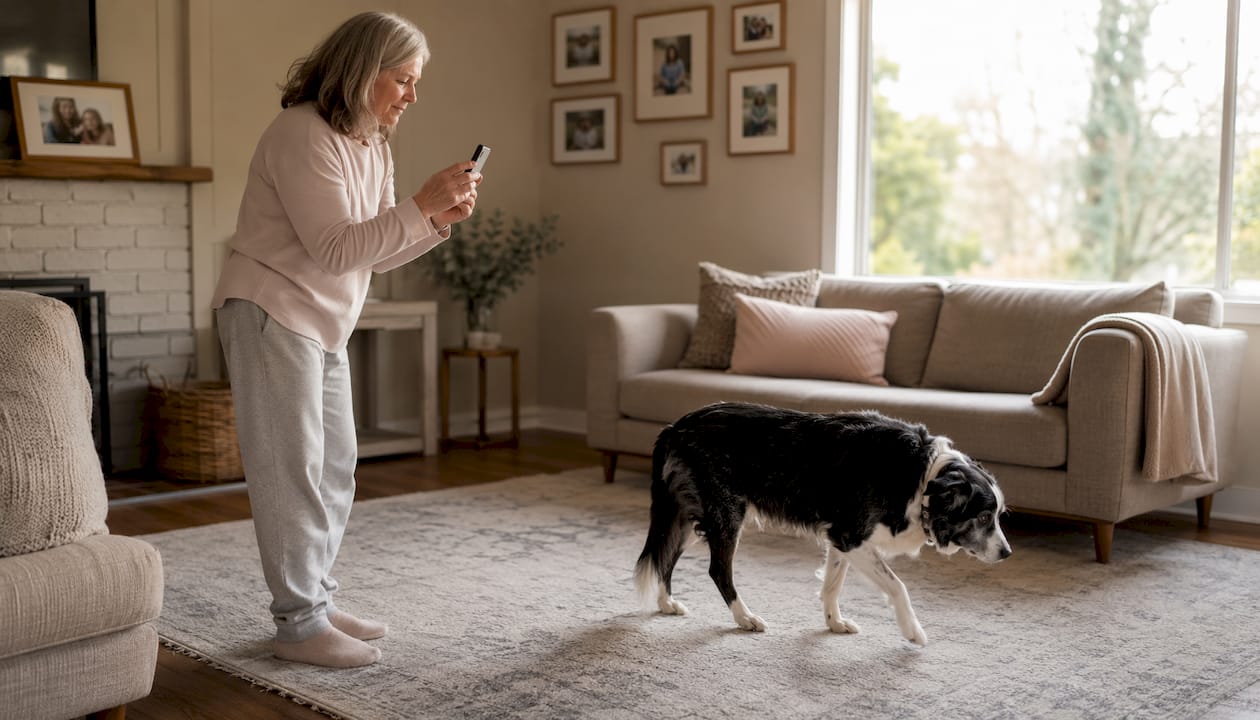
Pro Tip: Keep a simple pain log for two weeks before the visit. Note the time, what the dog was doing, and what you observed (e.g., “Tuesday 7 AM, took 12 seconds to stand, favored left rear”). Dates and times make the log immediately usable. Vague impressions like “seems stiffer lately” are much harder for a vet to act on.
How do vets screen for canine cognitive dysfunction?
Canine cognitive dysfunction (CCD) is the dog equivalent of dementia, and it affects a meaningful portion of dogs over age 11. The challenge is that early signs are subtle and easy to dismiss as normal aging.
Common signs to watch for:
-
Disorientation in familiar spaces (staring at walls, getting stuck in corners)
-
Sleep/wake cycle reversal: restless at night, sleeping heavily during the day
-
Reduced interest in play, greeting, or social interaction
-
House-soiling despite a reliable history of good training
-
Decreased activity and apparent confusion after waking
Vets typically screen using owner questionnaires and detailed behavior history. The key diagnostic task is separating CCD from other conditions that mimic it: pain, hypothyroidism, hypertension, and urinary tract infections can all cause behavioral changes in senior dogs. Ruling those out first is standard practice.
Questions to prepare before the visit:
-
When did you first notice a change, and what exactly did you see?
-
Has the dog ever seemed lost in a room it knows well?
-
Has sleep changed? Does the dog pace or vocalize at night?
-
Has greeting behavior toward family members changed?
-
Any new house-soiling incidents?
If CCD is suspected after ruling out medical causes, the management ladder starts with environmental enrichment, structured exercise, and dietary adjustments. Medical options exist and can slow progression. Neurologic imaging or specialist referral is reserved for atypical presentations or rapid progression.
How do vets discuss quality of life with caregivers?
Quality of life (QoL) assessment is one of the most important conversations in senior veterinary care, and it rarely gets enough time. The AVMA frames the senior visit as an opportunity to build a care plan around the family’s goals and budget, with decisions about intensive versus palliative care documented and revisited.
The core QoL elements a vet evaluates:
-
Pain control: Is the dog comfortable most of the day?
-
Mobility: Can the dog move independently to eat, drink, and eliminate?
-
Appetite and hydration: Is the dog eating and drinking adequately?
-
Hygiene: Can the dog stay clean, or does incontinence create skin problems?
-
Interaction and enjoyment: Does the dog still show interest in people, play, or activities it used to love?
Consider a dog diagnosed with moderate osteoarthritis and early kidney disease. Without a QoL conversation, the default might be maximum treatment for both conditions. But if the owner works long hours and the dog is highly anxious about clinic visits, a plan built around twice-daily oral pain medication, a ramp for the couch, and quarterly rechecks may deliver better daily quality of life than an aggressive protocol the owner cannot consistently execute.
Practical changes owners can make immediately:
-
Orthopedic or memory-foam bedding on the floor (no jumping required)
-
Non-slip rugs on hardwood floors near food, water, and sleeping areas
-
Raised food and water bowls for dogs with neck or shoulder arthritis
-
Shorter, more frequent walks instead of one long outing
-
Nightlights for dogs showing signs of cognitive decline
What additional screenings do vets commonly add for senior dogs?
Beyond the minimum database, several non-lab diagnostics add significant value in senior dogs. Your vet will recommend these based on physical exam findings, lab results, or breed predispositions.
-
Blood pressure measurement: Hypertension is common in senior dogs with kidney disease, hyperthyroidism, or Cushing’s disease. It causes retinal damage, cardiac changes, and neurologic signs, often silently. A single elevated reading is confirmed with repeat measurements before treatment.
-
Chest X-rays: Indicated when a heart murmur is detected, when coughing or labored breathing is present, or when a mass is suspected. X-rays show cardiac silhouette size, lung field changes, and rib or spine abnormalities.
-
Abdominal ultrasound: Digital X-rays and ultrasound are complementary. X-rays show density and silhouette; ultrasound provides real-time soft-tissue detail. Ultrasound is the preferred tool for evaluating organ architecture, adrenal glands, and abdominal masses.
-
Dental radiographs: Roughly half of dental disease in dogs lies below the gumline and is invisible without X-rays. Dental radiographs are taken under anesthesia during a professional cleaning and are the only way to assess tooth root health, bone loss, and resorptive lesions.
-
ECG and NT-proBNP: Ordered when a murmur is detected or when a breed with known cardiac risk (Cavalier King Charles Spaniels, Dobermans, Boxers) reaches middle age.
Pre-anesthetic bloodwork is required before any procedure involving sedation or general anesthesia, which is another reason the minimum database matters even when a dog appears healthy.
When should senior exams start, and how often?
The standard threshold is age 7 for most dogs. Large breeds (over 50 lbs) and giant breeds often cross into senior status at 5–6 years because they age faster and have shorter average lifespans.
The AAHA 2023 Senior Care Guidelines recommend semi-annual wellness exams for senior dogs, and the reasoning is straightforward: organ-function markers can shift meaningfully within six months. Waiting a full year means potentially missing a six-month window for early intervention.
-
Age 7+ (small/medium breeds): Twice-yearly exams with full minimum database annually; urinalysis at every visit
-
Age 5–6+ (large/giant breeds): Begin senior protocol earlier; twice-yearly exams from that point
-
Dogs with active chronic disease (kidney disease, diabetes, cardiac disease): Quarterly visits or as the condition requires
The “7-7-7” shorthand used in some practices refers to starting senior screening at age 7, visiting at least twice yearly (every 7 months at most), and tracking at least 7 core parameters across the minimum database. It is a memory aid, not a formal guideline, but it captures the spirit of the AAHA recommendation.
One year in a dog’s life equals roughly 5–7 human years. A once-yearly exam for a senior dog is the equivalent of a person seeing their doctor once every five to seven years.
What should you bring to a senior dog vet visit?
A two-week observation log is consistently the single highest-value item owners can bring. Clinicians report it changes diagnostic direction more often than any other owner-supplied information.
Bring to every senior visit:
-
Two-week observation log (dates, times, specific behaviors noted)
-
Complete medication and supplement list with exact doses and frequency
-
Photos of food bag labels (front and ingredient panel)
-
Recent weight history if you track it at home
-
Short videos of gait, rising from rest, or any concerning behavior
-
Written question list (you will forget half of them once you are in the room)
Track these specific items in your observation log: daily water intake relative to normal, appetite and any food refusal, sleep patterns and nighttime restlessness, mobility changes (stairs, jumping, rising), any house-training incidents, and mood or interaction changes.
Nutraceuticals and supplements deserve special attention. Many owners do not think to mention fish oil, joint supplements, or CBD products, but these can interact with prescription medications in clinically meaningful ways.
Pro Tip: Format your log as a simple table: date in column one, observation in column two, duration or frequency in column three. A vet can scan a well-formatted table in 30 seconds. A paragraph of narrative takes five minutes and still leaves gaps.
How does Cityanimalvet approach senior exams, and why does it matter?
The AAHA 2023 Senior Care Guidelines frame senior care as active health-span management, not passive monitoring of decline. “Age is not a disease” is the guideline’s explicit position. The AVMA reinforces this by recommending that senior visits include structured QoL discussions and documented care preferences. Cityanimalvet’s senior exam protocol is built around both frameworks.
| Guideline element | AAHA/AVMA recommendation | Cityanimalvet implementation |
|---|---|---|
| Exam frequency | Twice-yearly for age 7+ dogs | Semi-annual senior wellness visits |
| Minimum database | CBC, chemistry, urinalysis, thyroid | In-house lab with same-visit results |
| Pain assessment | Structured scoring, owner video | Mobility evaluation, validated pain scales |
| Imaging | X-ray/ultrasound when indicated | Digital radiography and ultrasound on-site |
| Stress reduction | Fear Free handling principles | Certified Fear Free approach at every visit |
| Access | N/A | House-call option for mobility-limited dogs |
Fear Free handling is not a marketing phrase at Cityanimalvet. It changes the diagnostic value of the exam. A dog that is panting, trembling, or bracing against the table has elevated cortisol, altered heart rate, and tense muscles, all of which affect exam findings. Reducing that stress produces more accurate auscultation, more cooperative palpation, and a dog that is willing to walk naturally for gait assessment.
For dogs that find clinic visits genuinely distressing, or for owners who cannot easily transport a large or mobility-limited senior dog, Cityanimalvet’s house-call service brings the exam to the dog. The home environment also gives the vet direct observation of the dog’s actual living conditions, flooring, stairs, and sleeping setup.
Pro Tip: Request the first or last appointment slot of the day. Waiting rooms are quieter, delays are shorter, and a dog that is already anxious does not have to sit next to other animals for 20 minutes before the exam even starts.
Key Takeaways
A senior dog wellness exam, done twice yearly starting at age 7, is the most reliable way to catch treatable disease before symptoms appear and keep your dog’s quality of life high for as long as possible.
| Point | Details |
|---|---|
| Start at age 7 (or earlier) | Large and giant breeds should begin senior screening at 5–6 years; most others at age 7. |
| Twice-yearly cadence | Semi-annual visits are AAHA-recommended; dogs with chronic disease may need quarterly checks. |
| Minimum database every visit | CBC, comprehensive chemistry, and urinalysis with specific gravity form the non-negotiable baseline. |
| Bring your observation log | A two-week log with dates and specific behaviors is the single highest-value item you can bring. |
| Cityanimalvet for Brooklyn seniors | Cityanimalvet offers Fear Free senior exams, in-house labs, digital imaging, and house calls for dogs who need them. |
Why twice-yearly visits change outcomes
The conventional wisdom in veterinary care used to be “annual exam, annual vaccines.” For a healthy two-year-old dog, that cadence is reasonable. For a ten-year-old dog with subclinical kidney disease, it is a missed opportunity every single time.
What actually shifts when you move to twice-yearly visits is not the exam itself. It is the trend data. A single creatinine value tells you where a dog is today. Six data points over three years tell you whether the kidneys are stable, slowly declining, or accelerating toward a crisis. That trajectory is what drives treatment decisions, dietary changes, and the timing of specialist referrals. Without it, every visit starts from scratch.
The other thing owners underestimate is how much dogs mask illness. A dog that greets you enthusiastically, eats well, and plays in the yard can be managing significant pain or early organ failure. Dogs evolved to hide vulnerability. That instinct does not disappear in a comfortable suburban home. Scheduled asymptomatic screening is the only reliable counter to it.
“Age is not a disease” is worth taking literally. The goal is not to slow the inevitable. It is to identify what is actually happening, separate normal aging from treatable disease, and give owners real choices rather than emergency decisions.
Senior wellness exams at Cityanimalvet in Brooklyn
Senior dog owners in Brooklyn have a specific problem: getting a large, arthritic, or anxious dog to a clinic is genuinely hard. Cityanimalvet solves that with a house-call option that brings the full senior exam to your home, including history-taking, physical assessment, and coordination of lab work.
For dogs that do come in, the Fear Free approach at Cityanimalvet means the exam room is set up to reduce stress from the moment your dog walks in. In-house digital radiography, ultrasound, and same-visit lab results mean you leave with answers, not a week of waiting. The first senior visit runs 45–60 minutes to establish a proper baseline. Subsequent visits are shorter because the groundwork is already done.
To book a senior wellness exam or arrange a house call, contact Cityanimalvet directly. Bring your observation log, your medication list, and your questions. That combination, paired with a thorough exam and baseline labs, is where early detection actually happens.
Useful sources and further reading
The following sources informed this article’s recommendations on screening cadence, minimum database composition, pain assessment tools, and Fear Free handling.
-
2023 AAHA Senior Care Guidelines for Dogs and Cats — The primary clinical authority for senior exam frequency, minimum database recommendations, pain assessment protocols, and the health-span management framework. Required reading for any veterinary team managing senior patients.
-
AVMA Senior Pets Resource — The American Veterinary Medical Association’s owner-facing guidance on senior pet care, including shared decision-making and QoL discussions.
-
Purdue University College of Veterinary Medicine — Senior Pet Wellness Exams — Clear clinical overview of age-associated conditions and the rationale for routine screening.
-
Penn Vet Canine Brief Pain Inventory (CBPI) — Validated owner-completed pain assessment tool used in clinical research and practice to quantify chronic pain in dogs.
-
Colorado State University Veterinary Pain Scales — Standardized pain scoring tools used by veterinary teams to objectively assess and track acute and chronic pain.
-
AAHA Dental Guidelines — Authoritative guidance on dental disease grading, the role of dental radiographs, and anesthesia protocols for dental procedures in dogs.