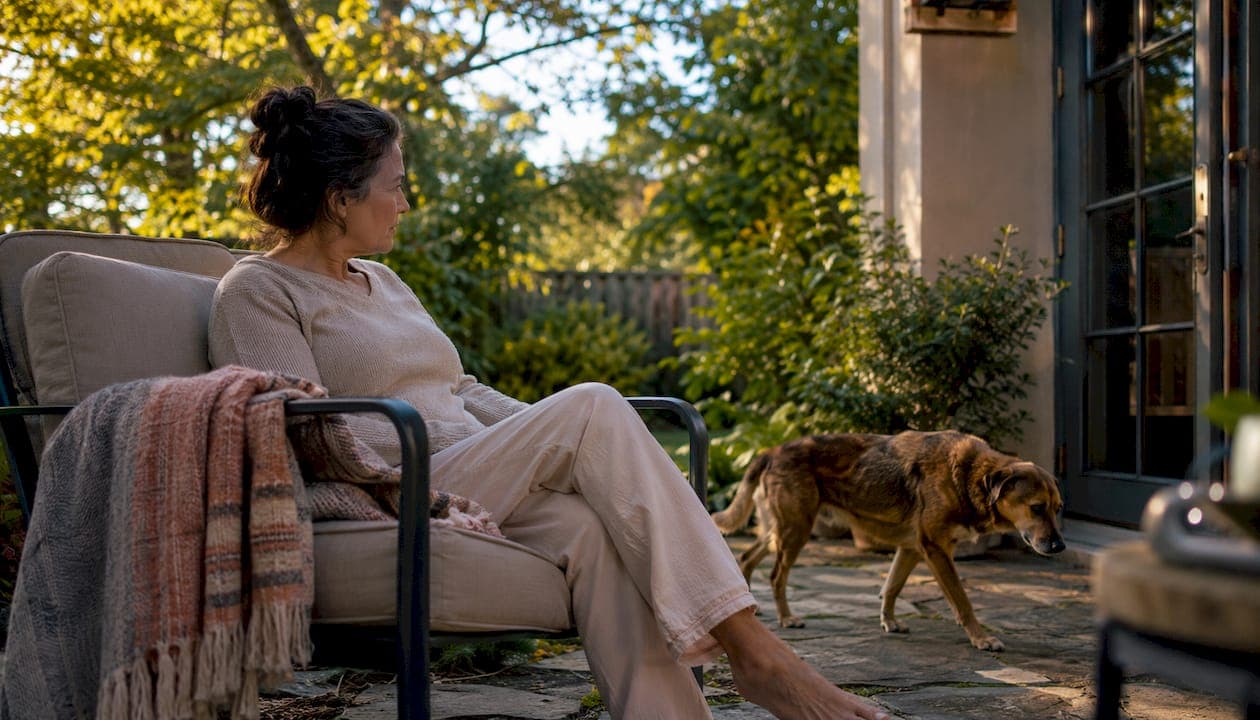
Separation anxiety in dogs is a diagnosable behavioral disorder in which a dog experiences genuine distress when separated from its primary attachment figure. It is not stubbornness, spite, or poor training. Right now, the three most useful things you can do: keep your departures and returns completely calm and low-key, set up a camera to record what your dog actually does in the first 20 minutes after you leave, and schedule a veterinary consult if the behavior is severe or causing injury. Do not punish your dog for what you find on that footage, and do not try to "flood" the fear by forcing long absences. City Animal Veterinary Center, a Fear Free clinic in Brooklyn, NY, offers behavioral consultations and house-call assessments specifically designed for dogs with anxiety. FDA-approved medications such as Reconcile (fluoxetine) and Clomicalm (clomipramine) exist and are effective adjuncts to behavioral treatment when a veterinarian determines they are appropriate.
Table of Contents
- What does separation anxiety in dogs actually look like?
- How do veterinarians diagnose separation anxiety?
- Why do dogs develop separation anxiety?
- What can you do right now to reduce your dog's distress?
- How does behavioral treatment for separation anxiety work?
- Which tools and environment changes actually help?
- What medications are available for separation anxiety in dogs?
- When should you call a veterinarian, behaviorist, or trainer?
- How do you prevent separation anxiety in puppies?
- How long does treatment take, and how long can you safely leave your dog?
- How City Animal Veterinary Center approaches separation anxiety
- Key Takeaways
- What we think owners get wrong about separation anxiety
- Veterinary care for separation anxiety in Brooklyn, NY
- Trusted sources and further reading
What does separation anxiety in dogs actually look like?
The behaviors that define true separation anxiety are specific, intense, and almost always tied to the moment of your departure or your absence. Boredom looks different. Knowing the difference saves you months of misdirected effort.
Common signs to watch for:
- Persistent vocalization: Howling, barking, or whining that begins within minutes of you leaving and does not stop. A neighbor complaint that your dog "never stops" while you're gone is a meaningful data point.
- Destructive behavior at exits: Chewing or scratching focused on doors, door frames, windows, and other escape routes. Destruction scattered randomly around the house is more consistent with boredom.
- House soiling when left alone: A dog that is reliably housetrained at home but eliminates indoors only during absences. This is a stress response, not a lapse in training.
- Pacing and restlessness: Repetitive movement patterns captured on video that show the dog cannot settle.
- Salivation and drooling: Excessive drooling during absences, sometimes visible as wet patches on bedding or the floor.
- Inappetence: Refusing food, treats, or puzzle toys left out during your absence, even favorites.
- Pre-departure signs: Following you from room to room, trembling, or pacing as soon as you pick up your keys, put on shoes, or reach for your coat.
The timing and location of these signs of dog anxiety matter enormously for diagnosis. Separation anxiety behaviors cluster around your absence. Territorial barking happens at the window when a stranger walks by. Confinement anxiety shows up specifically when a dog is crated, not necessarily when left loose. Incomplete housetraining produces accidents at various times, not only when you're gone.
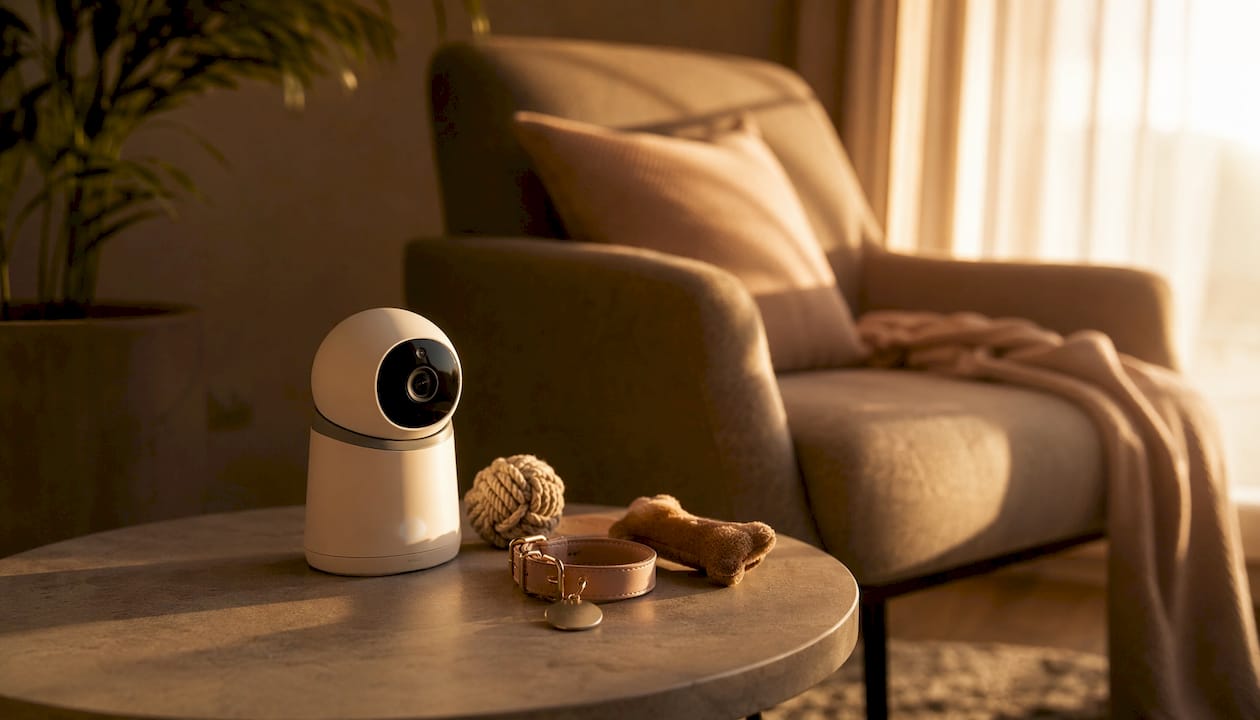
Record the evidence. Set up a phone or a pet camera before you leave and let it run for at least 30 minutes. Video recordings often capture the most telling behaviors in the first few minutes after departure, and that footage gives your veterinarian objective data rather than your best recollection.
How do veterinarians diagnose separation anxiety?
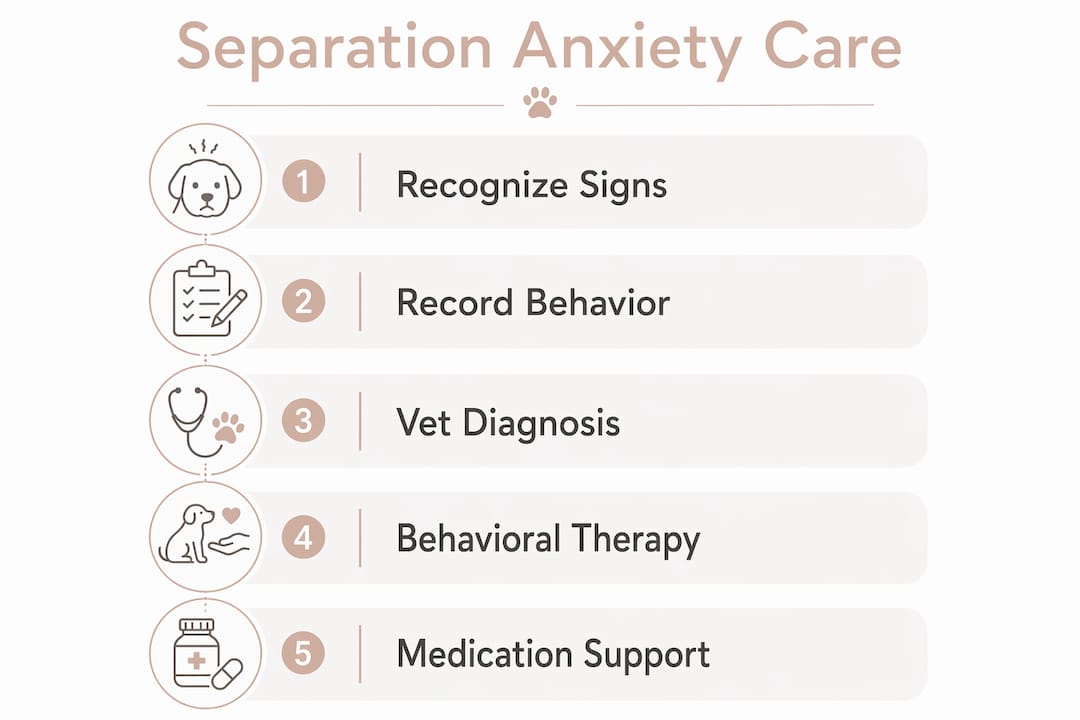
Diagnosis is built on behavioral history, video evidence, and ruling out medical causes. There is no blood test for separation anxiety. A good consult combines what you tell the vet, what the camera shows, and what a physical exam and lab work can exclude.
Medical conditions to rule out first
Several medical problems can look like separation anxiety or make it worse. Pain from arthritis or an injury can cause restlessness and vocalization. Gastrointestinal disease can cause house soiling. Urinary tract infections or bladder conditions produce accidents that have nothing to do with anxiety. In older dogs, cognitive dysfunction syndrome (canine dementia) can cause disorientation, vocalization, and house soiling that mimics separation-related distress. Your vet will want a physical exam and, depending on your dog's age and history, basic bloodwork and a urinalysis before attributing the behavior to anxiety alone.
Behavioral differentials
Separation anxiety may present alongside other anxiety types or behavioral problems, not instead of them. Noise phobia can trigger the same destructive and eliminative behaviors, but the trigger is a sound, not your absence. A dog that only panics during thunderstorms or fireworks, even when you're home, is showing noise phobia. Confinement anxiety is specific to being enclosed and may resolve when the dog has access to more space. These distinctions change the treatment plan significantly.
What to bring to your vet appointment
Come prepared with: a video of your dog during absences (even a short clip helps), a written timeline of when behaviors occur and how long they last, a list of any recent household changes (new baby, move, schedule shift, loss of another pet), your dog's current medications and supplements, and a brief history of any prior training attempts. The more specific you can be, the faster the consult moves.
See your vet now, not next week, if your dog is injuring itself trying to escape, has blood in urine or stool, is showing signs of dehydration, or is refusing food for multiple consecutive days.
Why do dogs develop separation anxiety?
Understanding why it happened does not assign blame. It does help you and your vet choose the right approach, because a dog that developed anxiety after a traumatic rehoming needs a different starting point than a puppy that never learned to be alone.
Common risk factors:
- Changes in household routine: A move, a divorce, the death of a family member or another pet, or a new baby can destabilize a dog's sense of predictability.
- Sudden increases in owner presence followed by a return to normal: The remote-work-to-office transition is a textbook trigger. Dogs that spent months with their owners home all day and then were suddenly left alone for eight hours showed a measurable spike in separation-related complaints.
- Lack of early alone-time practice: Dogs that were never gradually taught to be comfortable alone during puppyhood are more vulnerable.
- Genetics and temperament: Some breeds and individual dogs are simply more prone to strong attachment and anxiety. This is not a character flaw.
- Traumatic separation events: Shelter intake, repeated rehoming, or an extended hospitalization can leave lasting anxiety around being left.
- Age-related cognitive decline: Senior dogs can develop separation-related distress as a symptom of cognitive dysfunction, even with no prior history of anxiety.
Many dogs are deeply attached to their owners without having a disorder. A dog that follows you to the bathroom and greets you enthusiastically is not automatically anxious. Real separation anxiety is distinguished by the distress response when alone, not by the strength of the bond when you're present. Understanding the cause shapes whether the priority is prevention, retraining, or medication as an adjunct to behavior work.
What can you do right now to reduce your dog's distress?
Before a formal behavior modification program begins, a few immediate changes reduce harm and set the stage for training.
Keep departures and returns low-key
Long, emotional goodbyes raise your dog's arousal before you've even left. A calm, matter-of-fact departure, no extended petting, no drawn-out "be good," gives your dog less to react to. The same applies when you return: wait until your dog has settled before giving attention. This is not about being cold. It is about not accidentally teaching your dog that your departure and return are the most emotionally significant events of the day.
Create a safe, dog-proofed space
A crate can be a genuine comfort for dogs that have been properly introduced to one. For a dog already in panic mode, however, a crate can worsen escape attempts and cause injury. If your dog has not been crate-trained, a dog-proofed room with familiar bedding, water, and some of your worn clothing is a safer starting point. Match the containment to the dog's current training level, not to what you wish it were.
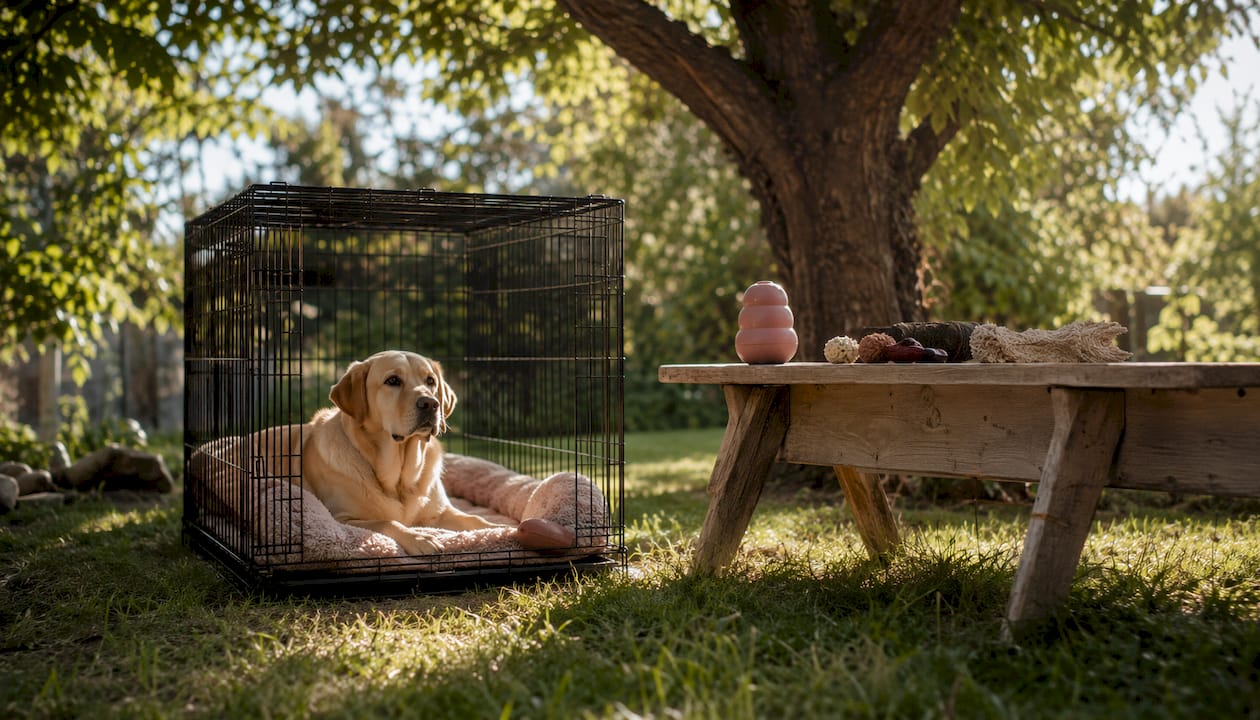
Enrichment helps, but only when the dog is calm enough to engage with it. A frozen Kong stuffed with peanut butter or wet food, a snuffle mat, or a long-lasting chew can occupy a mildly anxious dog. A dog in full panic will ignore all of it. Supervise new chews until you know your dog handles them safely, and never leave rawhide or anything with a choking risk unattended.
What not to do
Punishment worsens anxiety and can strengthen the negative emotional response your dog already has. Scolding a dog for destruction it did while you were gone accomplishes nothing except making the dog more anxious about your return. Flooding, which means forcing your dog to endure long absences until it "gives up," carries a high risk of psychological harm and is not recommended by any credible behavioral authority. Do not rush the training steps described below. Progress that sticks is progress at the dog's pace.
How does behavioral treatment for separation anxiety work?
Desensitization paired with counterconditioning is the core treatment for separation anxiety in dogs, and medication is an adjunct that lowers the dog's anxiety threshold enough to make behavioral work possible. Neither works as well alone.
Here is a stepwise protocol you can begin at home, or bring to a certified trainer:
-
Foundation: teach a settle cue. Before working on absences, teach your dog to settle on a mat or bed on cue, rewarded with high-value treats. This gives the dog a portable, positive safe place and builds the emotional self-control that desensitization requires. Practice this with you present, in multiple rooms, until the behavior is reliable.
-
Pre-departure desensitization. If your dog reacts to departure cues (keys, shoes, coat), practice picking them up and putting them down repeatedly without leaving. The goal is to drain those cues of their predictive power. Do this dozens of times over several days before moving to actual departures.
-
Micro-departures: 1–10 seconds. Step outside, close the door, and immediately return. No fanfare. Reward calm behavior on your return. Repeat many times in a single session. The dog should show relaxed body language: loose posture, no vocalization, no frantic greeting.
-
Gradual duration increases. Once your dog is consistently calm at 10 seconds, move to 30 seconds, then 1 minute, then 5 minutes, then 10 minutes. Do not jump steps. A sample progression might look like: 10s → 30s → 1m → 2m → 5m → 10m, with multiple successful repetitions at each level before advancing.
-
Intersperse short and long departures. Do not make every session a linear climb. Mix in shorter departures between longer ones so the dog never knows exactly how long you'll be gone. This prevents anticipatory anxiety from building.
-
Progress criteria. Before increasing duration, your dog should show calm body language throughout the absence and no repeated vocalization. If you see panting, pacing, whining, or frantic behavior on your camera, you have moved too fast. Back up two steps.
Common pitfalls: Moving too fast is the most frequent mistake. Owners feel guilty about the process and rush it, which pushes the dog over its threshold and undoes days of work. Inadvertently reinforcing attention-seeking (giving affection when the dog nudges or whines) teaches the dog that anxiety gets results. Misreading subtle anxiety signs, a slight tension in the body, a lip lick, a yawn, as "fine" is where video review becomes indispensable.
Pro Tip: Rely on your camera footage, not your memory, to judge whether your dog is ready to progress. Subtle anxiety signals are easy to miss in the moment but obvious on video. If you're unsure, stay at the current duration for another week.
Which tools and environment changes actually help?
Tools are supports, not solutions. Used correctly, they reduce baseline stress and make behavioral work more effective. Used as substitutes for training, they create new dependencies without fixing the underlying problem.
Crates and safe spaces
A crate works well for dogs that have been introduced to it gradually and genuinely use it as a den. For those dogs, the crate reduces the risk of destructive behavior and provides a predictable, enclosed space that feels safe. For a dog that has not been crate-trained, or one that is already attempting to escape, forcing crate use can escalate panic and cause physical injury. Read your dog's response honestly.
Puzzle toys and food enrichment
A Kong stuffed with wet food and frozen overnight, a Licki Mat spread with plain yogurt, or a snuffle mat packed with kibble can meaningfully occupy a mildly anxious dog. The key word is "mildly." These tools work best for dogs at the lower end of the anxiety spectrum or during the early stages of desensitization when absences are very short. A dog in full panic will not touch them. Enrichment reduces stress; it does not override it.
Background noise
Leaving a radio or television on at low volume can soften the silence that some dogs find distressing. There is no single "best" station, but calm speech or classical music tends to work better than high-energy programming. This is a low-effort, low-risk addition to any management plan.
Adaptil (dog-appeasing pheromone)
Adaptil is a synthetic version of the pheromone mother dogs produce to calm their puppies. It is available as a plug-in diffuser, a collar, or a spray. Owners commonly use it as part of a broader management plan, and it is widely recommended by veterinarians as a calming technique for dogs with anxiety. It is not a standalone treatment and will not resolve separation anxiety on its own, but it can reduce baseline arousal enough to make other interventions more effective. It carries no known drug interactions, which makes it a reasonable addition while waiting for behavioral training to take hold or for medications to reach therapeutic levels.
Cameras and monitoring technology
A pet camera with two-way audio serves two purposes: it gives you objective behavioral data for your vet, and it lets you monitor whether your dog is coping during training sessions. Some owners find that speaking through the camera's speaker calms their dog briefly; others find it increases arousal. Test it and watch the footage to see which effect it has on your dog. Do not rely on remote interaction as a substitute for the desensitization work.
Consistent daily scheduling, including regular meals, walks, and rest periods, reduces baseline anxiety and improves how well all of these tools perform.
What medications are available for separation anxiety in dogs?
Medication lowers your dog's anxiety threshold so that behavioral work can actually reach it. It is not a cure, and stopping medication without completing the behavioral program almost always results in relapse. Every medication decision requires veterinary oversight, including baseline bloodwork and a physical exam.
| Medication | Drug class | FDA-approved for canine SA? | Typical role |
|---|---|---|---|
| Reconcile (fluoxetine) | SSRI | Yes | Daily, chronic use; takes several weeks to reach full effect |
| Clomicalm / CaniQuell (clomipramine) | TCA | Yes | Daily, chronic use; takes several weeks to reach full effect |
| Trazodone | SARI | No (used off-label) | PRN or adjunct; faster onset, used situationally |
| Gabapentin | Anticonvulsant / analgesic | No (used off-label) | PRN adjunct; useful for dogs with comorbid pain or noise phobia |
| Clonidine | Alpha-2 agonist | No (used off-label) | PRN adjunct; situational anxiety management |
Reconcile and Clomicalm are the only FDA-approved medications specifically for canine separation anxiety in the United States. Dosing for both is individualized by the veterinarian based on the dog's weight and health status. Neither produces results overnight. Owners starting an SSRI or TCA should expect several weeks before seeing meaningful behavioral change, which is why the behavioral modification program must run in parallel from day one.
Quicker-onset PRN medications such as trazodone, gabapentin, and clonidine are used situationally, often while waiting for the slower-onset medications to take effect, or for predictable high-stress events like a move or a schedule change. Practitioners commonly advise administering PRN medications up to two hours before departure to allow adequate time for the medication to reach effective blood levels, since onset can be slower than owners expect.
What your vet will monitor:
- Baseline bloodwork before starting any chronic medication
- Weight and appetite changes in the first weeks
- Behavioral response at follow-up appointments (typically 4–6 weeks after starting)
- Liver and kidney function for dogs on long-term medication
Medication paired with behavior modification consistently outperforms either approach alone. If your dog's anxiety is severe enough that it cannot engage with even the shortest desensitization exercises, that is a strong signal to discuss medication with your veterinarian before continuing the training program.
When should you call a veterinarian, behaviorist, or trainer?
Start with your veterinarian. Medical causes must be ruled out before any behavioral label sticks, and your vet is the only professional who can prescribe medication if it is needed. A general practice vet can handle most mild-to-moderate cases with a behavioral history, a physical exam, and a referral to a trainer for the behavior modification work.
Escalate to a board-certified veterinary behaviorist (DACVB) for cases that are severe, refractory to initial treatment, involve self-injury, or have significant comorbid conditions like noise phobia or aggression. A Diplomate of the American College of Veterinary Behaviorists has completed a residency in behavioral medicine and can manage complex pharmacological plans alongside behavior modification. To find one, search the American College of Veterinary Behaviorists directory.
Work with a certified trainer for the structured at-home desensitization program. Look for credentials: Certified Professional Dog Trainer (CPDT-KSA), Certified Behavior Consultant Canine (CBCC-KA), or Certified Applied Animal Behaviorist (CAAB). These credentials indicate formal education in learning theory and behavior modification, not just experience with obedient dogs.
The decision tree is straightforward: vet first for medical screening and medication discussion, then a certified trainer for the behavioral protocol, then a veterinary behaviorist if the case is not responding or is high-risk. An initial behavior consult typically includes a home or video assessment, a written behavior modification plan, a medication plan if indicated, and a follow-up schedule to track progress.
How do you prevent separation anxiety in puppies?
Prevention is far easier than treatment. The window for shaping a puppy's comfort with solitude is short, and the habits you build in the first few months matter.
Prevention strategies:
- Practice alone time from day one. Even 10–15 minutes of supervised separation daily teaches puppies that being alone is normal, not alarming.
- Build a predictable daily routine. Meals, walks, play, and rest at consistent times give puppies a sense of control over their environment. Predictability and consistent daily scheduling are among the most effective tools for reducing baseline anxiety.
- Introduce the crate as a positive den. Feed meals in the crate, toss treats inside, and let the puppy choose to enter before you ever close the door. A crate that the puppy associates with good things becomes a genuine safe space.
- Desensitize departure cues early. Pick up your keys, put on your shoes, and then sit back down. Do this repeatedly so those cues never become reliable predictors of your absence.
- Avoid reinforcing clingy behavior. A puppy that learns that following you everywhere results in constant attention is a puppy that has not learned to self-soothe. Reward calm, independent behavior.
- Teach a "settle" cue. A puppy that knows how to relax on a mat on cue has a skill it can use for life.
Sample puppy schedule (8–12 weeks):
- 7:00 AM: Morning meal, short outdoor potty break
- 7:30 AM: Play and socialization
- 8:30 AM: Crate rest with a frozen Kong (15–20 minutes, owner nearby)
- 9:00 AM: Short training session (5 minutes), settle cue practice
- 10:00 AM: Potty break, then crate rest (30 minutes, owner in another room)
- 12:00 PM: Midday meal, outdoor time
- 1:00 PM: Nap in crate (45–60 minutes)
- 3:00 PM: Play, enrichment, socialization
- 5:00 PM: Evening meal, outdoor time
- 6:00 PM: Calm settle practice, brief alone time (10–15 minutes)
- 9:00 PM: Final potty break, bedtime in crate
Do: teach "settle," create positive associations with the crate, and vary your departure cues from the start.
Don't: spend every waking moment with your puppy during the first weeks, use erratic feeding or play schedules, or wait until a problem appears before practicing alone time.
How long does treatment take, and how long can you safely leave your dog?
Mild cases with consistent daily work can show meaningful improvement in a few weeks. Moderate cases typically take two to four months of structured desensitization before the dog can tolerate normal working-day absences. Severe cases often require six months or more, and most need medication alongside behavioral work to make progress at all.
Realistic milestones look like this: in the early weeks, a dog should be tolerating brief absences without vocalization or visible distress. Over the course of several weeks with consistent work, mild cases may tolerate longer absences while moderate cases progress more slowly. Progress is not linear. Setbacks happen, especially after schedule disruptions, and building in maintenance sessions after initial gains improves long-term durability.
On safe alone time: veterinary guidance commonly recommends that dogs not be left alone for more than a limit of a few hours. Puppies need significantly shorter intervals, short intervals appropriate to the puppy's age. Dogs with active separation anxiety can become distressed within minutes of your departure, which is why video monitoring and a daily behavior log are not optional extras. They are how you know whether your training is working or whether you need to slow down.
Behavior change is rarely a straight line. Plan for setbacks and build in periodic refresher sessions after the dog has reached its goal duration. Long-term follow-up, even brief monthly check-ins with a trainer or vet, improves how well gains hold over time.
How City Animal Veterinary Center approaches separation anxiety
City Animal Veterinary Center uses Fear Free exam techniques and a stepwise behavioral workflow that combines medical screening, individualized behavior modification planning, and medication management where appropriate. The Fear Free approach matters here specifically because anxious dogs often find the veterinary visit itself distressing. Reducing that stress means your dog arrives at the consult in a state where it can actually be assessed accurately, not in a panic triggered by the exam room.
What the clinic offers for dogs with separation anxiety:
- Behavioral consultations to assess history, triggers, and current severity
- Home and house-call assessments for dogs that are too anxious to travel or for owners who want the evaluation done in the dog's actual environment
- Fear Free exams that minimize procedural stress
- Medication management, including discussion of FDA-approved options and off-label adjuncts
- Follow-up scheduling to track behavioral progress and adjust medication if needed
What to bring to your first appointment:
- Video footage of your dog during absences (even 10–15 minutes of footage is useful)
- A written behavior timeline: when behaviors started, what triggers them, how long they last
- A list of current medications, supplements, and any prior training attempts
- Notes on recent household changes
To request an appointment at City Animal Veterinary Center, contact the clinic directly. The first visit is a non-emergency behavioral consult, not a crisis intervention, so scheduling in advance and arriving with your documentation makes the time as productive as possible.
Key Takeaways
Separation anxiety in dogs is a treatable behavioral disorder, and the most effective approach combines systematic desensitization with veterinary oversight and, when needed, FDA-approved medication.
| Point | Details |
|---|---|
| Record video first | Capture your dog's behavior in the first 30 minutes after departure — this footage is the most useful diagnostic tool you can bring to a vet. |
| Start micro-departures | Begin with 1–10 second absences and increase duration only when your dog shows calm body language throughout. |
| Medication is an adjunct | Reconcile (fluoxetine) and Clomicalm (clomipramine) are FDA-approved for canine separation anxiety and work best paired with behavioral training, not instead of it. |
| Four-hour limit | Veterinary guidance recommends dogs not be left alone for more than about four hours; anxious dogs can show distress within minutes. |
| City Animal Veterinary Center | Offers behavioral consultations, Fear Free exams, and house-call assessments in Brooklyn, NY for dogs with separation anxiety. |
What we think owners get wrong about separation anxiety
Most owners who come in with a separation-anxious dog have already tried something. They've left the TV on, bought a calming collar, tried a crate, tried no crate, tried ignoring the behavior. None of it worked, and they've started to wonder if their dog is just broken.
Here's what the evidence actually shows: the single biggest predictor of failure is moving through the desensitization program too fast. Not the wrong tool. Not the wrong breed. Not insufficient love. Speed. Owners feel guilty about the process, they feel pressure to get back to normal life, and they push the dog past its threshold before it has consolidated the previous step. The anxiety spikes, the owner backs off entirely, and the cycle resets.
The other thing owners consistently underestimate is how long the SSRIs take to work. Four to six weeks is not a rough estimate. It is the actual pharmacological timeline. Owners who start fluoxetine and expect a calmer dog by week two are going to be disappointed, and some stop the medication before it has had a chance to do anything. The behavioral work has to run in parallel from day one, not after the medication "kicks in."
What actually works is boring and slow: tiny steps, consistent repetition, objective video review, and a veterinarian who can adjust the plan when it stalls. City Animal Veterinary Center's house-call option is genuinely useful here because it lets the assessment happen in the environment where the anxiety actually occurs, not in a clinic that introduces its own stressors. If you're not sure where to start, that first consult is the right move.
Veterinary care for separation anxiety in Brooklyn, NY
Dogs with separation anxiety need a team, not just a training video. City Animal Veterinary Center offers a practical starting point for Brooklyn pet owners: behavioral consultations that include a full behavioral history and medical screening, Fear Free exams that reduce the stress of the visit itself, and house-call assessments for dogs that do better in their home environment.
The clinic's services relevant to separation anxiety include behavioral consultations, medication management (including FDA-approved options), Fear Free exams, home visits, and follow-up scheduling to track progress over time. This is not emergency care. If your dog is actively injuring itself or in medical distress, contact an emergency veterinary clinic immediately.
For everything else, including a dog that is destroying your door frames, eliminating indoors, or howling all day while you're at work, a scheduled behavioral consult is the right first step. Book an appointment at City Animal Veterinary Center and come prepared with your video footage and behavior timeline. The first visit is a conversation, not a judgment.
This article is general information, not a substitute for professional veterinary advice. Confirm current treatment recommendations with a licensed veterinarian for your dog's specific situation.
Trusted sources and further reading
- Cornell University College of Veterinary Medicine — Anxious Behavior in Dogs: A clear, evidence-based overview of canine anxiety from a leading veterinary institution, including practical guidance on desensitization and when to seek professional help.
- Today's Veterinary Practice — Separation Anxiety Algorithm: The clinical algorithm used by veterinary practitioners for diagnosing and treating canine separation anxiety, including FDA-approved medications and PRN adjuncts.
- PetMD — Dog Anxiety: Signs, Causes, and Treatment: A veterinarian-reviewed overview of anxiety in dogs covering signs, causes, and treatment options including behavioral and pharmacological approaches.
- AKC — Expert Tips on How to Calm an Anxious Dog: Practical, trainer-informed guidance on desensitization, counterconditioning, and building a settle cue for anxious dogs.
- RSPCA — Separation Related Behaviour in Dogs: UK-based veterinary welfare guidance on separation-related behavior, including safe alone-time recommendations and management strategies.
- City Animal Veterinary Center: Brooklyn, NY clinic offering Fear Free behavioral consultations, house-call assessments, and medication management for dogs with separation anxiety.