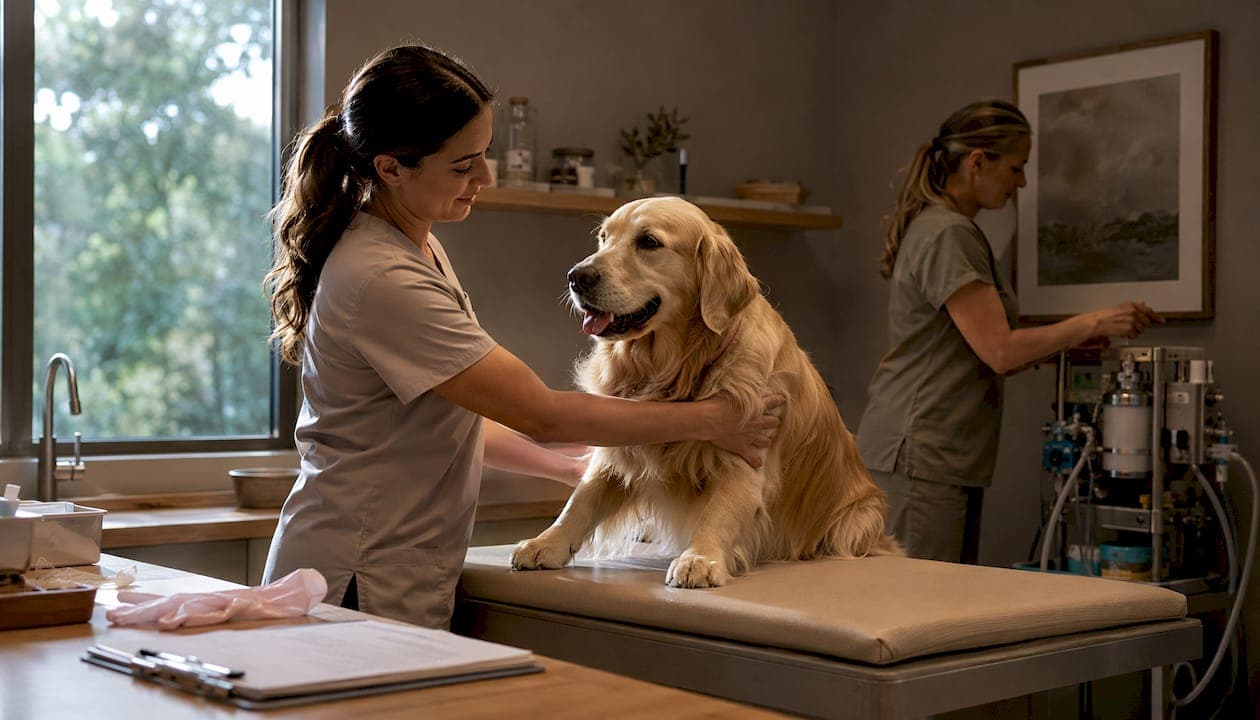
A dog tooth extraction is the surgical removal of a diseased, fractured, or infected tooth to stop pain and eliminate infection. Most procedures cost somewhere in a wide range depending on how many teeth are involved, whether the surgery is simple or complex, and where you live. Recovery follows a predictable pattern:
-
First 24–48 hours: Grogginess from anesthesia, soft food only, minimal activity
-
Days 2–7: Most dogs regain normal appetite and energy; pain medication continues
-
Days 7–14: Oral tissue heals; sutures dissolve or are removed
-
Beyond 2 weeks: Full bone remodeling takes longer, but your dog is typically comfortable
General anesthesia is always required. There is no safe way to perform a canine tooth removal on a fully awake, moving dog. The good news: most dogs feel better after extraction than they did before it, often within days.
Pro Tip: Ask your vet whether dental X-rays are included in the quoted price. They should be — and if they’re not, that’s a gap in the care plan, not a cost savings.
Table of Contents
-
How City Animal Veterinary Center approaches dental extractions
-
Dental care at City Animal Veterinary Center: book a visit or house call
What does a dog tooth extraction actually involve?
Extraction means the controlled removal of a tooth, its root, and any surrounding diseased tissue. The goal is to eliminate the source of pain and infection, not just the visible part of the tooth.
Understanding a bit of anatomy helps here. Each tooth has a crown (the part you see) and one or more roots anchored in the jawbone by a structure called the periodontal ligament. Single-rooted teeth like incisors are simpler to remove. Multi-rooted teeth like molars and large premolars require more work because each root must be separated and removed individually. The size and depth of those roots determine whether a simple or surgical approach is needed.
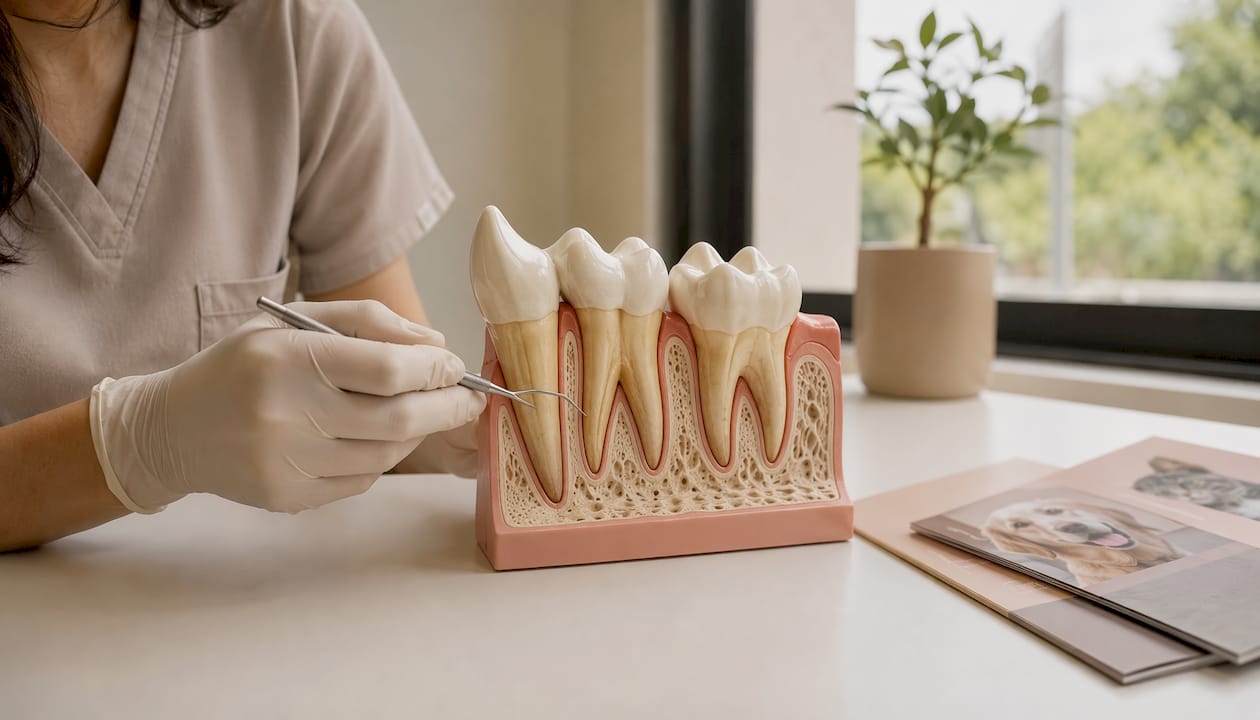
A dental cleaning and an extraction are not the same thing. Cleaning removes plaque and tartar from tooth surfaces. Extraction removes the tooth entirely, roots and all. Some dogs need both during the same anesthetic event.
Pro Tip: Dental radiographs change the surgical plan more often than owners expect. A tooth that looks stable on the surface can have a fractured root or severe bone loss underneath. X-rays taken before and during the procedure are standard of care, not an optional add-on.
When does a dog actually need a tooth removed?
The short answer: when a tooth is causing pain or infection that cannot be resolved any other way. The primary clinical indications include:
-
Advanced periodontal disease with significant bone loss around the root
-
Fractured teeth with pulp exposure, which leads to bacterial infection and pain
-
Root abscesses or periapical infections visible on X-ray
-
Retained baby teeth (deciduous teeth that don’t fall out when permanent teeth erupt)
-
Severe tooth resorption where the root structure is being destroyed
-
Tumors or cysts involving the tooth or surrounding bone
-
Traumatic malocclusion where a tooth is injuring soft tissue
At home, you might notice bad breath that doesn’t improve with brushing, drooling, facial swelling below one eye (a classic sign of a carnassial tooth abscess), reluctance to chew on one side, or pawing at the mouth. Some dogs show almost no outward signs at all, which is why annual dental exams matter.
Leaving a fractured or infected tooth untreated carries real consequences. Chronic oral bacteria don’t stay local. Untreated dental disease can progress to tooth root abscesses and is linked to systemic infection risks affecting the heart, kidneys, and liver. Extraction removes the source of that infection entirely.
Diagnosis is confirmed through a full oral exam under anesthesia, intraoral dental radiographs, and pre-op bloodwork. You cannot fully assess a dog’s mouth while it’s awake and moving.
Urgent signs that need same-day attention: facial swelling spreading toward the eye or throat, continuous bleeding from the mouth, or a dog that suddenly refuses to open its jaw. These warrant an emergency call, not a scheduled appointment.
How the procedure works, step by step
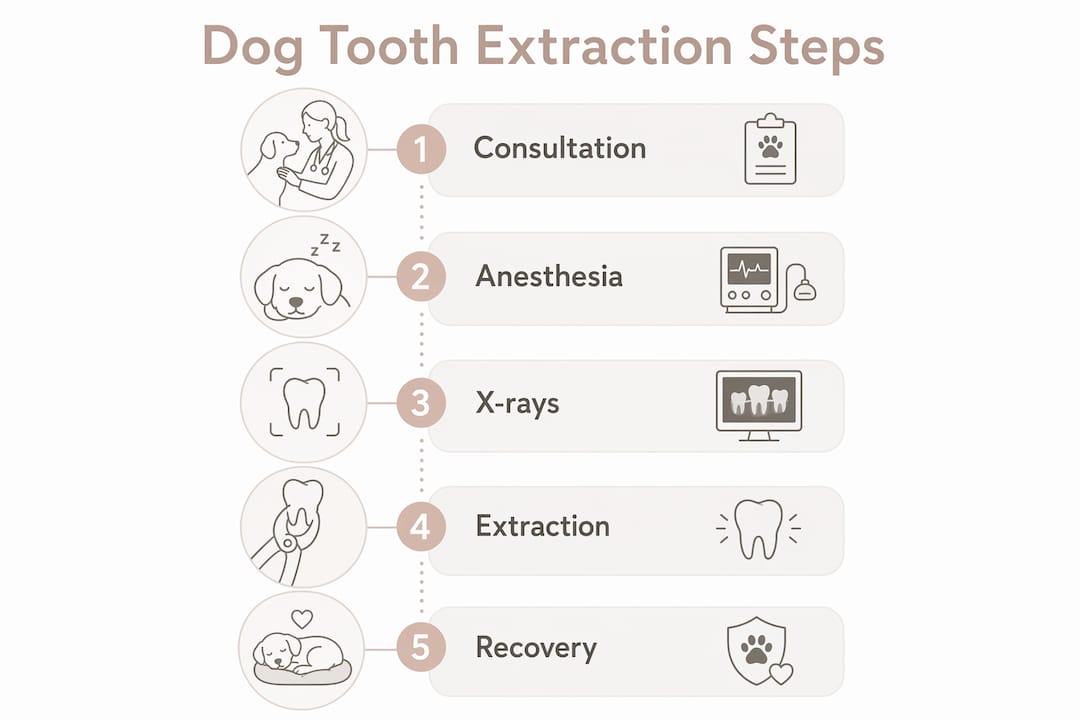
General anesthesia is required for every dental extraction. Because most dental disease occurs below the gumline, safe diagnosis and treatment simply aren’t possible in a conscious, moving patient. Here’s what the procedure looks like from start to finish:
-
Pre-op assessment: Blood panel reviewed, weight recorded, IV catheter placed. IV fluids are started to support organ function during anesthesia.
-
Induction: Anesthetic drugs are given through the IV catheter to bring the dog into a controlled sleep.
-
Intubation and monitoring: A breathing tube is placed to protect the airway and deliver gas anesthesia. Monitoring equipment tracks EKG, pulse oximetry, capnography, blood pressure, and body temperature throughout.
-
Full-mouth dental X-rays: Intraoral radiographs are taken before any extraction begins. These reveal root anatomy, hidden fractures, bone loss, and proximity to the nasal cavity or mandibular canal — all of which directly affect the surgical plan.
-
Dental cleaning: Scaling and polishing are typically performed before extractions to give the surgeon a clean field.
-
Local nerve blocks: Veterinarians inject local anesthetic (similar to what a dentist uses on you) around the nerves supplying the target teeth. This reduces the amount of general anesthetic needed and provides pain control that lasts into the recovery period.
-
Closed (simple) extraction: Used for single-rooted or very mobile teeth. The periodontal ligament is severed with a dental elevator, the tooth is loosened, and extraction forceps remove it with steady, controlled pressure. No incision, no bone removal.
-
Open (surgical) extraction: Required for multi-rooted teeth, deeply anchored roots, or teeth with curved or fused roots. The surgeon creates a mucoperiosteal flap by incising the gum, exposes the underlying bone, removes a section of bone to access the root, and sections multi-rooted teeth so each root comes out separately. The open extraction technique is the primary driver of cost and procedure time.
-
Post-extraction X-ray: A final radiograph confirms no root fragments remain in the socket.
-
Suturing: Open extraction sites are closed with absorbable sutures. The socket is irrigated with saline before closure.
-
Recovery monitoring: The dog is kept on IV fluids and monitored until fully awake, then transitioned to a warm, quiet recovery space.
Pro Tip: When you call to schedule, ask specifically: “What monitoring equipment do you use during anesthesia, and will my dog receive a local nerve block?” A clinic that uses EKG, pulse oximetry, capnography, and intraoperative nerve blocks is following current standards of care. These aren’t extras — they’re the baseline.
How to prepare your dog before the appointment
Getting the pre-op steps right protects your dog and keeps the day from going sideways.
-
Fast your dog as instructed. Most clinics require withholding food for 8–12 hours before anesthesia. Water is usually fine until a few hours before. Follow your vet’s specific instructions — fasting times vary by patient age and health status.
-
List all current medications. Bring a written list with doses and timing. Some medications (like certain NSAIDs or supplements) should be paused before surgery; others, like heart medications, must continue. Never guess — call ahead and ask.
-
Complete pre-op bloodwork. Most vets recommend a pre-anesthetic blood panel, especially for dogs over 5–7 years old. This screens for kidney, liver, and clotting issues that could affect anesthetic safety.
-
Arrive on time. Drop-off appointments are typically early morning. Being late compresses the monitoring window before induction.
-
Bring a carrier or leash and a calm energy. Dogs read your anxiety. A relaxed drop-off helps.
-
Plan for pickup. Your dog will be groggy. Have a quiet, warm space ready at home, and arrange for someone to drive so you’re not managing a woozy dog solo.
Common owner questions:
Can I give my dog medications the morning of surgery? Ask your vet specifically. Cardiac drugs and seizure medications are usually continued; NSAIDs and some supplements are often paused. Never skip this conversation.

What about a diabetic dog? Insulin dosing on surgery day requires a specific protocol from your vet. This is not a general-rule situation — call the clinic the day before.
My dog gets extremely anxious at the vet. What can I do? Mention this when you book. City Animal Veterinary Center’s Fear Free approach and house-call option are specifically designed for dogs (and owners) who find the clinic environment stressful. A pre-visit anti-anxiety medication can also be prescribed for highly reactive patients.
What recovery looks like, day by day
Recovery from dog oral surgery is more predictable than most owners fear. Here’s the honest timeline:
-
First 24 hours: Your dog will be groggy, unsteady, and possibly nauseous from anesthesia. Offer water when they’re alert enough to drink safely. Feed only soft food — canned food, moistened kibble, or a prescription recovery diet. Keep activity minimal: short leash walks only, no running or jumping.
-
Days 2–3: Most dogs are noticeably more comfortable. Appetite and energy typically return within 2–3 days. Continue soft food and administer all prescribed medications on schedule, even if your dog seems fine.
-
Days 4–7: Continue soft food. Avoid hard chews, rope toys, or anything that puts pressure on the surgical sites. Some mild pinkish discharge from the extraction site is normal in the first few days; bright red bleeding is not.
-
Days 7–14: Oral mucosal tissue heals within this window. Absorbable sutures dissolve on their own; non-absorbable sutures are removed at a follow-up visit. Most dogs are fully back to normal behavior by the end of this period.
Daily care checklist:
-
Administer pain medications and antibiotics exactly as prescribed
-
Feed soft food for the full duration your vet recommends (usually 7–14 days)
-
No hard toys, bones, or chews until cleared by your vet
-
Check the mouth gently once daily for swelling, discharge, or loose sutures
-
Keep the mouth clean if your vet prescribed an oral rinse or gel
Call your vet if you see:
-
Bleeding that doesn’t slow within 10–15 minutes of gentle pressure
-
Swelling that worsens after day 2 rather than improving
-
Fever, severe lethargy, or complete refusal to eat past 48 hours
-
Foul odor or discharge from the surgical site after day 3
-
A suture that appears to have pulled open
A note on pain after extraction: Veterinarians routinely use intraoperative local nerve blocks plus post-op NSAIDs and sometimes opioids. Many owners report their dogs needed pain medication for 3–5 days. Don’t skip doses because your dog “seems okay” — dental nerve pain is real even when a dog isn’t vocalizing it.
What are the real risks of dog dental surgery?
Every surgery under general anesthesia carries some risk. For healthy dogs with proper pre-op screening, the risks are low. Knowing what they are helps you recognize problems early.
Main risks and how they’re managed:
-
Anesthetic complications: Mitigated by pre-op bloodwork, IV fluids, and continuous intraoperative monitoring (EKG, pulse oximetry, capnography, temperature). The monitoring protocol is not optional.
-
Bleeding: Minor oozing is expected. Significant hemorrhage is uncommon and is managed intraoperatively with pressure, electrocautery, or sutures.
-
Infection: Post-op antibiotics are prescribed when indicated. Signs of infection (swelling, discharge, fever) appearing after day 3 warrant a call.
-
Retained root fragments: Prevented by intraoperative X-rays confirming complete removal. If a fragment is found later, a second procedure may be needed.
-
Jaw fracture: Rare, but possible when extracting teeth from a severely weakened mandible (common in small breeds with advanced periodontal disease). Surgeons account for this risk by adjusting technique.
-
Oronasal fistula: An abnormal opening between the mouth and nasal cavity, most often after upper canine extraction. Requires surgical repair if it develops.
-
Nerve injury: Uncommon; the mandibular canal is identified on X-ray before surgery to reduce this risk.
When to call the clinic vs. go to an emergency hospital:
-
Call the clinic: Mild swelling, suture concerns, appetite changes, or questions about medications during business hours.
-
Go to an emergency hospital: Uncontrolled bleeding, severe respiratory distress, collapse, or extreme pain that isn’t responding to prescribed medication.
The single best risk-reduction tool is pre-op dental radiography. Intraoral X-rays reveal root configuration, proximity to the nasal cavity or mandibular canal, and hidden fractures — findings that directly change the surgical plan and risk profile before the first incision is made.
Are there alternatives to pulling the tooth?
Extraction is often the most reliable option for severely damaged or infected teeth, but it isn’t always the only one. The right choice depends on the tooth, the degree of damage, and what you and your vet decide together.
| Alternative | When it applies | Pros | Cons |
|---|---|---|---|
| Root canal (endodontic therapy) | Fractured tooth with pulp exposure; structurally sound root | Preserves the tooth; good for working dogs or large canines | More expensive than extraction; requires specialist referral; follow-up X-rays needed |
| Restorative crown | After root canal on a high-use tooth | Protects the treated tooth | Adds cost; not appropriate without prior endodontic treatment |
| Long-term medical management | Mild periodontal disease; owner declines surgery | Buys time; non-invasive | Does not resolve infection; disease typically progresses |
| Watchful waiting | Very early disease; mobile deciduous tooth about to fall out naturally | No immediate intervention | Appropriate only in narrow circumstances; not a substitute for treatment |
A few practical notes:
-
Root canal therapy is performed by a board-certified veterinary dentist (find one at avdc.org). It’s a legitimate tooth-sparing option for a single-rooted tooth in an otherwise healthy mouth, but it costs more than extraction in most cases.
-
For retained baby teeth, watchful waiting is not appropriate. A persistent deciduous tooth should be removed as soon as the permanent tooth is visible above the gumline. Waiting to “see if it falls out” risks permanent tooth malalignment and infection.
-
Medical management alone for advanced periodontal disease is not a cure. It may reduce discomfort temporarily, but the underlying bone loss and infection continue.
How City Animal Veterinary Center approaches dental extractions
City Animal Veterinary Center follows Fear Free practices throughout every dental visit, from the moment you walk in to discharge. For dogs who find the clinic environment itself stressful, the house-call option means a veterinarian comes to you, reducing anxiety before the procedure even begins.
For in-clinic dental procedures, the team uses:
-
Digital dental X-rays taken before and during the procedure to guide every extraction decision
-
IV fluids and full intraoperative monitoring including EKG, pulse oximetry, and temperature management
-
Local nerve blocks to minimize anesthetic requirements and provide post-op pain coverage
-
Post-op pain protocols with NSAIDs and, when needed, additional analgesics
-
Clear discharge instructions so you know exactly what to watch for at home
The Fear Free approach isn’t just about the dog’s comfort during the visit. It changes the entire experience: lower-stress handling, thoughtful scheduling, and a team that takes the time to explain what’s happening and why.
Pro Tip: When you call to book, mention your dog’s anxiety level, any previous bad experiences at the vet, and whether a house call might be a better fit. Having that conversation upfront lets the team prepare the right environment and approach before your dog arrives.
Key Takeaways
Dog tooth extraction relieves pain and eliminates infection, and most dogs recover full comfort within 7–14 days with proper at-home care.
| Point | Details |
|---|---|
| Extraction treats real disease | Primary indications include periodontal disease, fractured teeth, retained baby teeth, abscesses, tumors, and tooth resorption. |
| Anesthesia is always required | General anesthesia with full monitoring (EKG, pulse oximetry, IV fluids) is standard for every extraction. |
| Recovery follows a clear timeline | Grogginess clears in 24–48 hours; most dogs regain normal appetite in 2–3 days; oral tissue heals in 7–14 days. |
| Cost varies widely | Simple extractions typically have a relatively low per-tooth cost; full-procedure bills vary widely depending on complexity. |
| City Animal Veterinary Center | Offers Fear Free in-clinic dental care and house-call options in Brooklyn, NY, with digital X-rays and full anesthesia monitoring. |
What we see every day at the clinic
The most common thing owners say after their dog recovers from an extraction is some version of: “I had no idea how much pain they were in.” Dogs are extraordinarily good at hiding dental discomfort. By the time an owner notices something is wrong, the tooth has often been painful for months. That’s not a failure on the owner’s part — it’s just how dogs are wired.
At City Animal Veterinary Center, we recommend extraction when the evidence is clear: significant bone loss, pulp exposure, abscess, or a retained baby tooth that’s crowding the permanent dentition. We also take the time to discuss tooth-sparing options like endodontic therapy when the tooth and the situation are right for it. The goal is always the same — a dog that eats, plays, and sleeps without oral pain.
Dental care at City Animal Veterinary Center: book a visit or house call
Fewer things are harder than watching your dog avoid their food bowl or paw at their face and not knowing why. City Animal Veterinary Center offers in-clinic dental care and house-call veterinary visits in Brooklyn, NY, built around a Fear Free approach that keeps your dog calm from check-in to discharge.
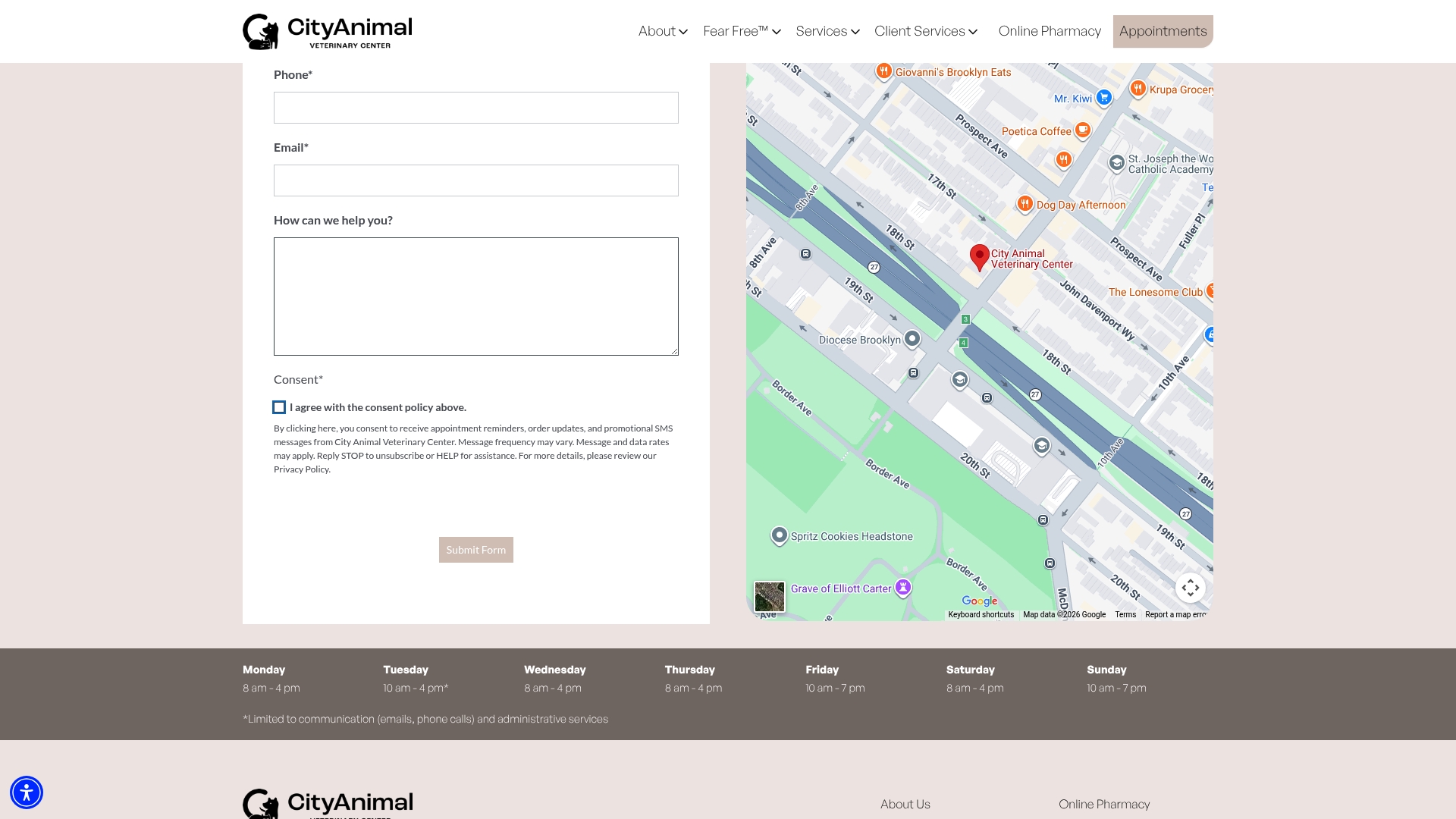
When you book, the team will review your dog’s dental history, discuss whether pre-op bloodwork is needed, and walk you through exactly what the procedure involves. If your dog is anxious about clinic visits, ask about the house-call option at the time of booking. Bring a list of current medications and any recent records from a previous vet.
To schedule a dental consultation or request a house call, visit City Animal Veterinary Center and book online, or call the Brooklyn clinic directly. Your dog’s mouth will thank you.
Useful sources and further reading
The clinical claims in this article draw from peer-reviewed veterinary literature, specialist dental resources, and owner-facing cost guides. Here’s where to go deeper:
| Source | Strongest for |
|---|---|
| Clinicians Brief — Canine Teeth Extraction | Technique details, dental radiography protocols, periodontal disease staging |
| PetMD — Dog Tooth Extractions | Owner-facing procedure overview, pain management, recovery expectations |
| CareCredit — Dog Tooth Extraction Cost Guide | Per-tooth cost averages, financing options |
| Great Pet Care — Dog Tooth Extraction | Full-procedure cost range, recovery timeline |
| Today’s Veterinary Practice — Deciduous Canine Tooth Removal | Puppy tooth extraction technique, retained deciduous teeth |
| AVDC — Find a Veterinary Dentist | Board-certified veterinary dentist locator, specialist referral guidance |
| Animal Dental Center — Oral Surgery | Indications, open vs. closed extraction overview, systemic disease risks |
| Mountain Road Animal Hospital — Dog Dental Surgery | Anesthesia monitoring protocols, IV fluid management, day-of expectations |
| City Animal Veterinary Center | Brooklyn dental care, Fear Free visits, house-call booking |
This article is general information for educational purposes. It is not a substitute for professional veterinary advice. Always confirm your dog’s specific diagnosis and treatment plan with a licensed veterinarian.