
The APHIS 7001 form is the U.S. Interstate and International Certificate of Health Examination for Small Animals, issued by a USDA-accredited veterinarian after a physical exam. If you're planning to travel with a pet, here's what to do right now:
- Confirm your destination's import rules first. Airline boarding requirements and country import requirements are not the same thing. The destination governs.
- Check your airline's pet boarding policy. Many carriers request an APHIS Form 7001 for cabin or cargo travel, even for domestic flights.
- Schedule an exam with a USDA-accredited veterinarian. Only an accredited vet can sign the certificate.
- Ask whether USDA endorsement is required. International destinations often require it; domestic trips usually do not.
The certificate has a limited validity period after issuance, so timing your vet appointment matters as much as getting the paperwork right.
Key Takeaways
The APHIS 7001 form has a limited validity period after issuance, and confirming your destination's import requirements before scheduling the vet exam is the single step that prevents most travel certificate problems.
| Point | Details |
|---|---|
| Confirm destination rules first | Airline boarding requirements and country import rules are separate; the destination governs endorsement decisions. |
| 30-day validity window | Schedule the vet exam close enough to departure that the certificate won't expire before you travel. |
| USDA endorsement is not always required | Domestic travel typically needs only a signed 7001; international travel often requires USDA endorsement through VEHCS or an AVIC office. |
| Verify every field before travel | Microchip number, owner name, accreditation number, and vaccine details must all match exactly or the certificate may be rejected. |
| City Animal Veterinary Center | Offers USDA-accredited certificate exams, Fear Free visits, and house calls in Brooklyn, NY, with pre-visit record verification to reduce errors. |
Table of Contents
- What the APHIS 7001 form is and what it contains
- When do you actually need an APHIS 7001?
- How to obtain, complete, and replace an APHIS 7001
- How USDA endorsement works, including VEHCS and submission options
- Common mistakes pet owners make with the APHIS 7001
- Alternatives to the 7001 and the shift toward digital CVIs
- Veterinary tips from City Animal Veterinary Center for a smoother certificate visit
- A perspective on what actually goes wrong with APHIS 7001 requests
- City Animal Veterinary Center can help you get your pet's health certificate right
- Sources
What the APHIS 7001 form is and what it contains
The APHIS Form 7001, officially titled the United States Interstate and International Certificate of Health Examination for Small Animals, is the standard USDA health certificate for dogs, cats, and other small animals traveling within or out of the United States. It serves two functions: it documents that a licensed, USDA-accredited veterinarian examined the animal and found it fit to travel, and it provides a standardized record that airlines, border agents, and destination country officials can verify.
The form captures a specific set of data. The NVAP reference guide lists both the 7001 and its companion form 7001A as standard USDA veterinary export documentation, confirming these are official agency instruments, not informal templates.
| Form Field | What It Captures |
|---|---|
| Owner information | Full legal name, address, and contact details |
| Animal description | Species, breed, sex, age, color/markings, and microchip or tattoo number |
| Issuing veterinarian | Name, address, USDA accreditation number, and license number |
| Clinical exam findings | Date of exam, health status, and any observable conditions |
| Vaccination history | Rabies and other vaccines: product name, lot number, date given, expiration |
| Veterinarian signature | Dated signature certifying the exam and findings |
| USDA endorsement block | Space for the USDA veterinarian's signature and official seal when endorsement is required |
The USDA endorsement block sits at the bottom of the form. When a destination country requires it, a USDA Area Veterinarian in Charge (AVIC) or authorized USDA official reviews the accredited vet's work, then applies their own signature and seal. Without that step, the form is a valid domestic health certificate but not an officially endorsed export document.
The legal warning printed on the form is not boilerplate. Country-specific guidance documents, including APHIS import guidance for destinations like Belize, reproduce the fraud warning verbatim: false or fraudulent statements on a federal certificate can carry official penalties. That language is the reason a veterinarian, not an owner, must complete and sign the form. Owners prepare the information; the vet verifies and certifies it.
When do you actually need an APHIS 7001?
The answer depends on two separate questions, and most pet owners conflate them. USDA APHIS guidance is explicit: destination country import requirements take precedence over airline boarding requests. An airline may ask for a 7001 to let your pet on the plane, but that does not mean the 7001 will satisfy your destination's import rules.
Work through these questions in order:
- Where are you going? If you're traveling to another U.S. state, a 7001 signed by an accredited vet is typically sufficient. No USDA endorsement is required for interstate travel.
- Does your destination country require a country-specific health certificate? Many countries, including those in the European Union, the United Kingdom, and Japan, require their own official certificate format, not the 7001. Check the destination country's embassy or APHIS's country-specific guidance pages before scheduling anything.
- Does your airline require a health certificate for boarding? If yes, confirm whether they accept the 7001 or require a different format. Most U.S. carriers accept the 7001 for domestic and some international routes.
- Does your destination require USDA endorsement? If the country requires an endorsed certificate, the 7001 must go through USDA after the vet signs it. If the destination does not require endorsement, submitting the 7001 for endorsement anyway adds unnecessary steps.
When destination requirements are unknown, APHIS recommends obtaining a health certificate from a USDA-accredited veterinarian and having it endorsed by APHIS as a precaution. That's a reasonable fallback, but it's not a substitute for checking the actual destination rules.
A practical example: a dog flying from New York to Los Angeles needs a signed 7001 for the airline, but no USDA endorsement. The same dog flying to France needs a different certificate entirely, the EU's official animal health certificate, endorsed by USDA. The 7001 alone would not satisfy French customs.
How to obtain, complete, and replace an APHIS 7001
The step-by-step process
-
Confirm your destination's requirements. Visit APHIS's pet travel pages or your destination country's official import authority. This step determines whether you need the 7001, a country-specific certificate, or both.
-
Find a USDA-accredited veterinarian. Not every licensed vet holds USDA accreditation. Use the USDA accredited veterinarian locator to find one near you. The accreditation number must appear on the form.
-
Schedule the exam inside the validity window. The certificate is valid for a limited period from the exam date. Book the appointment close enough to your departure that the form won't expire before you travel, but with enough buffer for endorsement processing if needed. For international travel requiring USDA endorsement, plan for several extra days.
-
Prepare your documents before the appointment. Bring:
- Current rabies vaccination certificate (product name, lot number, date, and expiration)
- Records of any other required vaccines
- Microchip documentation (ISO number and implant date)
- Your pet's prior medical records
- Your government-issued ID
- Flight itinerary and airline pet policy
-
The vet completes the form. The accredited vet performs the physical exam, fills in all required fields on the APHIS 7001 PDF, and signs and dates the certificate. The fillable PDF format means many clinics complete it digitally before printing for signature.
-
Submit for USDA endorsement if required. If your destination requires it, the signed form goes to your USDA AVIC office or through the Veterinary Export Health Certification System (VEHCS). See the next section for submission options and timelines.
-
Receive and verify the endorsed form. Before travel, check every field against your pet's actual microchip number, vaccine records, and your legal name. One transposed digit in a microchip number can result in denied boarding.
For a broader overview of the health certificate process for pet travel, including what to expect at each stage, that guide covers the full documentation workflow.
Replacing a lost or damaged certificate
If your original certificate is lost or damaged before travel, contact the issuing veterinarian immediately. The vet can reissue the certificate using the same exam findings if the 30-day validity window has not expired. If it has expired, a new physical exam is required. When USDA endorsement was obtained on the original, the reissued certificate must go through endorsement again. There is no shortcut. Keep a digital photo of the completed, endorsed form on your phone as a backup.
Pro Tip: Ask your vet to email you a PDF copy of the completed form the same day it's signed. If the paper original is lost in transit, you have a reference copy that shows every field exactly as completed, which speeds up reissuance significantly.
How USDA endorsement works, including VEHCS and submission options
USDA endorsement is the step that transforms a signed health certificate into an officially recognized export document. A USDA veterinarian, typically the Area Veterinarian in Charge for your region, reviews the accredited vet's completed form, verifies the accreditation number, and applies their own signature and official seal. Without that seal, the certificate carries no weight at international borders that require it.
Regulatory metadata confirms that the APHIS 7001 is available electronically and supports fillable and fileable electronic submission, which is where VEHCS comes in.
| Submission Pathway | How It Works | Best For |
|---|---|---|
| VEHCS (electronic) | Accredited vet submits the completed certificate through the USDA's Veterinary Export Health Certification System; USDA endorses digitally | International travel where the destination accepts electronic endorsement; faster processing |
| In-person (AVIC office) | Owner or vet delivers the signed paper form to the regional USDA AVIC office; endorsement applied same day or next day | Urgent travel; situations where VEHCS is not available for the destination |
| Mail (AVIC office) | Signed paper form mailed to the AVIC office with a prepaid return envelope; USDA endorses and mails back | Non-urgent travel; allow 5 business days round-trip |
VEHCS is the preferred pathway for most international submissions. It reduces the risk of a paper form being lost in transit and can shorten endorsement turnaround. Not all destination countries accept VEHCS-endorsed certificates, so confirm acceptance before choosing this route.
One point USDA guidance makes clearly: USDA will only endorse the certificate required by the destination country. If your airline wants a 7001 for boarding but your destination requires a different certificate, do not submit the 7001 for endorsement. Submit only the destination-required document. Issuing two certificates for the same trip can create confusion at the border and may result in rejection of both.
Common mistakes pet owners make with the APHIS 7001
The most frequent error is treating the airline's boarding requirement and the destination country's import requirement as the same thing. They are not. An airline accepting a 7001 for boarding does not mean the destination country will accept it for import. Confirm both, separately, before the vet appointment.
Other mistakes that lead to denied boarding or import refusals:
- Unsigned or undated fields. Every signature line must be completed. A missing date on the vet's signature is enough to void the certificate.
- Microchip number mismatch. The number on the form must match the chip in the animal exactly. Scanners at international entry points will check.
- Expired certificate. The form is valid for 30 days after issuance. A certificate signed on March 1 is invalid for a March 31 departure.
- Wrong owner name. The name on the certificate must match the name on your travel documents. Nicknames or initials are not acceptable.
- Missing accreditation number. The vet's USDA accreditation number is a required field. A certificate without it cannot be endorsed.
- Submitting the wrong form for endorsement. If the destination requires a country-specific certificate, submitting the 7001 for endorsement wastes time and may delay your trip.
- Incomplete vaccination records. If the rabies vaccine lot number or expiration date is missing from the form, the certificate may be rejected.
Before travel, run through this final check:
- Animal's microchip number on the form matches the chip (scan it to confirm)
- Rabies vaccine details are complete: product name, lot number, date administered, expiration date
- Vet's USDA accreditation number is present and legible
- Owner name matches travel ID exactly
- Exam date is within 30 days of departure
- USDA endorsement seal is present if the destination requires it
- Airline's specific format requirements are met
On the legal side, the warning printed on the certificate is federal. As APHIS country-specific guidance documents make clear:
That language exists because the certificate is a federal document. Asking a vet to sign off on vaccinations that weren't given, or to certify an exam that didn't happen, is not a paperwork shortcut. It is fraud.
Alternatives to the 7001 and the shift toward digital CVIs
The APHIS 7001 is a legacy paper form, and its role is narrowing. Many states and destination authorities are moving toward secure, digital Certificates of Veterinary Inspection (CVIs) for better traceability and fraud resistance. This shift is practical: a digital CVI carries an audit trail that a paper form cannot replicate.
Two platforms that facilitate electronic CVI workflows are GlobalVetLink and VEHCS. GlobalVetLink is a widely used platform for generating and transmitting CVIs electronically within the U.S. and for some international routes. VEHCS is USDA's own system for international health certificate endorsement. Neither replaces the APHIS 7001 entirely, but both represent the direction the industry is heading.
PetRelocation, an international pet mobility specialist, is an example of a service that helps owners navigate which certificate type a specific destination requires, including when a digital CVI or a country-specific form is mandatory rather than optional.
Use this checklist to decide which certificate type fits your trip:
- Domestic U.S. travel: A signed APHIS 7001 from an accredited vet is typically sufficient. No endorsement needed.
- International travel to a country that accepts the 7001: Get the 7001 signed and endorsed by USDA. Confirm the destination accepts it before the appointment.
- International travel to a country requiring a country-specific certificate: The 7001 alone will not work. You need the destination's official form, completed and endorsed. The 7001 may still be needed for airline boarding.
- Unknown destination requirements: Follow APHIS's recommendation and get a 7001 endorsed as a precaution while continuing to research the destination's rules.
- Domestic travel where the receiving state requires a digital CVI: Ask your vet about GlobalVetLink or your state's preferred electronic CVI platform.
For a broader look at travel logistics and pet welfare documentation, the pet welfare checklist for travelers covers the full range of documents and safety steps worth organizing before departure.
Veterinary tips from City Animal Veterinary Center for a smoother certificate visit
What to bring to the appointment
Preparation before the exam is what separates a smooth certificate visit from one that requires a recheck. Bring every document that touches your pet's identity or medical history:
- Vaccination records with lot numbers, administration dates, and expiration dates for rabies and any other vaccines the destination requires. If you're unsure what your puppy's vaccine schedule covers, pull those records before the appointment.
- Microchip documentation showing the ISO number and implant date. If your pet hasn't been microchipped, many destinations require it before the certificate can be issued.
- Prior medical records relevant to the exam, including any recent treatment for parasites.
- Flight itinerary and airline pet policy so the vet can confirm the certificate format the airline requires.
What the vet checks during the exam
The physical exam for a health certificate is more targeted than a routine wellness visit. The veterinarian will confirm the microchip reads correctly, assess the animal's overall condition, verify that vaccination records match what's documented, and check for signs of parasites or infectious disease that would disqualify the animal from travel. Common findings that delay certification include an expired rabies vaccine, a microchip that doesn't scan, or a recent illness that hasn't fully resolved.
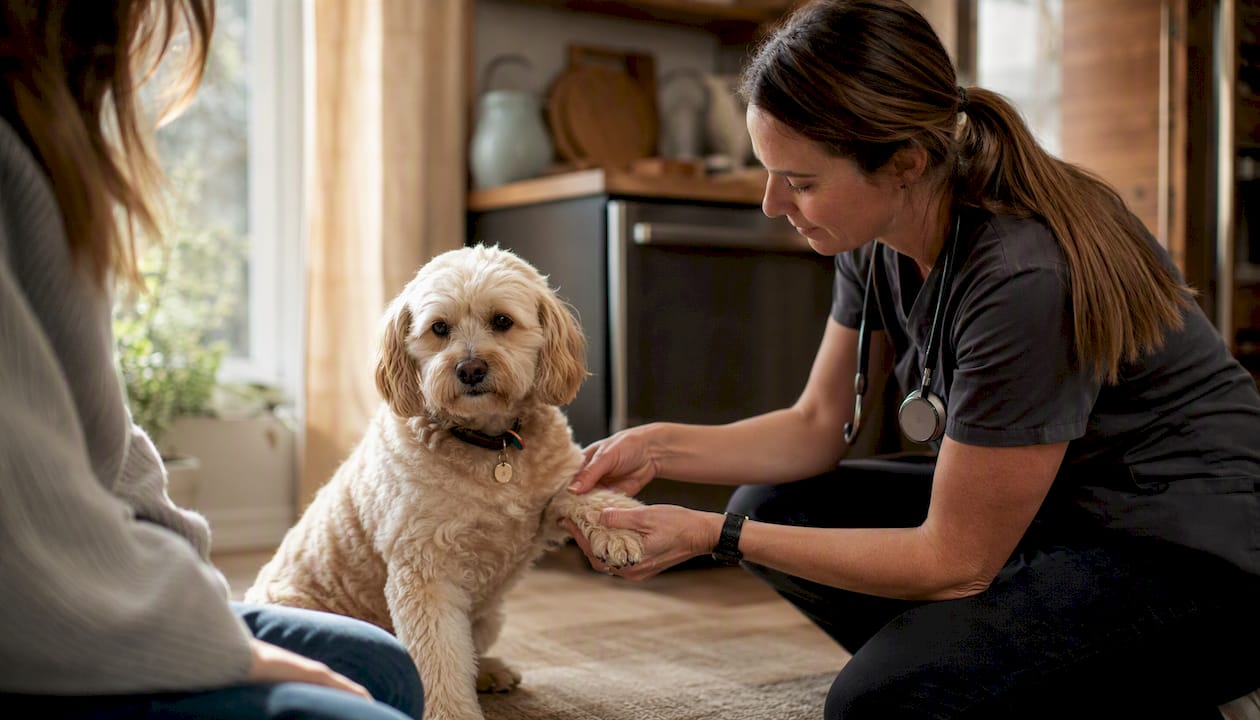
Pro Tip: If your pet has a history of anxiety at the vet, mention it when you book the certificate appointment. City Animal Veterinary Center uses a Fear Free approach during exams, which means the environment, handling techniques, and pacing are adjusted to keep stress low. A calmer animal is easier to examine thoroughly, and a thorough exam means fewer surprises on the form.
When a house call makes more sense
For pets that become severely stressed in a clinic environment, a house call exam can produce a more accurate assessment. The animal is in a familiar space, which reduces the physiological stress response that can affect exam findings. City Animal Veterinary Center offers house call services for owners who need that flexibility, including for certificate exams when scheduling allows.
A perspective on what actually goes wrong with APHIS 7001 requests
The paperwork itself is straightforward. What creates problems, consistently, is the sequence. Owners schedule the vet appointment first, then check the destination requirements, and discover mid-process that they needed a different certificate entirely. By then, the 30-day validity window is running and there's no time to start over cleanly.
At City Animal Veterinary Center, the protocol before any certificate appointment is to verify the destination's requirements with the owner, confirm the microchip number against the pet's records, and check that all vaccines are current and documented with lot numbers. That pre-visit verification step catches the majority of issues before the exam happens, not after. A mismatched microchip number found during the appointment is a delay. The same mismatch found at the border is a crisis.
The other pattern worth naming: owners who assume that because their airline accepted the 7001 last time, it will satisfy the destination this time. Airline policies and country import rules change. What worked for a trip to Canada two years ago may not work for a trip to the EU today. Checking the current rules every time, not relying on memory, is the only reliable approach.
City Animal Veterinary Center can help you get your pet's health certificate right
Getting a pet health certificate right the first time means fewer delays, no last-minute vet runs, and no surprises at the airport. City Animal Veterinary Center in Brooklyn, NY offers USDA-accredited health certificate exams, Fear Free handling for pets who find clinic visits stressful, and house call appointments for owners who need flexibility. The team verifies microchip numbers, vaccine records, and destination requirements before the exam, so the form is complete and accurate when it leaves the clinic.
For owners navigating international travel paperwork, the clinic can also walk you through whether your destination requires USDA endorsement and which submission pathway fits your timeline. If you have pet care documents to organize alongside the certificate, that's a conversation worth having at the same appointment. Book your certificate exam at City Animal Veterinary Center and arrive with your records ready.
Sources
These are the primary USDA APHIS resources for downloading the form, checking endorsement guidance, and verifying form history: