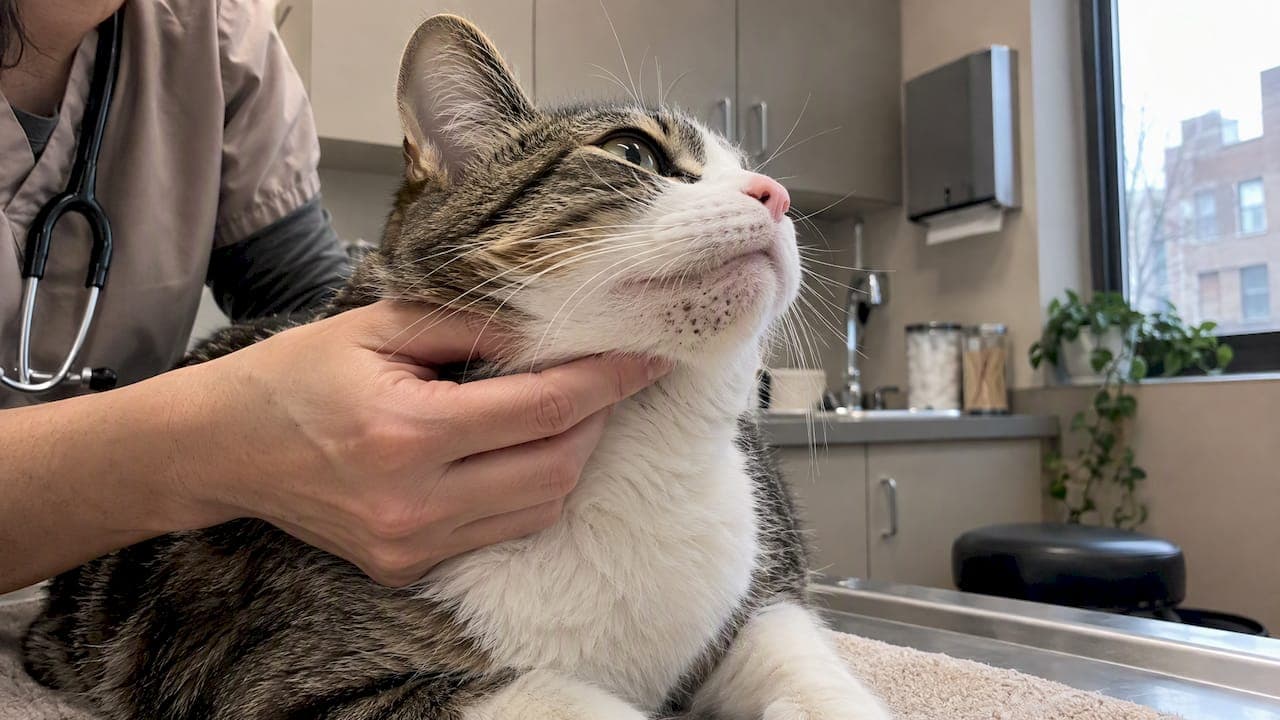
Black, dirt-like specks on your cat's chin are most often feline chin acne: plugged oil glands that look like blackheads. Mild cases are usually manageable with a clean chin, clean non-plastic bowls and gentle care. Red, swollen, crusty or sore chins need a veterinary exam, because infection can set in and other skin problems look much the same.
Below you'll find how to recognize it, what is behind it, what to do (and not do) at home, what a veterinarian may recommend, and how to keep it from coming back.
TL;DR
- Black specks that look like dirt on the chin are often plugged oil glands, the cat version of blackheads.
- Never squeeze or pop them, and skip human acne products with alcohol or peroxide.
- Swap plastic bowls for ceramic or stainless steel, wash them often and keep the chin clean and dry.
- Redness, swelling, pus, bleeding or a cat who paws at the chin means it's time for an exam.
- Chin acne tends to come back, so many cats do best with a simple long-term routine.
Table of Contents
- What cat chin acne looks like
- What causes blackheads on a cat's chin
- Is it acne, or something else?
- How to care for your cat's chin at home
- When to see a veterinarian
- What a veterinarian may recommend
- Preventing flare-ups
- Our perspective
- Help for your cat's chin in Brooklyn
- FAQ
- Sources
What cat chin acne looks like
Feline chin acne is a disorder of how hair follicles produce keratin, and the cause is still not fully understood. It usually starts small. You may see:
- Black specks on the chin or lower lip that resemble coffee grounds or dirt
- Small red bumps
- Pustules (tiny pimples with pus)
- Crusts, hair loss or a greasy feel to the fur
According to the University of Illinois College of Veterinary Medicine, acne may appear red, brown or black like a blackhead, or as pustules, and infected acne may look white or yellowish. The chin is the most common place, but a veterinary dermatology study of 25 cats found that the lower lip, upper lip and corners of the mouth were also often involved.
Because the dots look like dirt, many owners first try wiping them off. A veterinarian quoted by Zoetis Petcare notes that chin acne can be mistaken for a dirty chin. If the specks come back right after wiping, or the skin underneath looks irritated, think acne.
Stages from mild to severe
In the mildest stage there are only blackheads and the cat doesn't seem bothered. In the middle stage, the skin turns red and bumps become pustules. In the most serious stage, the chin swells, bleeds or crusts, and the cat may rub or scratch at it. A veterinary dermatology textbook from the University of Minnesota notes that in mild, symptom-free cases treatment usually isn't necessary, while cases with infection need active treatment. That's why it helps to check the chin regularly rather than wait for a flare.

What causes blackheads on a cat's chin
No single cause has been pinned down, but several factors come up again and again.
Oily glands in the chin. The chin has a collection of larger sebaceous glands whose oily secretion is important for scent marking. When those glands produce too much oil, or the follicles don't shed keratin normally, the pores plug and form blackheads.
Bowls and grooming. Cats can't groom their own chins well, and food residue, saliva and bacteria collect there at every meal. Plastic bowls can develop tiny scratches that hold bacteria and oils, which is why vets often suggest ceramic or metal dishes instead.

Other skin triggers. Allergies, stress, and secondary bacterial or yeast infections can all make a flare worse. Our guide to allergy testing for cats explains how food or environmental allergies are investigated, and our article on cat overgrooming covers skin trouble that is tied to stress or itch.
Cats of any age and breed can get chin acne. If your cat has repeated flares, ask your veterinarian to look for an underlying trigger rather than only treating the chin.
Is it acne, or something else?
Several problems can mimic chin acne. Preventive Vet notes that mange, ringworm and eosinophilic granuloma complex can cause similar signs, which is why a professional diagnosis matters.
| What you see | Could be | What to do |
|---|---|---|
| Black specks that return after wiping, no itch | Mild chin acne | Start gentle cleaning, switch bowls, monitor |
| Red bumps, pus, crusts | Acne with infection | Book an exam |
| Round patches of hair loss, scaling | Ringworm or mange | Exam and testing; ringworm can spread to people |
| Swollen, firm lip or chin | Eosinophilic granuloma complex or deep infection | Exam soon |
| Flakes in the coat and on skin elsewhere | Dandruff, not acne | See our cat dandruff guide |
To diagnose acne, a veterinarian examines the area and asks how long it has been visible and whether it bothers the cat. If the cause is unclear, they may check skin cells under the microscope, test for fungus or take samples for culture. A skin biopsy is the only definitive way to confirm acne, though it is typically saved for cases that don't respond to treatment or look unusual. In the University of Minnesota text, a biopsy may be needed in cases of marked chin swelling to rule out eosinophilic granuloma.
How to care for your cat's chin at home
For mild blackheads with no redness or pain, home care centers on keeping the area clean and dry. The University of Illinois describes it as gently cleaning the chin with a washcloth and regularly washing food and water bowls.
A simple routine
- Choose a calm moment. Cats tolerate chin cleaning best after a meal or play session, when they're relaxed. Keep sessions to under a minute at first.
- Use lukewarm water and a soft cloth. Dab and wipe in the direction of hair growth. Don't scrub hard.
- Consider a pet-safe wipe. Soft, unscented wipes made for cats are convenient for quick daily cleanups. A pack of cat wipes is easy to keep next to the feeding area.
- Dry the chin. Pat it with a dry cloth. Moisture left on the skin encourages bacteria.
- Reward. Offer a small treat or a brush session so the routine feels positive.
If your cat is nervous about handling, go slowly: touch the chin, treat, repeat. This is the same low-stress approach we use in our Fear Free visits.
Bowls and feeding setup
- Use ceramic, glass or stainless steel bowls.
- Wash them with hot soapy water every day.
- Choose wide, shallow dishes so your cat's chin doesn't press against the rim.
- Replace any bowl that looks scratched or cloudy.
What to avoid
Don't pop or squeeze the spots. According to Texas A&M veterinary specialists, popping a cat's acne can cause pain and irritation, disrupt hair follicles and spread infection to other parts of the chin.
Skip human acne products. Texas A&M advises against products containing alcohol or peroxide on a cat's skin because they can be harsh and irritating. That answers a common question: no, hydrogen peroxide is not a safe home treatment for a cat's chin. Cats also lick the area, so anything you apply can be swallowed.
Don't start medicated products or leftover creams without guidance. A medicated shampoo or ointment that suits one cat's skin may not suit another's, and a cat with an infection may need a different approach.
When to see a veterinarian
Plan an exam if the acne irritates your cat or looks infected, red or inflamed. In practice, book a visit when you notice:
- Pus, bleeding, scabs or a bad smell
- Swelling of the chin or lips
- Your cat pawing at the face, rubbing the chin on furniture or seeming sore when touched
- Hair loss around the chin
- No improvement after a couple of weeks of careful home cleaning
- Repeated flare-ups
Texas A&M's veterinary team notes that the condition is often cosmetic and manageable, but untreated infections can progress into painful sores. If the chin is badly swollen, your cat stops eating or seems unwell, don't wait: call us right away.
What a veterinarian may recommend
Treatment depends on how severe the acne is and whether infection is present. The University of Minnesota's veterinary dermatology text lays out the general approach:
- Topical care for any case that needs treatment. This helps remove the dark debris and comedones and treat secondary infection. Carefully clipping the fur around the chin can make cleaning and applying medication easier.
- Benzoyl peroxide shampoo. A veterinary-formulated product may be used for its degreasing and antibacterial effects. This is very different from guessing with a drugstore product, because the strength and form matter.
- Topical antibiotics. If there is a secondary infection, a prescription ointment such as mupirocin, clindamycin or metronidazole is tried before oral antibiotics. A 25-cat clinical trial reported on topical mupirocin for feline acne.
- Oral antibiotics. If these are needed, the same text says bacterial culture and susceptibility testing will be required to choose the right antibiotic.
In stubborn cases your veterinarian may also look for allergies, check for infection with in-house lab tests and review your cat's diet. Never give your cat human medication or a prescription meant for another pet.
Preventing flare-ups
Here is the honest part: feline acne is considered non-curable, so management is long-term. The good news is that the routine is small. PetMD notes that maintenance cleansing with gentle scrubbing has worked for many cats because it lengthens the time between episodes and treatment.
A prevention checklist:
- Use non-plastic bowls and wash them daily.
- Wipe the chin gently after meals, especially if your cat eats wet food.
- Check the chin weekly for new black specks or red bumps and act early, as catching pimples and blackheads early keeps things simple.
- Wash bedding regularly and keep the home dust-free. Preventive Vet notes that air purifiers, regular vacuuming and washing bedding can help remove allergens, which matters if allergies are part of your cat's skin story.
- Keep routine checkups, so skin changes are caught early. Our wellness exams include a full look at the skin, mouth and coat.
Our perspective
At City Animal Veterinary Center, we see chin acne as more than a cosmetic issue. It's often the first visible sign that something in a cat's routine, skin or comfort deserves a closer look.
Most cats hate having their face handled, and that is exactly why chin problems go unchecked. A stressed cat hides, resists cleaning and may flare more often. Our Fear Free approach is designed to lower that stress, so we can examine the chin, take samples if needed and show you how to clean at home without a struggle.
For cats who get anxious in carriers and cars, a home visit can make the exam easier on everyone. We look at the whole picture: skin, teeth, diet, allergies and behavior, because a sore mouth or an itchy cat can show up on the chin first. Where it helps, our dermatology and in-house lab services let us work toward answers faster.
Our goal is a plan you can actually keep up with: simple, gentle and matched to your cat.
CAVC
Help for your cat's chin in Brooklyn
If your cat's chin looks red, swollen or sore, or the blackheads keep coming back, we can help. Our team offers Fear Free exams, dermatology care, in-house laboratory testing and a pharmacy, so many steps happen in one place. If getting your cat to the clinic is the hard part, ask about home visits. You can also book a wellness exam to have the chin checked and get a care plan.

For a chin that is badly swollen or bleeding, our urgent care team can see your cat.
FAQ
Why does my cat have blackheads on her chin?
The chin has large oil glands, and when the follicles around them get plugged with oil and keratin, blackheads form. Dirty or scratched plastic bowls, allergies, stress and grooming difficulty may contribute. A vet can confirm it's acne and not mites or ringworm.
Can I use hydrogen peroxide on my cat's chin acne?
No. Veterinary sources advise against human products with alcohol or peroxide because they can irritate a cat's skin, and cats lick the area. Use lukewarm water and a soft cloth, and ask your vet about any medicated product.
Is cat chin acne contagious?
Chin acne itself is not caused by a contagious germ, but look-alike conditions such as ringworm and mange are contagious. That's one more reason to have persistent or spreading bumps examined rather than assume it's acne.
Will cat acne go away on its own?
Mild cases may stay stable with a clean chin and better bowls, and some cats need no treatment. But the condition tends to recur and is managed rather than cured, and infected acne won't resolve with wiping alone. Book an exam if you see redness, pus or swelling.
Can I wash my cat's chin every day?
A gentle daily wipe with a soft cloth or a cat-safe wipe is a common routine, but avoid scrubbing hard or using harsh soaps. Ask your vet how often suits your cat's skin, especially during a flare.
Sources
- Acne Can Afflict Dogs and Cats, University of Illinois Veterinary Medicine
- Managing Feline Acne, Texas A&M Veterinary Medicine
- Acne and Stud Tail, International Cat Care
- Cat Acne, PetMD
- Cat Acne: How to Treat and Prevent Breakouts, Preventive Vet
- Decoding Chin Acne in Cats, Zoetis Petcare
- Feline Acne, University of Minnesota Animal Dermatology
- Idiopathic Keratinization Disorders: General Considerations, University of Minnesota
- Feline acne and results of treatment with mupirocin, Veterinary Dermatology via PubMed