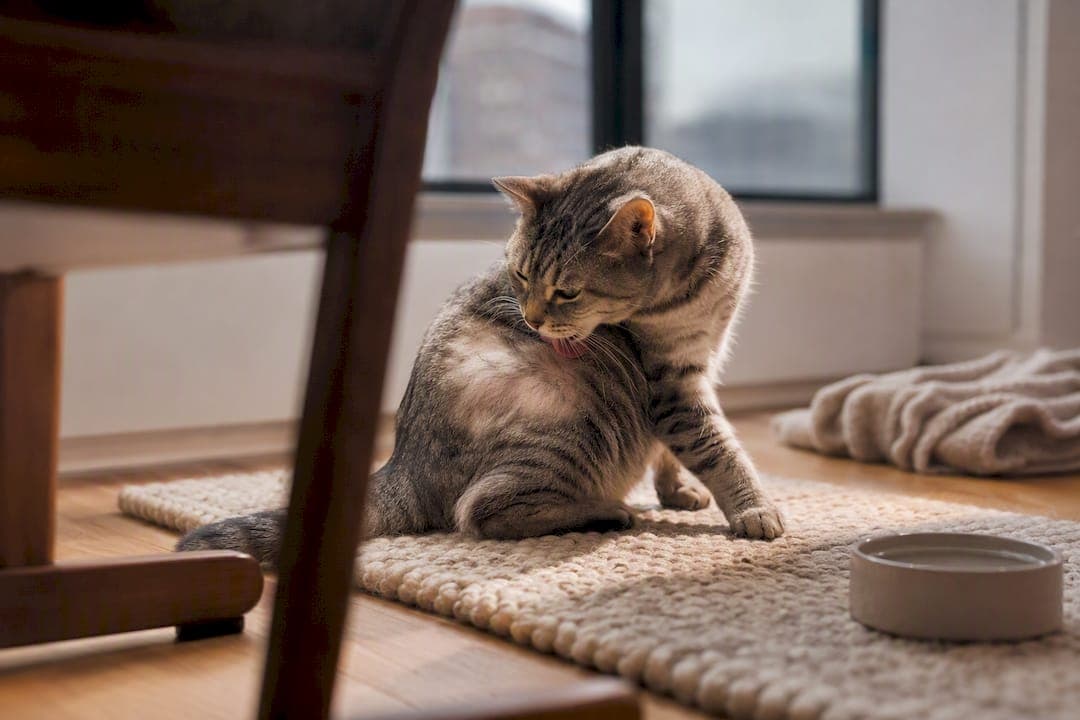
Cat overgrooming is usually a clinical sign, not a habit, and it deserves a veterinary exam rather than a wait-and-see approach. If your cat has open wounds, bleeding, raw skin, or is straining to urinate, that's urgent and needs same-day care. Otherwise, the right first move is still a vet visit: bloodwork, skin tests, and a physical exam come before any behavioral fix, because most excessive licking traces back to a medical cause.
TL;DR:
- Flea infestations and mites are the most common medical causes and can persist even when the coat appears clean, often requiring multiple treatments.
- Skin infections, allergies, and internal pain such as arthritis or urinary issues should be ruled out before considering behavioral causes.
- Overgrooming behavior often results from self-reinforcing habits due to endorphin release, sustained by environmental or emotional stressors.
- Effective treatment depends on accurately diagnosing the underlying cause, with some cases needing weeks of environmental or medical management.
- Stress-reducing handling or home visits may improve diagnosis accuracy for cats sensitive to travel or clinic environments.
Table of Contents
- What Cat Overgrooming Looks Like: Signs, Patterns, and How It Differs From Normal Licking
- Medical Causes Vets Rule Out First
- Behavioral Overgrooming: Psychogenic Alopecia and the Habit Loop
- What Happens During the Vet Visit: The Diagnostic Workflow
- Treatment and Management: Matching the Fix to the Cause
- Recovery Timeline and When to Ask for a Specialist
- How City Animal Veterinary Center Approaches Overgrooming Cases
- Our Take: Diagnose Before You Diagnose
- Get a Diagnostic-First Overgrooming Exam Without the Carrier Battle
- Sources
What Cat Overgrooming Looks Like: Signs, Patterns, and How It Differs From Normal Licking
Cats spend roughly 30% to 50% of their waking hours grooming under normal circumstances. That's already a lot of licking, which is exactly why overgrooming can sneak past owners for weeks. The behavior looks similar to routine self-care until you catch the results: patchy fur, bald strips, or skin that never gets the chance to heal.
The visual tells are specific. Instead of a full, even coat, you'll notice stubbly, broken hair shafts where the tongue's barbs have snapped hair off short rather than pulling it out at the root. Hair loss tends to show up symmetrically, on the belly, inner thighs, and flanks, which is a pattern groomers call symmetric alopecia. That symmetry matters diagnostically: lopsided or single-spot hair loss points toward something else, like a localized skin infection or an injury.
Watch for these secondary signs alongside the bald patches:
- Scabs, crusts, or reddened skin where licking has gone past hair into the skin itself
- Small sores or open lesions, especially at the base of the tail or on the belly
- A sour or yeasty odor coming from affected patches
- A noticeable jump in hairball frequency, since more ingested fur means more to bring back up
- Restlessness or repeated interruption of normal activity to groom the same spot
Cats often hide this behavior because they groom most intensely when nobody's watching, which is part of why early overgrooming gets missed until the hair loss is already obvious. Start a simple log: date, location on the body, and a quick photo taken from the same angle each time. A short video clip of an actual grooming episode is even more useful, since it shows your vet exactly how your cat is licking and how long each session lasts. That documentation turns "I think it's gotten worse" into something a vet can actually measure.
Medical Causes Vets Rule Out First
International Cat Care treats medical investigation as the starting point for every overgrooming case, and for good reason: parasites, infections, allergies, and pain account for the majority of cases that walk through clinic doors. Here's the order most vets work through, roughly from most to least common.
- Fleas and other ectoparasites. Even a light flea burden can trigger a disproportionate skin reaction in a flea-allergic cat. Some cats groom away all visible evidence of fleas, which means a clean-looking coat doesn't rule this out. Year-round preventives are the baseline fix, but confirming the diagnosis sometimes requires flea combing multiple times over several weeks.
- Mites, including Demodex gatoi. This particular mite is notoriously hard to catch on a skin scrape because the cat's own grooming physically removes the mites from the skin sample area. When mites are strongly suspected but scrapings come back clean, vets often run a treatment trial (a lime sulfur dip or a prescribed antiparasitic) and test any in-contact cats in the household, since Demodex gatoi is contagious between cats.
- Bacterial and yeast skin infections. These usually show up as reddened, greasy, or crusted patches with a distinct odor. Skin cytology, where a vet takes a sample and looks at it under a microscope, typically confirms the organism involved and guides which antimicrobial to prescribe.
- Food and environmental allergies. Allergic cats often lick at the same regions repeatedly because the itch is diffuse rather than localized to one wound. Diagnosing a food allergy generally means an elimination diet trial that runs for weeks, not days, while environmental allergies (dust, pollen, mold) sometimes lead toward long-term immunotherapy. If allergy is on the table, more background on allergy testing for cats is worth a read before your appointment.
- Pain and internal disease. This is the cause owners miss most often. A cat with arthritis in a hip joint may overgroom that flank simply because it hurts, not because the skin itself is diseased. Cats with bladder inflammation or urinary discomfort frequently overgroom the lower belly and genital area. Vets who suspect this route often push toward imaging, since the skin exam alone won't explain pain coming from underneath it, a pattern clinicians increasingly recognize as underdiagnosed. Urinary causes deserve particular attention since they can escalate quickly. If your cat is licking around the belly or genitals and straining to urinate, that combination needs same-day evaluation, and a urinalysis is typically the first test ordered.
- Rare systemic causes. Thyroid disease, certain cancers, and other systemic conditions can occasionally present as skin changes or grooming shifts, which is one reason bloodwork gets included even when the skin looks like the obvious problem.
Only once this list has been worked through, and nothing medical explains the behavior, does a vet move toward a behavioral diagnosis.
Behavioral Overgrooming: Psychogenic Alopecia and the Habit Loop
Psychogenic alopecia is a diagnosis of exclusion. Vets only land on it after fleas, mites, infections, allergies, and pain have all been checked and ruled out, which is a point MSPCA-Angell makes clearly in describing why this label gets misapplied so often. Too many owners (and, honestly, some quick clinical assessments) jump to "it's stress" before the medical workup is finished, and that shortcut delays real treatment.
Here's what actually happens biologically: repetitive licking releases endorphins, the same feel-good brain chemicals involved in pain relief and pleasure. That creates a self-reinforcing loop. The cat licks, feels a small hit of relief, and the brain files that action as worth repeating. Even after you've resolved whatever triggered the original licking, whether it was a flea infestation or a stressful move, the habit itself can persist because the behavior has become rewarding on its own.
Common household triggers include:
- A house move, new furniture, or renovation noise
- A new pet or new person in the home, including a new baby
- Long stretches of boredom with no play, climbing, or hunting-style stimulation
- Changes in routine, like an owner's new work schedule
- Conflict with another cat in a multi-cat household, even if it looks subtle to you
Some breeds, notably Siamese and other oriental-type cats, seem to show this pattern more often, though any cat under enough chronic stress can develop it.
Pro Tip: Keep a simple household timeline alongside your grooming log. Note every change, big or small, moves, new pets, schedule shifts, and its date. Vets treating suspected psychogenic alopecia often find the trigger buried in a detail the owner didn't think was worth mentioning.
Realistic expectations matter here. Behavioral overgrooming rarely resolves in a week. Most cases need sustained environmental changes, sometimes for months, and a subset of cats need medication support on top of that. Owners who go in expecting an instant fix tend to give up on enrichment changes right before they'd have worked.
What Happens During the Vet Visit: The Diagnostic Workflow
A proper overgrooming workup follows a fairly predictable sequence, and knowing it ahead of time helps you show up prepared. Royal Canin Academy's clinical approach frames this as a systematic process rather than a guessing game, and that structure is exactly what separates a fast diagnosis from months of frustration.
History first. Your vet will ask about onset, which body areas are affected, any recent changes at home, current flea prevention, diet, and litter box habits. This is where your photo log and video clips earn their keep, since cats frequently stop grooming the moment a stranger walks into the room.
Physical and dermatologic exam. The vet checks the whole coat, not just the obviously bald spots, feels for lumps or pain responses, and looks closely at skin texture and hair shaft appearance.
From there, testing typically branches into a few directions:
- Skin combing and trichogram. Plucked hairs examined under a microscope reveal whether the tips are broken (consistent with grooming) or pointed and intact (suggesting a different cause of hair loss entirely). Multiple hairs stuck in a resting growth phase can point toward a systemic issue rather than behavior.
- Skin scrapings and cytology. These look for mites and infection-causing organisms directly. False negatives happen, especially with Demodex gatoi, since the cat's own tongue can remove the evidence before the vet ever gets a sample.
- Fungal culture. Ringworm and other fungal causes get tested this way, particularly when lesions look scaly or circular.
- Bloodwork and urinalysis. These screen for systemic disease and urinary tract problems that can drive focused overgrooming even when the skin itself looks unremarkable.
- Imaging, X-rays or ultrasound. These come into play when pain is suspected, particularly arthritis or internal organ issues that wouldn't show up on a skin test at all.
Therapeutic trials. When tests come back inconclusive but suspicion remains high, vets often run a treatment trial instead of more testing. A flea and mite treatment trial run consistently for around eight to twelve weeks can confirm or rule out ectoparasites that scrapings missed. A structured elimination food trial run for about twelve weeks does the same for food allergy, since shorter trials frequently produce false conclusions when an allergic cat happens to have a good week partway through. Antibiotic or antifungal trials work the same way: if the skin clears up on treatment, that response itself becomes diagnostic information. If your vet suspects a skin infection, the interpretation of that cytology sample often shapes exactly which trial gets run first.
The order matters. Skipping straight to a behavioral diagnosis without this workup means treating symptoms while a treatable medical cause keeps driving the behavior underneath.
Treatment and Management: Matching the Fix to the Cause
PetMD's overview of overgrooming treatment is blunt about this: the treatment plan only works if it targets the actual cause, not just the symptom. Fleas call for consistent, year-round antiparasitic use, since inconsistent application is the single biggest reason flea-driven overgrooming keeps recurring. Bacterial and yeast infections need the specific antimicrobial matched to what the cytology found. Allergies get managed through a completed food trial, environmental controls like more frequent bedding washes and dust reduction, or immunotherapy for confirmed environmental triggers. Pain gets its own track entirely, with vets monitoring for reduced licking as a real indicator that pain control is working.
Environmental and behavioral support runs alongside any medical treatment, not after it:
- A predictable daily play schedule, even ten minutes twice a day makes a measurable difference
- Vertical space: cat trees, shelves, or window perches that let a cat survey territory from above
- Hiding spots and multiple resting areas, especially in multi-cat homes
- Puzzle feeders that turn mealtime into a mental task instead of a five-second event
- Pheromone diffusers like Feliway in high-traffic or high-stress rooms
Pro Tip: If litter box stress is part of the picture, especially with belly or genital overgrooming, check litter type, box placement, and number of boxes before assuming it's purely behavioral. A tool like Litter Room can help simplify litter management in multi-cat households where box conflict is a real trigger.
For chronic behavioral cases that don't respond to enrichment alone, vets sometimes prescribe medications such as fluoxetine or clomipramine, always under direct veterinary supervision and with a planned tapering schedule rather than an abrupt stop. Side effects need monitoring throughout, and a referral to a veterinary behaviorist is a reasonable next step when a case isn't responding.
Recovery Timeline and When to Ask for a Specialist
Skin irritation from an identified cause, like an infection or flea burden, usually starts improving within days to a couple of weeks once the right treatment is underway. Full hair regrowth takes longer, typically several weeks to a few months, depending on how much damage the skin sustained.
Keep tracking the same three things you started with: photos from a consistent angle, how often you're catching active licking episodes, and any changes in skin condition. Worsening lesions, new systemic symptoms like lethargy or appetite loss, or any trouble urinating are all reasons to get back in front of a vet immediately rather than waiting for a scheduled recheck. If weeks of appropriate treatment haven't moved the needle, that's the point to ask about a referral to veterinary dermatology or a behavior specialist rather than cycling through more of the same approach.
How City Animal Veterinary Center Approaches Overgrooming Cases
Overgrooming exams go smoother when a cat isn't already stressed before the vet even touches them, which is why City Animal Veterinary Center runs every visit through a Fear Free framework designed to keep handling calm from the waiting room forward. For cats who genuinely can't tolerate travel or clinic environments, some veterinary practices offer home visit options to allow diagnostics to happen in a familiar setting instead.
The workup itself covers the same ground outlined above: skin cytology, urinalysis, bloodwork, and imaging when pain or systemic disease is suspected, plus referral pathways for dermatology or behavior concerns that need specialist follow-up. If you're heading into an appointment, bring whatever photos or video you've gathered and a short list of anything that's changed at home recently. A Fear Free certified approach only works as well as the information the vet has to work with.
Our Take: Diagnose Before You Diagnose
The biggest mistake in overgrooming cases isn't a missed test. It's the instinct to call it "stress licking" before anyone's actually ruled out a flea, a mite, or a joint that hurts. That shortcut feels reasonable because behavioral explanations are simpler to accept than a multi-week diagnostic process, but it routinely leaves a treatable medical cause running unchecked for months while owners try enrichment tricks that were never going to fix a pain problem.
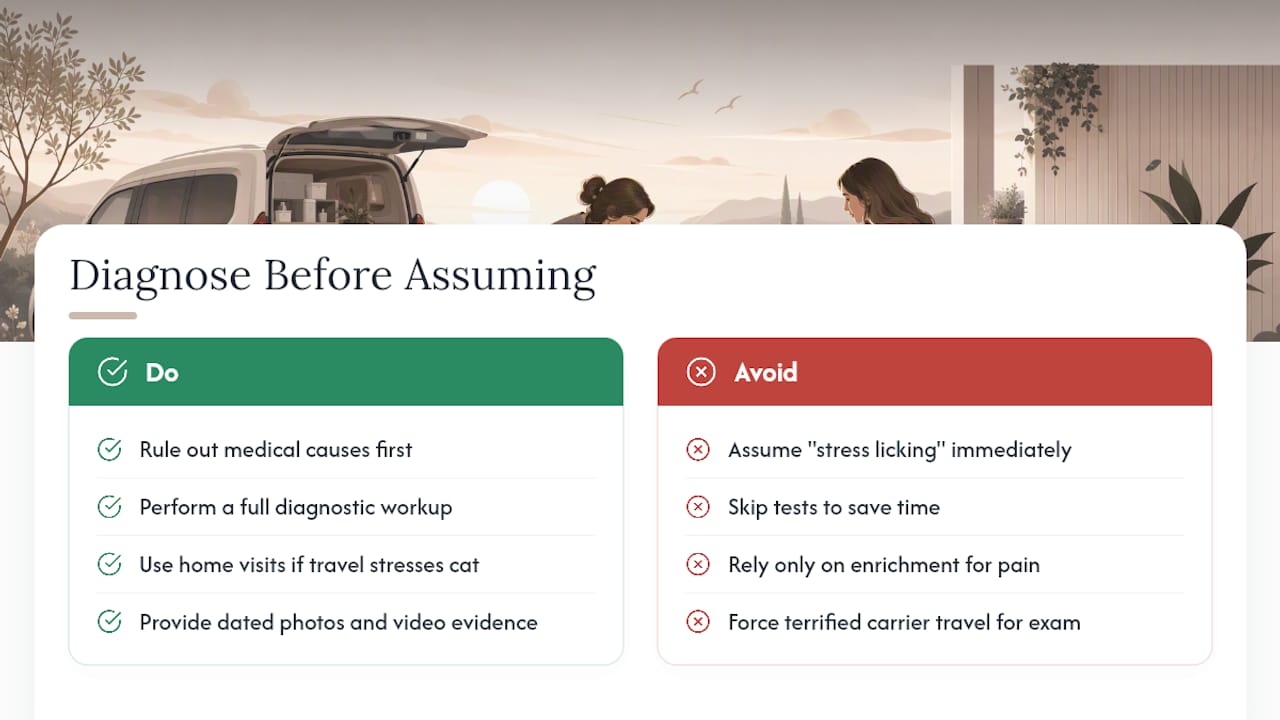
The workup outlined here isn't overkill. It's the difference between guessing and knowing. Where the home-visit option genuinely earns its place is with cats whose stress response to travel is itself a confound, since a terrified carrier ride can mask or exaggerate the very behavior you're trying to evaluate.
Prioritize documentation before your first appointment. A dated photo log and a short video of an actual grooming episode will save more diagnostic time than almost anything else you can do at home.
— CAVC
Get a Diagnostic-First Overgrooming Exam Without the Carrier Battle
Some veterinary centers provide cat owners with a calm, stress-reduced path to the diagnostic workup described above, without forcing an anxious cat through a stressful clinic visit if travel itself is the problem. A Fear Free approach means handling that minimizes a cat's stress before the exam even starts, and home visit options allow cats who shut down in carriers or waiting rooms to get skin cytology, bloodwork, and a full dermatologic exam done where they're comfortable.

That matters because a stressed cat during examination can muddy the very signs a vet is trying to evaluate. If your cat has been overgrooming, whether you're seeing early stubbly patches or full symmetric bald spots, the next step is booking a diagnostic exam rather than waiting to see if it resolves on its own. Visit City Animal Veterinary Center to schedule an appointment or ask about a home visit for cats who don't travel well.
This article is general information, not a substitute for advice from a qualified doctor. Consult a qualified healthcare professional about your own circumstances before acting on anything here.
Sources
- Cats that lick too much | Cornell University College of Veterinary Medicine
- Over-grooming in cats | International Cat Care (iCatCare)
- How I approach… Overgrooming in cats | Royal Canin Academy
- Cat Overgrooming: Why Is My Cat Licking Itself So Much? | PetMD
- Why your cat grooms so much | MSPCA-Angell