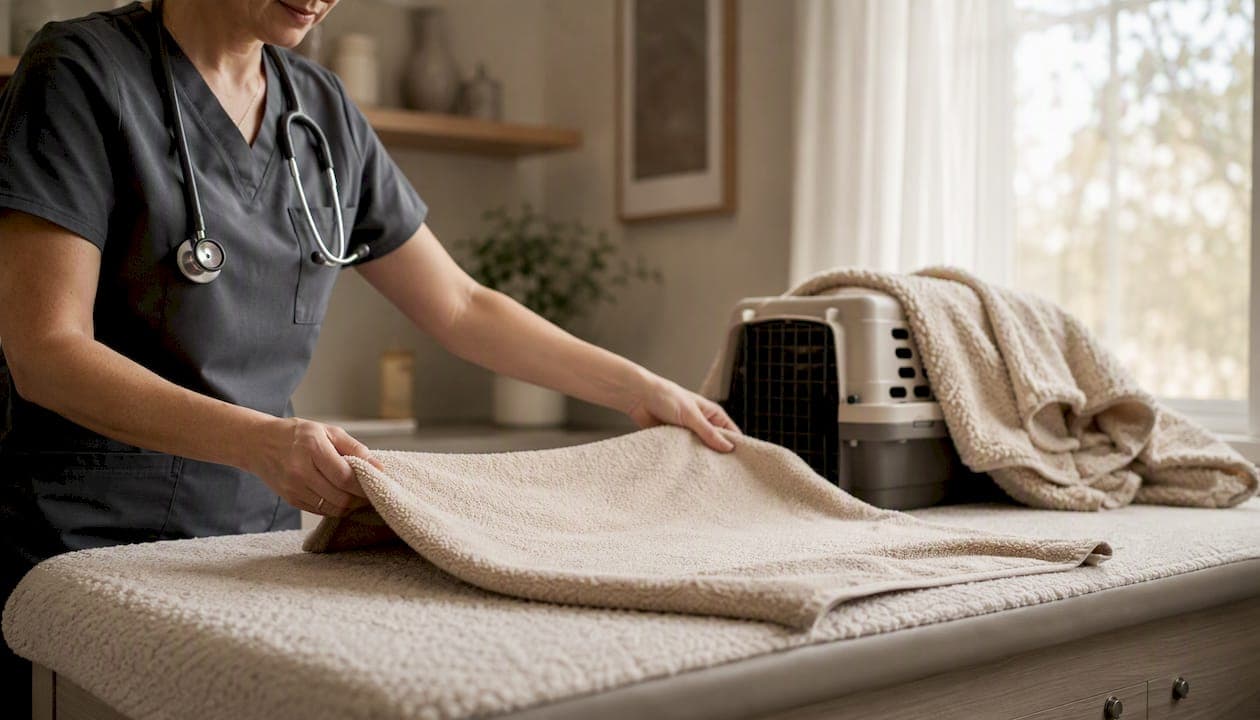
A cat friendly vet certification means the clinic has documented, feline-specific protocols for low-stress handling, a cat-adapted environment, and staff trained to read and respond to feline behavior — aligned with standards from the American Association of Feline Practitioners (AAFP) or the International Society of Feline Medicine (ISFM), or informed by Fear Free principles.
What that looks like in practice: staff who avoid scruffing, exam rooms designed around feline senses, and pre-visit guidance for you as the owner. The difference matters because a stressed cat gives unreliable diagnostics, is harder to examine safely, and is less likely to come back for the preventive care that catches problems early.
Three things a genuinely certified or cat-friendly practice will always have: documented staff training in feline handling, at least one environmental adaptation (cat-only room, separate waiting area, or scheduled cat-only times), and a written or stated restraint philosophy that prioritizes the cat's sense of control.
Key Takeaways
A cat friendly vet certification means the clinic uses verified, low-stress, feline-specific practices aligned with AAFP/ISFM standards or Fear Free principles, not just a general claim of being "good with cats."
| Point | Details |
|---|---|
| What certification means | AAFP/ISFM-aligned or Fear Free–informed clinic-level protocols for handling, environment, and staff training. |
| Top verification steps | Check catvets.com/cfp or catfriendlyclinic.org, ask three direct questions by phone, and request photos of cat-only spaces. |
| Two prep actions that help | Start carrier conditioning at home at least one week before the visit, and bring a lick mat with a high-value treat. |
| When to request a home visit | Book a house call when clinic-related panic persists despite pre-visit medication or when capturing normal behavior matters. |
| Local option | City Animal Veterinary Center in Brooklyn offers Fear Free–informed visits and house calls with feline-focused handling. |
Table of Contents
- What does cat friendly vet certification actually mean?
- 8 signs a practice is genuinely cat-friendly
- How do you verify a clinic's cat-friendly claims?
- What does a cat-friendly appointment actually look like?
- How to prepare your cat for a low-stress visit
- When is a home visit the better choice?
- City Animal Veterinary Center brings cat-friendly care to Brooklyn
- Why low-stress handling changes what we can actually do for your cat
- Sources
What does cat friendly vet certification actually mean?
The phrase covers two recognized programs and one widely adopted framework:
AAFP Cat Friendly Practice (CFP): Run by the American Association of Feline Practitioners, this U.S.-based program certifies clinics at Gold, Silver, or Bronze levels based on environment, handling protocols, and staff training. Listings are searchable at Catvets.
ISFM Cat Friendly Clinic: The international equivalent, run by the International Society of Feline Medicine. Clinics apply for Bronze, Silver, or Gold accreditation based on similar criteria. Searchable at catfriendlyclinic.org.
Fear Free: A separate U.S.-based certification program focused on reducing fear, anxiety, and stress across all species. Many cat-friendly practices layer Fear Free training on top of AAFP/ISFM alignment.
A clinic does not need all three to deliver genuinely low-stress feline care. What matters is whether the protocols are real and visible, not which logo is on the door.
8 signs a practice is genuinely cat-friendly
Use this checklist before you call or book. Each item is something you can verify with a short phone call or a look at the clinic's website.
| Sign | What to look for |
|---|---|
| Cat-only exam room or scheduled cat-only times | A dedicated room or blocked appointment slots where no dogs are present |
| Minimal restraint philosophy | Staff state they avoid scruffing; passive, cooperative techniques are standard |
| Pheromone use | Feliway or equivalent sprayed on towels, carriers, or in the exam room |
| Separate or screened waiting area | Cats are not seated next to dogs in an open lobby |
| Longer appointment slots | Cat appointments are typically longer than standard to allow for breaks |
| Staff feline training | Team can name AAFP/ISFM affiliation or specific feline-handling continuing education |
| Treats and distraction tools | Lick mats, high-value treats, and soft bedding are offered or encouraged |
| Directory listing or visible certificate | Clinic appears on catfriendlyclinic.org or catvets.com/cfp, or displays a certificate |
The 2022 ISFM/AAFP Cat Friendly Veterinary Environment Guidelines note that most of these adaptations are low-cost. Covering a carrier, dimming lights, and blocking visual contact with other animals can meaningfully reduce feline stress without a clinic renovation.
Pro Tip: Ask the receptionist one direct question: "Do you have a cat-only exam room, or do you schedule cat-only appointment times?" A confident, specific answer is a good sign. Vague or redirected answers are not.
How do you verify a clinic's cat-friendly claims?
Directory listings are a reliable starting point, but they work best when you combine them with a short phone call. Here is how to do it in under five minutes:
- Check the directories first. Search catfriendlyclinic.org (ISFM) and catvets.com/cfp (AAFP) for the clinic's name. A listing confirms the clinic has met a documented standard, not just claimed one. Practice-level certifications signal that a clinic has been evaluated against a defined set of criteria.
- Ask for the right person. When you call, ask to speak with the practice manager or the staff member responsible for feline care protocols.
- Use three specific questions: (1) "Are you listed on the AAFP Cat Friendly Practice or ISFM Cat Friendly Clinic directory?" (2) "What is your restraint philosophy for cats — do you avoid scruffing?" (3) "How long are your standard cat appointments?"
- Look for visible evidence online. Photos of exam rooms, team training statements, or a dedicated feline care page on the clinic's website all count.
- Watch for red flags. Evasive answers about restraint, no mention of feline-specific protocols, or a staff member who seems unfamiliar with the AAFP/ISFM programs are worth noting.
The 2022 ISFM/AAFP Cat Friendly Veterinary Interaction Guidelines emphasize that reading feline emotional cues and giving cats a sense of control are core competencies, not optional extras. A clinic that cannot speak to these points on the phone is unlikely to practice them in the exam room.
If you are still unsure after the call, ask to schedule a brief pre-visit video call or request a written summary of the clinic's feline handling policy.
What does a cat-friendly appointment actually look like?
The visit is built around your cat's pace, not the clinic's schedule.
Your cat stays in the covered carrier until the exam room is ready. Staff bring you directly to a cat-only room or a quiet area, bypassing the main waiting room. The team enters with minimal personnel and equipment already prepped so there is no clattering or sudden movement once your cat is out.
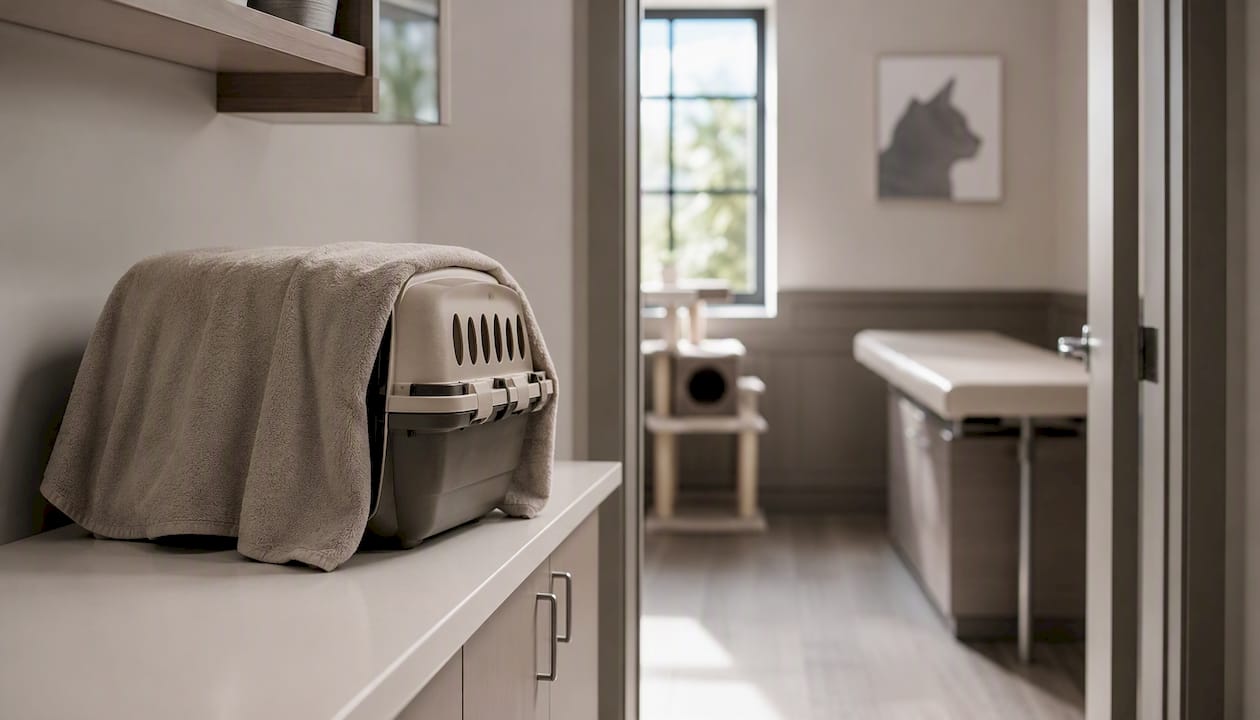
Handling follows what the AAFP Cat Friendly Practice Guide calls passive restraint: staff allow the cat to choose its position on the table, use pheromone-sprayed towels, and offer treats or a lick mat throughout. Scruffing is off the table. If a procedure is painful or the cat's stress is escalating, the clinician may delay it to a second visit or discuss anxiolytic support before proceeding.
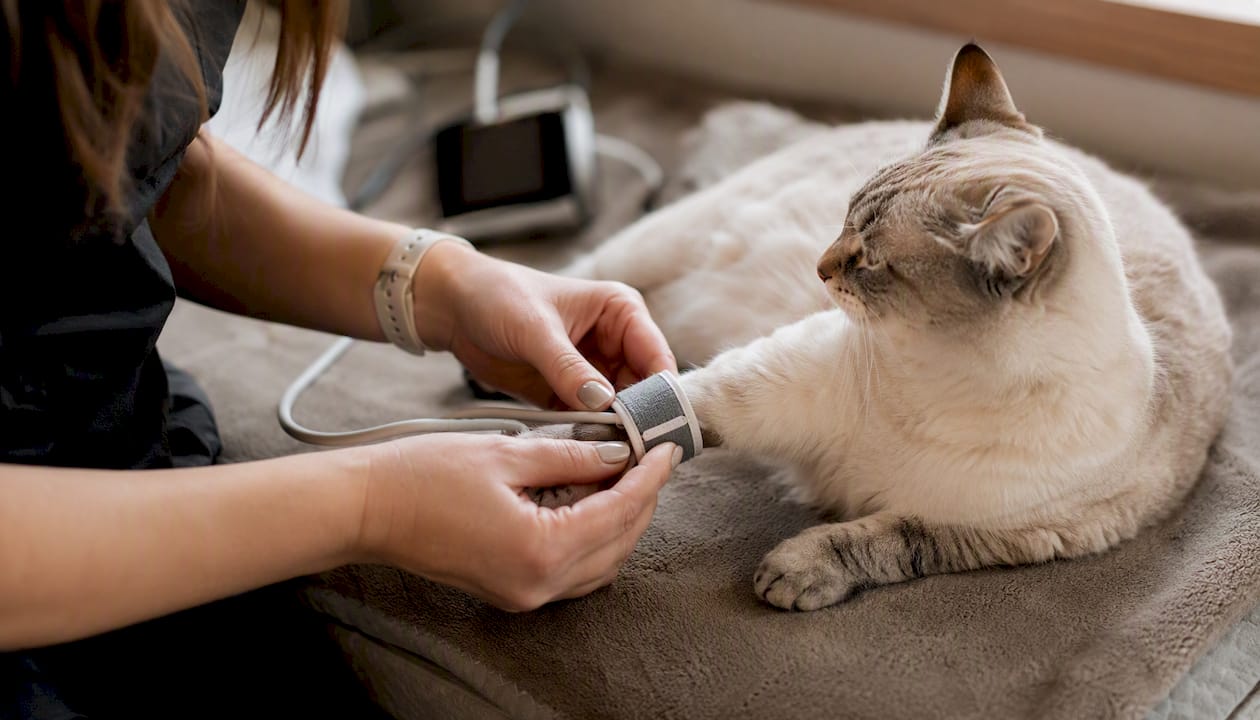
Diagnostics like blood pressure checks or blood draws are adapted too. A cat blood pressure test, for example, is typically done with the cat in a position it chooses, with minimal handling and a quiet room. Staff trained to read subtle feline body language — a tucked tail, flattened ears, a slow blink — can catch rising stress before it escalates and offer a break or a different approach.
Pro Tip: Bring a lick mat loaded with a soft, high-value treat like tuna paste or plain meat baby food. Cat-friendly clinicians actively encourage this because it keeps the cat focused on something positive and reduces the handling time needed.
How to prepare your cat for a low-stress visit
- Start carrier training at home. Leave the carrier out with the door open and familiar bedding inside for at least a week before the appointment. Short, treat-rewarded practice sessions inside the carrier help your cat associate it with calm rather than dread. The ICATCare owner guide walks through stepwise acclimation techniques you can start today.
- Spray the carrier with Feliway 30 minutes before travel. Place a worn T-shirt or familiar blanket inside. The ISFM/AAFP guidelines cite pheromone-sprayed bedding as one of the most effective low-cost stress reducers available to owners.
- Pack high-value treats and a lick mat. Bring something your cat does not get at home. Squeeze-tube treats or soft meat paste work well because they can be offered without the cat needing to move.
- Leave with time to spare. Rushing raises your stress, and cats read that. A calm car ride with the carrier covered and secured on the seat matters more than most owners expect.
- Discuss pre-visit anxiolytics if past visits have gone badly. If your cat has had highly stressful clinic experiences, call the clinic ahead of time and ask about their policy on pre-visit medication. Many cat-friendly practices support this. For a kitten's first visit, starting these habits early makes every future appointment easier.
Pro Tip: Never force your cat into an unnatural position for transport photos or loading. If your cat resists the carrier, ask the clinic for safe handling guidance before the appointment rather than improvising at home.
When is a home visit the better choice?
Some cats genuinely cannot tolerate a clinic environment, no matter how well-prepared the practice is. A house call removes the car ride, the waiting room, and the unfamiliar smells entirely.
- Situations that favor a home visit: extreme clinic-related panic that does not respond to pre-visit medication, owners with mobility limitations, or cases where capturing the cat's normal behavior at rest is clinically useful.
- How it differs from a clinic visit: the exam happens in the cat's chosen location, often on a favorite chair or bed. Fewer staff are present, the scents are familiar, and there is no environmental disruption. Restraint needs are typically lower.
- What it cannot replace: some diagnostics, including digital X-rays, ultrasound, or advanced lab work, require clinic equipment. A home visit clinician will tell you upfront what can be done at home and what will need a follow-up clinic appointment.
- How to arrange one: ask the clinic whether house calls are available, what the clinician brings, and whether the same AAFP/ISFM-aligned handling principles apply during home visits.
City Animal Veterinary Center brings cat-friendly care to Brooklyn
For Brooklyn cat owners, City Animal Veterinary Center offers Fear Free–informed, feline-focused appointments and house call services, so you are not choosing between low-stress care and convenience.
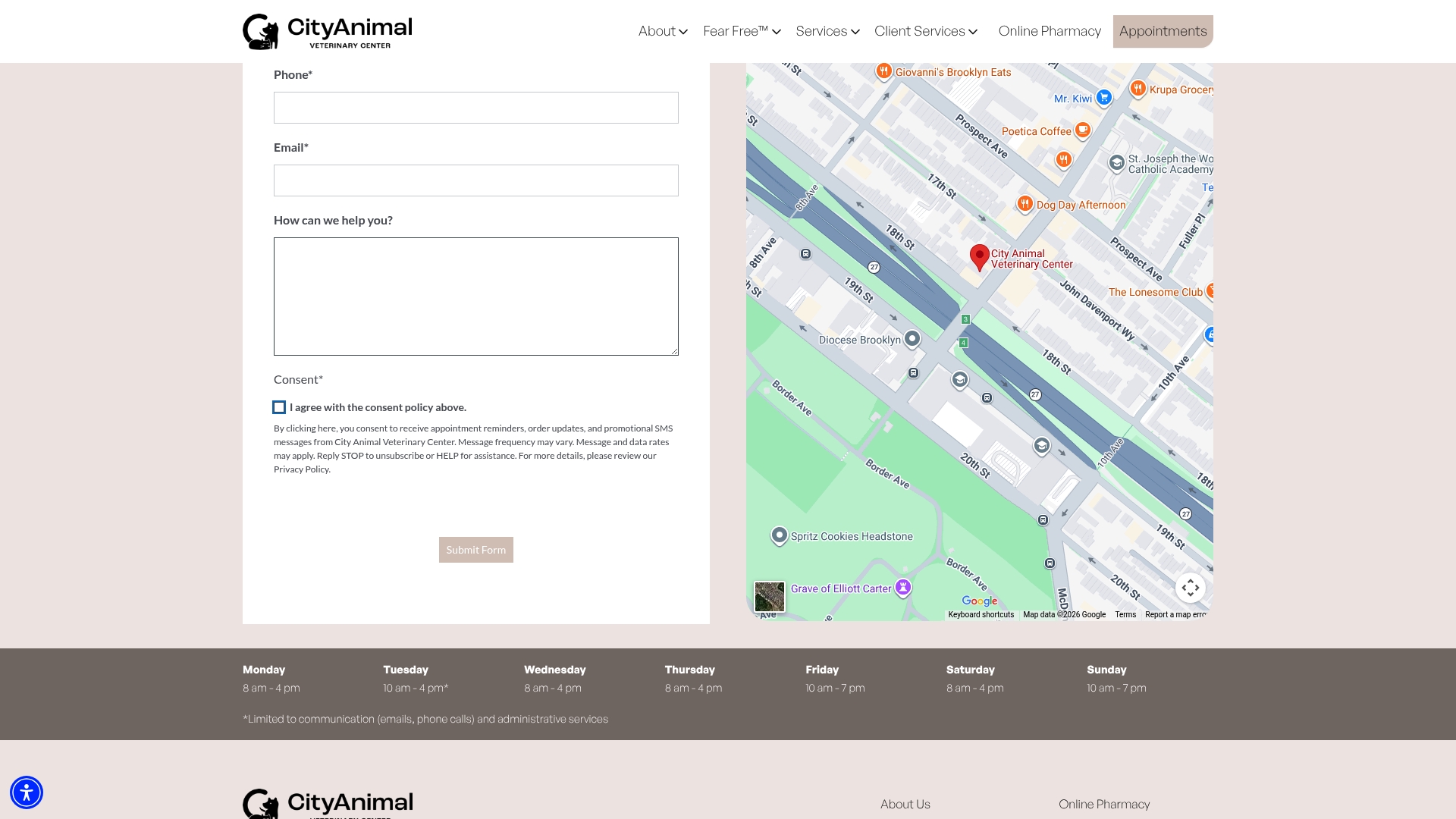
The clinic's approach follows the same principles this article covers: covered carriers straight to a calm exam space, treats and lick mats encouraged, minimal restraint methods, and staff trained in feline handling. For cats that cannot tolerate a clinic visit, house calls are available and follow the same low-stress protocols. City Animal also offers vet-approved nutrition guidance as part of a broader approach to feline wellness.
When you call to book, ask about cat-only appointment times and whether the clinic is listed on the AAFP Cat Friendly Practice directory. If your cat has had difficult visits in the past, request a house call or a dedicated feline appointment slot. Book your appointment at City Animal Veterinary Center and ask the team directly about their feline handling protocols.
Why low-stress handling changes what we can actually do for your cat
Cats that arrive terrified give us less to work with. Blood pressure readings spike, heart rates climb, and a cat in full defensive mode cannot be examined thoroughly or safely. The result is a shorter exam, fewer diagnostics, and a caregiver who dreads the next visit.
The AAFP/ISFM guidelines document something that matches what any experienced feline clinician observes: practices that follow cat-friendly protocols report fewer team injuries and fewer stress-related incidents. That is not incidental. A cat that feels safe holds still. A cat that holds still can be examined properly.
Owners who choose certified cat-friendly practices also tend to keep up with preventive care. That consistency is where real health outcomes are made, not in the single high-stakes emergency visit. If you have questions about feline-specific protocols or want to know whether a cat-only appointment slot is right for your cat, call the clinic directly.
Sources
The verification steps and checklist in this article draw from the following primary sources. Each one is publicly available and worth bookmarking.
- AAFP Cat Friendly Practice Guide (CFPGuide23-en.pdf)
- 2022 ISFM/AAFP Cat Friendly Veterinary Environment Guidelines
- TVP: Cat-Friendly Visits (abstract PDF)
- Cat carer guide: Cat friendly veterinary care | ICATCare
When in doubt about a clinic's claims, ask to see their directory listing or a visible certificate. A practice confident in its certification will have no hesitation showing you either.