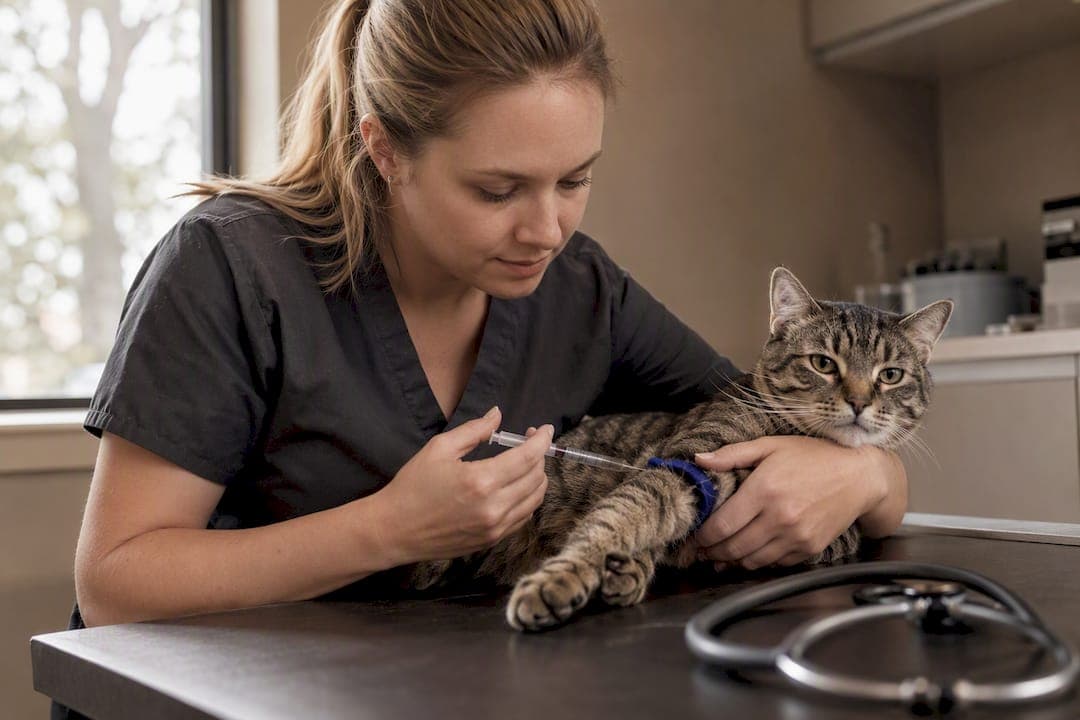
Yes, cats can be allergy-tested, and most owners end up on one of two paths: a blood test that checks for allergen-specific IgE antibodies, or an intradermal skin test performed by a veterinary dermatologist. Neither one is the first move, though. According to the Merck Veterinary Manual, the standard route starts with a history and exam, moves through parasite and infection rule-outs, adds a strict elimination diet if food is suspected, and only then reaches testing for environmental triggers. Lab options like ImmunoCAP assays from Thermo Fisher measure sensitization in blood samples, while City Animal Veterinary Center typically coordinates these steps as part of a broader diagnostic plan rather than ordering a test in isolation.
- Testing identifies sensitization, but not always the cause of symptoms.
- Food allergies are diagnosed through elimination diets, not blood or skin panels.
- Results mainly guide immunotherapy and avoidance strategies.
Pro Tip: Bring a symptom timeline to your first visit, noting when itching, ear infections, or GI upset started and whether they follow a seasonal pattern. It saves your vet a round of questions and speeds up the rule-out phase.
Key Takeaways
Allergy testing in cats works best as one step in a sequence, not a standalone answer, and the right test depends on whether food or environment is the suspected trigger.
| Point | Details |
|---|---|
| Testing follows rule-outs | Parasite control, infection treatment, and history come before any allergy test is ordered. |
| Food needs elimination diets | Blood and skin tests aren't validated for food allergy; an 8 to 12 week trial is the standard. |
| Intradermal testing is more conclusive | Estimated at 80% accuracy but requires sedation and a dermatologist referral. |
| Serum testing is more accessible | Convenient blood draw but more prone to false positives than skin testing. |
| City Animal Veterinary Center coordinates the full pathway | The clinic manages in-house blood draws, dermatologist referrals, and Fear Free handling throughout the process. |
Table of Contents
- When Should You Test Your Cat for Allergies?
- Serum Testing, Skin Testing, and Elimination Diets Compared
- What Happens During a Cat's Allergy Test Appointment
- How Reliable Are Cat Allergy Test Results?
- What Happens After a Positive Allergy Test Result
- Getting Your Cat Ready for Testing With Less Stress
- Is Intradermal Skin Testing Safe for Cats?
- Weighing the Trade-Offs Between Testing Options
- How a Fear Free Clinic Approaches Allergy Testing
- How City Animal Veterinary Center Supports Your Cat's Allergy Workup
- Frequently Asked Questions
- Sources
When Should You Test Your Cat for Allergies?
Vets don't reach for allergy testing the moment a cat starts scratching. They look for a pattern first: chronic itching that doesn't resolve with flea control, recurrent ear or skin infections, seasonal flare-ups, or obsessive licking at the paws and belly. Any one of these on its own could mean something else entirely, which is why the workup starts with elimination, not confirmation.
The standard sequence looks like this:
- Full history and physical exam, including flea and mite checks.
- Treatment of any active infections (bacterial or yeast) since they mimic and worsen allergic itching.
- A strict 8 to 12 week elimination diet trial if food allergy is on the list of suspects.
- Targeted testing (serum or intradermal) once environmental allergens remain the likely culprit.
Timing matters more than most owners expect. A cat tested during a symptom-free winter month may show fewer reactions to pollen allergens than the same cat tested in peak ragweed season. Medications complicate this further. Antihistamines and recent corticosteroids can suppress skin reactivity for weeks, so your vet will likely ask you to stop certain drugs before intradermal testing specifically.
Pro Tip: Ask your vet exactly which medications need a washout period and for how long before your cat's appointment. Steroids, in particular, can suppress test results for a month or more depending on the formulation.
Clinical guidance consistently stresses that testing should follow, not replace, a solid rule-out process, because a positive result can reflect sensitization that has nothing to do with your cat's current symptoms.
Serum Testing, Skin Testing, and Elimination Diets Compared
Three tools dominate the conversation around feline allergy diagnostics, and each answers a different question. Understanding what each one actually measures keeps you from expecting a single blood draw to explain everything.
Serum IgE testing, sometimes still called RAST testing (an older assay technology), measures antibody levels in a blood sample. Labs process the sample using assays like ImmunoCAP, and panels such as LabCorp's Allergen Profile for cats can reflex to component testing for specific Fel d proteins when the initial IgE result meets certain thresholds. This component-level detail helps distinguish a real primary sensitization from cross-reactivity between similar allergens.
Intradermal skin testing (IDT) works differently. A veterinary dermatologist injects small amounts of diluted allergen extracts into shaved skin and reads the resulting wheals for mast-cell mediated reactions, the same swelling response you'd see from a mosquito bite. This procedure generally requires sedation or heavy restraint and a referral, since it takes specialized training to perform and interpret.
| Method | What it tests | Sample/procedure | Accuracy and limits | Sedation/referral | Turnaround |
|---|---|---|---|---|---|
| Serum sIgE (ImmunoCAP/RAST) | Environmental allergen antibodies in blood | Blood draw, sent to reference lab | Accessible but prone to false positives | Not required | Days to about a week |
| Intradermal skin test | Direct skin reactivity to allergens | Injections under sedation, shaved test site | Estimated 80% accuracy per the Merck Veterinary Manual | Requires dermatologist referral | Read within 15 to 30 minutes on-site |
| Food elimination trial | Adverse reactions to specific proteins | Strict novel or hydrolyzed diet, 8 to 12 weeks | Considered the reference standard for food allergy | Not required | Weeks, not days |
Neither blood nor skin testing reliably diagnoses food allergy. Research on how allergy testing works in cats confirms that a controlled dietary trial remains the only validated method for identifying food-triggered skin or GI disease.
Pro Tip: If your vet suggests a mail-order "food sensitivity" panel using saliva or hair samples, ask about its validation. These kits aren't backed by the same peer-reviewed evidence as a supervised elimination trial.
What Happens During a Cat's Allergy Test Appointment
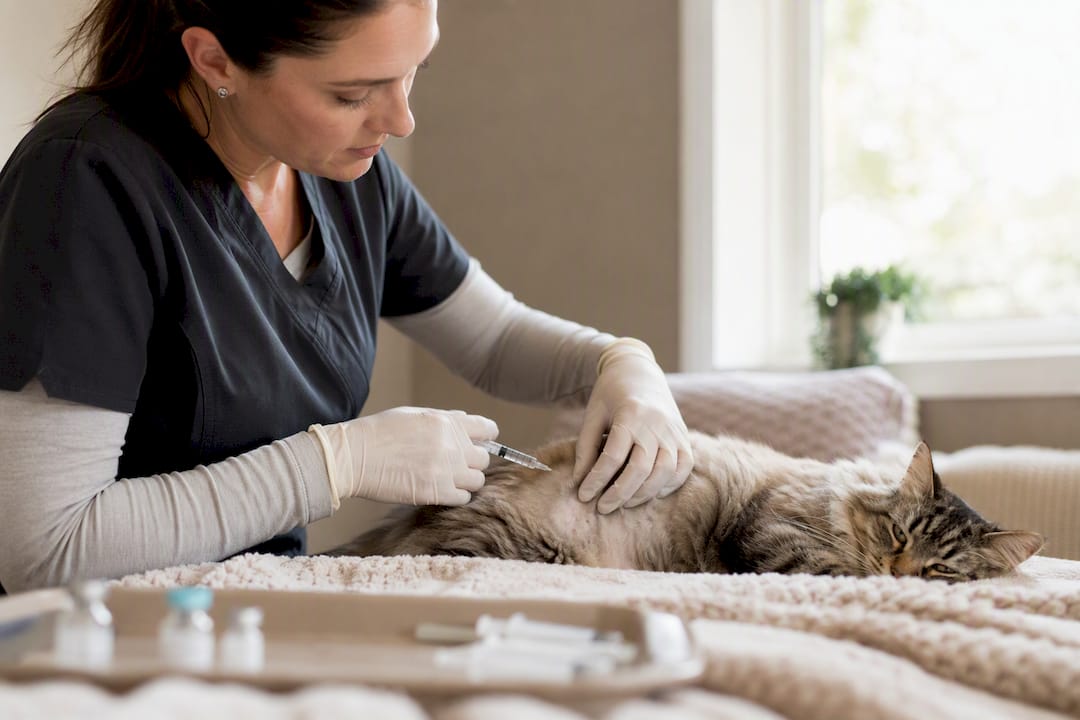
A serum test visit is fast and low-drama. Your vet draws blood during a regular appointment, the sample ships to a reference lab, and results typically return within several days to about a week, arriving as a report listing sIgE values for each allergen tested plus any component reflex results.
Intradermal testing takes more coordination. It happens at a referral appointment with a board-certified veterinary dermatologist, since the injection grid and reaction scoring require specialized training the Merck Veterinary Manual notes is central to accurate interpretation. Your cat is sedated or firmly restrained, a patch of fur is shaved, and a series of allergen extracts are injected in a grid pattern. The dermatologist reads the wheals 15 to 30 minutes later, then monitors your cat briefly afterward for any unusual reaction.
Before you book either test, ask:
- How long results take and who calls you with them.
- Whether the sample is processed in-house or sent to an outside lab.
- Whether payment happens at your regular clinic or at the referral practice.
Pro Tip: Request a copy of the written report, not just a verbal summary. Component-level data (like specific Fel d results) is easy to lose in a phone call but matters if you switch vets or pursue immunotherapy later.
How Reliable Are Cat Allergy Test Results?
Accuracy varies more than most owners assume, and the two main methods aren't interchangeable in reliability. Intradermal testing carries an estimated 80% accuracy according to the Merck Veterinary Manual, largely because it measures a direct physical response in the skin. Serum sIgE testing is more accessible, since it only requires a blood draw at a general practice, but it's also more prone to false positives.
Part of the problem is cross-reactivity. Allergens share structural similarities, and a cat's antibodies can bind to a related protein that isn't actually causing symptoms. This is where cross-reactive carbohydrate determinants, or CCDs, come in. Labs that use CCD blockers and offer component-resolved testing, like the reflex panel LabCorp runs for Fel d 1, Fel d 2, Fel d 4, and Fel d 7, produce results that are more specific and more useful for planning treatment.
Three mistakes show up again and again in practice:
- Testing before rule-outs are complete, which muddies the picture with unrelated skin disease.
- Running tests while a cat is still on antihistamines or steroids, suppressing results artificially.
- Treating a positive sensitization result as proof of causation instead of one piece of a larger clinical puzzle.
Pro Tip: A positive test result means your cat's immune system recognizes an allergen, not necessarily that this allergen explains the symptoms you're seeing. Your vet has to connect the dots with clinical history.
What Happens After a Positive Allergy Test Result
A positive result opens up two tracks: manage symptoms now, and consider longer-term prevention. Short-term relief usually means topical therapy, anti-itch medication, and treating any secondary skin or ear infections that have piled on top of the original allergy.
For environmental allergens that can't be avoided entirely, like dust mites or pollen tracked in from outside, allergen-specific immunotherapy (ASIT) is the longer-term option. Vets formulate an ASIT regimen directly from test results, whether serum-based or intradermal, targeting the specific allergens your cat's tests flag as clinically relevant. Veterinary dermatologists often reserve intradermal testing for cats being considered for this immunotherapy path, because IDT tends to identify the allergens actually active in the skin more precisely than a blood panel.
Expect a gradual timeline. ASIT benefit typically builds over several months, not days, and some cats need adjustments to the allergen mix as their response becomes clear.
- Address active infections and itching before starting immunotherapy planning.
- Reduce allergen exposure at home where practical (bedding washes, air filtration, litter changes).
- Ask whether a dermatology referral makes sense if symptoms are severe or testing results are ambiguous.
Pro Tip: Keep a simple symptom log for the first few months of any new treatment plan. It gives your vet real data to decide whether to adjust the immunotherapy formula.
Getting Your Cat Ready for Testing With Less Stress
Medication washouts come first: antihistamines and recent steroid courses can blunt intradermal test results, so follow your vet's specific timeline rather than guessing. Beyond medication, the visit itself is often the bigger hurdle for anxious cats.
A randomized trial found that a single oral dose of gabapentin reduced fear responses in confined cats without measurable sedation over a few hours, and a broader systematic review confirmed that gabapentin given before a veterinary visit consistently improved handling compliance across multiple trials.
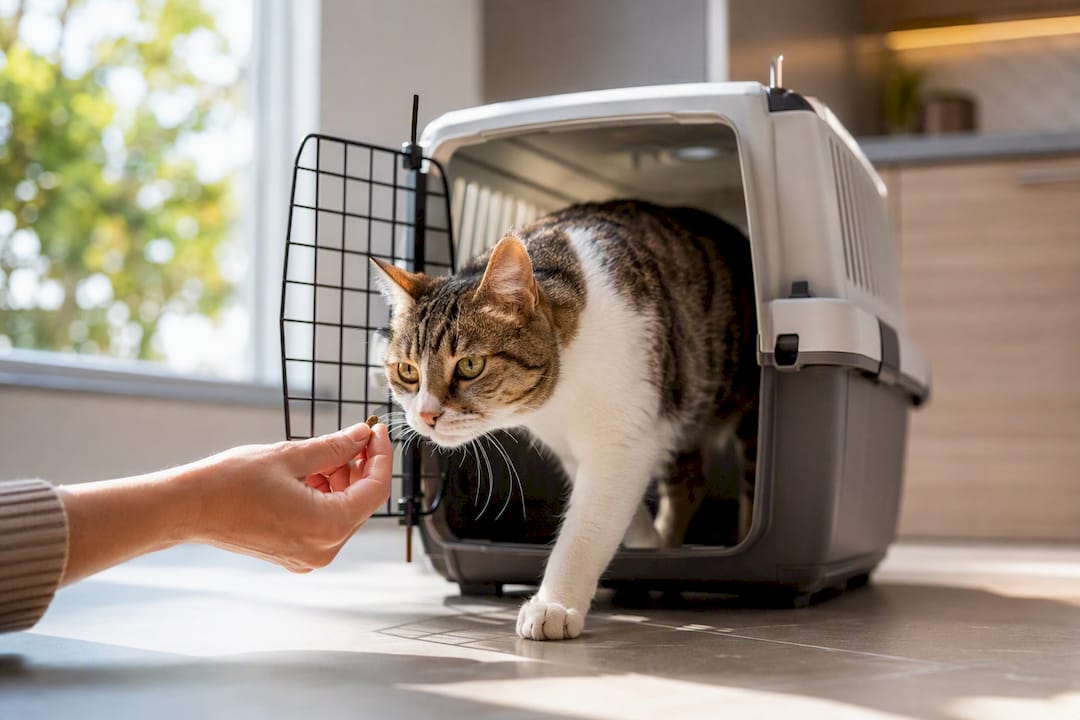
Common side effects include sedation, mild ataxia, and occasional drooling, so discuss dosing and suitability with your vet first, especially for cats with kidney issues. Carrier acclimation and familiar bedding help too, and if travel itself is the main stressor, ask about a home visit instead.
Pro Tip: Practice loading your cat into the carrier for a few minutes at a time, treats included, for a week before the appointment. It's the single cheapest stress-reduction tool available.
Is Intradermal Skin Testing Safe for Cats?
Intradermal testing is generally well tolerated, but it isn't risk-free, and owners deserve a clear picture before consenting. The procedure requires sedation or heavy restraint, which carries the standard, low risk associated with any sedation event, particularly in cats with underlying heart or kidney disease. Your dermatologist should screen for these before proceeding.
Locally, the injection sites can show mild swelling, redness, or discomfort for a short period after testing, similar to a series of small bug bites. Rarely, a cat may have a stronger systemic reaction to one of the allergen extracts, which is why testing happens in a clinical setting with monitoring immediately after the injections rather than at home.
There's also a subtler risk that has nothing to do with physical safety: over-interpretation. Because IDT detects mast-cell reactivity directly in the skin, a strong wheal can look dramatic and convincing even when it reflects sensitization that isn't driving the cat's actual symptoms. This is exactly why dermatologists interpret IDT results against the full clinical picture rather than treating any single reaction as a standalone diagnosis.
Shaving the test site is cosmetic but worth mentioning, since some owners aren't prepared for a visible bald patch that takes weeks to grow back. It's harmless, just unexpected if nobody mentions it beforehand.
Overall, the risk profile is low enough that board-certified veterinary dermatologists perform IDT routinely, but it's a procedure that belongs in a specialist's hands, not something attempted in general practice without the right training and monitoring setup.
Weighing the Trade-Offs Between Testing Options
We won't walk through dollar figures here, since pricing varies widely by clinic, region, and whether a referral is involved. What's worth weighing instead is what each test actually buys you for the effort involved.
Serum testing requires only a blood draw during a regular appointment, no referral, no sedation, and results come back within about a week. That convenience comes with a trade-off in specificity, since blood tests are more prone to false positives than skin testing.
Intradermal testing demands more: a specialist referral, sedation, and a dedicated appointment slot with a veterinary dermatologist. In exchange, you get a result the Merck Veterinary Manual considers more conclusive, which matters most if you're heading toward allergen-specific immunotherapy and need precise allergen identification.
Elimination diet trials cost the least in procedural complexity, no blood draw, no sedation, but ask the most of you as an owner: weeks of strict dietary control with zero treats or table scraps sneaking in. Many owners underestimate how disruptive this is until week three, when a well-meaning family member slips the cat a treat and the whole trial has to restart.
The right choice usually isn't about picking the "best" test in isolation. It's about matching the test to the clinical question. Suspected food allergy points toward elimination trials. Suspected environmental allergy heading toward immunotherapy points toward intradermal testing. A first pass at understanding what's going on, with lower logistical demands, points toward serum testing as a starting point.
How a Fear Free Clinic Approaches Allergy Testing
City Animal Veterinary Center builds allergy workups around a staged plan: history and physical exam first, infection and parasite rule-outs next, then a decision point between an elimination diet trial or targeted testing based on the pattern of symptoms. Fear Free techniques, like carrier acclimation coaching and pre-visit medication planning, get folded in at every stage rather than tacked on as an afterthought.
For environmental allergy suspects, the clinic can often run local serum blood draws in-house, only referring out to a veterinary dermatologist for intradermal testing when a cat is a strong candidate for immunotherapy. For cats who find any clinic visit overwhelming, home visits offer a way to complete history-taking and initial diagnostics without the added stress of travel.
How City Animal Veterinary Center Supports Your Cat's Allergy Workup
City Animal Veterinary Center handles the pieces of an allergy workup that actually require clinical judgment, not guesswork, starting with in-clinic blood draws that ship directly to reference labs and a referral pathway to veterinary dermatologists when intradermal testing makes sense for a candidate cat.
Every step is built around the clinic's Fear Free approach, which means carrier acclimation guidance and pre-visit medication planning happen before your cat ever sets paw in the exam room, not as an afterthought once stress has already set in. Once results come back, the team uses them alongside your cat's clinical history to shape a real treatment plan: infection control, elimination diet coaching if food is still in question, and immunotherapy planning if environmental allergens are the driver. For cats who find clinic visits genuinely distressing, home visits let the diagnostic process continue without the car ride. If your cat's itching, ear infections, or licking have you wondering whether testing makes sense, contact City Animal Veterinary Center to schedule an allergy evaluation and find out which path fits your cat.
Frequently Asked Questions
Can you allergy test a cat like you would a person? Not quite. Cats can be tested for environmental allergen sensitization through blood or skin tests, but food allergies require a supervised elimination diet trial rather than a panel test, unlike some human allergy workups.
What's the difference between gabapentin and trazodone for reducing a cat's stress before testing? Gabapentin is typically dosed once, 90 to 120 minutes before a visit, and research shows it reduces fear responses without heavy sedation in many cats. Trazodone works through a different mechanism and is sometimes used for cats needing a stronger anxiolytic effect. Your vet will weigh trazodone vs gabapentin for cats based on temperament, health history, and how the cat has responded to each in the past.
Is gabapentin safe for cats before a vet visit? For most healthy cats, a single pre-visit dose is well tolerated, though common side effects include sedation, mild loss of coordination, and drooling. Cats with kidney or liver disease need a dosing discussion with their vet first, since gabapentin is processed differently in those patients.
What's a typical gabapentin dose for cats' anxiety before an appointment? Studies commonly use doses in a moderate milligram range for an average-sized cat, given as a single oral dose about two hours before the visit. The exact amount depends on your cat's weight and health status, so this should always come from your veterinarian, not a generic chart.
How accurate is a blood allergy test compared to a skin test?
Can allergy testing tell me if my cat has a food allergy? No single blood or skin test reliably diagnoses food allergy in cats. A strict elimination diet trial lasting 8 to 12 weeks remains the standard method for identifying food-triggered reactions.
This article is general information, not a substitute for advice from a qualified doctor. Consult a qualified healthcare professional about your own circumstances before acting on anything here.
Sources
- Single-dose gabapentin reduces fear responses in confined community cats — PMC
- Systematic review: gabapentin effects on stress and handling in cats — Vetsci (MDPI)
- 606650: Allergen Profile, Cat, IgE With Component Reflex | Labcorp
- Gabapentin for cats and dogs — WebMD