
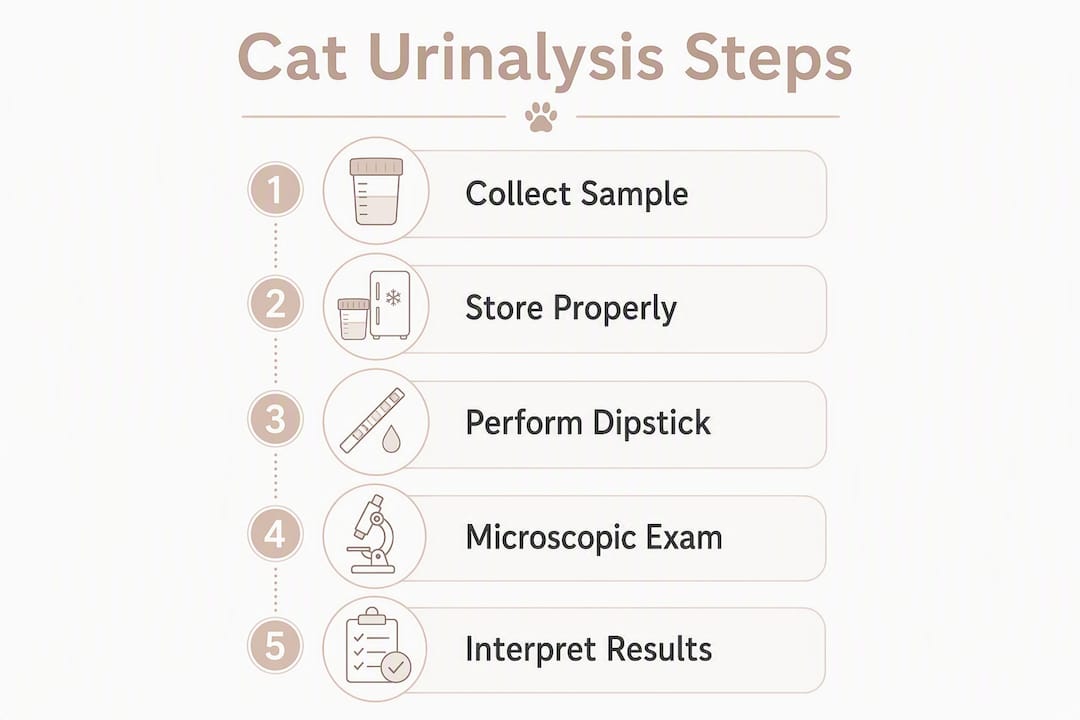
A cat urinalysis examines three things: urine concentration (specific gravity), chemical composition via dipstick, and microscopic sediment. Together, those three components can detect kidney disease, urinary tract infections, diabetes, bladder stones, and a range of systemic conditions before your cat shows obvious symptoms. If your vet has ordered one, or you're trying to make sense of a lab report, here's exactly what the test involves and what the results mean.
The three parts of a complete urinalysis:
- Physical/USG exam: Measures urine color, clarity, and specific gravity (concentration) using a refractometer.
- Chemical dipstick: A reagent strip that checks pH, protein, glucose, ketones, blood, and bilirubin simultaneously.
- Microscopic sediment: A centrifuged sample examined under a microscope for cells, crystals, casts, and bacteria.
For a home-collected sample, bring it to the clinic within 30–60 minutes of collection in a clean, sealed container, as urine should ideally be analyzed within about an hour for the most reliable results. First-morning urine is the most concentrated and gives the most useful results.
Table of Contents
- What a urinalysis includes and why your vet orders it
- How vets collect urine: cystocentesis, catheterization, and free-catch
- How to handle, store, and transport urine samples
- What each part of the urinalysis actually measures
- How to interpret common abnormal results
- When your vet will order a urine culture
- Common causes of false positives and the limits of the test
- When to repeat urinalysis and what follow-up looks like
- Fear-Free handling and why it improves your cat's results
- Key Takeaways
- City Animal Veterinary Center's urinalysis and diagnostic services
- Useful sources and further reading
What a urinalysis includes and why your vet orders it
A urinalysis is a standard part of what veterinarians call a "minimum database" — the baseline set of tests that give a broad picture of your cat's health. It rarely stands alone. Vets use it alongside bloodwork, physical exam findings, and sometimes imaging to build a complete diagnostic picture.
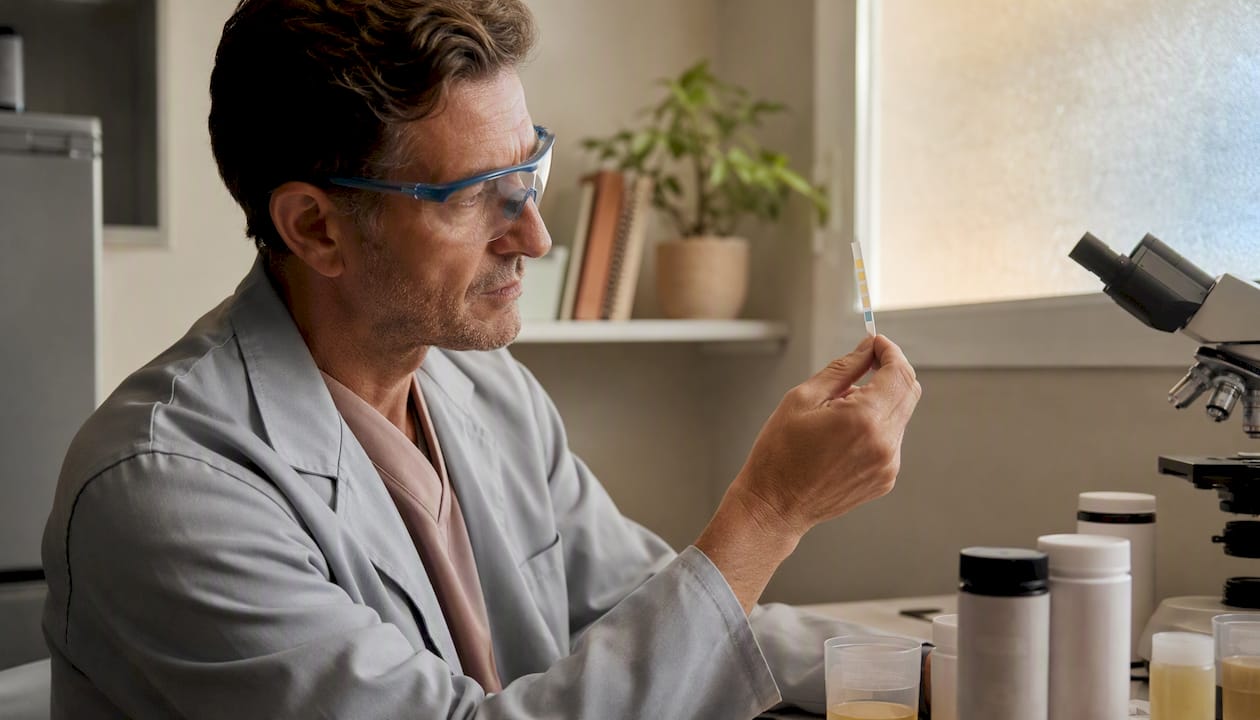
The test itself has three components. The physical exam covers color, turbidity, and specific gravity. The dipstick chemistry panel screens for protein, glucose, blood, ketones, bilirubin, and pH. Microscopic sediment analysis looks at what's actually floating in the urine: red blood cells, white blood cells, bacteria, crystals, casts, and epithelial cells. According to iCatCare's 2025 consensus guidelines, USG should be measured with a refractometer before any fluid therapy, since IV fluids dilute the sample and erase one of the most clinically valuable data points.
Common reasons a vet orders a cat urine test:
- Changes in urination frequency, volume, or posture
- Blood visible in urine (hematuria)
- Increased thirst or urination (polydipsia/polyuria)
- Routine screening for kidney disease, diabetes, or hyperthyroidism
- Monitoring cats on long-term medications (NSAIDs, steroids)
- Pre-anesthetic workup for older cats
- Follow-up after a previous abnormal result
A few terms you'll see on the report:
- USG (urine specific gravity): A measure of how concentrated the urine is.
- Hematuria: Red blood cells in urine.
- Pyuria: White blood cells in urine, often signaling infection or inflammation.
- Crystalluria: Crystals present in the sediment.
As the Merck Veterinary Manual notes, a single abnormal value rarely provides a diagnosis on its own. Interpretation always requires correlation with clinical signs, physical exam, and other diagnostics.
How vets collect urine: cystocentesis, catheterization, and free-catch
The collection method matters more than most owners realize. It directly affects which findings are clinically meaningful and which are artifacts of the collection process itself.
Cystocentesis
A needle is passed through the abdominal wall directly into the bladder under ultrasound guidance. This is the cleanest method: the sample is sterile, free of urethral or environmental contamination, and the only acceptable method when urine culture is planned. The main limitation is that it requires a reasonably full bladder and a cooperative patient. Mild hematuria from the needle pass is possible but usually clinically insignificant.
Urethral catheterization
A sterile catheter is passed through the urethra into the bladder. Used when cystocentesis isn't feasible or when the bladder is not palpable. The downside: catheterization introduces more epithelial cells and carries a higher contamination risk than cystocentesis, which complicates sediment interpretation. It's also more stressful for most cats.
Free-catch (voided) sample
The owner or technician collects urine as the cat voids naturally. Easiest for owners to do at home, but the sample picks up cells, bacteria, and debris from the lower urethra, prepuce, or vulva. Useful for routine screening but not reliable for culture.
| Method | Sterility | Best for | Contamination risk |
|---|---|---|---|
| Cystocentesis | Highest | Culture, definitive diagnosis | Very low |
| Catheterization | Moderate | When bladder not accessible | Moderate |
| Free-catch | Lowest | Routine screening, home collection | High |
Pro Tip: If your vet asks you to collect a sample at home, use a clean, rinsed container (no soap residue), collect the first-morning void, and get it to the clinic within an hour. Avoid letting the sample touch litter, the floor, or any surface that might introduce bacteria.
How to handle, store, and transport urine samples
Timing is one of the most overlooked variables in feline urinalysis. A sample that sat on the counter for three hours before the appointment can produce false crystal findings, bacterial overgrowth, and pH drift — all of which can lead to unnecessary follow-up tests.
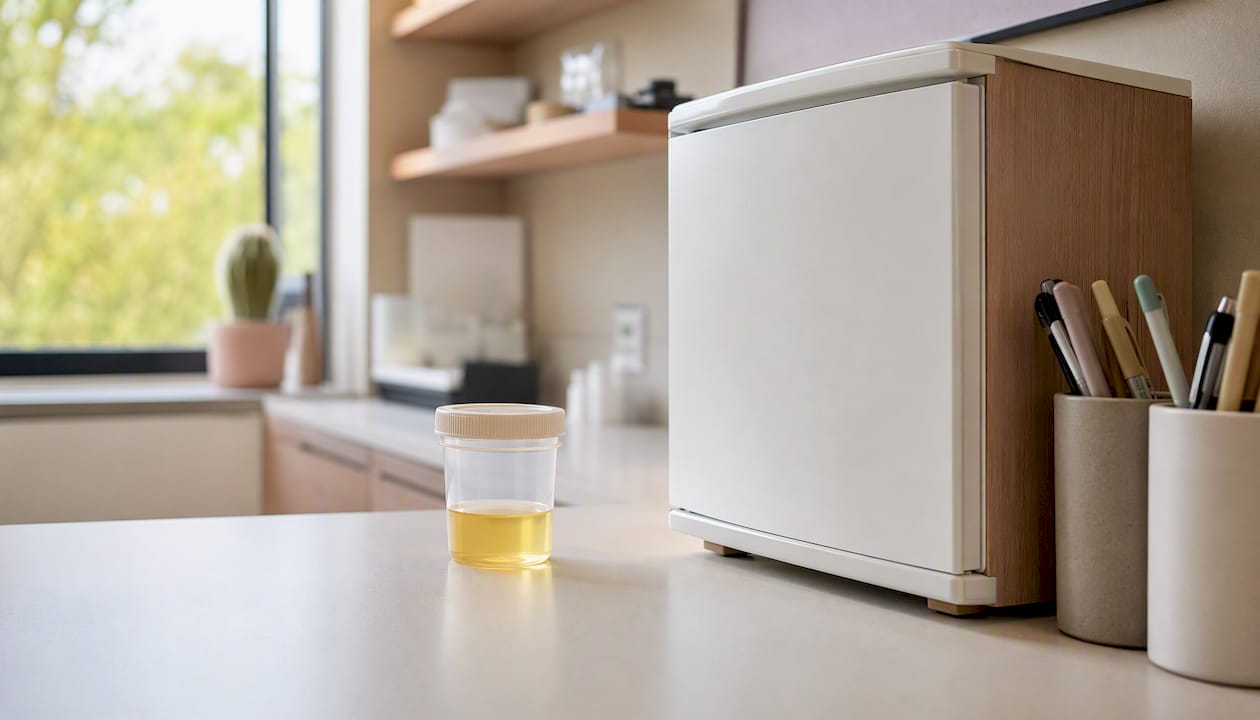
The MSD Veterinary Manual recommends evaluating urine within 30 minutes of collection. If immediate drop-off isn't possible, refrigerate the sample at 4°C and analyze it within 24 hours. Refrigeration slows bacterial growth and cellular degradation, but it can cause crystal precipitation in samples that would otherwise be crystal-free at body temperature. Always let a refrigerated sample return to room temperature before analysis to reduce this artifact.
If a significant delay is expected and cytology is a priority, a preservative can be added. A few drops of 10% formalin preserves cells better than boric acid, but it changes staining characteristics, so the lab must be informed.
Home collection and transport checklist:
- Collect first-morning urine when possible (most concentrated)
- Use a clean, dry, lidded container (no soap residue)
- Label the container with your cat's name, collection time, and collection method
- Refrigerate immediately if you can't leave for the clinic within 30 minutes
- Transport in a small cooler bag if the drive is longer than 20 minutes
- Tell the clinic staff the exact collection time when you arrive
For in-clinic collection, dipstick and microscopic results are typically available within minutes to an hour. Urine culture results, when ordered, take 48–72 hours because the lab must grow any bacteria present before identifying the organism and testing antibiotic sensitivity.
What each part of the urinalysis actually measures
Specific gravity (USG)
USG tells you how well the kidneys are concentrating urine. It's measured with a refractometer, a handheld optical instrument that reads the refractive index of the sample. The Merck Veterinary Manual places the lower threshold for normal concentration at 1.015, with hypersthenuric (highly concentrated) urine in the 1.025–1.040 range for cats. Values below 1.010 suggest the kidneys are producing urine more dilute than plasma, which can be seen in diabetes insipidus, early kidney disease, or certain medications. A single low USG reading in an otherwise healthy cat isn't automatically alarming, but a persistently dilute sample warrants investigation.
Chemical dipstick
The dipstick is a plastic strip with multiple reagent pads, each reacting to a specific analyte. Results are read by color change, either visually or with an automated reader. Research published in PMC confirms that while dipstick testing is quick and cost-effective, some pads are unreliable in cats. The leukocyte and nitrite pads should not be used to rule in or rule out infection in feline samples. pH pads are accurate only to within ±0.5 units, which matters when you're trying to interpret crystal type.
Microscopic sediment
The sample is centrifuged, the supernatant poured off, and the pellet resuspended and placed on a slide. A trained technician or veterinarian examines it under low and high magnification. This is where the real diagnostic detail lives: you can see individual red blood cells, white blood cell clusters, bacterial rods or cocci, struvite or calcium oxalate crystals, and casts (cylindrical structures that form in the renal tubules and indicate kidney involvement).
| Component | What it measures | Key feline reference points |
|---|---|---|
| USG | Urine concentration | Normal: 1.015–1.040; <1.010 = isosthenuria |
| pH | Acid-base balance | Normal: 6.0–7.0; diet and stress shift this |
| Protein | Albumin presence | Trace acceptable in concentrated urine |
| Glucose | Blood sugar spillover | Should be negative; positive suggests diabetes |
| Blood/hemoglobin | RBCs or free hemoglobin | Should be negative |
| Ketones | Fat metabolism byproduct | Should be negative |
| Bilirubin | Liver/bile pigment | Trace may be normal in concentrated samples |
| WBCs in sediment | Inflammation/infection | >5 WBCs/hpf is abnormal |
| RBCs in sediment | Bleeding anywhere in tract | >5 RBCs/hpf is abnormal |
| Casts | Renal tubule involvement | Hyaline casts: occasional; granular/cellular: abnormal |
How to interpret common abnormal results
Proteinuria
Protein on the dipstick means little without knowing the USG. A trace of protein in highly concentrated urine (USG >1.040) can be normal. The same trace reading in dilute urine (USG 1.010) is a red flag. When protein is present with an inactive sediment (no cells, no casts), the next step is a urine protein:creatinine ratio (UP:UC). The Merck Veterinary Manual sets the abnormal threshold for cats at a UP:UC above 0.4:1. Values above that suggest genuine renal protein loss and warrant further workup.
Hematuria and pyuria
Blood in the urine points to bleeding somewhere in the urinary tract: the kidney, ureter, bladder, or urethra. Causes range from bladder stones and infection to polyps or, less commonly, neoplasia. Pyuria (white blood cells in sediment) signals inflammation or infection. When you see both hematuria and pyuria together with bacteria on sediment, a urinary tract infection is the likely diagnosis. Hematuria without pyuria or bacteria is more suggestive of uroliths, trauma, or idiopathic feline lower urinary tract disease (FLUTD).
Crystals
Struvite (magnesium ammonium phosphate) and calcium oxalate are the two most common crystal types in cats. Struvite crystals form in alkaline urine; calcium oxalate crystals form in acidic urine. Here's the critical point: per the 2025 iCatCare guidelines, crystal type does not reliably predict stone type. Cats can have uroliths without any crystalluria, and crystalluria doesn't confirm stones. Imaging is required to diagnose uroliths definitively.
Glucosuria and ketones
Glucose in the urine almost always means blood glucose has exceeded the renal threshold, which in cats is typically around 280–300 mg/dL. Diabetes mellitus is the most common cause. Ketones alongside glucosuria suggest the cat is in a metabolic crisis (diabetic ketoacidosis) and needs urgent care. Either finding requires a blood glucose measurement before drawing any conclusions.
Dilute urine
Persistently dilute urine (USG <1.020) in a cat that isn't on diuretics or IV fluids is a significant finding. Chronic kidney disease, hyperthyroidism, diabetes insipidus, and liver disease can all reduce concentrating ability. A single dilute reading after a stressful car ride is less concerning than three consecutive dilute samples collected at home.
When to seek immediate veterinary care:
- Your cat is straining to urinate and producing little or no urine (possible urethral obstruction)
- Blood is visible in the urine alongside lethargy or vomiting
- Your cat has stopped urinating entirely
- Glucosuria with vomiting, lethargy, or rapid breathing (possible diabetic ketoacidosis)
Pro Tip: After an abnormal urinalysis, ask your vet three questions: "Does this result change with repeat testing?" "Should we check a UP:UC ratio or blood glucose?" and "Do we need imaging to rule out stones?" Those three questions cover the most common next-step decisions.
When your vet will order a urine culture
A routine urinalysis can suggest infection, but it can't confirm it or identify the organism. That's what culture is for. PetMD describes urine culture as the gold standard for detecting bacterial infection, providing both organism identification and antibiotic susceptibility data.
Clinical indications for culture:
- Bacteria visible on sediment with consistent clinical signs (straining, blood, frequency)
- Recurrent urinary tract infections (more than two per year)
- Before surgical removal of uroliths
- Suspected complicated infections (cats with diabetes, CKD, or immunosuppression)
- Cats on long-term antibiotics where resistance is a concern
Cystocentesis is required for culture. A free-catch sample carries too much contamination risk to produce a reliable result. The lab inoculates the sample onto growth media and incubates it. If bacteria grow, they're identified and tested against a panel of antibiotics to determine sensitivity.
Culture results typically take 48–72 hours. In the meantime, your vet may start empiric antibiotic therapy based on the most likely organisms and local resistance patterns, then adjust the prescription once sensitivity results come back. If the culture is negative but signs persist, that's diagnostically useful too — it shifts the focus away from infection toward other causes like FLUTD or uroliths.
While waiting for results, monitor your cat's urination frequency, posture, and comfort level. If signs worsen before the results are back, call the clinic rather than waiting.
Common causes of false positives and the limits of the test
A urinalysis is only as good as the sample and the handling. Several factors can produce results that look abnormal but aren't clinically meaningful.
Pre-analytic errors:
- Delayed analysis: Samples analyzed more than an hour after collection can develop artefactual crystalluria and bacterial overgrowth that wasn't present in the fresh sample.
- Improper refrigeration: Refrigerating without sealing the container causes evaporation and concentration changes.
- Contaminated containers: Soap residue or environmental bacteria in the collection cup introduces false pyuria and bacteriuria.
- Free-catch contamination: Cells from the vulva, prepuce, or skin can inflate epithelial cell and WBC counts.
Analytical limitations:
The leukocyte and nitrite dipstick pads are unreliable in cats and should not be used to diagnose or exclude infection. pH readings carry a ±0.5 unit margin of error, which matters when you're interpreting crystal type. A pH reading of 6.5 could actually be 6.0 or 7.0 — a difference that changes whether struvite or calcium oxalate crystals are expected.
Biologic factors:
Stress raises urine pH in some cats and can produce transient glucosuria without diabetes. A single high-stress clinic visit can shift pH enough to change crystal interpretation. Diet also affects pH significantly: high-protein diets acidify urine, while plant-heavy or grain-based diets push it alkaline.
A single abnormal result should rarely drive a treatment decision in isolation. Repeat sampling, ideally under better conditions, is often the most informative next step.
Pro Tip: Always write the collection method on the sample label or request form. A vet reading sediment results needs to know whether the sample was collected by cystocentesis or free-catch — the acceptable WBC count differs significantly between the two, and that single piece of information changes the interpretation.
When to repeat urinalysis and what follow-up looks like
Repeat testing intervals depend on what the first result showed and what condition is being managed.
Common repeat intervals:
- After UTI treatment: Recheck urinalysis and culture 5–7 days after completing antibiotics to confirm resolution.
- After dietary change for crystals: Recheck in 4–6 weeks to assess whether crystal type or pH has shifted.
- Chronic kidney disease (CKD) monitoring: Every 3–6 months depending on disease stage, alongside bloodwork for BUN, creatinine, and phosphorus.
- Diabetes management: Monthly or quarterly, depending on glycemic control.
- After a single dilute sample: Recheck in 2–4 weeks with a home-collected first-morning sample to see if the finding persists.
Immediate repeat testing is warranted when a cat is straining to urinate, producing no urine, or showing signs of systemic illness (vomiting, lethargy, collapse). A urethral obstruction is a life-threatening emergency, and urinalysis in that context is part of an urgent diagnostic workup, not a routine recheck.
Follow-up often integrates multiple tests. A cat with persistent proteinuria needs a UP:UC ratio and a blood pressure measurement. A cat with crystalluria and suspected stones needs abdominal radiographs or ultrasound. A cat with dilute urine and weight loss needs a full chemistry panel including thyroid hormone. Urinalysis guides which direction to go, but it rarely ends the diagnostic conversation.
For home monitoring, free-catch samples are acceptable for routine rechecks between clinic visits. If your vet suspects active infection or needs a sterile sample for culture, they'll want an in-clinic cystocentesis rather than a home collection.
Fear-Free handling and why it improves your cat's results
Stress isn't just uncomfortable for your cat. It changes the urine. Research supports that stress during a clinic visit can physiologically alter urine pH, and minimizing anxiety through gentle handling directly contributes to diagnostic reliability. A cat that arrives terrified, fights through the exam, and voids from stress produces a sample with shifted pH and potentially elevated glucose — findings that can look like disease when they're actually artifacts of the visit itself.
Fear-Free techniques address this at the source. Quiet handling, pheromone diffusers (Feliway is commonly used in clinical settings), low-light exam rooms, and minimal restraint all reduce the cortisol spike that distorts results. The goal isn't just a calmer cat — it's a more accurate test.
Fear-Free handling isn't a comfort add-on. When a cat arrives calm and the sample is collected without a fight, the results reflect the cat's actual physiology rather than its stress response. That distinction changes clinical decisions.
For cats who find the clinic itself distressing, a house call removes the car ride, the waiting room, and the unfamiliar smells entirely. A sample collected at home, in the cat's own environment, is often more representative of baseline health than one collected after a 45-minute commute. City Animal Veterinary Center offers house-call services specifically for situations like this, and the clinic's Brooklyn location handles in-house urinalysis, culture submission, and Fear-Free diagnostics under one roof.
Pro Tip: Two days before a scheduled urine collection, start leaving the carrier out with a familiar blanket inside. Spray the carrier interior with Feliway 30 minutes before the trip. Cats that enter the carrier voluntarily arrive at the clinic with measurably lower stress markers than those that are chased and stuffed in at the last minute. For more on reducing clinic-induced stress, the same principles that apply to blood pressure testing apply here.
Key Takeaways
A complete urinalysis for cats combines specific gravity, dipstick chemistry, and microscopic sediment analysis to detect urinary, kidney, and systemic disease — and results are only reliable when the sample is fresh, properly handled, and interpreted alongside clinical context.
| Point | Details |
|---|---|
| Bring a fresh first-morning sample | Collect within 30–60 minutes of the appointment; refrigerate if delayed, but note it may affect crystal findings. |
| Label the collection method | Free-catch vs. cystocentesis changes what sediment findings are considered normal — always note it on the form. |
| Dipstick results are fast; culture takes days | In-house dipstick and microscopy are available within an hour; urine culture results take 48–72 hours. |
| Crystals don't confirm stones | Crystal type on sediment does not reliably predict urolith type; imaging is required for a definitive stone diagnosis. |
| City Animal Veterinary Center | Offers in-house urinalysis, culture submission, Fear-Free handling, and house-call sample collection in Brooklyn, NY. |
What City Animal Veterinary Center prioritizes in feline diagnostics
At City Animal Veterinary Center, the approach to urinalysis reflects a broader commitment: diagnostics should be accurate, and accuracy depends on how the sample is collected, not just how it's analyzed. Fear-Free handling isn't incidental to that — it's central. A cat that arrives calm produces a sample that reflects its actual physiology. That matters for every result on the report, from pH to sediment cell counts.
The clinic's in-house diagnostic capabilities mean that dipstick and microscopy results are available during the appointment, so conversations about next steps happen in real time rather than days later. For cats who need culture, samples are submitted to a reference lab with full chain-of-custody documentation. For cats who find clinic visits distressing, house-call options bring the diagnostic process to the cat's own environment.
Every abnormal result comes with a conversation. Owners leave understanding what the finding means, what the likely next steps are, and when to be concerned versus when to watch and recheck. That's the standard the clinic holds itself to.
City Animal Veterinary Center's urinalysis and diagnostic services
When your cat's urine test comes back with an abnormal result, the next step shouldn't be a Google spiral. City Animal Veterinary Center in Brooklyn, NY runs in-house urinalysis during your appointment, submits cultures to a reference lab when needed, and offers Fear-Free handling that reduces the stress artifacts that skew results. For cats who won't tolerate the clinic environment, house-call visits bring the diagnostic process home.
The team walks you through every result, explains what warrants follow-up, and coordinates additional diagnostics (bloodwork, imaging, culture) when the urinalysis points in that direction. To schedule an in-clinic appointment or request a house call, visit City Animal Veterinary Center and book directly online.
Useful sources and further reading
The following sources informed this guide. Share them with your veterinarian if you want to discuss specific findings from your cat's report.
- Practical urinalysis in the cat: macroscopic examination tips and traps (PMC) — A peer-reviewed clinical review covering dipstick limitations, pH accuracy, and macroscopic interpretation pitfalls specific to feline samples.
- 2025 iCatCare consensus guidelines on feline lower urinary tract diseases (Journal of Feline Medicine and Surgery) — The current clinical standard for diagnosing and managing FLUTD, including USG measurement protocols and crystal/urolith interpretation.
- Merck Veterinary Manual: Urinalysis — Comprehensive reference covering USG reference ranges, dipstick analytes, sediment findings, and proteinuria interpretation across species including cats.
- MSD Veterinary Manual: Urinalysis — Covers sample handling, storage timing, refrigeration guidance, and preservative use for delayed analysis.
- Cornell University Animal Health Diagnostic Center: Urinalysis — Protocol and interpretation guidance from one of the leading veterinary diagnostic labs in the United States.
- PMC review: Feline urinary diagnostics — Peer-reviewed literature on feline urinary tract disease diagnosis, including sediment interpretation and culture indications.