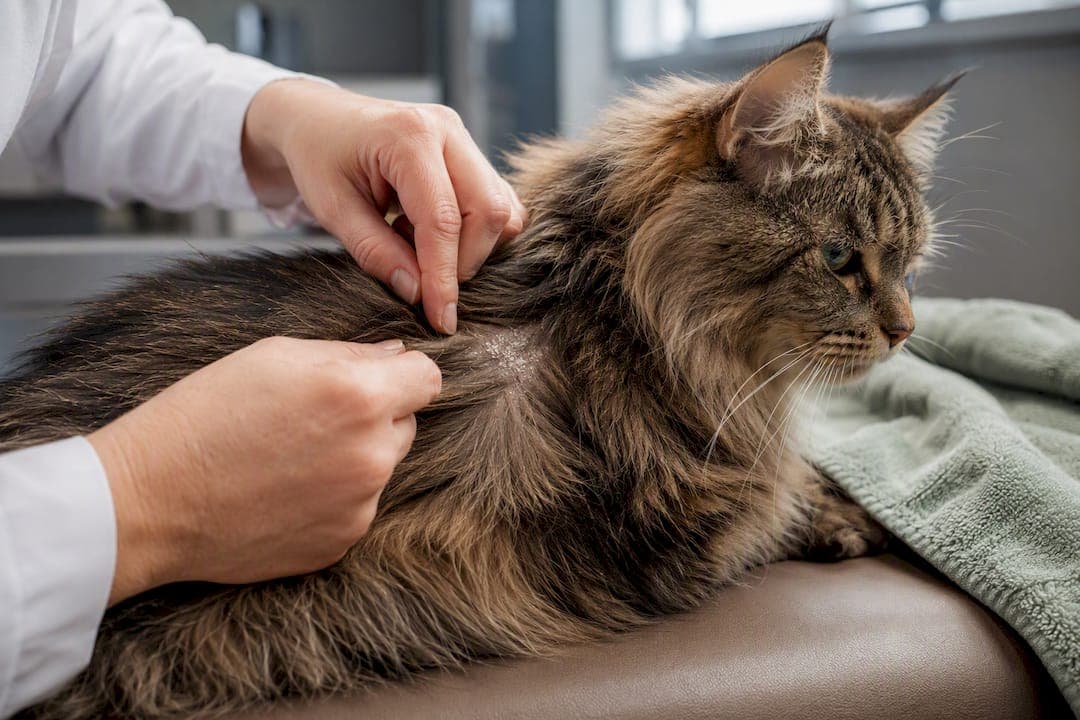
Dandruff in cats is almost always a symptom, not a diagnosis, and the real cause typically falls into one of five buckets: parasites, allergies, poor grooming, infections, or an underlying systemic illness. Mild, occasional flaking may be nothing to worry about, but heavy flaking paired with itching, sores, hair loss, or lethargy warrants a veterinary visit. When in doubt, get it checked rather than guessing.
TL;DR:
- Parasite infestations like fleas and Cheyletiella mites can cause localized or spreading dandruff that usually clear with proper treatment within weeks.
- Allergies, infections, and underlying systemic illnesses often present with additional symptoms such as sores, hair loss, or lethargy, requiring veterinary diagnosis and targeted therapy.
- Owners should seek veterinary care if dandruff is accompanied by persistent itching, open sores, patchy hair loss, or systemic signs like increased thirst or weight loss.
- At-home management includes regular brushing, maintaining flea prevention, and avoiding harsh shampoos or overbathing, but serious cases require professional evaluation.
- Most causes improve within a few weeks with appropriate treatment, but endocrine and systemic diseases may need longer-term management for coat recovery.
Table of Contents
- What are the common causes of cat dandruff?
- When does flaky skin need a vet visit?
- How do veterinarians diagnose the cause of cat dandruff?
- What can owners do at home to manage cat dandruff?
- Parasites, allergies, infections, or disease: what's actually going on?
- How City Animal Veterinary Center approaches cat dandruff cases
- The gap between "just dandruff" and what it's telling you
- Sources
What are the common causes of cat dandruff?
Flaky skin shows up for a lot of reasons, and the visible symptom looks similar no matter which one is driving it. Here's what tends to be behind it, according to Hill's Pet:
- Parasites: fleas, Cheyletiella mites (the so called "walking dandruff"), and other skin mites irritate the skin and trigger flaking.
- Allergies: flea allergy dermatitis, environmental allergens like pollen or dust mites, and food sensitivities all show up on the skin before anywhere else.
- Skin infections: bacterial overgrowth and fungal infections such as ringworm damage the skin's surface and disrupt normal shedding.
- Poor grooming: obesity, arthritis, dental pain, or general age related decline make it physically hard for a cat to groom itself, letting dead skin and undercoat build up.
- Nutritional gaps: diets low in essential fatty acids can leave skin dry and flaky, which is one reason an AAFCO-complete diet matters more than owners often realize.
- Systemic or endocrine disease: hyperthyroidism, diabetes, and kidney disease frequently show up first as a dull, flaky coat.
- Environmental factors: low indoor humidity, overbathing, and harsh grooming products can dry out skin that was otherwise healthy.
Most cats with dandruff have more than one of these overlapping issues. An overweight older cat with mild arthritis, for instance, often can't reach her lower back to groom, and that same cat may also be dealing with early kidney changes that dull her coat further.
When does flaky skin need a vet visit?
A few flakes near the base of the tail on an otherwise normal, active cat is common and usually not urgent. What changes the calculus is a combination of signs, not any single symptom alone.
Watch for these red flags:
- Intense or constant scratching, licking, or chewing at the skin
- Open sores, scabs, or crusting
- Patchy hair loss, especially in a spreading pattern
- Pustules or a greasy, foul-smelling coat
- Lethargy, weight loss, increased thirst, or other systemic changes
- Dandruff that seems to "move" across the coat, which can signal Cheyletiella
Localized flaking on one small patch is less concerning than dandruff spread across the whole body, and a sudden onset over a few days points toward something more acute than a slow, chronic issue.
Pro Tip: Take a few close-up photos under good lighting the moment you notice flaking. If symptoms progress, your vet can compare the timeline instead of relying on memory.
If you see any combination of the red flags above, call your vet the same day rather than waiting for a routine opening. Isolated, mild flaking with no other symptoms can usually wait for the next available appointment.
How do veterinarians diagnose the cause of cat dandruff?
Vets work through a stepwise process, starting with the least invasive tests and moving toward more targeted ones only as needed. This keeps the cat from being subjected to broad, unnecessary treatment while narrowing down the real cause efficiently, a workflow PetMD outlines as standard practice.
- History and physical exam: coat inspection, combing for fleas or flea dirt, and a check of body condition and joint mobility.
- Skin scrape: a small sample examined under a microscope to check for mites like Cheyletiella.
- Skin cytology: cells collected with tape or a slide, stained, and viewed under a microscope to identify bacteria or yeast overgrowth. City Animal Veterinary Center uses this same skin cytology approach to pin down infections quickly.
- Fungal culture or PCR testing: used when ringworm is suspected, since it can take days to grow out a culture.
- Bloodwork and urinalysis: screens for kidney disease, diabetes, and hyperthyroidism, which often cause coat changes as a secondary sign.
- Allergy testing or elimination diet trials: reserved for later in the workup, since food allergy diagnosis can take weeks to months to confirm.
Cases that don't resolve with this baseline workup sometimes get referred to a veterinary dermatologist for more specialized testing.
What can owners do at home to manage cat dandruff?
A few habits genuinely help, but none of them replace a diagnosis when something more serious is going on.
- Brush regularly, matched to coat type. This redistributes natural oils and clears out undercoat buildup a cat may not be able to reach alone.
- Keep flea and tick prevention current year round, under your vet's guidance, since flea-related dermatitis is one of the most common triggers of severe itching and flaking.
- Never use human dandruff shampoos or unlabeled over-the-counter products. Many are unsafe for cats and should only be used if your vet specifically recommends them.
- Feed a diet that meets AAFCO standards, and ask your vet before adding omega-3 supplements, since more isn't automatically better.
- Run a humidifier during dry months and avoid harsh detergents or frequent bathing, both of which strip natural oils from the skin.
- Bathe only when needed, using a cat-safe shampoo, and never more often than your vet advises.
Pro Tip: Set a recurring monthly reminder to run your hands along your cat's spine and hindquarters. Early undercoat buildup is easier to feel than to see.
If home changes don't improve things within a couple of weeks, or if new symptoms appear, that's your signal to loop your vet back in rather than trying another product.
Parasites, allergies, infections, or disease: what's actually going on?
Each underlying cause carries its own pattern of signs, its own tests, and its own timeline for improvement.
Parasites. Fleas cause localized itching, especially near the tail base, and usually clear up within a couple of weeks of consistent prevention. Cheyletiella, or "walking dandruff," is more concerning: it's contagious between animals and can be zoonotic, meaning it can transfer to people, so persistent or spreading flakes need veterinary testing rather than a wait-and-see approach. Other mite infestations fall somewhere in between, depending on species; to learn how parasite-related skin irritation and shedding can affect the home environment, see Examples of pet hair carpet damage: a Canadian pet owner's guide.
Allergies. Flea allergy dermatitis responds well to strict flea control. Environmental allergies (pollen, dust mites) tend to be seasonal or chronic and are managed rather than cured. Food allergies require an elimination diet trial lasting weeks to months, which is why vets usually rule out faster diagnoses first.
Infections. Bacterial infections often respond to topical or oral antibiotics within one to two weeks. Ringworm, a fungal infection, is contagious to other pets and to people, so it typically calls for both topical and systemic antifungal therapy along with environmental cleaning.
Grooming-related causes. Obesity, arthritis, and dental pain all limit a cat's physical ability to groom itself. The result is undercoat buildup that looks like dandruff but is really a mechanical problem. Addressing the pain or weight issue, sometimes alongside dental care if mouth pain is limiting grooming, tends to resolve the flaking as a side effect.
Systemic disease. Hyperthyroidism, diabetes, and kidney disease all show up as dull, flaky coats before other symptoms become obvious. Treating the primary disease, not the coat, is what actually fixes the dandruff, and baseline bloodwork is often what catches these early.
Recovery timelines vary widely: parasite issues often improve within a few weeks, infections in a few weeks, and endocrine or organ disease can take a longer period of managed treatment before coat quality fully rebounds.
How City Animal Veterinary Center approaches cat dandruff cases
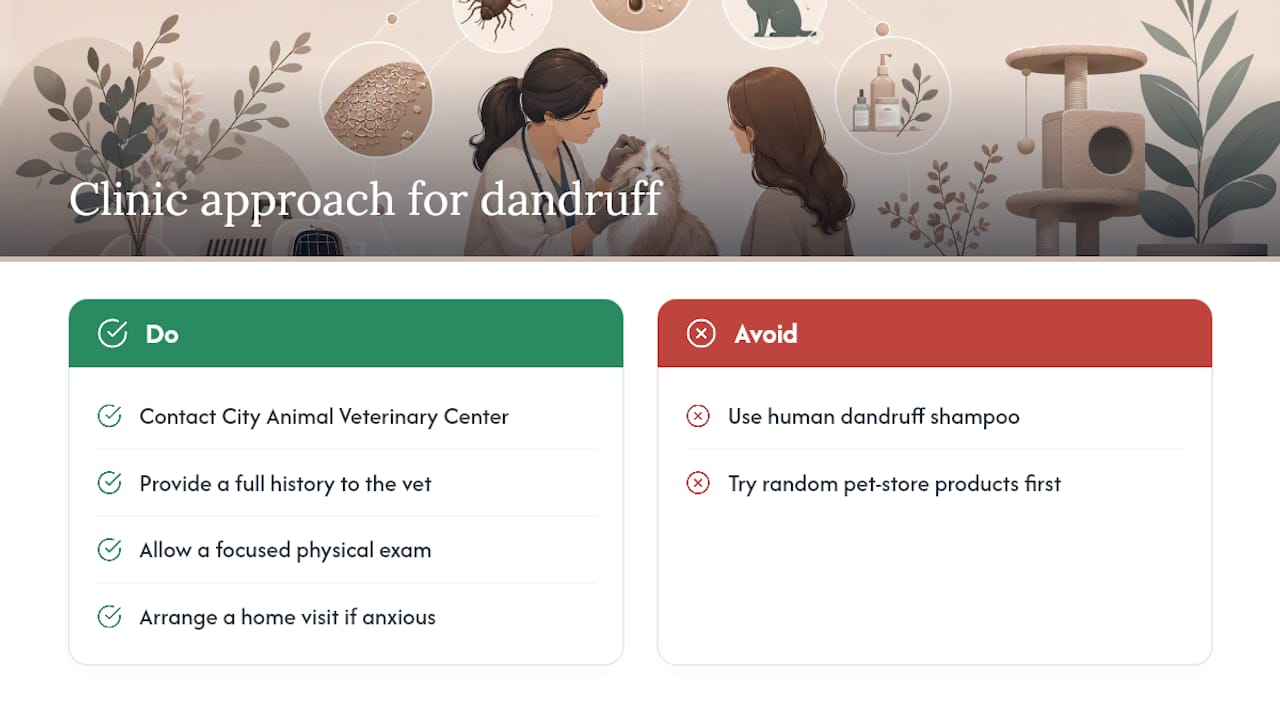
We start with the same principle every case deserves: history, a focused physical exam, and only the testing that's actually indicated, not a shotgun panel. That keeps stress low and gets answers faster.
Because flaky, itchy cats are often anxious cats, approaches that reduce stress and home visit options matter more here than they might for a routine wellness visit. A cat examined calmly at home, without a car ride or waiting room, often allows a more thorough skin check than one who's panicking in a carrier.
One thing we'll say clearly: don't reach for human dandruff shampoo or a random pet store product before calling us. If your cat's coat looks off, reach out to City Animal Veterinary Center and we'll help you figure out what's actually going on.
The gap between "just dandruff" and what it's telling you
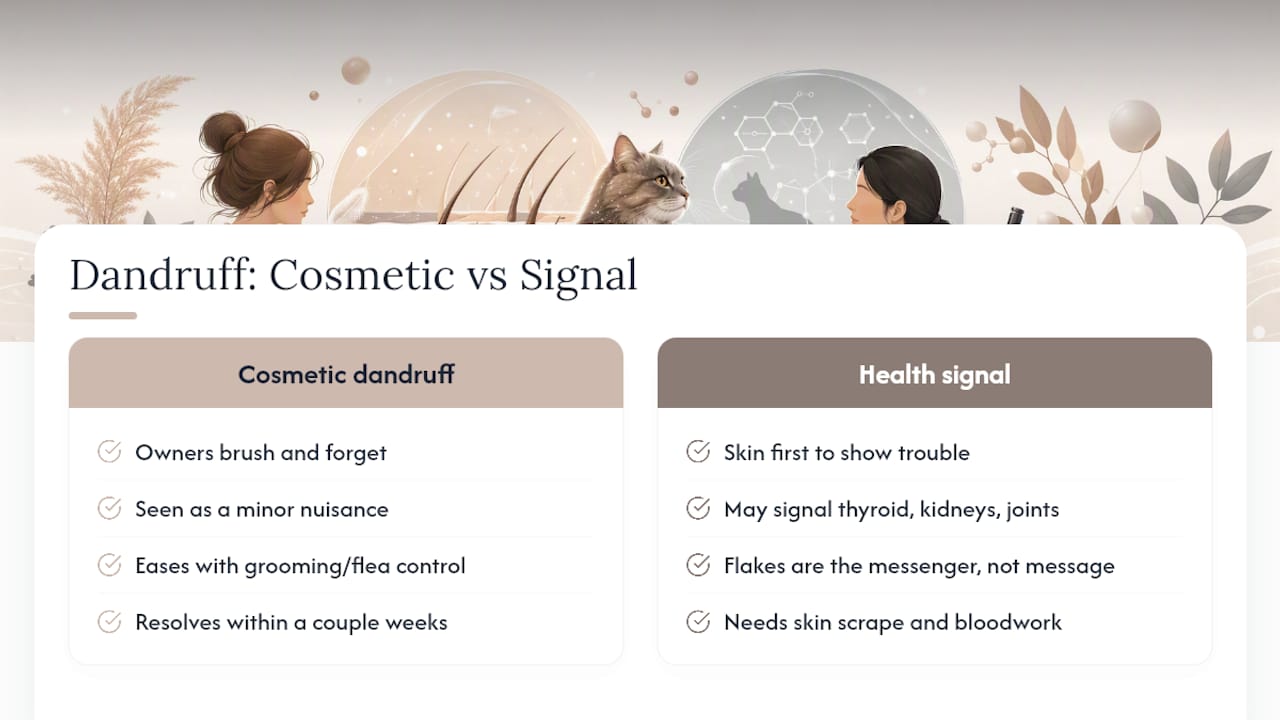
Most owners treat dandruff as a cosmetic nuisance, something to brush away and forget. That instinct undersells what the skin is actually doing: it's usually the first organ to show trouble when something else in the body is off. A thyroid gland running hot, kidneys starting to struggle, joints too sore to bend into a grooming position. The flakes are the messenger, not the message.
The mistake we see most often isn't ignoring dandruff entirely. It's treating it symptomatically for months, a supplement here, a different food there, without ever getting a skin scrape or bloodwork to check what's driving it. That approach can mask a treatable problem long enough for it to become a harder one. If your cat's flaking hasn't resolved with basic grooming and flea control within a couple of weeks, the flakes have already told you they're not going away on their own.
— CAVC
Sources
- Cat dandruff causes — PetMD
- Cat Dandruff Causes and Solutions — Hill's Pet
- Don’t Brush Off Feline Dandruff — Texas A&M Vet Med