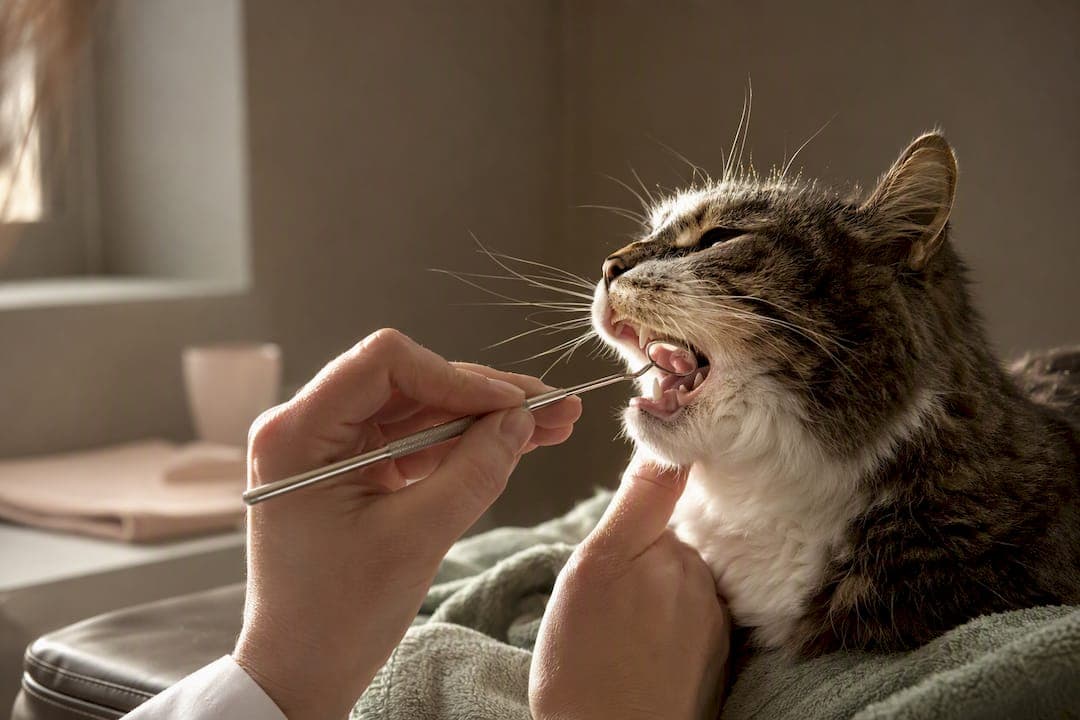
Early gingivitis is reversible, but only after a veterinary dental cleaning removes the tartar driving the inflammation. Daily cat-safe brushing then keeps it from coming back. Home care alone cannot fix gingivitis once tartar has hardened on the teeth. If you see bleeding gums, drooling, or a cat pawing at its mouth, get a veterinary exam promptly rather than waiting to see if it clears up on its own.
TL;DR:
- Professional dental cleaning is necessary to remove hardened tartar that home brushing cannot eliminate, which is essential for reversing early gingivitis.
- Signs like bleeding gums, bad breath, or behavioral changes should prompt immediate veterinary evaluation to prevent progression to irreversible periodontal disease.
- Cats with viral infections, crowded teeth, or genetic predispositions are at higher risk for developing gingivitis despite home care efforts.
- Dental radiographs and probing under anesthesia are crucial for detecting hidden bone loss or root issues that determine treatment.
- Regular veterinary checkups and consistent home brushing, ideally daily or at least every other day, are key to preventing recurrent gingivitis.
Table of Contents
- What Cat Gingivitis Actually Is (and When It's Still Reversible)
- Symptoms of Cat Gingivitis Owners Miss
- Why Some Cats Get Gingivitis and Others Don't
- How Vets Diagnose Gingivitis: Exams, Probing, and X-Rays
- What Happens During a Professional Dental Cleaning
- Cat Teeth Cleaning Tips You Can Actually Stick With
- Building a Prevention Routine That Actually Sticks
- When Gingivitis Becomes an Emergency
- How City Animal Veterinary Center Approaches Feline Dental Health
- A Straight Answer on What Works
- Get Your Cat's Gum Disease Treated the Fear Free Way
- Sources
- FAQ
What Cat Gingivitis Actually Is (and When It's Still Reversible)
Gingivitis is inflammation of the gum tissue with no bone or ligament loss yet. That distinction is the whole ballgame: gingivitis is a soft-tissue problem, while periodontitis means the supporting structures around the tooth have already started breaking down. One is fixable. The other, once it progresses far enough, is permanent damage you can only manage.
The timeline matters here. Plaque, the soft bacterial film on teeth, starts hardening into tartar within 24 to 72 hours if it isn't disrupted, according to UC Davis's veterinary dental guidance. Once that plaque mineralizes into tartar, no amount of home brushing removes it. Only a professional cleaning can. Catch the inflammation while it's still just red, puffy gums, and a cleaning plus a real home routine can return your cat's mouth to normal. Wait too long, and you're managing a chronic disease instead of curing one.
Symptoms of Cat Gingivitis Owners Miss
Cats hide mouth pain well, so the first signs are often subtle. Look for a thin red line along the gum edge, gum swelling, or bleeding when your cat chews on a toy or dry food. Bad breath that's noticeably worse than usual is rarely "just a cat thing." It usually signals bacterial buildup along the gumline.
Behavioral clues matter just as much as visual ones. A cat that suddenly favors soft food, chews on one side of its mouth, paws at its face, or stops grooming as often may be dealing with gum pain it can't otherwise communicate. Drooling, especially if it's tinged pink, is another red flag. Even mild redness without any of these behavior changes still counts as an early, reversible stage. Do not wait for obvious pain before scheduling a look.
Why Some Cats Get Gingivitis and Others Don't
Plaque biofilm is the root cause in nearly every case: bacteria colonize the tooth surface, the immune system reacts, and gums become inflamed. But several factors tilt the odds. Diet plays a role, since dry kibble and wet food both leave residue, just in different forms. Age matters too. Gingivitis prevalence rises steadily as cats get older, partly from years of accumulated plaque and partly from slower immune response.
Crowded or rotated teeth trap debris in places a cat's tongue can't reach. Viral infections like FIV and FeLV suppress immune function, which lets oral bacteria run more unchecked than they would otherwise. Tooth resorption, a painful erosion of the tooth structure itself, often shows up alongside gingivitis rather than separately. Genetics explain why some young cats develop aggressive juvenile periodontal disease well before their second birthday, even with decent home care.
How Vets Diagnose Gingivitis: Exams, Probing, and X-Rays
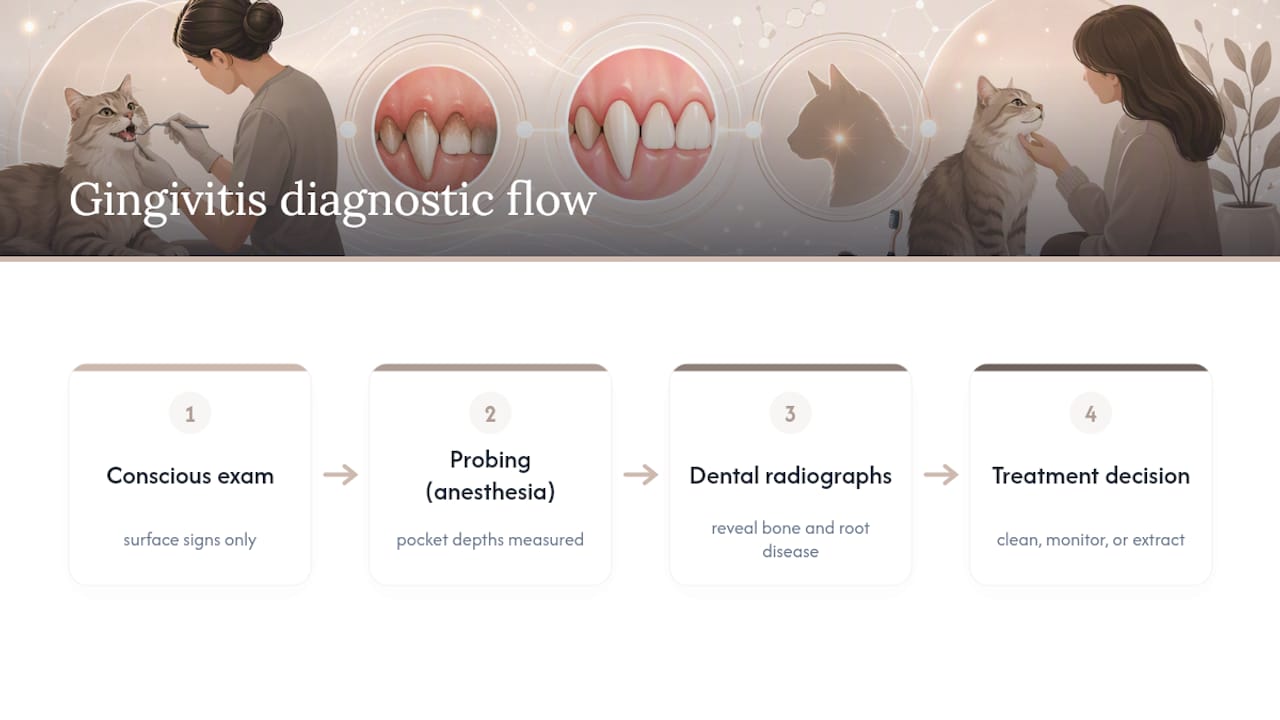
A conscious oral exam catches the obvious stuff: redness, visible tartar, broken teeth, obvious swelling. But it misses almost everything happening below the gumline. That's why a full evaluation happens under anesthesia, where your veterinarian can safely probe each tooth without your cat flinching away or fighting the process.
Periodontal probing measures the depth of the gum pocket around each tooth. Deeper pockets mean more attachment loss and point toward periodontitis rather than simple gingivitis. Dental radiographs go a step further, revealing bone loss, resorptive lesions, and root abscesses that look completely normal from the surface. Cornell's Feline Health Center notes that radiographs routinely turn up disease invisible to a visual check, which changes the treatment plan on the spot. This combination, exam plus probing plus x-rays, is what determines whether a tooth gets cleaned, monitored, or extracted.
What Happens During a Professional Dental Cleaning
Professional cleaning under general anesthesia is the actual fix for established gingivitis. Here's the sequence most clinics follow:
- Pre-op bloodwork and physical exam to confirm your cat can safely tolerate anesthesia, especially important for older cats or those with kidney or heart concerns.
- Anesthesia with continuous monitoring of heart rate, oxygen levels, and blood pressure throughout the procedure.
- Full-mouth dental radiographs taken before cleaning begins, to map what's happening under each tooth.
- Scaling above and below the gumline, removing calculus that brushing could never reach.
- Polishing to smooth the enamel surface, which slows new plaque from sticking as fast.
- Extractions if needed, when radiographs or probing reveal resorption, deep pockets, or fractured roots beyond saving.
- Pain control and, when indicated, antibiotics, followed by a soft-food recovery period at home.
The reason this step can't be skipped: it resets the mouth to a clean baseline. Home brushing works to prevent new plaque from building up again, but it can't undo years of tartar and inflammation that already happened. Skipping the cleaning and going straight to brushing is like mopping a floor that still has gum stuck to it. It won't get clean until the gum comes off first.
Pro Tip: Ask your vet for the periodontal probing chart after your cat's cleaning. It tells you exactly which teeth are at risk, so your home care and follow-up visits can focus where they matter most.
Cat Teeth Cleaning Tips You Can Actually Stick With
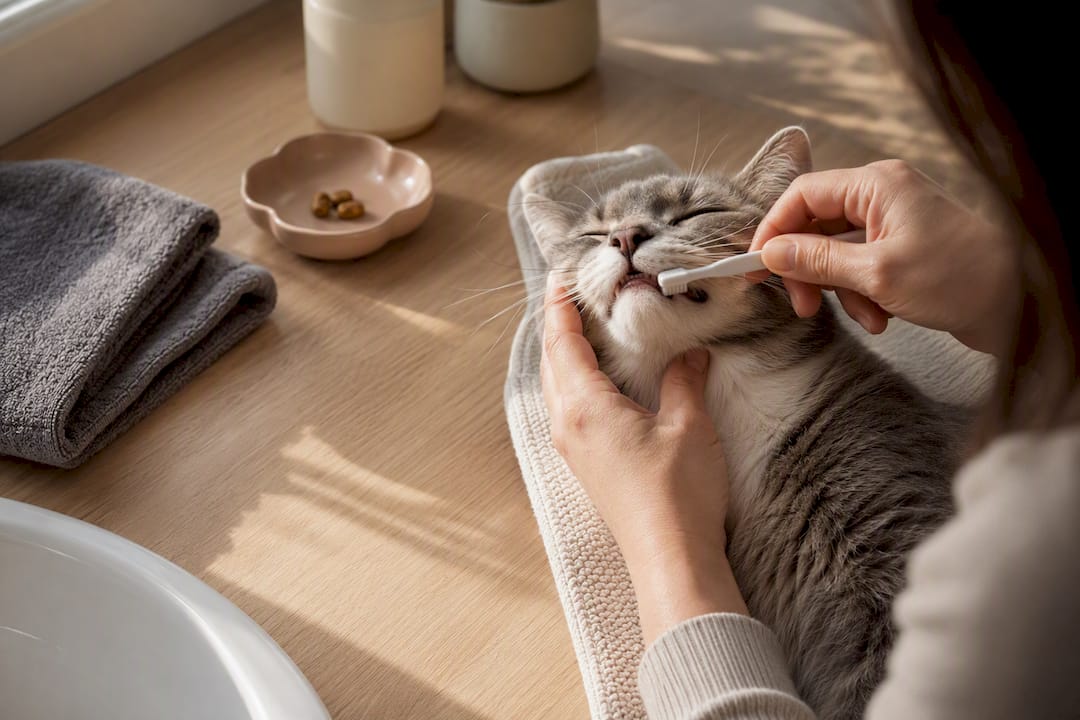
Brushing is the single best thing you can do at home, but forcing a toothbrush into an unwilling cat's mouth on day one is how most owners quit within a week. Build tolerance gradually instead.
- Let your cat taste the toothpaste off your finger for several days before touching their teeth at all.
- Rub the gumline gently with a finger once they're comfortable with the flavor, keeping sessions under a minute.
- Switch to a fingertip brush for a few more days, still focused on short, low-pressure contact.
- Move to a small, soft cat toothbrush, brushing for 20 to 30 seconds daily and increasing time as your cat tolerates it, a sequence UC Davis recommends for building lasting compliance.
Use an enzymatic toothpaste made specifically for cats. Never use human toothpaste or mouthwash. Both contain ingredients like xylitol or fluoride that are toxic to cats even in small amounts. If brushing genuinely isn't happening despite real effort, dental wipes, water additives, and VOHC-accepted dental treats offer a real, if smaller, reduction in plaque buildup. They're a fallback, not a substitute for the real thing.
Pro Tip: If your cat bolts the second they see the toothbrush, separate the "good stuff" (treats, play) from brushing time by at least fifteen minutes. Cats read context fast, and stacking a stressful task right after something fun undoes the positive association.
Building a Prevention Routine That Actually Sticks
Daily brushing is the gold standard, but life happens. Brushing 2 to 3 times a week still delivers a meaningful drop in plaque buildup when daily isn't realistic, based on UC Davis's dental care findings. Consistency beats perfection here.
A simple prevention framework:
- Brush daily if you can manage it, or at minimum every other day.
- Schedule a veterinary dental check at least once a year, more often for cats over seven or with a history of gum disease.
- Look for the VOHC seal (Veterinary Oral Health Council) on any dental diet or treat before buying it. It signals the product actually reduces plaque or tartar in controlled testing.
- Repeat professional cleanings on the schedule your vet recommends based on your cat's individual tartar buildup rate, which varies a lot between cats.
When Gingivitis Becomes an Emergency
Most gingivitis cases are not urgent, but a few signs mean don't wait for a routine appointment.
- Heavy or persistent bleeding from the gums
- Facial swelling, especially under one eye
- Refusing to eat for more than a day
- A tooth that's suddenly loose or has fallen out
- Lethargy or fever alongside mouth symptoms
Clinics triage these cases quickly, often same day, with pain control and antibiotics started immediately if infection is suspected. Delaying care at this stage risks the inflammation progressing into irreversible periodontitis, or an abscess that spreads beyond the mouth.
How City Animal Veterinary Center Approaches Feline Dental Health
Some veterinary practices use a Fear Free approach specifically because dental exams can be one of the more stressful parts of a vet visit for cats. That matters for accurate diagnosis. A relaxed cat allows a more thorough conscious exam before anesthesia is even discussed.
For cats who can't tolerate a car ride or clinic environment well, home visits combined with in-clinic digital x-rays give a fuller picture without added stress. Our cat dental cleaning guide and our post on spotting tooth resorption early go deeper into what to expect from each of these steps.
A Straight Answer on What Works
Gingivitis treatment isn't complicated in theory. It's just poorly executed in practice. Most owners either skip the professional cleaning because their cat "seems fine," or they buy a toothbrush, try it once, give up, and assume brushing doesn't work for their cat. Both mistakes come from misunderstanding what each step actually does.
Cleaning removes what's already there. Brushing stops new buildup from forming. Neither replaces the other, and doing only one while skipping the other is why so many cats cycle through the same gum problems year after year. Modern anesthesia protocols with continuous monitoring have made the cleaning itself far safer than most owners assume, and pain control has improved enough that recovery is usually quick. If your cat needs a dental evaluation, reach out for a Fear Free assessment or ask about a home visit if travel is the barrier.
— CAVC
Get Your Cat's Gum Disease Treated the Fear Free Way
Certain veterinary centers offer full dental care with digital x-rays on site, so a cat's cleaning includes an actual look below the gumline rather than a guess based on visible tartar alone. For cats who panic at carriers or car rides, some veterinarians provide home visit services that bring a Fear Free approach to a pet's living room instead of a clinic waiting area.

Our dental care services cover everything from the initial exam through anesthesia, cleaning, and post-op pain management, and our team walks you through what your cat's specific x-rays and probing results actually mean before any extraction decision gets made. If travel is the obstacle, our home visit program can handle assessments and follow-up care without the stress of a waiting room. Book a dental evaluation today and get a clear answer on whether your cat's gingivitis is still in the reversible stage.
Sources
- UC Davis — Pet Health: Teeth Brushing (client-supplied PDF)
- Cornell Feline Health Center — Feline Dental Disease
- PetMD — Gingivitis in Cats
FAQ
Can Gingivitis Be Reversed in Cats?
Yes, early gingivitis is reversible once a professional dental cleaning removes the tartar causing the inflammation. Daily brushing afterward keeps it from returning, but brushing alone cannot reverse gingivitis that's already established.
How Can I Treat My Cat's Gingivitis at Home?
Home care alone can't treat existing gingivitis since it can't remove hardened tartar, but it plays a critical role after a professional cleaning. Daily brushing with a cat-specific toothbrush and enzymatic toothpaste prevents new plaque from causing the problem again.
How Long Can a Cat Live With Gum Disease?
Cats can live for years with untreated gum disease, but quality of life suffers as pain and infection risk increase over time. Left untreated, gingivitis often progresses to periodontitis, which causes permanent bone and tissue loss and can affect a cat's ability to eat comfortably.
What Is Stage 1 Gingivitis in Cats?
Stage 1 gingivitis is mild gum inflammation with redness along the gumline but no gum recession or bone loss yet. This is the reversible stage, meaning a professional cleaning combined with consistent home brushing can typically return the gums to a healthy state.
How Often Should My Cat Get Professional Dental Cleanings?
Most cats benefit from an annual dental check, with professional cleanings scheduled based on individual tartar buildup and gum health rather than a fixed calendar date. Cats prone to faster plaque formation or with a history of periodontal disease may need cleanings more frequently, which your veterinarian can assess at wellness exam visits.