Tooth resorption is a common, progressive, and usually painful condition that destroys a cat's tooth from the inside out, and it almost always requires veterinary diagnosis with dental X-rays under anesthesia. There's no home remedy or diet that reverses it. If your cat shows any hint of mouth discomfort, the right move is scheduling a veterinary dental exam with radiographs, not waiting to see if it gets worse. The good news: extraction or crown amputation reliably ends the pain once it's found.
TL;DR:
- Most cats with tooth resorption have lesions below the gumline that are only visible through radiographs, making early detection difficult without anesthesia.
- The treatment approach depends on lesion stage and type, with full extraction suitable for early, non-fused roots, and crown amputation recommended for fused roots or advanced cases.
- Tooth resorption risk increases with age, affecting up to 70% of cats over their lifetime, but prevention remains unproven, emphasizing the importance of regular dental exams.
- Behavioral signs such as altered eating patterns, drooling, or head tilting are subtle and often only noticeable through video or professional assessment.
- Postoperative recovery usually involves soft food and pain management, with regular monitoring needed to detect new lesions, as resorption can recur in other teeth.
Table of Contents
- What Is Cat Tooth Resorption, and How Common Is It?
- Types and Stages: What Your Vet's Report Actually Means
- Why Does Tooth Resorption Happen? Causes and Risk Factors
- Signs Your Cat Might Have Tooth Resorption
- How Vets Diagnose Cat Tooth Resorption
- Treatment Options and What Recovery Actually Involves
- Caring for Your Cat After Diagnosis and Treatment
- When to Seek Urgent Veterinary Care
- Ruling Out Other Causes of Mouth Pain
- Underlying Health Factors That May Contribute
- What to Expect Long-Term After Treatment
- How Tooth Resorption Affects Daily Life and Behavior
- The Fear Free Difference for Cats Needing Dental Care
- Getting Your Cat Diagnosed and Treated at City Animal Veterinary Center
- Sources
What Is Cat Tooth Resorption, and How Common Is It?
Cat tooth resorption happens when the body's own cells, called odontoclasts, start dissolving a tooth's structure, chewing through dentin, enamel, and cementum the way they're supposed to break down and remodel bone. Except in this case, nothing rebuilds what gets destroyed. The tooth erodes from the root or crown inward, often below the gumline where you can't see it, until the nerve is exposed and every bite becomes painful.
This isn't a rare quirk. Between 30% and 70% of cats show some sign of tooth resorption, and it ranks among the leading causes of tooth loss in cats. Risk climbs with age. A cat that sails through its first five years with a clean mouth can start developing lesions at seven, eight, or ten, seemingly overnight from the owner's perspective, though the process has usually been underway for a while.
People often assume this works like a human cavity, where bacteria eat through enamel from the outside. Cat tooth resorption is a different mechanism entirely: it's the cat's own body attacking the tooth, not decay from sugar or plaque alone. That distinction matters for treatment, because there's no filling that fixes it, and no amount of brushing reverses cells that have already started resorbing tooth structure.
What owners tend to notice, when they notice anything:
- A tooth that looks slightly pink, where the gum has grown over an eroded spot
- A small pit or divot at the gumline on a tooth that used to look normal
- Nothing visible at all, because the damage started below the gum
That last point is the one that trips up even attentive owners. Feline dental disease of this kind frequently hides in plain sight until a veterinarian takes a radiograph.
Types and Stages: What Your Vet's Report Actually Means
If your cat's chart comes back with something like "Stage 3, Type 2 resorption on tooth 307," it helps to know what that's actually describing. Veterinary dentistry stages the lesions from 1 to 5 and types them into three categories, and both numbers drive the treatment decision.
- Stage 1 marks the earliest damage, limited to cementum or enamel, often invisible without probing or radiographs.
- Stage 2 shows resorption reaching into dentin, still typically without pulp involvement.
- Stage 3 means the pulp is now exposed or involved, though the tooth largely retains its structural integrity.
- Stage 4 involves extensive structural loss, with the crown or root weakened significantly.
- Stage 5 is the endpoint: most of the crown has resorbed away, sometimes leaving only gum tissue covering a buried root remnant.
Type matters just as much as stage. Type 1 lesions are inflammatory, usually tied to periodontal disease, and the root maintains a normal periodontal ligament and density on X-ray. Type 2 lesions are the replacement kind: the body starts substituting tooth structure with bone-like tissue, and radiographs show reduced radiopacity with the periodontal ligament space narrowing or disappearing entirely. Type 3 is mixed, showing features of both in the same tooth or mouth.
Here's why the distinction isn't academic. Type 1 lesions, especially in a tooth with intact root structure, usually call for full extraction because the root remains a viable, attached structure. Type 2 lesions, where the root has essentially started fusing with surrounding bone, can be too fragile and unpredictable to extract safely. For those, crown amputation with intentional root retention is an accepted technique: the vet removes the visible crown and closes the gum over the remaining root, leaving it to be slowly resorbed by the body over time. Type 3, being mixed, often gets judged tooth by tooth.
Why Does Tooth Resorption Happen? Causes and Risk Factors
Veterinary researchers still don't have a definitive answer for why odontoclasts turn on healthy tooth structure in some cats and not others. The honest term is idiopathic, meaning the root cause is largely unknown. What's better understood is that inflammation plays a role in at least some cases: periodontal disease and gingivitis can stimulate odontoclastic activity, driving Type 1 lesions in particular.
Beyond that, a handful of factors have been proposed without being firmly established:
- Age is the clearest correlation, with prevalence rising steadily in cats past middle age
- Some breed patterns have been suggested, though nothing rises to a confirmed genetic marker
- A dietary vitamin D hypothesis has circulated in veterinary literature for years, tied to the mineral content of commercial diets, but it remains unproven
- Chronic viral infections and immune-mediated factors have been floated as contributors without solid confirmation
None of this adds up to a prevention plan. There is no identified way to reliably prevent tooth resorption, which is a hard thing for owners to hear when they're doing everything else right. What professional cleanings and periodontal care can do is limit the inflammatory lesions tied to gum disease, even if they can't touch the idiopathic ones.
Signs Your Cat Might Have Tooth Resorption
Cats are remarkably good at hiding pain, which is exactly why so many resorption cases get missed until they're advanced. A cat with a badly resorbed tooth will often keep eating, keep purring, and keep acting like nothing's wrong, because showing weakness isn't something cats evolved to do.
The subtle signs are the ones worth training your eye for:
- Swallowing kibble whole instead of chewing, or chewing only on one side of the mouth
- A sudden preference for soft or wet food over dry kibble
- Dropping food after picking it up, almost like it startled them
- A slight head tilt while eating, favoring one side
- Reduced interest in crunchy treats they used to enjoy
More obvious signs tend to show up later in the disease process: drooling, blood-tinged saliva, noticeably bad breath, pawing at the face, or a visible pink or reddened spot where a tooth meets the gum.
Pro Tip: Film your cat eating dry food for thirty seconds on your phone before your next vet visit. Chewing patterns are hard to describe from memory but obvious on video, and it gives your vet a real data point instead of a vague "she seems fine, I guess."
Watching for these behavioral shifts matters more than waiting for your cat to act like it hurts, because a cat that's still eating isn't necessarily a cat that's pain free.
How Vets Diagnose Cat Tooth Resorption
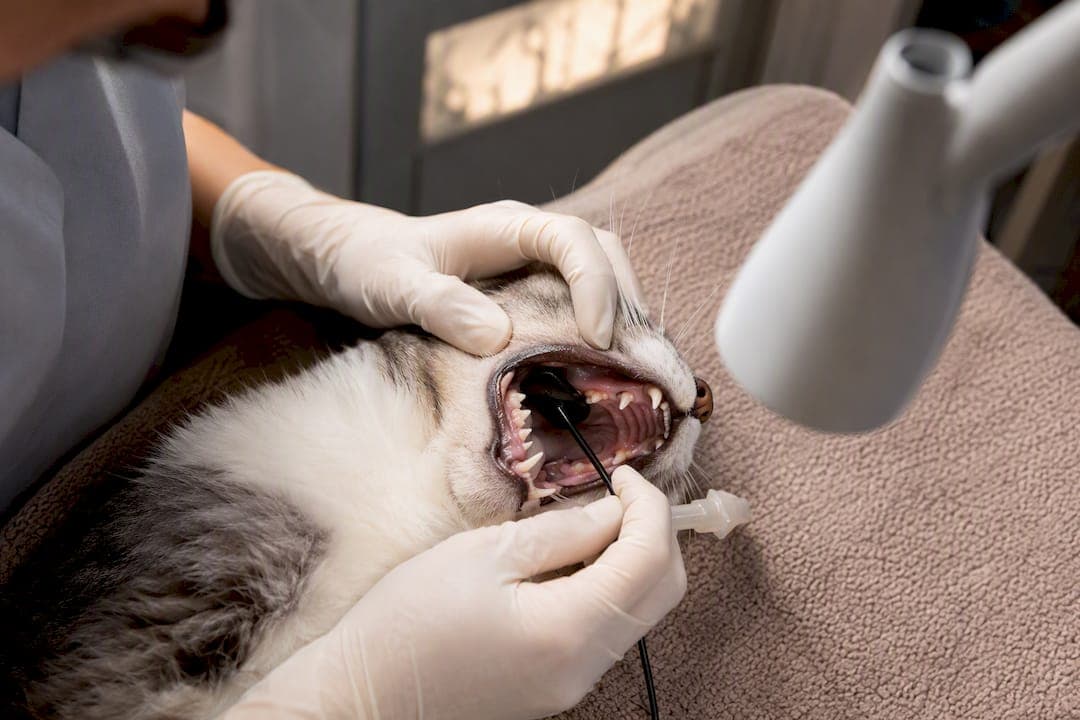
A visual exam on an awake cat catches maybe the most advanced, obvious lesions. Everything else, especially the early root-level damage, only shows up once your cat is under general anesthesia and a vet has a dental probe and an X-ray sensor in hand.
The standard workup looks like this:
- Pre-anesthetic bloodwork to confirm the cat is a safe candidate for sedation
- Full anesthesia, since a conscious cat won't tolerate the probing and positioning required
- Full-mouth intraoral dental radiographs, not just a visual scan, because clinical exams alone typically catch only late-stage lesions
- Careful probing of every tooth surface, including under the gumline, to find pits, defects, or mobility
- Charting each finding by stage and type so the treatment plan matches what's actually happening in that specific tooth
Roughly 30% to 70% of cats carry at least one resorptive lesion at some point, and a meaningful share of those lesions sit below the gumline where fingers and eyes can't reach. Early Stage 1 damage, in particular, may only reveal itself through careful probing under magnification, or through a radiograph that catches the subtle bone changes around a root before the crown shows any surface defect.
Regional nerve blocks, using local anesthetics like lidocaine or bupivacaine, are typically administered before any extraction begins. That keeps the cat comfortable during the procedure and cuts down on how much general anesthetic gas is needed, which shortens total anesthesia time. When you get the written report back with stage and type noted for each affected tooth, that's the language your vet is using to decide between extraction and crown amputation, and to flag which teeth need watching at the next visit.
Treatment Options and What Recovery Actually Involves
Once a lesion is confirmed, the treatment path splits mainly along two lines, and the choice isn't arbitrary. It follows directly from the stage and type documented on the radiograph.
- Full extraction is the standard approach for Type 1 lesions and any tooth where the root remains intact and attached to normal periodontal ligament. The vet removes the entire tooth, root and crown, and closes the gum tissue over the socket.
- Crown amputation with root retention applies mainly to Type 2 lesions, where the root has already started fusing with surrounding bone through the replacement process. Attempting a full extraction on a root like that risks fracturing it and leaving fragments behind, so the accepted technique removes the visible crown and leaves the root to be resorbed naturally over time, since it can be difficult and risky to extract these roots intact.
- Radiographic confirmation before closing is standard practice regardless of which approach is used, since a vet needs to confirm no root fragment was left behind that could keep causing pain.
Comfort during the procedure gets serious attention. Beyond general anesthesia, regional nerve blocks reduce postoperative pain and shorten total anesthesia exposure, since a numbed mouth means the anesthesiologist can run lighter gas levels throughout the procedure. Most clinics also send cats home with oral pain medication for several days afterward, and some cases call for anti-inflammatory support depending on how many teeth were involved.
Recovery is usually faster than owners expect. Most cats are eating soft food within 24 hours and back to normal within a week to ten days, once the gum tissue has had time to close over the extraction sites. Swelling and mild lethargy the day of the procedure are normal; anything beyond that, like refusing food for more than a day or visible discharge, warrants a call back to the clinic.
Pro Tip: Ask your vet for a printed or emailed copy of the dental radiographs and chart, not just a verbal summary. If your cat needs a recheck at a different point down the line, having the actual images on file saves time and avoids repeating X-rays that were already taken.
Caring for Your Cat After Diagnosis and Treatment
The first week after extraction or crown amputation is about keeping things calm and letting the gum tissue heal. Soft or canned food is standard for at least five to seven days, even for teeth on the opposite side of the mouth from where work was done, since cats don't reliably chew on just one side. Pain medication should be given on schedule, not just when your cat "seems" uncomfortable, because cats hide discomfort even post-surgery.
Longer term, a few things are worth building into your routine:
- Daily or near-daily toothbrushing with a cat-safe enzymatic toothpaste helps slow the plaque buildup that drives inflammatory Type 1 lesions, even though it won't touch idiopathic resorption
- Dental diets and treats can act as a mild adjunct to reduce plaque, though the evidence supporting them as a standalone fix is limited, and some products marketed for feline dental support work better as a supplement to brushing than a replacement for it
- Skip anything marketed as a resorption "cure" or "reversal," since no such product exists and claiming otherwise misleads owners
Because resorption tends to progress and can appear in new teeth even after others were treated, annual anesthetized oral exams with full-mouth radiographs are the recommended monitoring schedule once a cat has been diagnosed with even one lesion. Regular professional dental cleanings between those exams also help control the periodontal inflammation tied to Type 1 lesions.
When to Seek Urgent Veterinary Care
Most tooth resorption cases develop slowly enough to schedule a routine exam. Some situations don't wait, and those need a same-day or next-day call to your vet.
- Sudden refusal to eat anything, including favorite treats
- Heavy or bloody drooling that wasn't there yesterday
- A visibly broken or fractured tooth
- Pawing at the face combined with obvious distress
- Lethargy, fever, or facial swelling alongside any mouth symptom
If any of those show up, call your clinic and specifically request a dental exam with intraoral radiographs, and mention any video or photos you've taken of the behavior. That detail helps the front desk triage how urgently your cat needs to be seen, rather than slotting you into a routine wellness visit that might be weeks out.
Ruling Out Other Causes of Mouth Pain
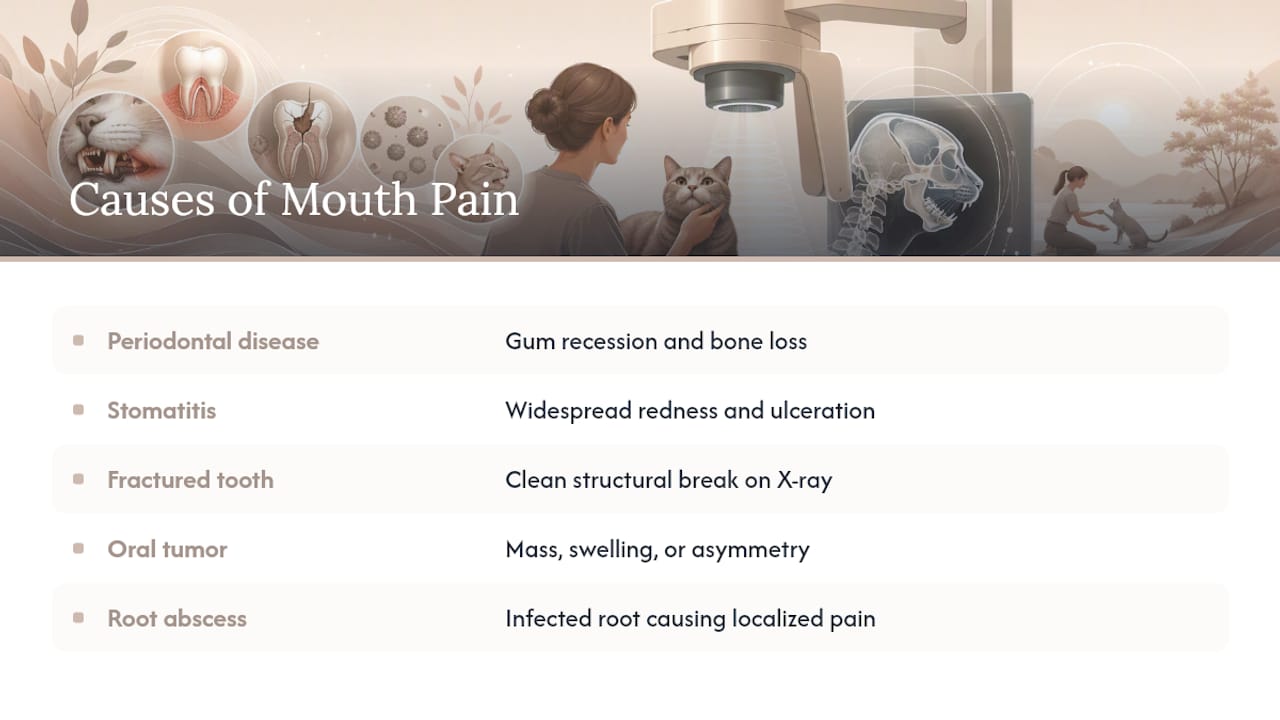
Not every case of drooling or reluctance to eat traces back to resorption, and a good diagnostic workup rules out the alternatives before settling on that diagnosis. Periodontal disease alone, without resorption, can cause nearly identical symptoms through gum recession and bone loss around otherwise structurally intact teeth. Radiographs distinguish the two by showing whether the tooth structure itself is being dissolved or whether the surrounding bone and gum are simply receding.
Stomatitis, a severe and often immune-mediated inflammation of the mouth's soft tissue, can look similar from the outside, with drooling and reduced appetite as shared symptoms, but it typically involves widespread redness and ulceration across the gums and back of the throat rather than damage isolated to individual teeth. Fractured teeth from trauma or chewing on hard objects create localized pain that mimics an advanced resorptive lesion, though a fracture usually shows a clean structural break rather than the gradual dissolving pattern resorption produces on X-ray.
Oral tumors, whether benign or malignant, are less common but need to be on the list, particularly in older cats with a mass, unusual swelling, or asymmetry in the mouth that doesn't match a simple dental explanation. Retained deciduous teeth, tooth root abscesses, and even certain viral infections that cause oral ulceration round out the list of conditions a thorough anesthetized exam is designed to sort through. This is exactly why the diagnostic process leans so heavily on radiographs and direct probing rather than a guess based on symptoms alone: the treatment for stomatitis looks nothing like the treatment for a Type 2 resorptive lesion, even though a worried owner watching from across the room might describe the same drooling and food avoidance for both.
Underlying Health Factors That May Contribute
Tooth resorption doesn't happen in isolation from the rest of a cat's health, even though the cause remains largely idiopathic. Chronic kidney disease and other conditions common in older cats often occur alongside dental disease, partly because both tend to show up in the same aging population and partly because systemic inflammation may play some role in oral tissue changes, though the exact relationship isn't fully mapped out.
Periodontal disease deserves particular attention here, since it's one of the few contributing factors with real evidence behind it. Chronic gingivitis and periodontitis create ongoing inflammation in the tissue surrounding teeth, and that inflammatory environment appears to stimulate the odontoclast activity behind Type 1 resorptive lesions specifically. This is also the one piece of the puzzle owners have some influence over: keeping periodontal disease controlled through cleanings and home care can't stop idiopathic resorption, but it can reduce the inflammatory trigger tied to at least one type of lesion.
Immune system factors have been discussed in veterinary circles for years, given how some resorption patterns resemble other conditions where the body mistakenly targets its own tissue, though nothing conclusive has emerged connecting resorption to a specific autoimmune mechanism. Age remains the strongest overall pattern, with cats past middle age showing meaningfully higher rates than young adults, which points toward some kind of cumulative or degenerative process even without a fully understood trigger.
What to Expect Long-Term After Treatment
Extraction and crown amputation share the same core outcome: they eliminate the source of pain. Once the affected tooth is gone or the exposed nerve is addressed, cats typically return to normal eating behavior within days, and owners frequently report their cat seems more energetic and social almost immediately, a change that speaks to how much pain the cat had been quietly carrying.
Cats manage remarkably well with missing teeth, including multiple extractions or, in advanced cases, full-mouth extractions. A cat missing every tooth can still eat kibble effectively, since cats primarily use their mouths to grip and swallow rather than grind food the way humans chew. This surprises a lot of owners who worry that extraction means their cat will struggle to eat going forward.
The prognosis gets more nuanced when it comes to new lesions developing elsewhere in the mouth. Because the underlying process that triggers resorption in one tooth can trigger it in another, a cat treated for one lesion has a real chance of developing another lesion in a different tooth months or years later. That's the entire rationale behind annual radiographic monitoring rather than treating one diagnosis as a closed chapter. Outcomes after treatment are consistently good for pain relief. They're not a guarantee against future lesions.
How Tooth Resorption Affects Daily Life and Behavior
The behavior changes that come with untreated resorption are easy to miss precisely because they look like personality quirks rather than symptoms. A cat that becomes pickier about food, less interested in play, or slightly more irritable when picked up around the face isn't necessarily aging or getting moody. Chronic mouth pain shows up as withdrawal more often than it shows up as obvious distress.
Owners who've gone through diagnosis and treatment often describe a noticeable shift afterward, a cat that seems more like its old self, more playful, more willing to eat a full meal without hesitation. That contrast is often the clearest evidence that the resorption had been quietly affecting quality of life long before anyone recognized the pattern. It's a reminder that "eating fine" and "pain free" aren't always the same thing in a species built to hide weakness.
The Fear Free Difference for Cats Needing Dental Care
Cats associate carriers, car rides, and clinic smells with stress long before anyone touches their mouth, and that stress alone can mask or exaggerate the very signs a vet needs to assess. Fear Free handling techniques, from pheromone-calmed exam rooms to gentle restraint methods, change how cooperative a cat is during the oral exam that leads to a resorption diagnosis. Pre-visit planning, including sedation options for anxious cats before they even arrive, can make anesthesia induction smoother and safer.
For cats who genuinely struggle with clinic visits, a home visit for the initial oral assessment or a postoperative recheck removes the travel stress entirely, letting a vet evaluate healing in the cat's own environment.
Getting Your Cat Diagnosed and Treated at City Animal Veterinary Center
Veterinary dental centers typically handle tooth resorption cases with full-mouth intraoral radiographs under anesthesia, careful staging and typing of every lesion found, and a treatment plan built around extraction or crown amputation depending on what the X-rays actually show, not guesswork from a visual exam alone.

What sets the experience apart isn't the procedure itself, since anesthetized dental radiographs are the standard everywhere good veterinary dentistry happens. It's how the visit gets there. A Fear Free approach means pre-visit planning for anxious cats, calmer handling during exams, and regional nerve blocks used during any extraction to keep your cat comfortable and cut down on anesthesia time. For owners whose cats find clinic visits genuinely distressing, or who have trouble transporting a cat at all, some clinics offer home visits for initial assessments and postoperative checks without the carrier and car ride.
Before your appointment, jot down what you've noticed: any head tilting while eating, a switch to softer food, drooling, or anything caught on video. That detail speeds up the exam and helps the Fear Free certified team know exactly where to focus once your cat is under anesthesia. If you suspect your cat is dealing with dental pain, the next step is simple: book a dental exam with City Animal Veterinary Center and get the radiographs that actually reveal what's going on.
Sources
- Tooth Resorption | Cornell University College of Veterinary Medicine
- Tooth Resorption in Small Animals - Merck Veterinary Manual
- Tooth resorption in cats: Pathophysiology and treatment options (C Gorrel, 2014)
- Feline Tooth Resorption: Stages and Treatment | PetMD