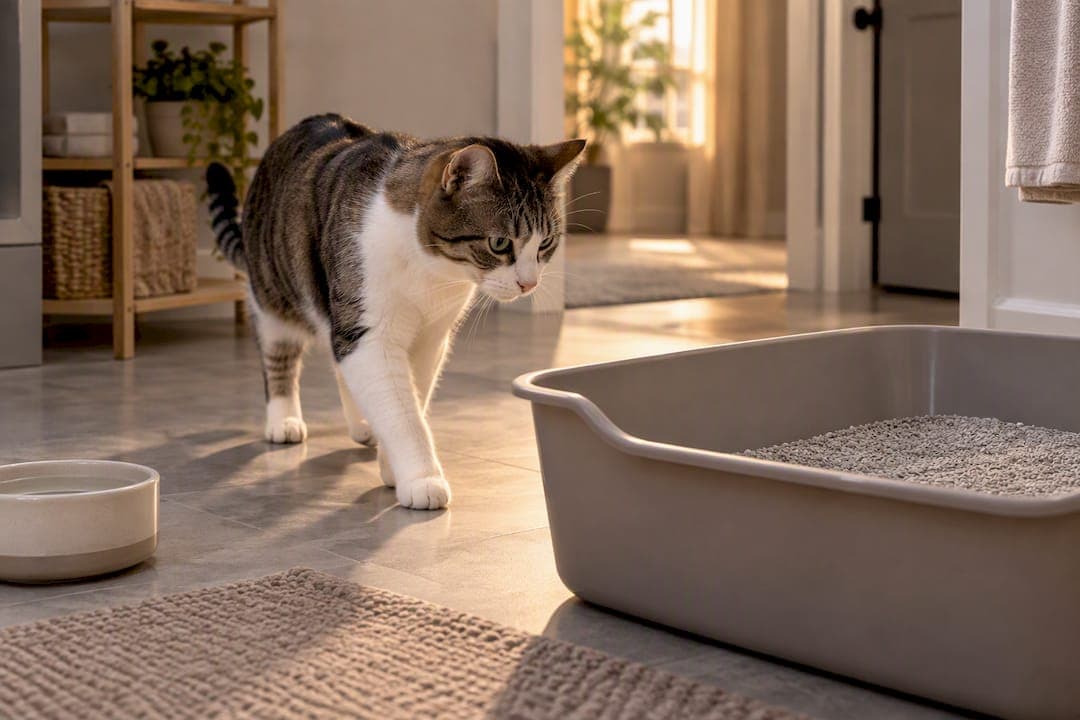
If your cat is suddenly or persistently avoiding the litter box, check for medical causes first, then troubleshoot the environment. Watch for straining, crying while trying to urinate, blood in the urine, or repeated trips with little or no output. Any of those means a same-day vet visit, not a wait-and-see approach. No urgent signs? Work through the setup and behavior fixes below one change at a time.
TL;DR:
- Most litter box issues are caused by medical problems like urinary infections, kidney disease, or arthritis that create lasting negative associations with toileting areas.
- A cat showing signs of discomfort during urination, such as crying or blood in the urine, requires immediate veterinary attention on the same day.
- Proper litter box setup, including size, unscented fine litter, and placement in quiet, accessible areas, can significantly reduce avoidance behaviors.
- Environmental stressors, such as new pets, household renovations, or strange sights outside, often trigger marking or avoidance, necessitating adjustments in home layout and enrichment.
- Systematic troubleshooting—one change at a time, with a waiting period of 3 to 7 days—improves chances of resolving issues without misdiagnosing or overlooking medical causes.
Table of Contents
- Why Do Cats Stop Using the Litter Box?
- What Medical Conditions Cause Litter Box Avoidance?
- How Should You Check for Medical Issues Before a Vet Visit?
- What Litter Box Setup Actually Prevents Accidents?
- Can Stress or Other Cats Cause Litter Box Problems?
- How Do You Troubleshoot Litter Box Problems Step by Step?
- How Do You Clean Accidents So Cats Don't Return?
- When Is a Litter Box Problem an Emergency?
- The Vet-First Approach to Litter Box Problems
- Get a Straight Answer on Your Cat's Litter Box Problem
- Sources
- FAQ
Why Do Cats Stop Using the Litter Box?
Litter box problems fall into five overlapping buckets: medical pain, box aversion, surface or texture preference, territorial marking, and multi-cat stress. Sorting a cat into the right bucket is most of the battle, and the timeline of onset is your best clue.
A cat that was reliable for years and suddenly starts missing the box, especially with visible straining or frequent small trips, is usually telling you something hurts. A cat that has always been a little picky about litter type, or who started avoiding the box the week you switched brands, is telling you a different story. Gradual, creeping problems (an extra accident every week or two over months) point toward chronic pain like arthritis or slow-building environmental stress. Sudden, dramatic changes point toward acute medical events like a urinary blockage or an infection.
Some recognizable patterns:
- Crying or hunching in the box, then leaving without urinating, suggests pain or urgency, not preference.
- Urinating on cool, flat surfaces like tile or a bathtub often means the cat associates the box itself with discomfort.
- Small amounts of urine on vertical surfaces (walls, furniture legs) is marking behavior, not house soiling.
- Avoiding the box entirely in favor of a specific room or closet usually points to a location or access problem.
- Accidents that started right after a new pet, houseguest, or renovation are almost always stress-driven.
House soiling is the single most common behavior complaint cat owners bring to shelters and behaviorists, according to Alley Cat Allies. It is common precisely because so many different things, medical and environmental, can cause the exact same visible symptom.
A significant portion of cats will develop a litter box problem at some point in their lives, according to the ASPCA. That figure matters because it tells you this isn't a rare glitch or a sign your cat is "bad." It's one of the most statistically ordinary things that happens to an otherwise healthy pet.
What Medical Conditions Cause Litter Box Avoidance?
Several medical conditions change how a cat experiences elimination, and each one can leave a lasting mental association between pain and the box itself. According to the Cornell Feline Health Center, urinary tract infections, feline idiopathic cystitis (FIC), kidney disease, diabetes, and arthritis are among the most common drivers.
- Urinary tract infections cause burning and urgency, which often means frequent trips with very little urine each time.
- Feline idiopathic cystitis (FIC) inflames the bladder wall without a clear infectious cause and tends to flare during stressful periods, making it hard to separate "medical" from "behavioral" in practice.
- Bladder stones or crystals create mechanical irritation and, in male cats especially, can partially or fully block the urethra, a true emergency.
- Kidney disease increases urine volume and frequency, sometimes faster than a cat can get to the box in time.
- Diabetes produces the same increased volume and urgency, often alongside noticeable weight loss and increased thirst.
- Arthritis doesn't change urine at all. It changes whether the cat can physically climb into a high-sided box without pain, especially in cats over 10.
Here's the part owners underestimate: a single painful trip to the box can create an association that outlasts the underlying medical issue. A cat successfully treated for a UTI two weeks ago may still avoid the box today, because its brain filed that location under "pain happens here." This is why medical treatment alone sometimes isn't enough. The environment needs rebuilding too, which later sections cover.
Red flags that require same-day attention rather than a routine appointment: repeated straining with no urine produced, visible blood in the urine, crying out during attempts to urinate, a swollen or hard abdomen, or sudden lethargy paired with any of the above. Male cats are at particular risk for urethral obstruction, which can become fatal within 24 to 48 hours if untreated.
How Should You Check for Medical Issues Before a Vet Visit?
Good information at home makes the vet visit faster and more accurate. Before you call, spend a day or two tracking the pattern.
- Log frequency and volume. Note how many times your cat visits the box per day and whether each trip produces a normal amount of urine, a trickle, or nothing.
- Photograph accidents. A photo of the puddle size, color, and location tells your vet more than a verbal description will.
- Note the location pattern. Accidents always in the same spot suggest a surface or box-access issue; accidents scattered everywhere suggest a medical or stress-wide problem.
- Attempt a urine sample if possible. Non-absorbent litter substitutes or a clean, empty box can let you collect a sample; if you can't, tell your vet exactly when the last urination happened.
- Watch mobility. Note any hesitation jumping, stiffness after rest, or reluctance to climb stairs, all signs pointing toward arthritis rather than a urinary issue.
At the clinic, expect a urinalysis with sediment exam as the first-line test, since it can reveal infection, crystals, blood, or concentration problems within minutes. Blood chemistry and a T4 thyroid panel typically follow if kidney disease or diabetes is suspected, and imaging (X-ray or ultrasound) gets added when stones or a mass are on the list. Our own breakdown of what a urinalysis for cats actually measures walks through what each value on the report means.
Pro Tip: Bring your phone to the appointment loaded with your accident log and photos. Vets diagnose litter box problems faster with a week of real data than with a description from memory.
What Litter Box Setup Actually Prevents Accidents?
Box size is the most underestimated variable in litter box problems. The ASPCA recommends a box at least 1.5 times your cat's body length, nose to base of tail, not including the tail itself. Most standard commercial boxes are too small for an adult cat, let alone a larger breed. Owners of Maine Coons and other big-bodied cats often need to look at oversized litter box options built for large cats rather than anything sold as "standard."
- Fill with 1 to 2 inches of fine, unscented, clumping litter. Cats consistently prefer texture over fragrance, and scented litter can drive avoidance in sensitive cats.
- Skip the liner. Liners bunch up, trap claws, and hold odor against the plastic instead of letting you scrub it away.
- Think twice about covered boxes. Covers trap odor inside, restrict a nervous cat's ability to watch for threats while eliminating, and many cats simply refuse them, per the ASPCA's own guidance.
- For senior or arthritic cats, prioritize low entry height over box size, even if it means a shallower storage bin instead of a marketed "senior box."
- Scoop at least once a day, twice for cats with sensitive noses or a history of avoidance, and do a full litter change weekly for clumping litter.
- Wash boxes monthly with a fragrance-free soap. Bleach and ammonia-based cleaners leave a scent cats find unpleasant, even after rinsing.
In multi-cat homes, the standard rule is one box per cat plus one extra, placed in separate locations rather than lined up in a single room. A colony of boxes in one corner functions like a single contested resource to a cat, which defeats the purpose entirely.
Pro Tip: Place boxes in quiet, low-traffic spots with two exit routes. A cat that feels cornered near the box will often find somewhere else to go, even if the box itself is perfect.
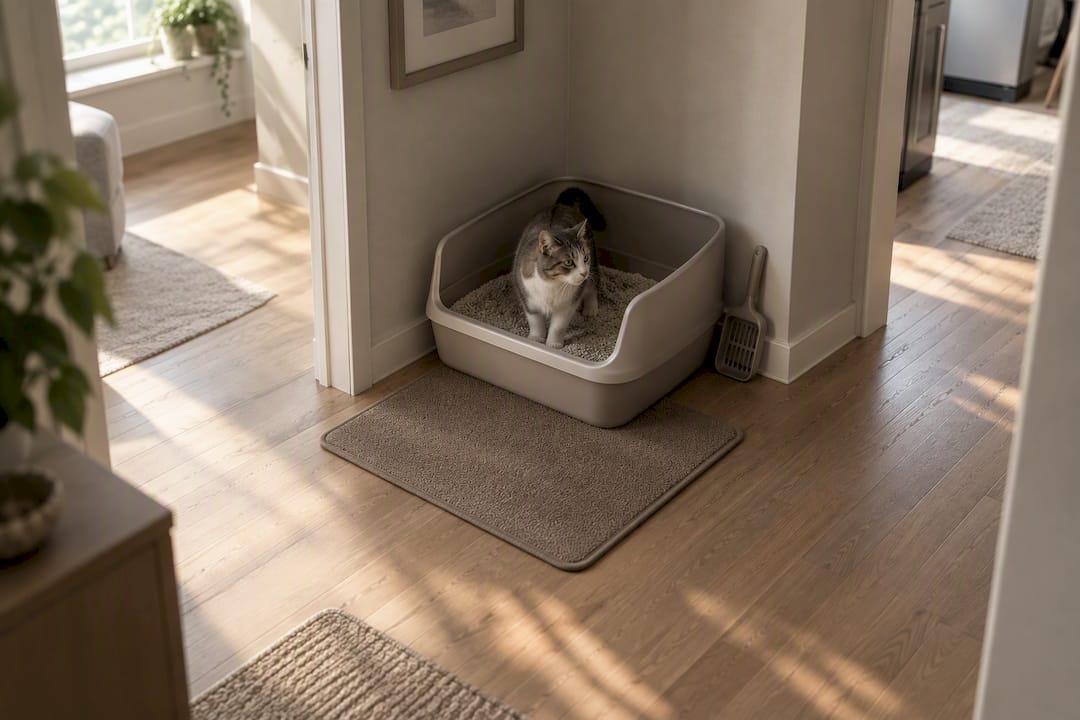
Can Stress or Other Cats Cause Litter Box Problems?
Stress is a legitimate medical trigger, not just a vague behavioral excuse. Environmental changes such as a new pet, a houseguest, construction noise, or even strange cats visible through a window can trigger feline idiopathic cystitis flare-ups and box avoidance at the same time, which is exactly why the medical and behavioral categories overlap so often.
Marking and inappropriate elimination look similar but mean different things. Marking usually happens on vertical surfaces (walls, door frames, furniture legs) in small, targeted amounts, and it's a communication behavior, often tied to unneutered status, territorial disputes, or the presence of unfamiliar animals. Inappropriate elimination happens on horizontal surfaces in normal or large volumes and is far more likely to be pain, aversion, or access related.
- Add boxes and spread them across multiple rooms rather than clustering them, especially in homes with more than two cats.
- Watch for one cat "guarding" the box entrance, a subtle but common source of competition-driven avoidance.
- Skip covered boxes for any cat showing signs of anxiety; visibility matters more than privacy for a stressed cat.
- Add vertical space, scratching posts, and window perches away from the litter area to reduce general tension in the home.
- Consider a pheromone diffuser in high-traffic zones if a specific stressor (new pet, recent move) can't be removed quickly.
How Do You Troubleshoot Litter Box Problems Step by Step?
Chasing five variables at once is the single biggest reason owners fail to solve a litter box problem. Change one thing, wait, and measure.
- Triage first. Any urgent sign (straining, blood, no output, lethargy) means calling the vet today, skipping the rest of this list entirely.
- Get medical clearance. If there's no emergency but the problem is new or persistent, book a vet visit before changing anything else. Fixing the environment while an infection or arthritis goes untreated wastes weeks.
- Audit box count and placement. Confirm you meet the one-per-cat-plus-one rule and that boxes sit in quiet, accessible spots, then hold for 3 to 7 days.
- Test litter type. Switch to fine, unscented, clumping litter if you haven't already, and give it a full week before judging the result.
- Increase cleaning frequency. Move to twice-daily scooping for a week, particularly if the accidents cluster near (but not in) the box.
- Consider temporary confinement. For cats with entrenched habits, a smaller space with a single, ideal box for one to two weeks can help reset the pattern before expanding territory again.
- Escalate if nothing moves. No improvement after two or three full test cycles means a referral to a certified veterinary behaviorist or a second look at medical causes that may have been missed on the first pass.
Running each change for 3 to 7 days before judging it, rather than stacking three changes in one week, is the difference between a fix you can trust and a fix you can't explain, a point Alley Cat Allies emphasizes in its own troubleshooting guidance.
How Do You Clean Accidents So Cats Don't Return?
Standard household cleaners, even strong ones, don't fully break down uric acid crystals in cat urine, which is why a spot that looks and smells clean to you can still smell like a bathroom to your cat. PetMD recommends enzymatic cleaners specifically because they digest the uric acid rather than masking it.
- Avoid ammonia-based cleaners entirely. Ammonia is a component of urine, so it can actually reinforce the scent cue you're trying to remove.
- Block repeat visits temporarily with aluminum foil, an upside-down carpet runner, or double-sided tape over the exact spot.
- Never punish a cat for an accident. Punishment doesn't stop the behavior, it just teaches the cat to hide it, or to associate you with fear during a moment that's already stressful.
When Is a Litter Box Problem an Emergency?
Some signs mean the litter box problem has become a medical emergency, not a behavior project.
- Repeated straining in the box with little or no urine produced
- Visible blood in the urine
- A hard, distended, or painful abdomen
- Sudden lethargy, hiding, or refusal to eat alongside any urinary symptom
Urgent clinics typically respond with urethral catheterization to relieve a blockage, IV fluids to correct dehydration and electrolyte imbalances, pain relief, and follow-up diagnostics once the cat is stable. Male cats face a meaningfully higher risk of urethral obstruction than females due to anatomy, and that blockage can turn fatal within one to two days without treatment. If you're unsure whether what you're seeing counts as an emergency, call anyway. Erring toward caution costs you a phone call; erring the other way can cost a life.
The Vet-First Approach to Litter Box Problems
Most litter box guides jump straight to box size and litter brand, skipping the step that actually matters most: ruling out pain. A Fear Free exam changes what a vet can actually see, because a cat that isn't panicking in the exam room shows its real gait, posture, and abdominal tenderness instead of a stress response that masks everything. Home visits remove the car ride and waiting room entirely, which matters when the goal is separating "this cat hurts" from "this cat is scared." Diagnostics first, environment second, in that order, every time.
— CAVC
Get a Straight Answer on Your Cat's Litter Box Problem
Guesswork and litter-aisle trial and error only get you so far when pain might be the real cause. City Animal Veterinary Center runs in-house urinalysis and lab work the same day you walk in, so you get answers instead of another week of watching and waiting.

If your cat is showing urgent signs, urgent care is available without a long wait for a slot. For cats who panic at the sight of a carrier, our Fear Free home visits bring the exam, the sample collection, and the diagnostics to your living room instead. And when the cause turns out to be stress rather than disease, our behavior management services pick up where the medical workup leaves off. Call to book a wellness exam or a home visit, and bring your accident log. It'll save everyone time.
This article is general information, not a substitute for advice from a qualified doctor. Consult a qualified healthcare professional about your own circumstances before acting on anything here.
Sources
- Litter box problems | ASPCA
- Feline behavior problems: house soiling | Cornell Feline Health Center
- Troubleshooting litter box issues | Alley Cat Allies
- Reasons your cat is peeing outside the litter box | PetMD
FAQ
Why Do Vets Not Recommend Closed Litter Boxes?
Covered boxes trap odor inside instead of letting it dissipate, which makes the box less pleasant for the cat using it and more likely to be avoided. Many cats also prefer an open view of their surroundings while eliminating, since a fully enclosed box limits their ability to watch for threats, a preference the ASPCA notes directly.
Why Is My Cat Pooping on the Floor With a Clean Litter Box?
A clean box doesn't rule out pain, arthritis, or a box that's simply too small or hard to access. It's also worth checking whether the box location itself has become associated with a bad experience, like being startled during use, even if cleanliness isn't the issue.
Why Is My Cat Suddenly Not Using the Litter Box Anymore?
Sudden changes almost always point to something medical, since cats rarely alter established habits without a reason. According to the Cornell Feline Health Center, a urinalysis and physical exam should be the first step, not a change in litter brand.
Where Should You Not Put a Cat's Litter Box?
Avoid loud, high-traffic areas like next to a washing machine or in a busy hallway, and skip spots with only one exit, since a cat that feels cornered may avoid the box altogether. Placement near food and water bowls should also be avoided, since cats instinctively keep those areas separate.
Does My Cat Need a Vet Visit for a Litter Box Problem?
Yes, for any sudden-onset case or one involving straining, blood, or repeated unproductive trips, same-day care is warranted. For gradual or milder cases, a standard wellness exam with urinalysis is the right starting point before trying environmental fixes alone.