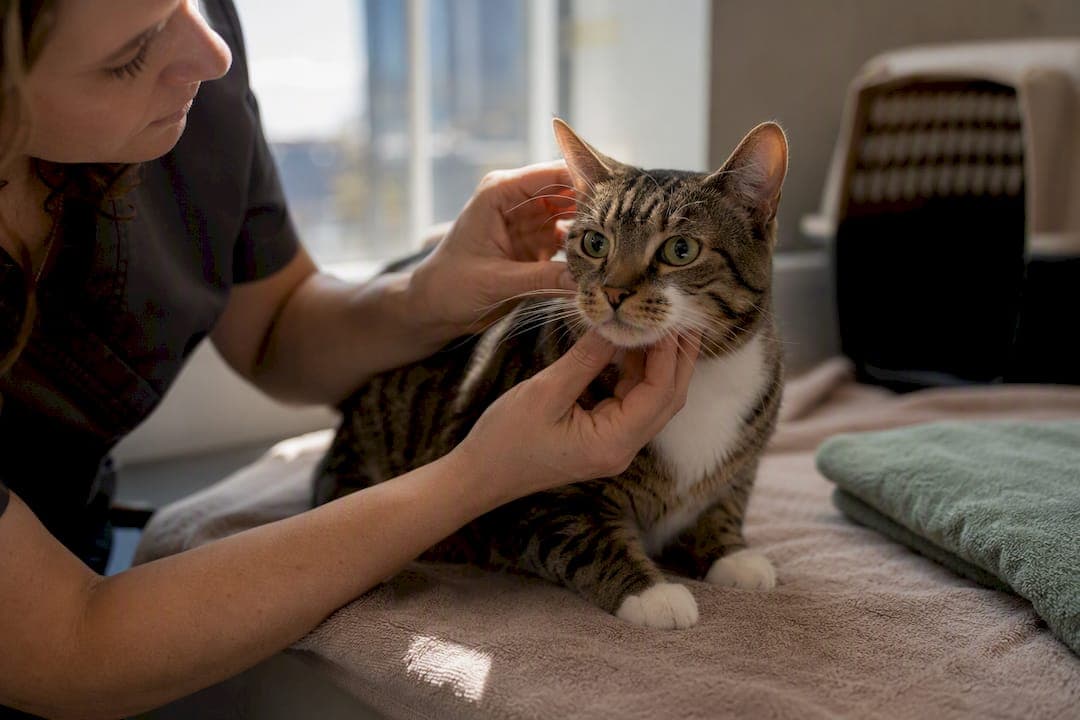
One or two sneezes with your cat otherwise acting normal is nothing to panic over. Monitor for 24 to 48 hours. But if the sneezing continues past a few days, or shows up alongside colored discharge, labored breathing, lethargy, or a cat who's skipping meals, that's your signal to call a vet, not the internet.
TL;DR:
- Most cases of cat sneezing resolve within 48 hours if isolated and no additional symptoms are present.
- Persistent sneezing beyond three days, especially with colored discharge, labored breathing, or lethargy, warrants immediate veterinary care.
- Viral infections are the leading cause, especially in kittens and multi-cat households, but environmental irritants and foreign bodies are common triggers.
- A sharp, single sneeze is distinguishable from reverse sneezing, coughing, or gagging, which require different diagnostic approaches.
- Video recordings of episodes, vaccination history, and symptom timelines are crucial for accurate diagnosis, with more extensive testing for chronic or severe cases.
Table of Contents
- Is It Actually a Sneeze? Cat Sneezing vs. Other Sounds
- What's Actually Causing the Sneezing?
- When to Worry: The Timeline and Red Flags That Matter
- What Happens at the Vet Visit
- Treating and Supporting a Sneezing Cat at Home
- How CAVC Approaches a Sneezing Cat
- A Practical Note on Sneezing and When to Act
- Book a Fear Free Exam for Your Sneezing Cat
- Sources
Is It Actually a Sneeze? Cat Sneezing vs. Other Sounds
Before you diagnose anything, confirm what you're actually hearing. A true sneeze is a sharp, single burst of air out through the nose, sometimes with a head shake or a spray of moisture. It's easy to confuse with other sounds that mean completely different things medically.
- Reverse sneezing: rapid, honking inhales through the nose, often mistaken for choking or an asthma attack.
- Coughing: comes from the chest, sounds wet or dry, and points to airway or lung issues rather than nasal ones.
- Retching or gagging: usually tied to hairballs or stomach upset, not the respiratory tract at all.
- Hiccups: rhythmic, quiet body jerks with no forceful air expulsion.
Each of these points diagnostically in a different direction, so getting it right matters. Grab your phone the next time it happens and film 10 to 15 seconds. Vets rely heavily on owner video to tell nasal problems apart from airway or esophageal ones, since verbal descriptions are notoriously unreliable, according to the Royal Canin Academy.
Pro Tip: Note what triggers it, too. Sneezing right after litter box use often points to dust or scented litter. Sneezing during play or after sniffing under furniture raises suspicion for a foreign body.
What's Actually Causing the Sneezing?
Cat sneezing causes fall into a rough hierarchy of likelihood, and working through it in order saves you from jumping to worst-case scenarios.
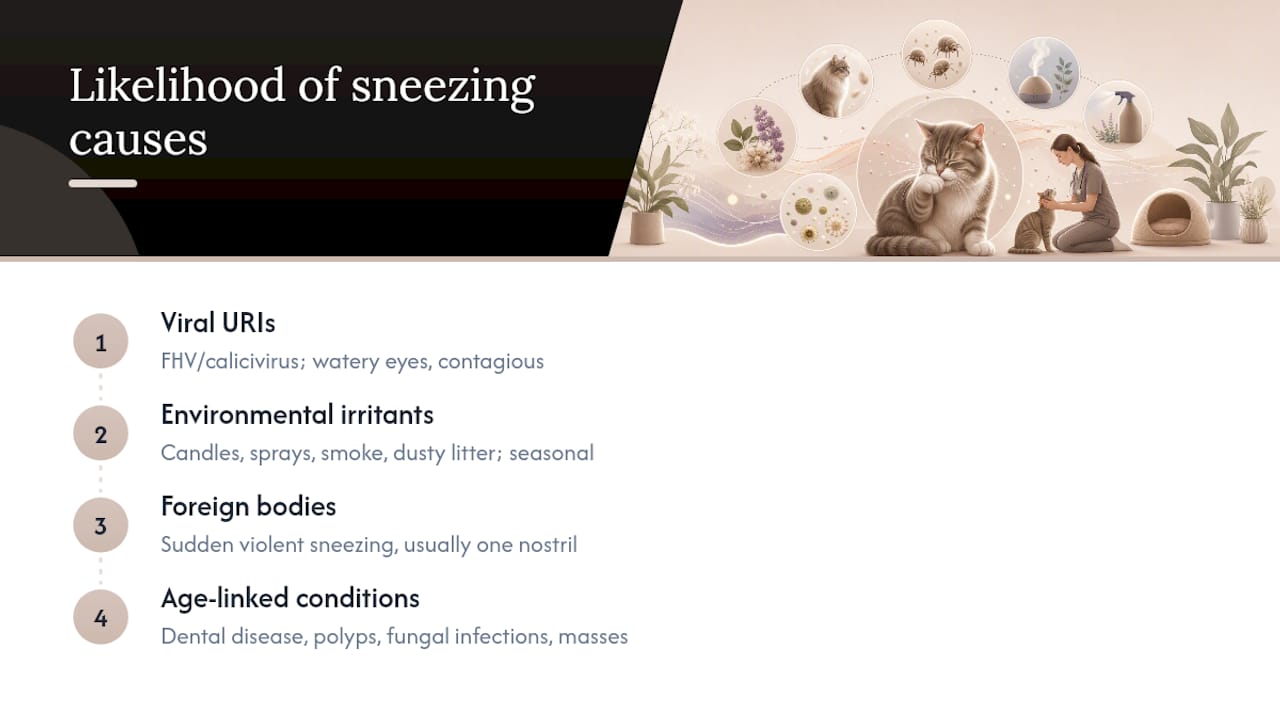
Viral upper respiratory infections top the list by a wide margin. Feline herpesvirus and calicivirus cause the classic combo of sneezing, watery eyes, and mild congestion, and they spread easily between cats through shared bowls, bedding, or direct contact. Kittens and cats from shelters or multi-cat households catch these far more often, since crowding accelerates transmission.
Environmental irritants and allergies rank second. Scented candles, aerosol sprays, cigarette smoke, dusty litter, and even strong cleaning products can set off a sneezing fit that looks a lot like the start of a viral infection but clears up once the trigger is removed. Allergic sneezing tends to come with itchy skin or watery eyes rather than thick discharge, and it often recurs seasonally.
Foreign bodies or inhaled debris cause sneezing that looks and sounds different: sudden, violent, and usually from one nostril only. A blade of grass or a bit of debris lodged in the nasal cavity triggers repeated forceful sneezing that doesn't ease up, and PetMD notes these often need removal under anesthesia rather than resolving on their own.
Dental disease, polyps, fungal infections, and nasal masses sit lower on the probability list but climb higher with age. A senior cat with new, one-sided, chronic sneezing deserves more workup than a kitten with the sniffles, because tooth root infections and nasal tumors become disproportionately more likely as cats get older.
When to Worry: The Timeline and Red Flags That Matter
Timing is your first and most useful tool. Here's how to read it:
- Under 48 hours, isolated, cat acting normal: monitor at home. Keep an eye on appetite and energy.
- 48 to 72 hours with no improvement: call your vet, even if nothing else looks alarming.
- Any red flag present at any point: skip the waiting window entirely and seek care.
The red flags that override the monitoring clock: colored discharge (yellow or green usually means secondary bacterial infection, according to Hill's Pet), any blood, open-mouth or labored breathing, noticeable lethargy, refusing food, facial swelling, or discharge that's persistently coming from just one nostril.
Occasional sneezing without other symptoms is normal and typically resolves on its own, but sneezing that persists more than two to three days, or comes with any of the signs above, is the point where home monitoring stops being appropriate, per Hill's Pet.
Age and health status shift this timeline. Kittens, senior cats, and cats with existing conditions like FeLV or FIV don't have the immune reserve to shake off infections the way a healthy adult cat does, and they can decline faster than the standard 48 to 72 hour window suggests. For those cats, earlier contact with a vet is the safer default, not the cautious overreaction.
What Happens at the Vet Visit
Your vet starts with questions, and the video you took is often more useful than a verbal description. Expect to be asked about onset, whether other cats in the household are affected, and vaccination history, since unvaccinated cats face higher URI risk.
The physical exam covers more ground than most owners expect:
- Nasal and ocular exam for discharge, symmetry, and airflow through each nostril.
- Dental evaluation, since a rotting tooth root can mimic nasal disease.
- Facial palpation to check for swelling or pain over the sinuses.
- Chest auscultation to rule out lower airway involvement.
For a straightforward, short-lived case, the exam alone may be enough. Chronic, unilateral, or severe cases move up a diagnostic ladder: bloodwork, FeLV/FIV testing, PCR panels, and imaging like radiographs or CT, sometimes followed by rhinoscopy or biopsy. Routine bacterial cultures from nasal swabs are notoriously unreliable, since they tend to pick up normal colonizing bacteria rather than whatever's actually driving the problem, per the Royal Canin Academy. A PCR test helps confirm a chronic infectious cause, but a negative result doesn't rule disease out, since carrier cats can test negative between flare-ups.
Treating and Supporting a Sneezing Cat at Home
Most mild cases respond well to simple supportive care while the immune system does its work. Sit with your cat in a steamy bathroom for 10 minutes a few times a day, gently wipe crusted discharge from the eyes and nose with a warm damp cloth, and warm up wet food slightly to make it smell more appealing to a cat whose sense of smell is temporarily blocked. If you have multiple cats, isolate the sneezing one until you know whether it's contagious.
Medically, your vet may prescribe:
- Antibiotics, but only when a secondary bacterial infection is suspected or confirmed.
- Fluid therapy for cats who've stopped eating or drinking enough to become dehydrated.
- Anti-inflammatories to ease nasal swelling and discomfort.
- Hospitalization, reserved for cats in real respiratory distress.
Foreign bodies, deep dental infections, and nasal masses usually require a procedural fix, whether that's endoscopic retrieval, extraction, or biopsy under anesthesia. Integrative options like acupuncture for feline respiratory conditions are sometimes used alongside standard treatment for chronic cases, though they're a complement to veterinary care, not a substitute for it.
Pro Tip: Never give your cat human decongestants, antihistamines, or cold medicine without direct veterinary guidance. Several common over-the-counter ingredients are toxic to cats even in small doses.
How CAVC Approaches a Sneezing Cat
A cat who's already stressed from feeling unwell doesn't need the added anxiety of a traditional exam table. City Animal Veterinary Center built its process around Fear Free techniques, which keep handling gentle and low-stress, and a calmer cat is also a more accurately examined one, since fear masks or exaggerates physical signs like breathing rate.
For owners whose cat is too anxious, too sick, or simply too hard to transport, our house call service brings the exam to your home instead. Before either visit, gather what actually speeds up diagnosis:
- A short video of the sneezing episode.
- Vaccination history and any prior URI diagnoses.
- A rough timeline of when symptoms started and whether they've changed.
A Practical Note on Sneezing and When to Act
The 24 to 72 hour window isn't arbitrary. It's long enough to let a mild irritation pass and short enough to catch a real infection before it worsens. Film the episode, watch for the red flags, and call sooner rather than later if anything shifts. A stress-minimized exam, whether in-clinic or at home, makes that call easier for both of you.
— CAVC
Book a Fear Free Exam for Your Sneezing Cat
Veterinary centers can offer alternatives to stressful vet visits that make cat owners put off care until symptoms get worse. Fear Free exams, in-clinic diagnostics, imaging, and house call services can help avoid the need to wrestle an anxious cat into a carrier just to get an answer.

Before you book, pull together a short video of the sneezing, your cat's vaccination history, and a rough timeline of when symptoms started. That handful of details lets our team narrow down causes faster, whether it turns out to be a passing irritant or something that needs a closer look. If your cat has been sneezing longer than a couple of days, or you've spotted any of the red flags above, schedule a visit with City Animal Veterinary Center and get a straight answer instead of another night of googling symptoms.
Sources
- What You Should Know About Cat Sneezing | Hill's Pet
- Approaching and Diagnosing Sneezing in Cats | Royal Canin Academy
- Cat sneezing: Symptoms & causes | PetMD