Fear aggression is a dog's defensive attempt to make a scary thing go away, expressed through growling, snapping, or biting. The moment you see it, the priority isn't correction. It's distance: calmly remove your dog from whatever triggered the reaction, keep people and other animals clear, and don't punish the display. Long-term resolution comes later, through environmental changes, gradual behavior modification, and often a veterinarian's help, sometimes including medication as a support tool rather than a fix.
TL;DR:
- Most fear aggression signs are noticeable before biting and include lip licking, yawning, whale eye, and tucked tail, which owners should learn to recognize.
- Immediate management involves creating distance from triggers, avoiding punishment, and using tools like muzzles and gates to control risks during the process.
- Behavior modification with desensitization and counter-conditioning proves effective, with 75% of dogs improving without advanced interventions when applied correctly.
- Medications such as SSRIs and situational drugs assist during training but are not replacements for managing environment and underlying causes.
- Medical issues, early socialization, routine, environmental enrichment, and gentle handling are crucial preventive measures against fear aggression development.
Table of Contents
- What Is Fear Aggression, and How Is It Different From Other Types?
- What Does Fear-Driven Aggression Look Like?
- Why Do Dogs Show Aggression Rooted in Fear?
- Managing Fear Aggression: Safety Now, Progress Over Time
- Can You Prevent a Dog From Becoming Fear-Aggressive?
- When Should You Call a Veterinarian or Behaviorist?
- How a Fear Free Veterinary Visit Changes the Picture
- Where the Standard Advice on Fear Aggression Falls Short
- Sources
What Is Fear Aggression, and How Is It Different From Other Types?
Fear aggression starts as an emotion, not a power play. A dog that feels cornered, threatened, or unable to escape will growl, snap, or bite to create space. That's fundamentally different from resource guarding, which is about protecting a valued item, or the rarer cases of genuinely offensive, confidence-driven aggression.
The distinction matters because the fix is different for each. A dog guarding a bone needs trade protocols and management around food. A fear-aggressive dog needs distance, predictability, and a slower introduction to whatever frightens it.
Fear aggression also splits into two behavioral patterns:
- Defensive (withdrawal-first): The dog tries to retreat, hide, or avoid contact before escalating to a growl or snap only when cornered.
- Offensive-looking fear response: The dog lunges or barks aggressively at a distance, using a "best defense is a good offense" strategy to keep a trigger from approaching further.
Both stem from the same root: the dog feels unsafe and doesn't trust that walking away will work.
What Does Fear-Driven Aggression Look Like?
Fear aggression rarely appears out of nowhere. Dogs telegraph distress well before a bite, and learning to read those signals is the single most useful skill an owner can develop.
Watch for this progression:
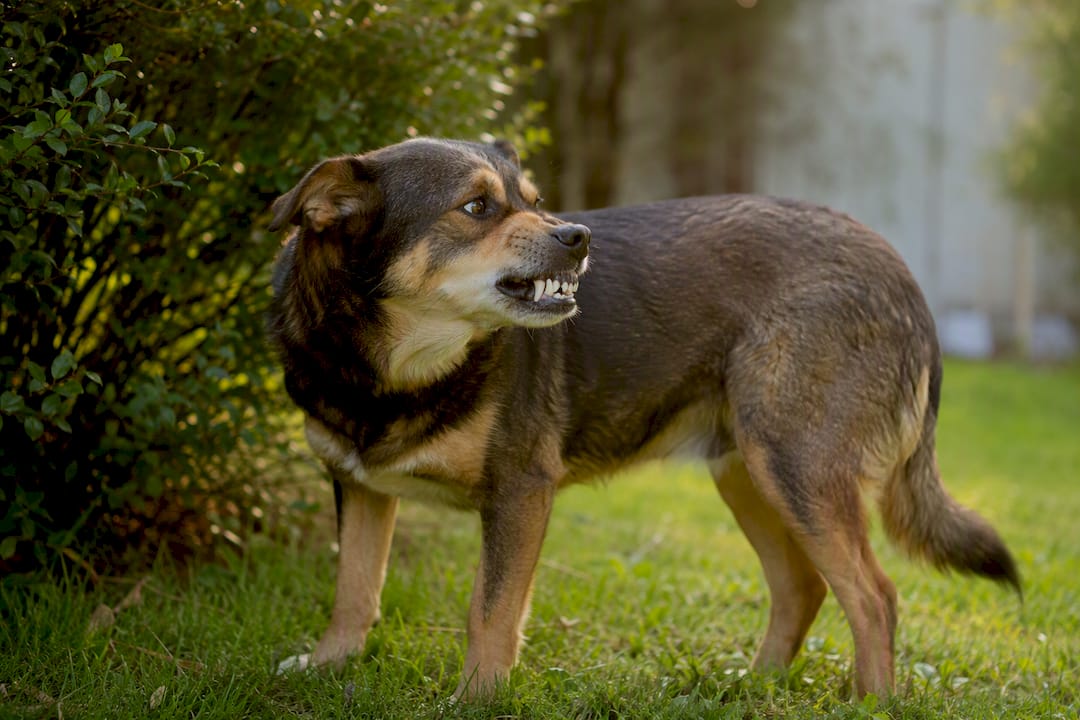
- Subtle stress signals: lip licking, yawning outside of tiredness, whale eye (showing the whites of the eyes), a low or tucked tail, and pinned-back ears.
- Avoidance behaviors: turning away, freezing, backing into a corner, or trying to leave the room.
- Vocal warnings: growling, snarling, or a stiff, low bark aimed at the trigger.
- Escalated warnings: snapping without contact, air-snapping close to a hand or face.
- Bite: contact, often a fast "hit and retreat" bite rather than a prolonged attack.
Most incidents happen indoors, when someone approaches or reaches for the dog rather than during a walk or park visit, according to a retrospective study in Animal Welfare. That context clue matters. If your dog tenses when you lean over the couch or reach for its collar, you're watching the same pattern that shows up in clinical case files.
Pro Tip: A growl is information, not defiance. Punishing it doesn't remove the fear behind it, it just removes your dog's willingness to warn you before the next incident.
Suppressing those early signals, through scolding, physical correction, or "toughing it out," doesn't make a dog less afraid. It teaches the dog that warnings don't work, which raises the odds of an unpredicted bite down the line, according to guidance from PetMD.
Why Do Dogs Show Aggression Rooted in Fear?
Some dogs arrive at fear aggression through their history. Puppies who missed critical socialization windows, between roughly three and fourteen weeks, often grow into adults who read unfamiliar people, dogs, or environments as threats. Dogs with a documented trauma, a rough shelter stay, a bad encounter with another animal, or heavy-handed training, carry that association forward.
Medical issues deserve equal attention and get overlooked constantly. Pain from arthritis, dental disease, or an injury can turn a normally tolerant dog defensive the instant it's touched near the sore spot. Vision or hearing loss makes a dog more easily startled by sudden approach. Any sudden onset of aggression in an adult dog warrants a full veterinary exam before you assume it's purely behavioral.
Everyday triggers tend to repeat across cases:
- Being reached for, restrained, or handled near the collar, paws, or ears
- Children moving unpredictably or hugging the dog
- Veterinary or grooming procedures
- Loud noises: vacuums, fireworks, construction
- Strangers entering the home or approaching on leash
Managing Fear Aggression: Safety Now, Progress Over Time
Handling a fear-aggressive dog well means separating what you do in the next five minutes from what you build over the next five months.
Immediate safety comes first. Create physical distance between your dog and the trigger. Move the dog to another room, use a leash to guide (not drag) it away, and keep children and visitors clear until it settles. Skip any form of punishment, yelling, leash jerking, or physical correction, since punishing a fear response reliably makes the underlying fear worse, not better, per PetMD.
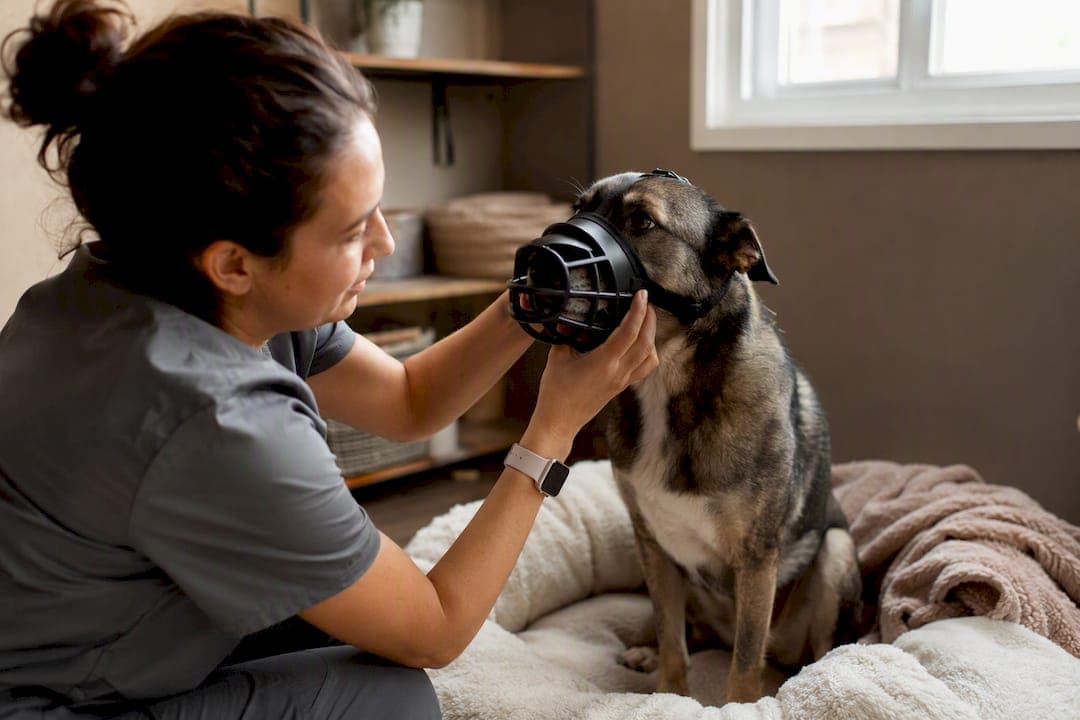
Management tools buy you time to train. A properly conditioned muzzle, introduced slowly with treats so the dog associates it with good things rather than restraint, protects everyone during vet visits, walks, or unpredictable encounters. Baby gates, exercise pens, and a predictable leashing routine reduce the number of surprise confrontations your dog has to navigate. None of these tools "cure" anything. They control risk while the real work happens.

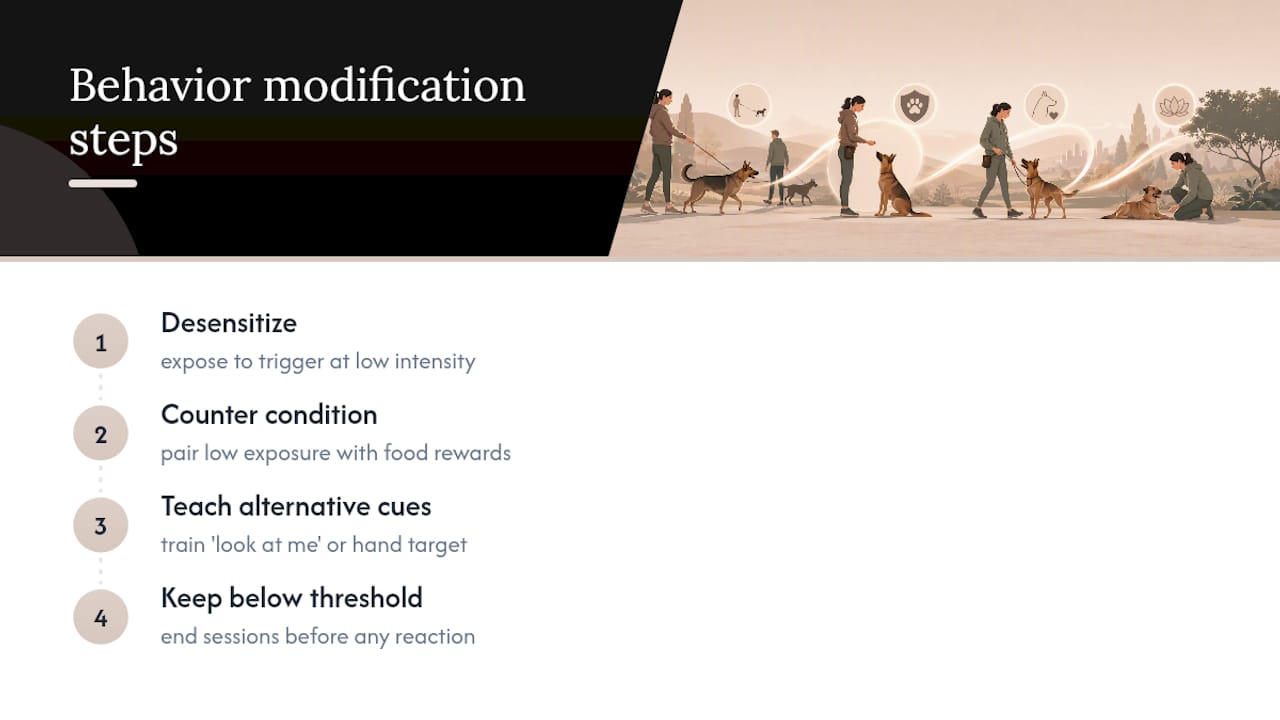
Behavior modification is the real work. The gold-standard approach combines desensitization (exposing the dog to a trigger at an intensity too low to provoke a reaction) with counter-conditioning (pairing that low-level exposure with something the dog loves, usually food). Teaching alternative behaviors, like an automatic "look at me" or a hand-target cue, gives the dog something productive to do instead of escalating. The critical rule: keep every session below the threshold where your dog reacts. A dog's window for choosing a calm response instead of a fear response can close in a fraction of a second, according to the American Veterinary Medical Association, so training has to move in small, boring, repeatable steps rather than big leaps.
The payoff for sticking with it is real. In the Cambridge retrospective study of dogs referred for fear-motivated aggression, 75% improved after management changes and behavior-focused therapy, without needing anything more dramatic than consistent, correctly-paced work.
Medication has a role, but it's a supporting one. Drugs don't replace training, they make training possible for dogs whose anxiety is too high to learn anything. Certain medications such as clomipramine, fluoxetine, dexmedetomidine, and imepitoin are FDA-approved for canine anxiety conditions, and they work on different timelines. SSRIs like fluoxetine typically take several weeks to show a behavioral effect, while situational medications like trazodone or dexmedetomidine act within minutes to hours and suit one-off stressful events like vet visits or fireworks. All of it requires veterinary prescribing and monitoring, according to the AVMA, and works best layered onto a behavior plan rather than used alone, per Today's Veterinary Practice.
Can You Prevent a Dog From Becoming Fear-Aggressive?
Prevention leans heavily on what happens early, but adult dogs benefit from the same principles.
- Expose puppies to varied people, surfaces, sounds, and handling during the socialization window, always at a pace the puppy tolerates without panic.
- Use positive reinforcement, treats, praise, play, for calm behavior around new things. Skip corrections for fearful reactions; they add stress rather than resolve it.
- Keep a predictable daily routine. Consistent feeding times, walk schedules, and quiet rest periods lower baseline anxiety.
- Give dogs mental enrichment, puzzle feeders, scent games, and short training sessions to burn off nervous energy productively.
- Practice gentle, reward-based handling of paws, ears, and mouth from puppyhood so vet exams and grooming don't feel like ambushes.
Solid leash handling habits also cut down on unplanned encounters that spike stress, something the dog walking safety guidance from American Bark Bliss covers well for owners managing a reactive dog outdoors.
When Should You Call a Veterinarian or Behaviorist?
Certain signs mean this isn't a wait-and-see situation.
- Any bite that breaks skin, or repeated snapping that's getting closer to contact.
- Aggression directed at children or escalating in frequency or intensity over weeks.
- A sudden behavior change in an adult dog, which often points to an underlying medical cause.
- Fear responses that are shrinking your dog's world, refusing walks, hiding constantly, or reacting to more and more everyday situations.
Come prepared. Video of an actual incident is worth more than a verbal description, since body language details matter and owners under stress tend to miss them in the moment. Bring a timeline of when the behavior started and how it has changed, your dog's full medical history, and notes on what management you've already tried. A vet will typically run a physical exam to rule out pain or illness, ask about the specific circumstances of each incident, and build a staged plan: document, examine, manage the environment, start behavior modification below threshold, and add medication if progress stalls, a workflow outlined by Today's Veterinary Practice.
How a Fear Free Veterinary Visit Changes the Picture
A fearful dog's worst environment is often the exam room itself, which is exactly the problem City Animal Veterinary Center's Fear Free approach is built to solve. Techniques like low-stress handling, pheromone support, and letting the dog set the pace reduce the panic that makes exams and treatment planning harder for everyone. For dogs too anxious to travel well, City Animal Veterinary Center's home visit service brings the exam into a familiar space instead. If you're heading into an appointment, bringing your incident video and timeline gives the team at City Animal Veterinary Center a real head start on building your dog's plan.
Where the Standard Advice on Fear Aggression Falls Short
Most guidance on fear aggression treats it as a training problem with a training solution: enough desensitization sessions and the dog comes around. That undersells two things the evidence actually supports. First, medical causes get skipped too often. A dog that suddenly snaps when touched near the hip may have arthritis, not a socialization gap, and no amount of counter-conditioning fixes a sore joint. Second, medication carries a stigma it hasn't earned. It's not a last resort or an admission of failure. For a dog too anxious to learn anything, a prescribed SSRI or a situational option like dexmedetomidine can be what makes behavior modification possible in the first place, not a shortcut around it.
What we'd tell any owner to prioritize first: rule out pain with a vet exam, stop punishing warning signals immediately, and start management before you start training. The dog that gets to feel safe first is the dog that actually learns.
— CAVC
Sources
- Fear aggression in dogs | PetMD
- Treating anxiety to prevent canine aggression | American Veterinary Medical Association
- Fear-motivated aggression in dogs: patient characteristics, diagnosis and therapy | Animal Welfare (Cambridge)
- The Use of Medications in Canine Behavior Therapy | Today's Veterinary Practice