
The SNAP 4Dx Plus test is an in-clinic blood screen that checks for heartworm and three tick-borne infections in about eight minutes, using a small blood sample drawn during a regular visit. A positive spot signals exposure to a pathogen like heartworm or Lyme disease, not necessarily active illness, so it typically triggers a conversation about follow-up testing rather than an immediate treatment decision. City Animal Veterinary Center runs this screen as part of routine wellness visits because catching exposure early changes what happens next.
TL;DR:
- The SNAP 4Dx Plus test detects heartworm antigen and tick-borne antibodies, with sensitivity ranging from 93% to 99%, but false negatives can occur shortly after exposure or with early infections.
- A positive result indicates exposure, not necessarily active illness, requiring follow-up tests like antigen confirmation or bloodwork before treatment decisions.
- Testing is recommended annually, but should be retaken after recent tick bites, travel, or lapses in prevention, especially if exposure risk is high in your region.
- The test's accuracy improves with recent, calm sample collection using a Fear Free approach, and in-house testing allows immediate follow-up diagnostics if needed.
- Confirmatory testing and follow-up are essential if results are borderline or if your dog shows symptoms to accurately assess infection status and determine appropriate treatment.
Table of Contents
- What Does the SNAP 4Dx Test Screen For?
- How Is the SNAP 4Dx Test Performed at a Clinic Visit?
- How Accurate Is the SNAP 4Dx Plus Test?
- When Should You Test Your Dog for Heartworm and Tick-Borne Disease?
- What Happens After a Positive or Negative SNAP 4Dx Result?
- City Animal Veterinary Center's Take on Fear Free SNAP 4Dx Screening
- Book a Fear Free SNAP 4Dx Screening
- Sources
- FAQ
What Does the SNAP 4Dx Test Screen For?
The test looks for one antigen and antibodies to three groups of pathogens. It detects Dirofilaria immitis (heartworm) antigen directly, along with antibodies to Borrelia burgdorferi (Lyme disease), Anaplasma species, and Ehrlichia species, according to IDEXX's own test documentation.
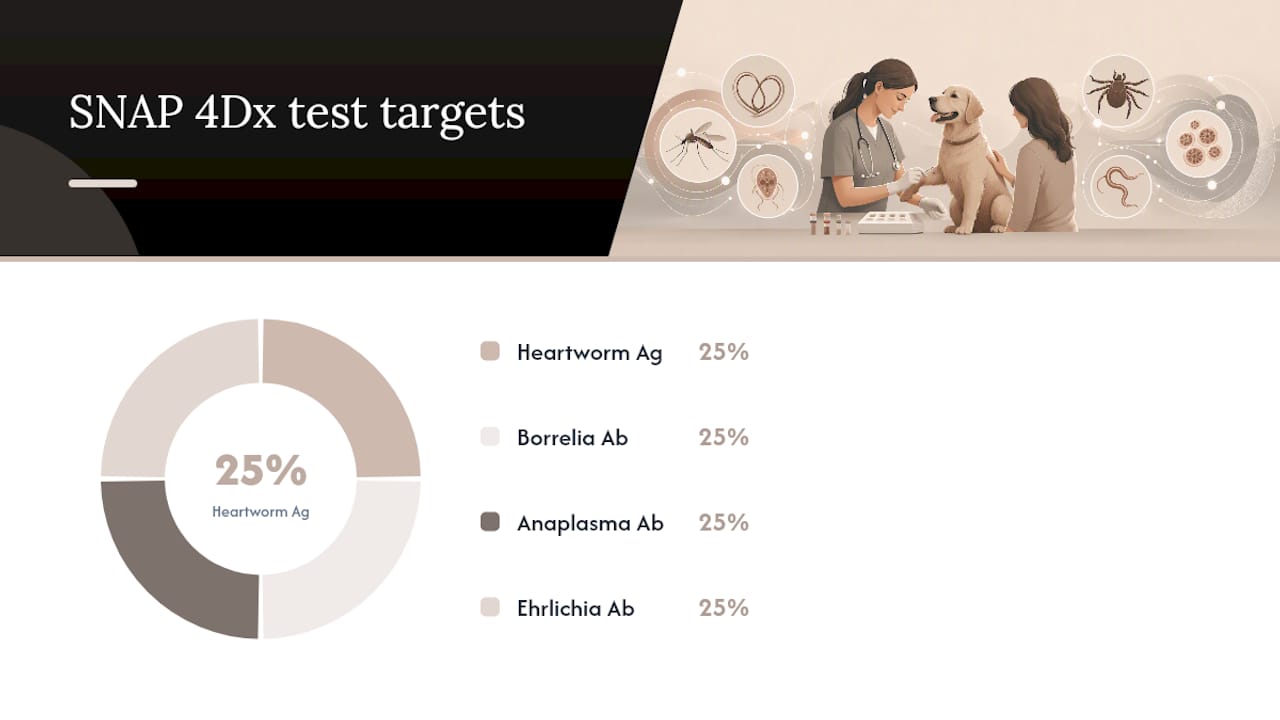
That distinction between antigen and antibody matters more than most owners realize. Antigen detection means the test found actual heartworm protein, a much stronger sign of true infection. Antibody detection means the dog's immune system reacted to exposure at some point, which is a different question entirely.
Some spots on the device group multiple species together rather than isolating one:
- The Anaplasma spot covers both A. phagocytophilum and A. platys without telling you which one.
- The Ehrlichia spot covers E. canis and E. ewingii the same way.
- A positive on either spot means the dog was exposed to something in that family, and species-level confirmation requires a separate test.
A positive tick-borne antibody result usually means your dog's immune system met the bacteria at some point, which informs behandling av matsensitivitet hos hund and broader veterinary health management approaches. It does not automatically mean your dog is sick right now, which is exactly why the next section of this test matters as much as the result itself.
How Is the SNAP 4Dx Test Performed at a Clinic Visit?
The physical test itself runs on whole blood, plasma, or serum, and any refrigerated sample needs to reach room temperature before use, per the manufacturer's kit instructions. The clinic-side steps go in a specific order:
- Draw a small blood sample during the appointment.
- Mix the sample with the conjugate reagent supplied in the kit.
- Add the mixture to the SNAP device sample port.
- Activate the device once color fills the activation circle.
- Read the result at exactly 8 minutes, per the product's timing guidance.
Before the visit, bring up anything relevant: recent tick bites, gaps in heartworm prevention, or travel to another region. That history shapes how your veterinarian reads a borderline result.
The draw can be done using Fear Free handling, meaning a calm approach, high-value treats, and a comfortable carrier setup rather than restraint-first technique. Most dogs barely notice the poke when the visit is paced right, and the wellness exam itself usually continues while the sample processes.
Pro Tip: Feed your dog a small meal an hour before the visit rather than on an empty stomach. A dog who isn't hungry or anxious tends to sit still for the blood draw, which makes the whole process faster for everyone.
How Accurate Is the SNAP 4Dx Plus Test?
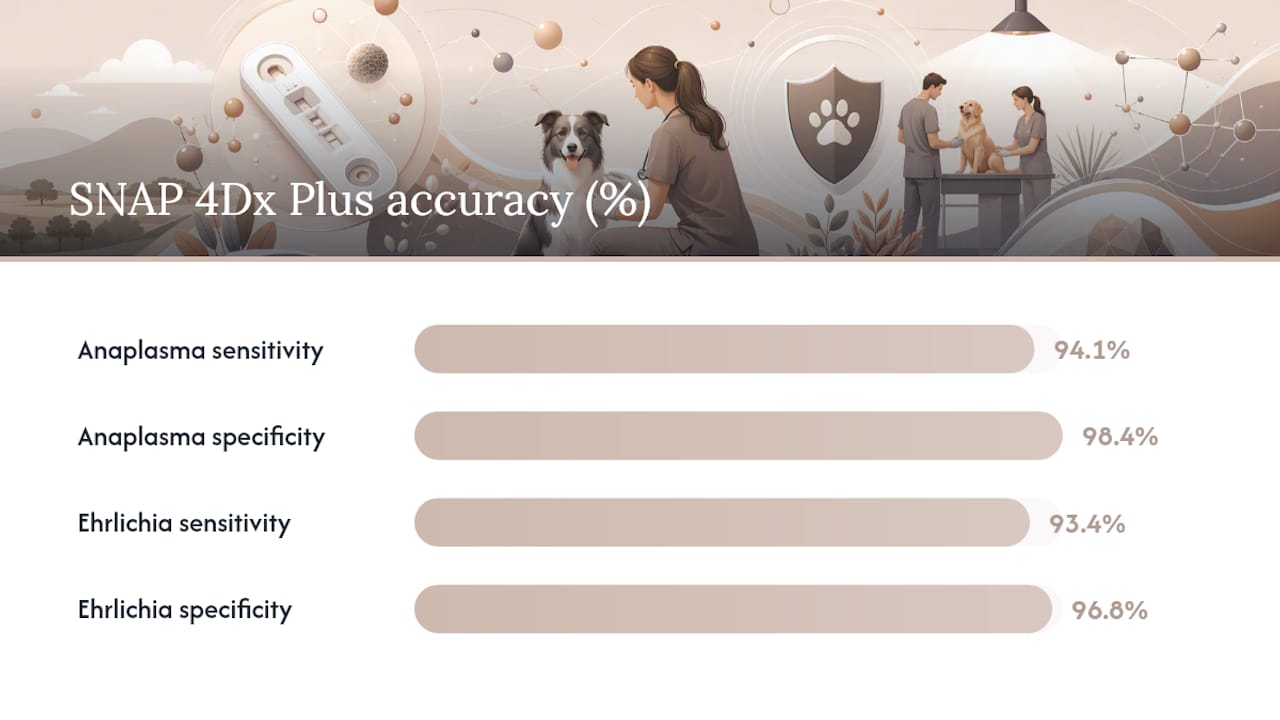
Sensitivity and specificity for SNAP 4Dx Plus generally fall between 93% and 99%, with variation by pathogen. Validation data from IDEXX reports Anaplasma sensitivity at 94.1% and specificity at 98.4%, and Ehrlichia sensitivity at 93.4% with specificity at 96.8%. Heartworm antigen detection tends to run near the top of that range in most cited studies.
Those numbers still leave room for two specific blind spots:
- Timing gaps. Antibody tests only work after the immune system has responded, and seroconversion after exposure takes time. Test too soon and you can get a false negative even in a truly exposed dog.
- Antigen-only heartworm limits. The antigen test detects protein from adult female heartworms. An infection made up only of male worms, or a very early, low-burden infection, can slip past antigen detection.
Improved peptides used in the current SNAP 4Dx Plus version, similar to the C6 ELISA technology used to detect Borrelia burgdorferi, have measurably improved detection of Anaplasma and Ehrlichia compared with earlier versions, according to IDEXX's own whitepaper. When a result sits in a gray zone, veterinarians typically lean on PCR testing, complete bloodwork, or urinalysis to confirm whether an active infection is actually present.
When Should You Test Your Dog for Heartworm and Tick-Borne Disease?
Annual testing is the standard recommendation, and it's not just a formality. Most dogs that pick up heartworm or a tick-borne infection show no symptoms at all in the early stages, which means a yearly screen is often the only way exposure gets caught before it becomes a bigger problem. Aggregated surveillance data spanning hundreds of thousands of samples shows regional exposure risk varies significantly by geography, which is part of why annual screening stays useful even for dogs that rarely leave the yard.
Timing matters after a known exposure, too. Testing immediately after a tick bite is often too soon, because it takes several weeks for antibodies to build up to detectable levels. Veterinarians commonly recommend waiting and then retesting a few weeks out if the first result comes back negative but suspicion remains high.
A few situations call for testing outside the normal annual schedule:
- Puppies entering their first wellness visits.
- Newly adopted dogs with an unknown exposure history.
- Dogs recently returned from travel to a tick or heartworm endemic region.
- Any dog with a lapse in heartworm or tick preventive medication.
What Happens After a Positive or Negative SNAP 4Dx Result?
A positive result doesn't mean panic, and a negative doesn't mean permanent immunity. What happens next depends heavily on which spot lit up and whether your dog is showing symptoms.
- Positive heartworm antigen. This gets confirmed with a follow-up antigen test or a microfilaria check before starting the staged heartworm treatment protocol, since a false positive here has real consequences for treatment decisions.
- Positive tick-borne antibody, no symptoms. An asymptomatic dog with a positive Lyme antibody spot is often monitored rather than treated immediately, sometimes with a urinalysis to check for early kidney involvement, a known complication of Lyme disease in dogs.
- Positive result with symptoms. A dog showing lameness, lethargy, or fever alongside a positive tick-borne spot is a different case. Veterinarians commonly start doxycycline and run additional bloodwork right away rather than waiting to monitor.
- Negative result. A clean result supports continuing current prevention, though a recent, unresolved tick bite may warrant a repeat test later.
Beyond the exam room, a positive result is also a household signal. It means ticks are active in your dog's environment, which is worth knowing for every person and pet who shares that yard.
City Animal Veterinary Center's Take on Fear Free SNAP 4Dx Screening
Annual SNAP 4Dx screening works best when it's folded into a visit your dog isn't dreading. That's the whole logic behind building it into the standard wellness exam rather than treating it as a separate, stress-inducing errand. A calm dog holds still better, which means a cleaner sample and a faster draw.
An in-house lab means a positive spot doesn't send you out the door with more questions than answers. Confirmatory bloodwork and urinalysis can happen without a second appointment in most cases, and for dogs who genuinely struggle with clinic visits, home visit follow-up testing may be available so a positive result doesn't require repeat trips that raise stress levels. Screening only earns its value if the follow-up plan is just as low-friction as the test itself.
— CAVC
Book a Fear Free SNAP 4Dx Screening
SNAP 4Dx screening works best when built into a wellness visit a dog isn't dreading, with a Fear Free approach to handling and an in-house lab that turns a positive spot into an answer, not a second appointment.
Booking is simple. A wellness exam visit covers the SNAP 4Dx draw alongside your dog's regular checkup, and the same visit can include the nutritional counseling and microchipping many owners handle at once. If your dog struggles with car rides or clinic environments, ask about home visit services so screening and follow-up happen in a space your dog already feels safe in. Call or book online to get your dog's annual screening on the calendar before tick season peaks.
This article is general information, not a substitute for advice from a qualified doctor. Consult a qualified healthcare professional about your own circumstances before acting on anything here.
Sources
- SNAP 4Dx Plus Test FAQs (IDEXX)
- SNAP 4Dx Plus Test accuracy (IDEXX)
- SNAP 4Dx Plus whitepaper (IDEXX)
- Drugs
FAQ
What Is a SNAP 4Dx Test for Dogs?
It's an in-clinic blood test that screens for heartworm antigen and antibodies to Lyme disease, Anaplasma, and Ehrlichia in a single small sample. Results come back in about 8 minutes, so your veterinarian can discuss findings before you leave the appointment.
How Accurate Is the SNAP 4Dx Test?
Sensitivity and specificity generally range from 93% to 99% depending on the pathogen, with Anaplasma and Ehrlichia detection on the higher end of that range in current validation data. No screening test is perfect, so results outside expected patterns are usually confirmed with additional bloodwork.
How Often Should Dogs Get a 4Dx Test?
Annual testing is the standard recommendation for most dogs, typically timed with a routine wellness exam. Dogs with a recent tick bite, travel history, or a missed preventive dose may require testing outside the usual schedule.
How Much Does a SNAP 4Dx Plus Test Cost?
Pricing depends on your dog's individual visit and is available directly through City Animal Veterinary Center rather than listed as a flat rate. Contact the clinic or check the wellness exam page for current details on what's included in a screening visit.
What Does a Positive SNAP 4Dx Result Mean?
A positive spot means your dog was exposed to that pathogen, not that active disease is confirmed. Your veterinarian will typically recommend follow-up testing, such as a confirmatory heartworm test or urinalysis, to decide whether treatment or ongoing monitoring is the right next step.