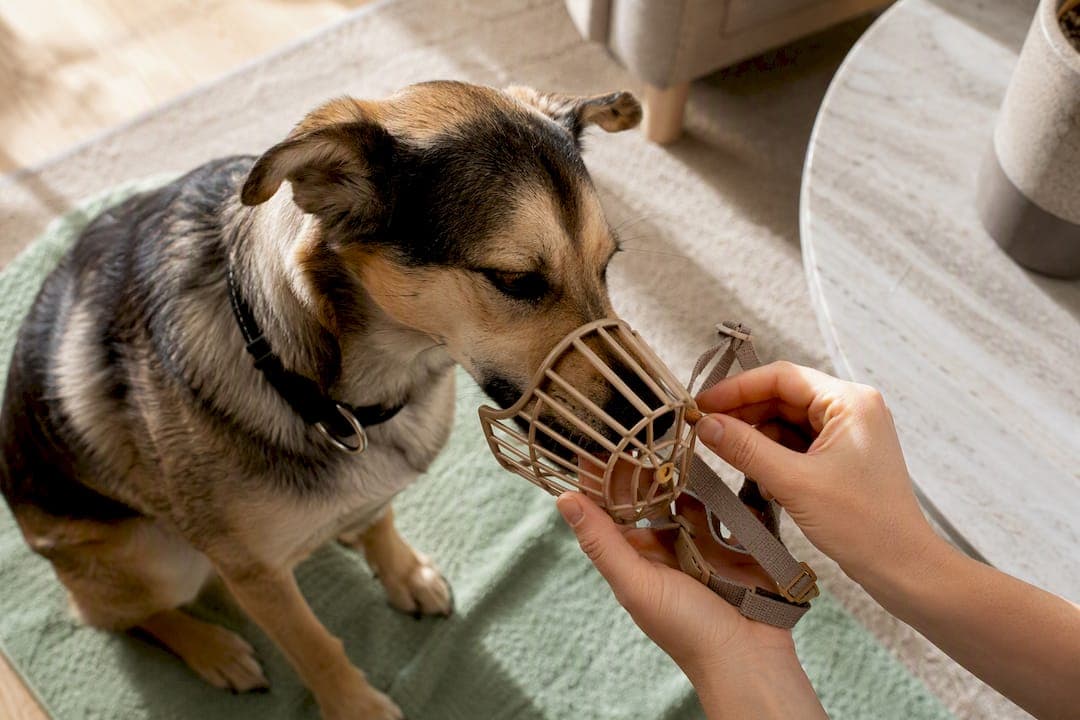
For calmer, safer vet visits, teach your dog to accept a basket muzzle using short, positive-reinforcement sessions at home before the appointment. Start by letting the muzzle double as a treat receptacle, build up wearing time in minutes, then add the strap once your dog pushes its nose in willingly. Proper fit matters as much as the training itself: your dog must be able to pant, drink, and take treats through it.
TL;DR:
- Proper muzzle fit is crucial to prevent overheating, stress, or breathing issues, requiring careful measurement and regular checks during training.
- Positive, gradual training sessions that reward nose-in behavior and treat acceptance help dogs associate muzzles with positive experiences rather than fear.
- Basket muzzles are preferred for vet visits because they allow dogs to pant, drink, and accept treats, unlike soft muzzles which restrict airflow and can cause heat stress.
- Muzzle training can take several days to weeks and involves exposing dogs to the equipment in various safe environments, including simulating clinic conditions.
- Dogs with prior handling issues or fear-related behaviors need foundational obedience and handling training first to ensure muzzle training is successful and safe.
Table of Contents
- What Is the Best Way to Start Muzzle Training for Vet Visits?
- How Do You Train a Dog to Accept a Muzzle Step by Step?
- How Should a Muzzle Fit, and What Are the Warning Signs?
- What Should You Do the Day of the Vet Appointment?
- How Does a Fear Free Clinic Handle a Muzzle-Trained Patient?
- Why Does General Obedience Training Matter Before Muzzle Work?
- How Do You Use Treats to Build a Positive Muzzle Association?
- How Do You Simulate Vet Visit Conditions During Training?
- How Do You Keep Muzzle Training From Fading Over Time?
- How Do You Muzzle a Fearful or Aggressive Dog Safely?
- How Do You Adjust Muzzle Training for Different Sizes and Breeds?
- A Note From City Animal Veterinary Center
- Where to Learn More About Muzzle Training
- Sources
- FAQ
What Is the Best Way to Start Muzzle Training for Vet Visits?
Not all muzzles belong at the vet's office, and picking the wrong style can undo weeks of good training. The shape of the muzzle determines whether your dog can pant, drink, or take a treat mid-exam, which is exactly why clinics have strong opinions about this.
Basket muzzles are the standard for clinic use. Cornell University's veterinary team notes that basket muzzles are preferred for veterinary visits because the open-front design lets a dog pant freely, drink water, and accept treats through the gaps. That last part matters more than most owners realize. A muzzle you can feed treats through stays a positive object; one you can't turns into something the dog just tolerates.
Soft or sleeve muzzles wrap snugly around the nose and mouth, pressing the jaw shut. They're fine for a two-minute nail trim or a quick grooming touch-up, but they block panting almost entirely. Leave one on too long, especially in a warm exam room, and you risk real heat stress.
Gauze or emergency wraps exist for one purpose: a brief, unplanned restraint when nothing else is available. They're not training tools and shouldn't become part of a routine.
Some dogs need extra thought:
- Flat-faced breeds (Bulldogs, Pugs, Boxers) often need a shortened basket muzzle designed for brachycephalic snouts.
- Very small dogs may need a mini basket style rather than a scaled-down version of a standard one.
- Dogs with underbites or overbites sometimes need a custom-fit basket to seat correctly without pinching.
How Do You Train a Dog to Accept a Muzzle Step by Step?
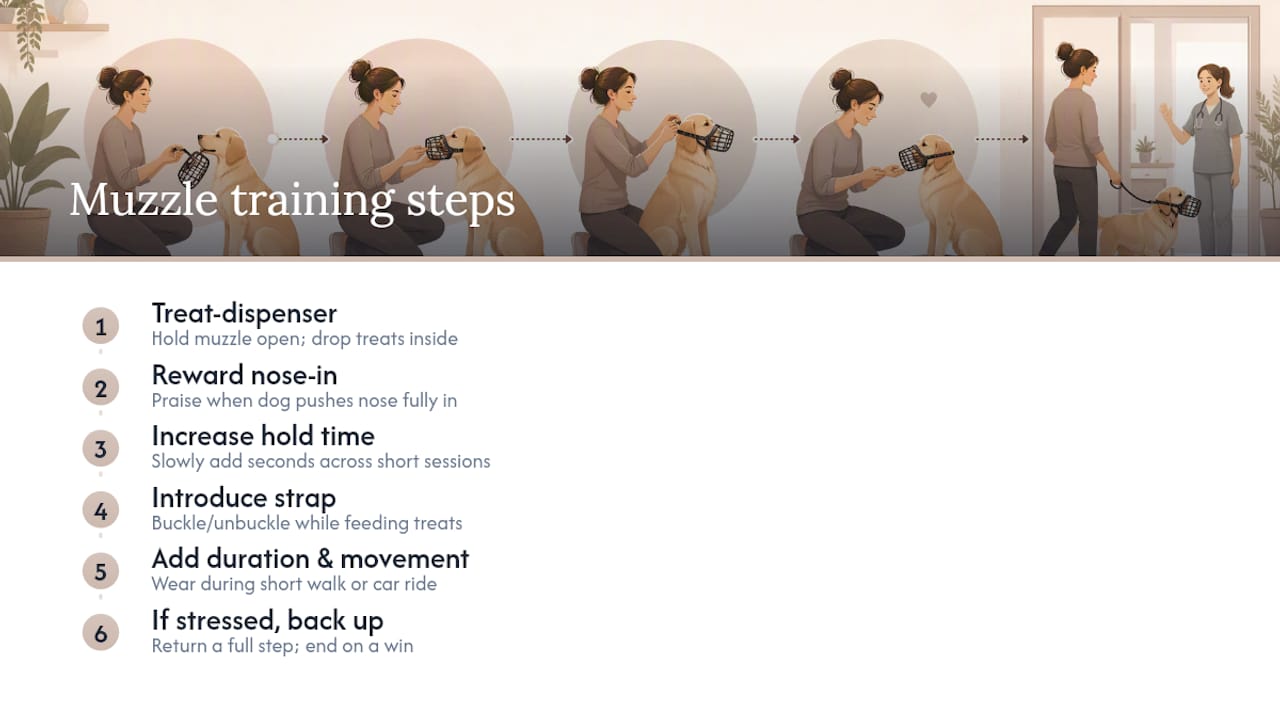
Muzzle training works best as a slow, staged process, not a single sit-down session. Cornell's behavior team frames it as building comfortable muzzle acceptance through repeated, low-pressure exposure, and the timeline depends entirely on your dog's starting comfort level with having things near its face.
1. Turn the muzzle into a treat dispenser. Hold the muzzle open like a bowl and drop treats inside. Let your dog approach and eat without any pressure to put its nose through. Repeat until your dog walks up to the muzzle on its own.
2. Reward the nose-in behavior. Once your dog is comfortable eating out of the muzzle, start rewarding it for pushing its nose all the way in to reach the treats. Keep each session to a minute or two, several times over the day rather than one long push.
3. Stretch out the duration. Gradually ask your dog to hold its nose in the muzzle a few seconds longer each time, always following with a treat. Build this slowly over several short sessions a week.
4. Introduce the strap. Once your dog is relaxed with the nose-in step, practice buckling and unbuckling the strap while feeding treats, without expecting your dog to wear it for long. This is the stage most owners rush, and it's the one that causes the most setbacks.
5. Add duration and movement. Let your dog wear the buckled muzzle during something it already enjoys: a short walk around the block, a car ride, a favorite game. Remove the muzzle before any sign of stress creeps in, not after.
Whole Dog Journal's training guidance echoes the same pacing: short, frequent sessions that end while the dog is still happy work better than long sessions that push through discomfort. Most dogs need several short, frequent sessions over time, depending on temperament and prior experience with handling.
Pro Tip: If your dog backs away, paws at the muzzle, or refuses treats it normally loves, go back a full step rather than pushing forward. Ending on a win is what makes tomorrow's session easier.
Never introduce a muzzle for the first time during an actual panic episode. Cornell's veterinary behavior team warns that forcing a muzzle on an already stressed dog can build a negative association that takes far longer to undo than the original training would have taken.
How Should a Muzzle Fit, and What Are the Warning Signs?
A poorly fitted muzzle can turn a helpful safety tool into a genuine hazard. Get the fit wrong and you risk overheating, panic, or a dog that simply can't breathe comfortably during a stressful moment.
Fit basics to check every time:
- Measure your dog's snout length and circumference before buying, since sizing charts vary between brands.
- Slide one to two fingers under the strap at the back of the head. Any tighter and it's restrictive; any looser and the muzzle can slip off or shift.
- Confirm your dog can open its mouth fully to pant once the strap is buckled.
- If using a sleeve-style muzzle for a short procedure, keep total wear time to just a few minutes and watch closely the whole time.
The AKC's guidance on muzzle fit is blunt about the stakes: a muzzle that restricts panting increases heat stress risk fast, especially in a warm exam room where a dog is already anxious and breathing harder than usual.
Watch for red flags that mean you should stop immediately: frantic pawing at the muzzle, repeated yelping or whining, or any inability to close the mouth partway to pant. If you see these signs during home training, remove the muzzle, go back a step, and slow down.
If your dog has a bite history or reacts with real panic rather than mild avoidance, loop in a certified positive-reinforcement trainer or veterinary behaviorist before continuing on your own.
What Should You Do the Day of the Vet Appointment?
The groundwork you've done at home only pays off if the appointment itself stays calm. A few small choices in the parking lot or waiting room can make or break the visit.
- Put the muzzle on before you walk into the clinic, ideally at home or in the car, so your dog isn't associating the building itself with the muzzle appearing.
- Bring high-value treats your dog rarely gets otherwise, and keep the same handler on the leash your dog already trusts.
- Tell the front desk your dog is muzzle trained. Ask about waiting in a quieter spot or heading straight into an exam room instead of a crowded lobby.
- If your dog is already panicking, don't force the muzzle on. Ask the clinic about rescheduling or a calm-facilitation plan instead.
The AKC notes that a trained muzzle reduces the need for heavy physical restraint during exams, which usually means a faster, gentler visit for everyone involved, including the veterinary team.
How Does a Fear Free Clinic Handle a Muzzle-Trained Patient?
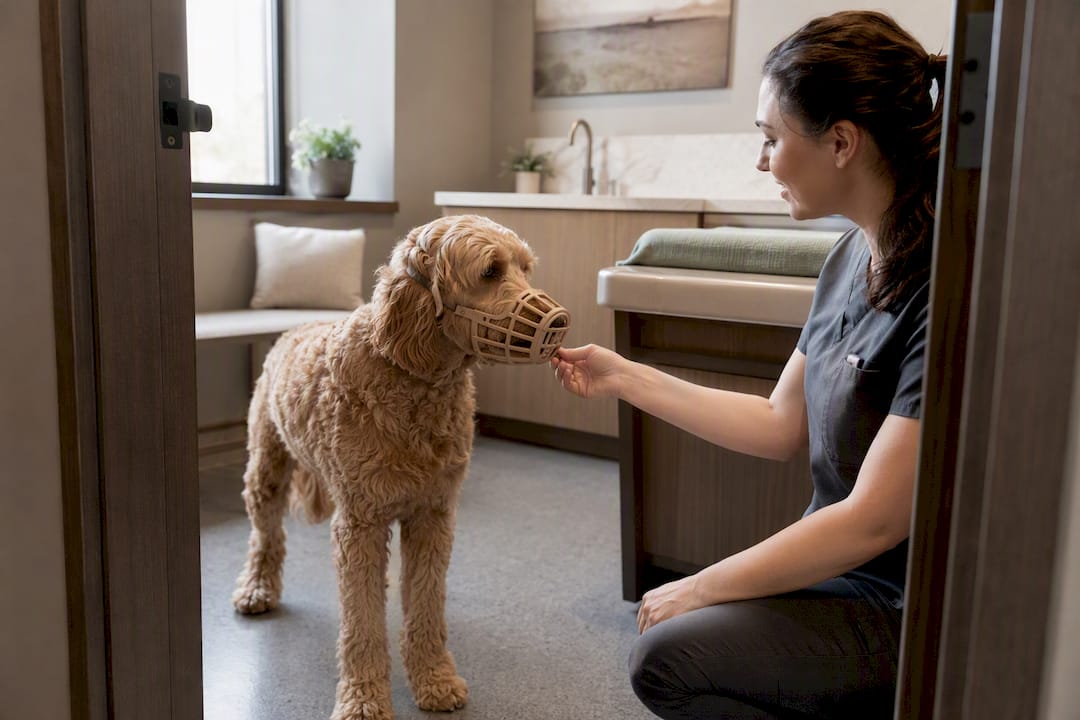
A trained muzzle can be treated as a safety tool that makes gentler handling possible, not a sign that a dog is aggressive or a problem patient. A dog who calmly accepts a basket muzzle usually needs less physical restraint overall, which means fewer stress hormones circulating and a faster path through the exam.
When a patient arrives already muzzle trained, staff can often skip the scramble of finding and fitting a muzzle mid-appointment under stress. That alone changes the tone of the visit. For dogs still building confidence, City Animal Veterinary Center offers house calls for owners who find travel itself is the biggest stressor, along with guidance on preparing anxious pets for diagnostic procedures like ultrasound in a lower-pressure setting. If your dog has never met the team before an actual medical need arises, a familiarization visit can let your dog explore the exam room, meet staff, and practice wearing the muzzle with treats, all before anything clinical happens.
Why Does General Obedience Training Matter Before Muzzle Work?
A dog that already knows how to hold still, take treats calmly, and tolerate hands near its face and body will pick up muzzle training faster than one starting from zero. Muzzle acceptance isn't really a standalone skill. It's built on top of basic handling tolerance.
Before you even bring the muzzle out, spend a few sessions on simple handling exercises: gently touching your dog's muzzle, ears, and paws while offering treats; practicing a solid "sit" and "stay" so your dog can hold position during the muzzle steps; and getting your dog comfortable with a collar or harness being put on and taken off without fuss. Dogs that struggle with basic restraint, like nail trims or ear checks, often need this handling foundation before muzzle training will stick.
If your dog already shows signs of tension around handling, guarding, or unpredictable reactions to being touched, address those behaviors first, ideally with help from a trainer. City Animal Veterinary Center's resources on reducing vet-related anxiety cover many of the same handling basics that make muzzle training smoother down the line. Puppies benefit especially from early habituation, since the early vaccine visit schedule already involves plenty of handling that doubles as practice.
Skipping this groundwork is the single most common reason muzzle training stalls. Owners jump straight to the muzzle, hit resistance, and assume the dog "just hates muzzles" when the real issue is a dog that hasn't learned to relax under any kind of handling yet.
How Do You Use Treats to Build a Positive Muzzle Association?
Every stage of muzzle training runs on the same fuel: treats your dog genuinely wants. Skip this step or use boring kibble, and the whole process slows down or stalls entirely.
Use something your dog rarely gets outside training sessions: small pieces of chicken, cheese, or a soft training treat cut down to pea size. The goal is a strong enough reward that your dog chooses to interact with the muzzle instead of avoiding it. Timing matters as much as the treat itself. Reward the instant your dog's nose touches or enters the muzzle, not a few seconds later, so the connection stays clear.
A marker word or clicker can sharpen this further. Fear Free's training guidance describes breaking muzzle training into tiny, marked criteria, letting owners reward the smallest steps toward success instead of waiting for the whole behavior. This keeps sessions from feeling like a test your dog can fail.
Never let the muzzle appear only right before something unpleasant happens. If the only time the muzzle comes out is seconds before a nail trim or an injection, your dog will learn to dread it fast. Bring it out during walks, before meals, or during play so the association stays mixed and mostly positive. Over time, many dogs start treating the muzzle the way they treat a leash: a signal that something good, not something scary, is about to happen.
How Do You Simulate Vet Visit Conditions During Training?
Home training only carries you so far if the exam room itself is what triggers stress. Dogs that muzzle up perfectly at home sometimes freeze the moment they smell antiseptic or hear a metal table. Bridging that gap takes deliberate practice in vet-like conditions.
Start by practicing the muzzle routine in new locations: your driveway, a friend's house, a pet supply store. Novelty alone raises a dog's baseline alertness, so rehearsing there builds resilience beyond your living room. Next, add some of the sensory details of a clinic: have your dog stand on a wobbly surface like a yoga mat to mimic an exam table, practice gentle restraint holds similar to what a technician might use, and get your dog used to being touched on the paws, belly, and ears while wearing the muzzle.
If your clinic allows it, ask about a low-key visit where your dog simply walks in, gets weighed, receives treats, and leaves, with no exam and no needles. City Animal Veterinary Center's Fear Free approach often includes exactly this kind of familiarization stop, letting a dog build positive memories of the building itself before anything clinical happens. Car rides to the clinic parking lot, followed immediately by treats and a walk back to the car, work as a lighter version of the same idea when a full visit isn't available.
How Do You Keep Muzzle Training From Fading Over Time?
Muzzle training isn't a one-time project. Skills that go unused for months tend to rust, and a dog who happily wore a muzzle in the spring might hesitate again by fall if nothing has reinforced it in between.
Build in occasional refresher sessions, even after your dog seems fully comfortable. Once every few weeks, run through the basics: muzzle out, treats inside, nose in, strap on, short walk, muzzle off. It takes only a few minutes and keeps the behavior fresh without turning it into a chore.
Watch for small signs of backsliding, like hesitation before nose-in or reluctance when you reach for the strap. These are easier to fix early than after weeks of avoidance rebuild. If your dog goes through a stretch of not wearing the muzzle at all, treat the next session as a light refresher rather than assuming the training will hold at full strength.
Life changes also affect muzzle comfort. A dog recovering from surgery, adjusting to a new home, or going through a fear period as a young adult may need the training dialed back a stage or two temporarily. That's normal, not a failure of the original work. Keep a spare muzzle in the car or by the leash hook so it's part of your routine gear, not something dug out of a drawer only when an appointment looms. Familiarity breeds calm, and calm is the entire point.
How Do You Muzzle a Fearful or Aggressive Dog Safely?
Fear-based reactivity and true aggression require more caution than routine muzzle training, and rushing this group of dogs is where most injuries happen. The training principles stay the same, but the pace slows dramatically and safety margins widen.
Work in a quiet space with no other pets or unfamiliar people present, and keep every session shorter than you would for an easygoing dog. Use a longer lead or stand slightly to the side rather than directly in front, since a fearful dog often reacts more strongly to a face-on approach. Toss treats near the muzzle rather than holding it close to the dog's face at first, letting your dog choose to approach on its own terms.
If your dog has a documented bite history or shows warning signs like stiffening, growling, or whale eye (showing the whites of the eyes) around the muzzle, pause and bring in professional support before continuing. City Animal Veterinary Center's guidance on managing fear-based aggression covers safety-first handling for exactly this situation, and a qualified trainer can build a plan tailored to your dog's specific triggers. Dogs with resource guarding tendencies sometimes need that behavior addressed separately, since guarding around the muzzle itself (treating it as something to protect rather than accept) can complicate straightforward desensitization.
Never attempt to physically force a muzzle onto a dog that's actively growling or snapping. That single moment can undo months of otherwise careful work and make every future attempt harder.
How Do You Adjust Muzzle Training for Different Sizes and Breeds?
A technique that works cleanly for a Labrador rarely transfers without changes to a Chihuahua or a Bulldog. Snout shape, jaw strength, and even personality tendencies by breed all shift how training should look.
Small breeds often need extra patience with fit, since mini basket muzzles vary more in quality between brands than standard sizes do. Many small dogs also startle easily at anything approaching their face, so slower nose-in progression tends to pay off.
Large and powerful breeds need a muzzle rated for their jaw strength, and owners should double-check strap durability since a determined large dog can sometimes work a weak buckle loose.
Flat-faced breeds like Bulldogs, Pugs, and Boxers need muzzles specifically shaped for brachycephalic snouts, since a standard basket muzzle designed for a longer nose won't seat correctly and can restrict already-limited airflow.
Long-nosed breeds like Greyhounds and Collies typically adapt fastest to basket muzzles, since the shape naturally accommodates their snout length without much modification.
Whatever the breed, the fitting rules stay constant: room to pant, one to two fingers under the strap, and no pressure on the tender skin around the eyes. Size changes the equipment. It doesn't change the underlying training principles.
A Note From City Animal Veterinary Center
We see muzzle-trained dogs come through our doors calmer, faster to examine, and far less likely to need heavy restraint than dogs meeting a muzzle for the first time under stress. That difference is the whole point of positive-reinforcement muzzle training: it protects your dog's dignity and our team's hands at the same time. If you'd like help getting started, ask us about a familiarization visit or just bring your questions to your next appointment.
— CAVC
Where to Learn More About Muzzle Training
For deeper reading, Cornell University's veterinary team covers both muzzle selection and step-by-step desensitization. The AKC's muzzle guide explains fit and safety, and Whole Dog Journal offers practical pacing tips for home sessions. Owners looking for complementary calming tools can also review this anxiety wrap comparison from Kiblco.
Ready to bring your muzzle-trained dog in for a Fear Free visit, or want to schedule a familiarization stop first? Visit City Animal Veterinary Center to book an appointment or house call with a team that trains alongside you, not just on you.
Sources
- Basket muzzle training — Cornell University College of Veterinary Medicine
- When, why, and how to correctly use dog muzzles — AKC
- How to muzzle train your dog — Whole Dog Journal
FAQ
What Is the Best Dog Muzzle for Vet Visits?
A basket muzzle is the standard choice because it lets your dog pant, drink, and take treats through the gaps, unlike soft sleeve muzzles, which press the jaw shut and are meant for very brief use only.
How Long Does It Take to Train a Dog to Use a Muzzle?
Most dogs need anywhere from a few days to a few weeks of short, frequent sessions, depending on temperament and prior comfort with handling near the face.
Do Vets Recommend Muzzles for Dogs?
Yes. Veterinary sources describe a trained muzzle as a safety tool that enables gentler handling and reduces the need for heavy physical restraint during exams, not a punishment or a sign of a "bad" dog.
What Is the Best Way to Train My Dog to Use a Muzzle?
Introduce the muzzle as a treat receptacle first, reward your dog for pushing its nose in, gradually extend wearing time, then add the strap slowly, always stopping before any sign of stress appears.