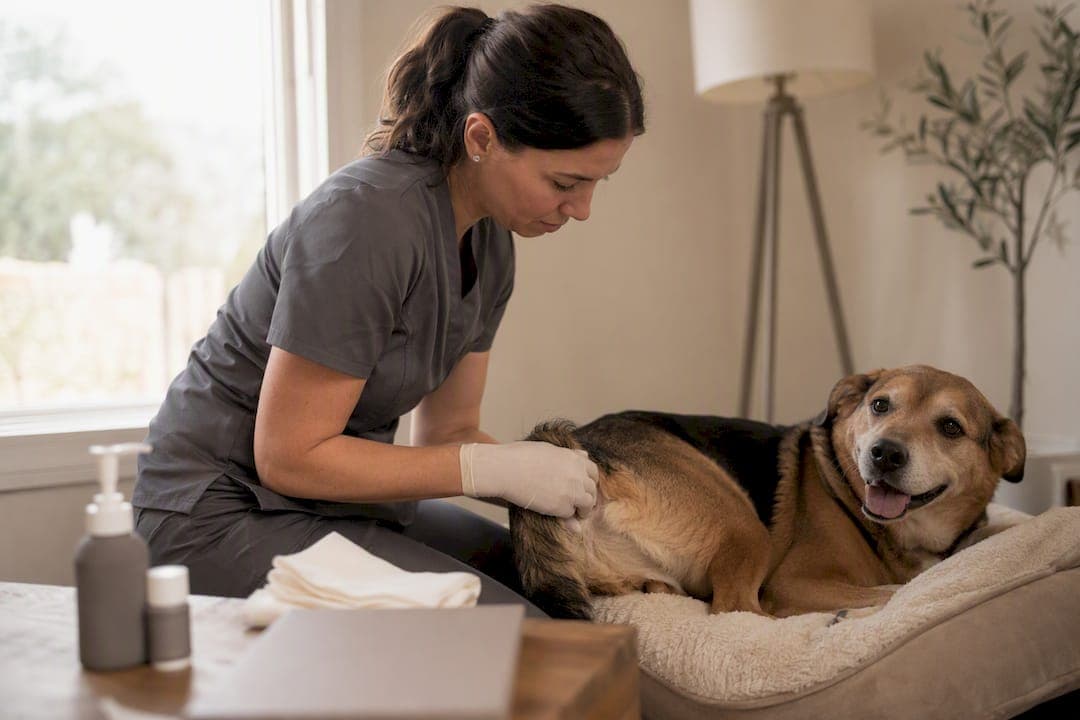
If your dog is scooting, licking at its rear, or trailing a sharp fishy odor, the most likely explanation is anal gland irritation or impaction. Occasionally the real culprit is tapeworms, allergies, or matted fur instead, which is why guessing at home only gets you so far. Some signs mean this can wait for a scheduled exam. Others mean you need to call your vet today.
Get help now if you see any of the following:
- Swelling, redness, or a visible lump near the anus
- Bloody or pus-like discharge, or a broken area of skin
- Fever, lethargy, or loss of appetite
- Straining to defecate or crying out when trying to poop
While you wait for an appointment, keep your dog from licking or biting the area (an e-collar works well), jot down when symptoms started, and snap a photo of anything unusual so your vet can see the progression. Don't attempt to drain or squeeze anything yourself if there's swelling or pain involved.
Key Takeaways
Anal gland problems in dogs range from simple impaction to infection, abscess, or tumors, and the right treatment depends entirely on accurate diagnosis rather than home guesswork.
| Point | Details |
|---|---|
| Know the urgent signs | Swelling, bloody or pus-like discharge, fever, or straining mean call your vet the same day. |
| Scooting isn't always glands | Tapeworms, allergies, and matted fur can cause identical symptoms, so a real exam matters. |
| Fix the root cause | Low fiber, obesity, and chronic allergies drive most recurrent cases, not bad luck. |
| Skip routine squeezing | Most dogs never need scheduled expression, and improper technique can damage the ducts. |
| Choose Fear Free™ care | City Animal Veterinary Center offers gentle in-clinic exams plus house calls for anxious or homebound dogs. |
Table of Contents
- What Are Anal Glands and How Do They Work in Dogs?
- What Types of Anal Gland Problems Do Dogs Get?
- What Are the Signs and Symptoms of Anal Gland Problems in Dogs?
- Why Do Dogs Get Anal Gland Problems in the First Place?
- How Do Vets Diagnose Anal Gland Problems in Dogs?
- What Are the Treatment Options for Dog Anal Gland Problems?
- How Can You Prevent Anal Gland Problems in Dogs?
- How City Animal Veterinary Center Approaches Anal Gland Care
- What Most Advice Gets Wrong About Anal Gland Care
- Get Professional Anal Gland Care Without the Stress
- Frequently Asked Questions
- Sources
What Are Anal Glands and How Do They Work in Dogs?
Every dog has two small scent glands tucked just inside the anus, roughly at the 4 o'clock and 8 o'clock positions if you picture the anus as a clock face. These sacs produce a pungent, oily fluid dogs use for scent marking and identification, which is a big part of why dogs sniff each other's rear ends on greeting.
Under normal conditions, the pressure of passing a firm stool squeezes these sacs and empties them automatically. No owner involvement needed. Sudden fear or excitement can also trigger involuntary expression, which explains that unmistakable smell after a stressful vet visit or a startling thunderclap.
A few physiological details determine whether this system works smoothly:
- Stool has to be firm enough to apply real pressure as it passes
- The muscles around the anus need adequate tone to squeeze the sacs
- The duct openings need to stay clear and unobstructed
When any one of those breaks down, whether from soft stool, weak muscle tone, or a narrowed duct, the glands stop emptying on their own. That's when problems start.
What Types of Anal Gland Problems Do Dogs Get?
Anal sac disease isn't one condition. It's a spectrum, and where your dog falls on it determines the urgency and the treatment.
- Impaction. The gland fluid thickens and builds up without becoming infected. Your dog is uncomfortable, maybe scooting or licking, but there's no swelling or fever yet. This is the mildest and most common presentation.
- Sacculitis (infection or inflammation). Bacteria take hold in the stagnant fluid, causing local inflammation. The area may feel warm, look reddened, and cause noticeably more pain than simple impaction.
- Abscess or rupture. Untreated infection can progress to a pocket of pus that eventually bursts through the skin. This is painful, often accompanied by systemic symptoms like fever or lethargy, and needs urgent veterinary attention.
- Neoplasia (anal sac tumors). More common in older dogs, these show up as firm masses that can't be expressed normally. Anal sac adenocarcinoma can also trigger paraneoplastic hypercalcemia, a metabolic complication that changes how the case gets staged and treated.
According to Cornell University's College of Veterinary Medicine, these four categories cover the vast majority of anal sac disease cases vets see, and distinguishing between them usually requires a hands-on exam rather than guesswork from home.
What Are the Signs and Symptoms of Anal Gland Problems in Dogs?
Scooting is the sign most owners notice first, but it's rarely the only one. Watch for a cluster of behaviors rather than a single symptom.
The common list includes:
- Scooting or dragging the rear across the floor or grass
- Excessive licking or biting at the base of the tail or anus
- A strong, fishy odor that seems to come out of nowhere
- Oily or brownish discharge, sometimes leaving a mark where your dog sits
- Matted or greasy fur around the tail base
Pain shows up a little differently. A dog with a genuinely sore anal gland issue may resist sitting, whine or yelp when trying to defecate, or strain without producing much stool. That combination, straining plus vocal discomfort, tends to point toward infection or impaction rather than a mild case.
Redness, swelling, or visible discharge around the anus signals it's time to stop watching and start calling your vet.
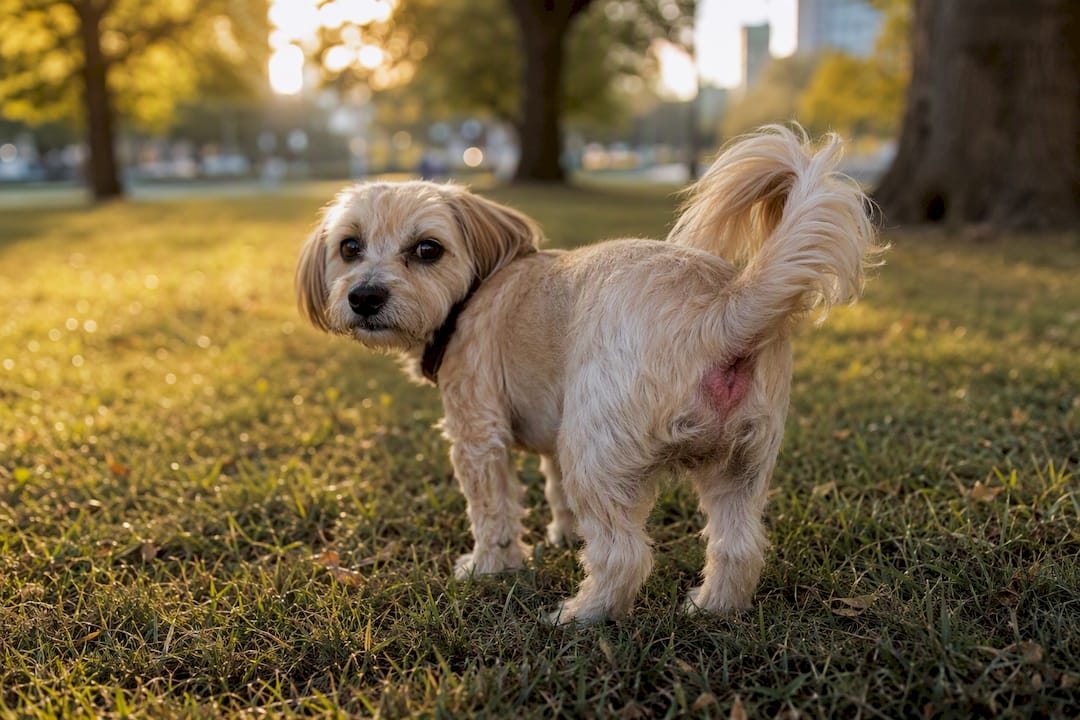
Pro Tip: Don't assume every case of scooting is anal glands. It's frequently the first sign owners notice with intestinal parasites or a skin allergy flare, so a proper exam beats a home remedy every time.
Why Do Dogs Get Anal Gland Problems in the First Place?
Anal gland issues rarely come out of nowhere. They tend to trace back to a handful of predictable, often modifiable factors.
Soft or inconsistent stool tops the list. If your dog has chronic diarrhea or loose stool from a dietary sensitivity, there simply isn't enough firm pressure to empty the glands during a normal bowel movement, and fluid accumulates over time. Low dietary fiber compounds the problem by reducing stool bulk overall.
Other contributing factors worth knowing about:
- Obesity reduces muscle tone around the anus and can make the sacs harder to access even during a vet exam
- Chronic skin or food allergies are linked to recurrent anal sac disease, likely through inflammation and altered gland secretions
- Parasites, particularly tapeworms, can cause irritation that mimics or worsens anal gland symptoms
- Repeated improper expression by a groomer or an untrained owner can scar or damage the duct lining over time
The American Kennel Club lists obesity, chronic diarrhea, low fiber intake, and allergies as the primary predisposing factors for recurrent disease, which is why prevention efforts almost always start with diet and weight.
How Do Vets Diagnose Anal Gland Problems in Dogs?
A vet visit for suspected anal gland trouble usually follows a predictable sequence, and knowing what to expect can make the appointment feel a lot less stressful for both of you.
- Visual inspection. Your vet looks for swelling, redness, discharge, or an obvious abscess before touching anything.
- Digital rectal exam. This is how a vet actually assesses gland fullness, texture, and pain response, since impacted or infected sacs feel notably different from healthy ones.
- Cytology or culture. If infection is suspected, a sample of the gland fluid gets examined under a microscope or sent for culture to identify the right antibiotic.
- Imaging or biopsy. Reserved for firm, nonexpressible masses or cases that keep recurring despite treatment, since these findings raise concern for a tumor.
A same-day appointment is warranted for any swelling, discharge, fever, or a dog that seems to be in real pain. A milder case of intermittent scooting can usually wait for the next routine slot.
What Are the Treatment Options for Dog Anal Gland Problems?
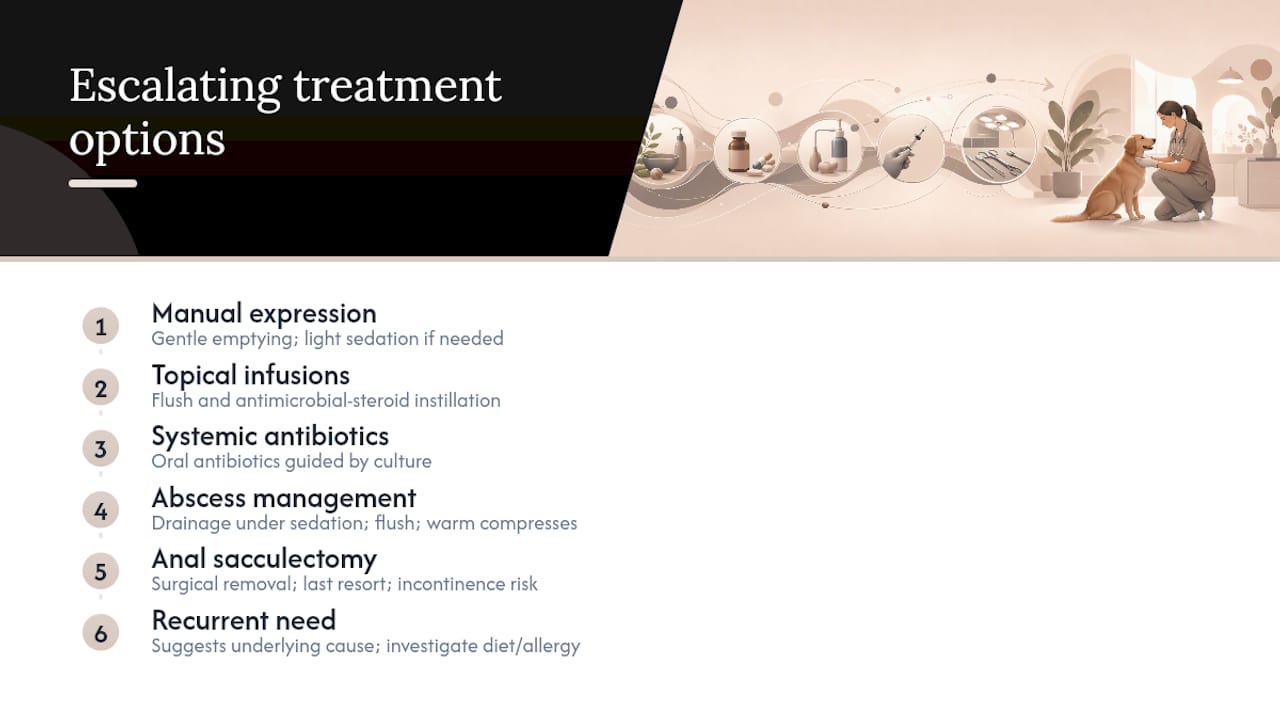
Treatment escalates with severity, and most cases resolve well before surgery ever becomes a conversation.
Manual expression is the starting point for simple impaction. A vet applies gentle pressure to empty the sacs, and if the gland is inflamed or painful, light sedation makes the process far less stressful for an anxious or sore dog.
Topical infusions come next for mild infection. A vet flushes the gland and instills an antimicrobial-steroid combination directly into the sac, which often clears things up without systemic drugs.
Systemic antibiotics get added when infection is more established or when cytology shows a bacterial population that needs broader treatment. Culture results guide which antibiotic actually works rather than guessing.
Abscess management requires drainage under sedation, followed by flushing, warm compresses, and often a course of oral antibiotics. This is one of the more painful presentations, and owners typically see rapid improvement once the pressure is relieved.
Anal sacculectomy, or surgical removal of the glands, is reserved for dogs with recurrent, treatment-resistant disease or confirmed tumors. It's an effective fix, but the surgery carries a real risk of fecal incontinence since the nerves controlling anal sphincter function run close to the glands. Most vets treat it as a last resort rather than a first-line option.
Pro Tip: If your dog needs repeated expressions every few weeks, that's not a routine maintenance schedule. It's a sign an underlying cause, like diet, allergies, or duct scarring, needs to be identified and addressed.
How Can You Prevent Anal Gland Problems in Dogs?
Prevention comes down to giving the glands what they need to empty themselves naturally, since that's how the system is designed to work in the first place.
Diet is the biggest lever. Adding plain canned pumpkin or a vet-recommended fiber supplement firms up stool and restores the pressure needed for natural expression. Skip anything containing xylitol, since it's toxic to dogs even in small amounts and shows up in some sugar-free products people mistakenly share.
Beyond diet, a few habits make a measurable difference:
- Weight management through diet and regular exercise improves pelvic muscle tone, which directly affects how well the glands empty
- Routine parasite control removes one common irritant that mimics or worsens anal gland symptoms
- Skip the squeeze unless a vet has specifically taught you the technique, since routine home expression can cause more harm than good over time
- Investigate chronic allergies with your vet if scooting or licking recurs despite a good diet, since skin allergy workups sometimes uncover the real driver
Most dogs never need scheduled manual expression at all. If yours does, that pattern itself is worth discussing at your next visit rather than treating as a permanent routine.
How City Animal Veterinary Center Approaches Anal Gland Care
City Animal Veterinary Center in Brooklyn treats anal gland exams with the same Fear Free™ philosophy it applies to every visit, since a rectal exam is understandably one of the more stressful moments in a dog's day. That means gentle handling, minimal restraint, and sedation options when a procedure is likely to cause real pain or anxiety.
For dogs who get anxious even leaving the house, or for owners managing mobility issues of their own, house calls are a genuine option for routine gland checks and mild cases. More involved situations, like suspected abscess, a firm mass, or anything needing imaging, are better handled in the clinic where full diagnostic tools are on hand.
- Fear Free™ handling reduces stress during exams and expressions
- House calls suit stable, low-complexity cases
- In-clinic visits are recommended for abscess, suspected tumor, or diagnostic imaging
What Most Advice Gets Wrong About Anal Gland Care
The conventional wisdom treats anal gland expression like a grooming task, something to schedule every few weeks alongside a nail trim. That framing does dogs a disservice. Most dogs never need routine expression at all, and repeated squeezing by hands not trained for it can scar the very ducts you're trying to keep clear.
The better question isn't "how often should this be expressed?" It's "why isn't this dog emptying its glands on its own?" That reframes the whole problem toward diet, weight, and stool quality rather than treating symptoms in a loop. A dog needing expression every three weeks doesn't have a maintenance need. It has an unresolved underlying issue.
I'd also push back on the instinct to handle mild scooting entirely at home before calling a vet. A quick exam rules out tapeworms, allergies, or early infection before they become a bigger problem, and it costs you almost nothing in time. Prevention through fiber and weight management does more long-term good than any at-home fix, but it works best paired with an accurate diagnosis up front, not a guess.
Get Professional Anal Gland Care Without the Stress
City Animal Veterinary Center handles anal gland exams and treatment the way they should be handled: with a Fear Free™ approach that keeps a genuinely uncomfortable procedure from becoming a traumatic one for your dog.
If your dog is scooting, licking excessively, or overdue for a check, you don't have to figure out whether it's urgent on your own. The clinic's team can assess gland fullness, catch infection early, and rule out the other causes, like allergies or parasites, that mimic anal gland symptoms. For dogs who panic at the sight of a carrier or owners who can't easily get to Brooklyn, the house-call option brings that same gentle exam to your living room. Schedule a visit with City Animal Veterinary Center and get a clear answer instead of another few weeks of watching and wondering.
Frequently Asked Questions
Is it normal for a dog's anal glands to need expressing regularly? No. Most dogs empty their glands naturally through normal bowel movements. Needing expression every few weeks points to an underlying issue like soft stool, low fiber, or weak muscle tone that's worth discussing with your vet rather than treating as routine maintenance.
Can I express my dog's anal glands at home? It's possible, but it's not recommended for most owners. Improper technique can damage the gland or duct lining over time, and a vet visit lets a professional check for infection or impaction at the same time.
What does it mean if my dog's anal gland discharge is bloody? Bloody or pus-like discharge usually signals infection, an abscess, or a rupture already in progress. This warrants a same-day veterinary appointment rather than a wait-and-see approach.
Are certain dog breeds more prone to anal gland problems? Smaller breeds are reported more often, though obesity, chronic soft stool, and food allergies are stronger predictors across all sizes than breed alone.
Can diet alone fix recurring anal gland issues? Diet changes, particularly increasing fiber and firming up stool, meaningfully reduce recurrence for many dogs. Chronic or worsening cases still need a veterinary exam to rule out infection, allergies, or a mass.
This article is general information, not a substitute for advice from a qualified doctor. Consult a qualified healthcare professional about your own circumstances before acting on anything here.
Sources
- Dog Anal Glands: Common Problems, Treatment, and Prevention | PetMD
- Anal Gland Disease in Dogs | American Kennel Club (AKC)
- Anal sac diseases | Cornell University College of Veterinary Medicine
- Anal sac disease in dogs and cats | Merck Veterinary Manual