
Most dog coughs trace back to kennel cough, tracheal collapse, chronic bronchitis, or heart disease, though foreign bodies, parasites, and fungal infections also make the list. Seek immediate veterinary care if your dog has labored breathing, bluish or pale gums, repeated coughing that ends in collapse, or a cough that produces frothy or bloody mucus. A brief, isolated cough in an otherwise bright, eating, playing dog can usually wait for a scheduled exam.
TL;DR:
- Only a small percentage of coughs are caused by infectious diseases or foreign objects, with chronic bronchitis and heart disease being common in older, small, or breeds prone to airway issues.
- Vaccination against Bordetella and parainfluenza reduces kennel cough risk but does not prevent all cases, which usually resolve within 10 to 20 days without complications.
- Small breed dogs with a honking or goose-like cough triggered by excitement or collar pressure likely have tracheal collapse, which improves with harness use and weight management.
- Dogs with a cough that worsens at night, causes labored breathing, blue gums, or collapse require immediate veterinary care for urgent diagnosis and treatment.
- A cough following eating, gagging, or retching often indicates throat or reflux problems requiring specific examination approaches, not standard respiratory diagnostics.
Table of Contents
- How Vets Sort Out Coughing Dog Causes
- Kennel Cough and Other Infectious Causes (CIRDC)
- Chronic Bronchitis and Lower Airway Disease
- Collapsing Trachea: The "Goose Honk" Cough
- When a Cough Means Heart Trouble
- Foreign Bodies and Sudden Airway Obstructions
- Parasites and Fungal Infections Behind a Cough
- What to Expect During a Veterinary Cough Workup
- Treating a Cough: Principles and Safe Home Support
- Preventing Future Coughing Episodes
- GI Trouble and Throat Dysfunction Can Look Like a Cough
- Age and Breed Change What's Likely
- Veterinarian Perspective: Practical Triage for Owners
- Book a Cough Evaluation With City Animal Veterinary Center
- Sources
- FAQ
How Vets Sort Out Coughing Dog Causes
Before naming a diagnosis, veterinarians sort a cough along a few axes: how long it's been happening, whether it produces mucus, and where in the respiratory tract it seems to originate. That framework matters more than the sound of the cough itself.
Acute vs. chronic is the first split. A cough under two weeks old usually points to infection, an irritant, or a foreign object. A cough lasting beyond that window shifts suspicion toward chronic bronchitis, tracheal collapse, heart disease, or in some cases tumors, according to a 2025 review of chronic cough diagnostics. That same review notes chronic, nonproductive coughing can physically damage the airway lining over time, which is one reason vets don't treat a months-long cough as "just a cough."
Wet vs. dry tells you something about location. A moist, productive cough suggests fluid or mucus in the lower airways or lungs, common with pneumonia or heart failure. A dry, honking cough often starts higher up, in the trachea or larynx, which is the classic pattern in tracheal collapse and kennel cough.
Here's the catch: cough sound alone rarely nails the diagnosis. Veterinary sources caution that context matters more than acoustics.
- Exposure history (dog parks, boarding, doggy day care)
- Timing (during exercise, at night, after eating)
- Breed and age
- Associated signs (fever, appetite change, exercise intolerance)
Vets weigh all of that together, not the honk itself, per guidance from Whole Dog Journal.
Kennel Cough and Other Infectious Causes (CIRDC)
Canine infectious respiratory disease complex, better known as kennel cough, is the most common reason a healthy young or middle-aged dog suddenly starts coughing. It's not one germ but a mix of them, usually Bordetella bronchiseptica, parainfluenza virus, canine adenovirus, or sometimes canine influenza, working alone or together.
The classic picture: a sudden, dry, honking cough that starts a few days after contact with other dogs, at boarding, day care, dog parks, or training classes. Most cases run their course in 10 to 20 days, according to the Merck Veterinary Manual. Dogs usually stay bright and eating despite the cough, which is a helpful clue.
Vet care becomes necessary when:
- The dog is a young puppy or a senior with other health issues
- The cough turns wet or productive, or fever develops
- Breathing looks labored, not just noisy
- The cough drags on past three weeks
Vaccination against Bordetella and parainfluenza lowers risk but doesn't guarantee immunity, since so many different organisms can cause the complex.
Pro Tip: Isolate a suspected kennel cough case from other dogs for at least two weeks, even if symptoms seem mild. It's more contagious than most owners realize, and a quick call to your vet before starting any over-the-counter remedy avoids masking something more serious.
Chronic Bronchitis and Lower Airway Disease
Chronic bronchitis is diagnosed when a dog coughs almost daily for at least two months with no infection driving it. It's inflammation of the lower airways, and it tends to hit middle-aged and older dogs, especially small breeds.
The hallmark is a dry, harsh cough that doesn't quit, sometimes ending in a gag or retch. Unlike kennel cough, there's no clear exposure story and no resolution after a couple of weeks.
Diagnosis usually involves:
- Chest radiographs to rule out heart disease, pneumonia, or masses
- Airway sampling (a wash or bronchoscopy) in dogs who don't respond to initial treatment
- Bloodwork to check for underlying triggers
A 2025 retrospective study of 329 dogs referred for chronic cough found airway collapse and chronic bronchitis were the two most frequent diagnoses, ahead of tumors and infectious pneumonia, according to research published in Animals (MDPI). Treatment leans on corticosteroids, sometimes inhaled versions, and bronchodilators. It's rarely curable but usually manageable. Owners should expect ongoing medication and periodic rechecks rather than a one-time fix.
Collapsing Trachea: The "Goose Honk" Cough
Tracheal collapse happens when the cartilage rings supporting the windpipe weaken and flatten, narrowing the airway. It's overwhelmingly a small and toy breed problem, Yorkshire terriers, Pomeranians, Chihuahuas, and similar dogs, and it typically shows up in middle age, though some dogs develop signs younger.
The cough is distinctive once you've heard it: a dry, harsh, honking sound, often compared to a goose call, triggered by excitement, exercise, heat, humidity, or pressure on the neck from a collar.
If you suspect this, a few steps make an immediate difference:
- Switch to a harness immediately, even for short leash walks around the block.
- Keep the dog calm and cool, since excitement and heat both worsen episodes.
- Avoid smoke, aerosols, and strong scents that irritate the airway further.
- Schedule a veterinary exam for tracheal palpation and radiographs to confirm severity.
Weight control also matters enormously here, since extra pounds put more pressure on an already compromised airway.
Pro Tip: If your small-breed dog coughs every time you clip on a leash, that's not stubbornness. It's likely mechanical pressure on a weakened trachea, and a harness swap alone often cuts episodes noticeably.

When a Cough Means Heart Trouble
Cardiac cough happens through a specific mechanism: an enlarged left atrium presses against the airway, or fluid backs up into the lungs (pulmonary edema) as the heart struggles to pump efficiently. Either way, the cough is a downstream symptom of a struggling heart, not a respiratory infection.
The pattern differs from other causes in a few telling ways:
- Worse at night or when lying down, sometimes waking the dog
- Paired with reduced stamina on walks the dog used to handle easily
- An elevated resting respiratory rate, worth counting for a full minute while the dog is calm and asleep
- Often develops gradually in older dogs, especially small breeds prone to mitral valve disease or large breeds prone to dilated cardiomyopathy
Veterinarians confirm cardiac involvement with chest X-rays to check heart size and lung fluid, followed by an echocardiogram if the picture is unclear, per findings summarized in the Merck Veterinary Manual. A resting respiratory rate consistently above 30 to 40 breaths per minute in a relaxed dog is one of the most useful early warning signs owners can track at home, since it often changes before a vet visit is even scheduled. Sudden severe breathing difficulty, collapse, or blue-tinged gums alongside this pattern means emergency care, not a next-week appointment.
Foreign Bodies and Sudden Airway Obstructions
Grass awns, foxtails, small toys, sticks, and even food can lodge in a dog's throat or airway, and the presentation looks nothing like a slow-developing chronic cough. It comes on fast and looks frightening.
Signs of a true obstruction include sudden violent gagging, retching, pawing at the mouth or face, distress, and sometimes drooling or reluctance to swallow. Compare that to intermittent throat clearing that comes and goes over weeks, which points elsewhere.
If you suspect an obstruction:
- Stay calm and check whether the dog can still breathe and move air.
- Do not reach into the mouth or throat to grab at an object you can't clearly see and safely reach; you risk pushing it deeper or getting bitten.
- Get to a veterinary clinic or emergency hospital immediately, since sedated removal or even surgery may be needed.
Foxtails deserve special mention because they migrate. A foxtail inhaled through the nose can travel into the lungs and cause chronic coughing and infection weeks later, long after the original sneezing fit is forgotten.
Parasites and Fungal Infections Behind a Cough
Heartworm disease causes chronic cough paired with exercise intolerance as worms mature in the pulmonary arteries and heart, according to the American Heartworm Society. It's diagnosed with a simple blood antigen test, and monthly prevention remains far easier to manage than treating an established infection.
Lungworm, less common but regionally significant, causes similar chronic respiratory signs and gets picked up through fecal testing, sometimes requiring repeated samples since shedding is inconsistent.
Fungal pneumonias, blastomycosis, histoplasmosis, and coccidioidomycosis among them, tend to cluster in specific geographic regions and cause a persistent cough that doesn't respond to antibiotics. These require antifungal therapy, often for months, and diagnosis leans on imaging plus specific blood or urine antigen tests rather than guesswork. If your dog has a stubborn cough and you live in or recently traveled through a region known for one of these fungi, mention that travel history to your vet.
What to Expect During a Veterinary Cough Workup
A useful exam starts before the dog even reaches the clinic, with the history you provide. Vets want to know when the cough started, whether your dog has been around other dogs recently, what seems to trigger episodes, whether there's a known heart murmur, and whether heartworm prevention and vaccines are current.
On physical exam, two maneuvers do a lot of the early work:
- Auscultation, listening to the heart and lungs, which can reveal murmurs, crackles, or wheezes
- Tracheal palpation, gently pressing the windpipe to see if it reproduces the cough, a maneuver that's helpful but not conclusive on its own since a wash and imaging often confirm what palpation only suggests
From there, diagnostics typically follow this order:
- Thoracic radiographs to check heart size, lung pattern, and rule out masses or fluid
- Bloodwork (CBC and chemistry panel) and a heartworm antigen test
- Referral-level testing, transtracheal wash, bronchoscopy, or echocardiogram, when initial results point toward infection, cancer, or cardiac disease
Cough is a symptom, not a diagnosis, which is why this layered approach exists, according to PetMD's vet-reviewed overview.
Treating a Cough: Principles and Safe Home Support
Treatment follows the cause, not the cough itself. Antibiotics address bacterial infections, dewormers and antiparasitics target lungworm or heartworm, antifungals handle fungal pneumonia, corticosteroids and bronchodilators manage chronic bronchitis, and surgery may be needed for a foreign body or severe tracheal collapse. Suppressing the cough without knowing why it's happening can mask a problem that's getting worse.
At-home support that's generally safe once a vet has weighed in:
- Humidified air or a few minutes in a steamy bathroom to loosen secretions
- A harness instead of a collar for every walk, permanently, for tracheal or bronchitis cases
- Cutting exposure to smoke, dust, aerosols, and strong cleaning fumes
- Rest during flare-ups, since exercise often worsens both tracheal collapse and cardiac coughing
Pro Tip: Never give human cough suppressants, decongestants, or cold medicine without direct veterinary instruction. Several common ingredients are toxic to dogs, and the ASPCA Animal Poison Control is the right call if you suspect accidental exposure to any medication or household chemical.
Preventing Future Coughing Episodes
Vaccination against Bordetella and parainfluenza cuts the risk of kennel cough but doesn't eliminate it entirely, since CIRDC involves multiple pathogens working together or separately. Year-round heartworm prevention remains one of the most reliable, low-effort ways to avoid a serious cause of chronic cough entirely.
Beyond vaccines and parasite prevention, a few habits reduce risk meaningfully:
- Skip indoor smoking and go easy on aerosol sprays and scented candles
- Use a harness rather than a collar, especially for small breeds
- Keep your dog at a healthy weight, since extra pounds worsen tracheal and cardiac strain
- For chronic conditions, stick to the recheck schedule your vet recommends rather than waiting for symptoms to worsen
Tracking energy, appetite, and breathing rate at home gives your vet useful data between visits, not just at the next appointment.
GI Trouble and Throat Dysfunction Can Look Like a Cough
Not every hacking, gagging sound coming from your dog is actually respiratory. Gastroesophageal reflux, where stomach acid or contents move backward into the esophagus, irritates throat tissue and can trigger coughing, gagging, or a wet swallow-and-cough pattern that owners often mistake for a chest problem. It tends to show up after meals, during sleep, or when a dog has recently eaten too fast or too much.
Laryngeal dysfunction is a separate but related issue, more common in older large breeds like Labradors, and involves the cartilage flaps that normally protect the airway during swallowing failing to move properly. Dogs with laryngeal paralysis often cough or gag around food and water, and the sound can be strikingly similar to a respiratory cough, complete with a raspy or altered bark. Some dogs also show voice changes or noisy breathing that worsens with heat or exertion.
Both conditions get missed initially because owners and even some first exams focus on the lungs and trachea. If a cough consistently follows eating or drinking, or shows up alongside gagging and retching without much actual sputum, mention that pattern specifically at the vet visit. It changes what gets examined. A vet may look at swallowing mechanics, do a throat exam under light sedation, or investigate for reflux triggers like obesity or delayed stomach emptying, rather than jumping straight to chest imaging. Getting the location right the first time saves owners from repeat visits and unnecessary lung workups aimed at the wrong end of the airway.
Age and Breed Change What's Likely
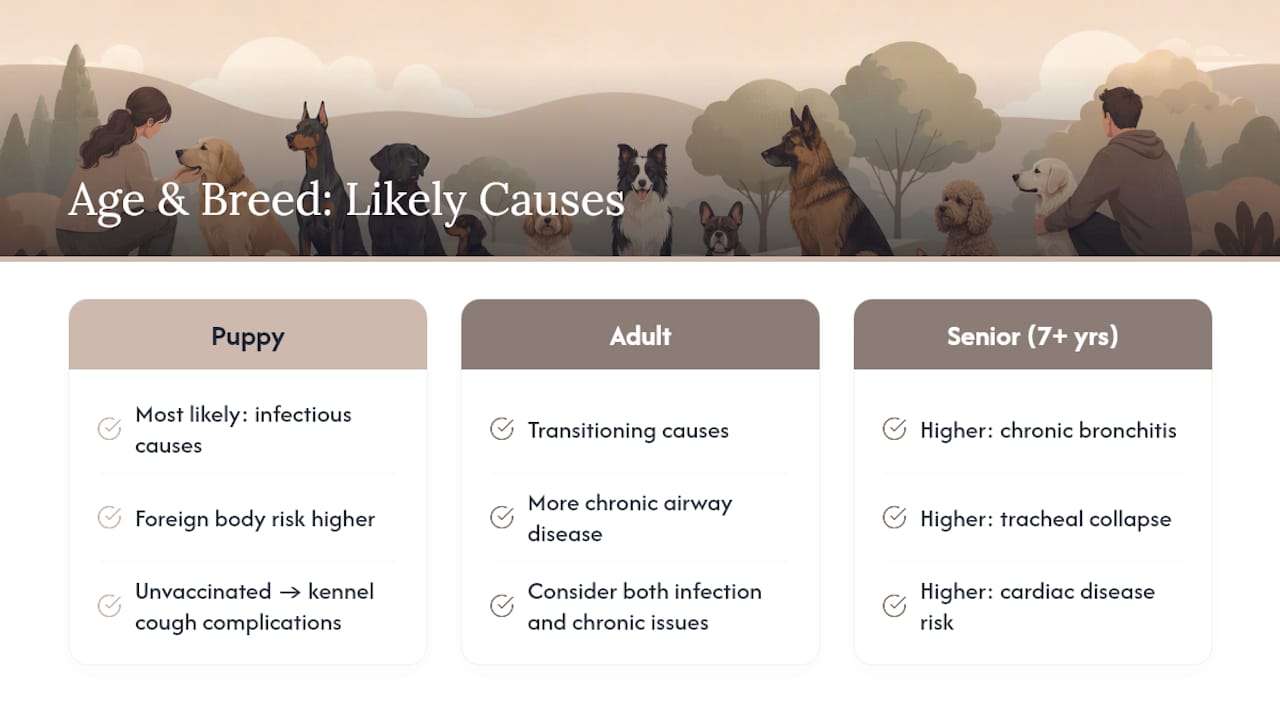
A coughing puppy and a coughing senior dog are usually dealing with entirely different problems, even if the sound is identical. Puppies who haven't finished their vaccine series are more vulnerable to kennel cough complications and, in unvaccinated or under-vaccinated populations, more serious viral infections. A young dog's cough is far more likely to be infectious or related to a foreign object than cardiac.
Middle-aged and senior dogs shift the odds toward chronic bronchitis, tracheal collapse, or heart disease, particularly once a dog passes seven or eight years old. Age alone doesn't diagnose anything, but it reasonably narrows the list before a single test is run.
Breed loads the dice even further. Toy and small breeds, Yorkshire terriers, Chihuahuas, Pomeranians, and similar dogs, carry outsized risk for both tracheal collapse and mitral valve disease, sometimes both at once in the same dog, which complicates the picture since one triggers the other. Brachycephalic breeds like bulldogs and pugs deal with airway anatomy that predisposes them to noisy breathing that can be confused with coughing, plus a higher baseline vulnerability to heat and exercise intolerance. Large and giant breeds lean more toward dilated cardiomyopathy as a cardiac cause and carry their own set of orthopedic and systemic risks that can complicate a respiratory workup. None of this replaces a real exam, but knowing your dog's breed tendencies helps you describe symptoms with the right context and helps your vet prioritize which tests to run first.
Veterinarian Perspective: Practical Triage for Owners
A short, isolated cough in a dog who's eating, playing, and breathing normally can usually wait for a routine visit. Repeated coughing with labored breathing, blue or pale gums, or falling energy needs same-day care. Track when it happens, what triggers it, and whether appetite or stamina has changed. That log often points the diagnosis faster than the exam itself.
— CAVC
Book a Cough Evaluation With City Animal Veterinary Center
A cough that's dragging on, worsening, or paired with any red flag doesn't need to wait for guesswork at home. Veterinary centers with in-house radiology and lab testing can often provide diagnostic results the same visit, not days later. For dogs too anxious, elderly, or physically unable to travel comfortably, the home visit service brings the exam to your living room instead of a stressful waiting area, using the practice's Fear Free approach to keep the whole visit low stress for a dog already struggling to breathe comfortably.
If your dog is showing any red flag, labored breathing, bluish gums, collapse, or a cough that's lasted longer than the typical kennel cough window, same-day urgent care is the right call rather than watching and waiting. For a cough that needs imaging and bloodwork to pin down, the in-house laboratory speeds up the process considerably. Call to book an urgent exam or ask about scheduling a house call for a coughing dog who does better at home.
Sources
- Animals (MDPI) — Chronic coughing study (2025)
- Merck Veterinary Manual — Tracheobronchitis (Kennel cough)
- PetMD — Why is my dog coughing? (Vet-reviewed overview)
- Coughing in small animal patients — review (PMC)
- The American Heartworm Society
FAQ
Why does my dog cough like something is stuck in his throat?
That gagging, retching cough usually means the upper airway or throat is irritated rather than the lungs. It's the classic pattern for kennel cough, a foreign object like a foxtail, or laryngeal irritation, and it's worth a same-day look if it's sudden and severe.
When should I worry about a dog coughing?
Worry when the cough is paired with labored breathing, blue or pale gums, collapse, lethargy, or a cough lasting beyond the typical 10 to 20 day kennel cough window. A brief cough in a bright, active dog is far less urgent than one that keeps them from resting.
What does a dog heart failure cough sound like?
Cardiac cough tends to be soft and moist, worse at night or when lying down, and paired with reduced stamina on walks. It's driven by an enlarged heart pressing on the airway or fluid building in the lungs, not an infection, per the Merck Veterinary Manual.
How do you treat a dog with a cough?
Treatment depends entirely on the cause, antibiotics for bacterial infection, dewormers for parasites, steroids or bronchodilators for chronic bronchitis, or surgery for a foreign body or severe tracheal collapse. City Animal Veterinary Center starts with a physical exam and imaging to identify the actual cause before recommending treatment, since suppressing the cough blindly can hide a worsening condition.