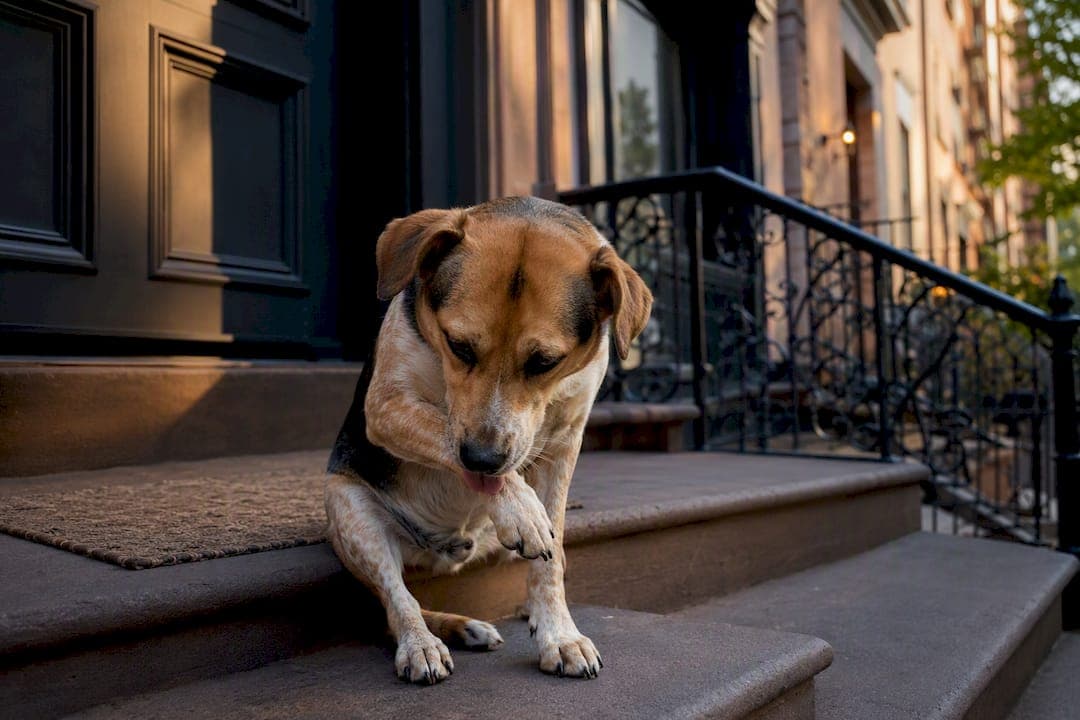
Most excessive paw licking stems from allergies or secondary skin infections, though pain, parasites, and behavior can also drive it. The two often travel together: licking irritates the skin, which invites bacteria and yeast, which triggers more licking. Check between your dog's toes tonight, and call a veterinarian if the licking is constant, limited to one paw, or the skin looks red, swollen, or smells off.
TL;DR:
- Dogs with persistent paw licking often have allergies, especially environmental or food-related, affecting roughly 1 in 10 dogs, with symptoms concentrated on paws, ears, face, and belly.
- Secondary skin infections develop rapidly once licking breaks the skin barrier, often indicated by a musty yeast odor or reddish-brown saliva staining on lighter fur.
- Urgent veterinary attention is needed if there is swelling, bleeding, or refusal to bear weight on a paw, or if symptoms worsen rapidly despite cleaning.
- Routine home care includes rinsing and drying paws, inspecting for debris or cracks, using vet-approved antiseptics, and avoiding harmful remedies like undiluted hydrogen peroxide.
- Long-term management focuses on consistent flea control, allergen avoidance, and allergy testing or immunotherapy for recurrent cases, with veterinarians performing structured diagnostics.
Table of Contents
- What Causes Dogs to Lick Their Paws Excessively
- How Vets Diagnose the Real Cause Behind the Licking
- What to Do for Your Dog's Paws Right Now
- Red Flags That Mean Don't Wait
- Preventing Recurrent Paw Licking Long Term
- How City Animal Veterinary Center Approaches Paw-Licking Cases
- A Veterinary Checklist for Tonight
- Book a Diagnostic Visit or House Call
- Sources
What Causes Dogs to Lick Their Paws Excessively
Paw licking almost always has a reason, and the pattern usually points to it. A dog licking all four paws, especially with itchy ears or a seasonal flare, is telling a different story than a dog obsessively focused on one back foot.
Allergies are the most frequent trigger. Environmental allergies, known clinically as atopic dermatitis, affect roughly 1 in 10 dogs and tend to concentrate itch in the paws, ears, belly, and face. Food allergies produce a similar pattern but without the seasonal on-off switch. Flea allergy dermatitis is intensely itchy even from a single bite and often shows up along the back half of the body as well as the feet.
Secondary infections rarely start the problem, but they take over fast. Once licking breaks down the skin barrier, warm, moist skin between the toes becomes ideal territory for bacteria and yeast to multiply. A musty, corn-chip odor usually signals yeast. Reddish brown staining on white or light fur comes from porphyrins in saliva, a telltale sign your dog has been licking heavily even if you haven't caught them in the act.
Pain and injury show up differently: sudden onset, one paw only, limping, or a dog that won't put weight on the foot. Splinters, thorns, ice balls, burrs, and torn nails are common culprits. Parasites like mites cause intense itching and skin changes, sometimes with visible hair loss or crusting. Interdigital cysts, painful nodules between the toes, cause focused licking on that one spot and often need veterinary drainage or medication.
Boredom and anxiety can cause licking too, but veterinarians treat this as a diagnosis of exclusion. Behavioral causes get considered only after medical conditions are ruled out, since anxious licking and allergic licking look nearly identical from across the room.
- Allergies: multiple paws, itchy ears, seasonal or food-linked pattern
- Secondary infection: odor, staining, greasy or thickened skin
- Pain/injury: one paw, limping, sudden start
- Parasites/mites: hair loss, crusting, intense scratching
- Interdigital cysts: focal swelling between toes
- Behavioral: diagnosed last, after medical causes are cleared
How Vets Diagnose the Real Cause Behind the Licking
Diagnosing pododermatitis is rarely a single-test process. Because several causes can layer on top of each other, veterinarians work through a structured sequence rather than guessing from symptoms alone.
- History first. Expect questions about when the licking started, whether it's symmetric or on one paw, whether it worsens seasonally, and what's changed at home (new food, new carpet cleaner, a new dog park).
- Physical exam, with particular attention to the interdigital folds, since inflammation between the toes is easy for owners to miss until it's advanced. Nail condition and gait are checked too, since referred pain from joints can masquerade as a paw problem.
- Cytology, using tape strips or direct smears, gives fast, clinic-side answers on whether yeast or bacteria are driving the flare and steers immediate treatment.
- Skin scraping, cultures, or bloodwork when mites, deeper infection, or hormonal disease are suspected.
- Allergy workup, either an elimination diet trial or serum/intradermal allergy testing, usually reserved for recurrent cases where infection alone doesn't explain it. Referral to a dermatology specialist sometimes follows when the picture stays unclear.
What to Do for Your Dog's Paws Right Now
Before you get to a vet appointment, there's a safe sequence that helps without masking anything a clinician needs to see.
Start by rinsing the paw with lukewarm water to flush out irritants like pollen, salt, or de-icing chemicals, then dry it thoroughly, including between the toes where moisture lingers. Spread the toes gently and look for debris, foxtails, cracked pads, or a foul smell. Remove anything visible with tweezers if your dog tolerates it; don't force it if the area is painful. A short-term E-collar can break the licking cycle for a night while you arrange an appointment.
- Rinse with lukewarm water, then dry completely between the toes
- Inspect for foreign material, cracks, or swelling
- Use a vet-approved antiseptic wipe, not undiluted hydrogen peroxide or essential oils
- Apply a short-term E-collar if licking continues unchecked
- Avoid bandaging tightly, which traps moisture and worsens infection
Topical antiseptic wipes formulated for dogs are fine for interim use. Skip home remedies that sound gentle but aren't: undiluted hydrogen peroxide damages healthy tissue, and essential oils like tea tree can be toxic to dogs even in small amounts.
Actual treatment depends on what's found. Bacterial infections typically need oral or topical antibiotics; yeast overgrowth calls for antifungals. Allergic flares often get anti-inflammatories or antipruritic medication to break the itch cycle. Confirmed mite infestations need targeted parasiticides, not a generic flea product. Behavioral licking, once medical causes are excluded, responds to enrichment, more structured exercise, and sometimes anxiety-focused treatment, but that's the last box checked, never the first.
Pro Tip: Take a photo of the paw before you start cleaning it. Vets can't undo redness or staining you've already washed away, and a "before" photo often speeds up the diagnosis.
Red Flags That Mean Don't Wait
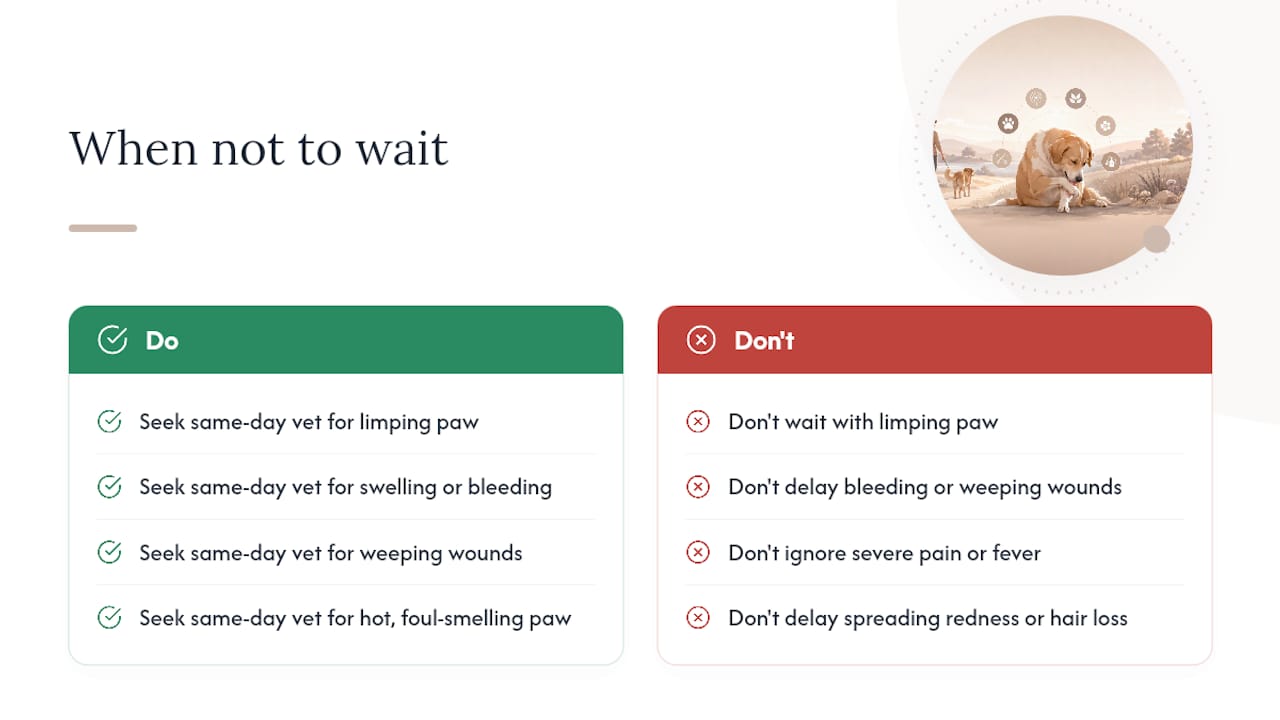
Some paw licking can wait a few days for a scheduled visit. Some can't.
Get seen the same day if you notice a single paw with limping, visible swelling, bleeding, a wound that won't stop weeping, severe pain when touched, or any sign your dog is off overall, like lethargy or fever. A strong foul odor combined with heat in the paw also warrants urgent attention rather than a wait-and-see approach.
Book a prompt appointment, within a few days, if licking persists despite cleaning and drying, redness is spreading rather than shrinking, hair loss is developing, or your dog has recurrent ear infections alongside the paw symptoms; that combination often points to underlying allergy. Delaying care on a genuine infection tends to backfire: what starts as surface irritation can deepen into chronic infection, scarring, and a licking habit that outlasts the original cause.
Preventing Recurrent Paw Licking Long Term
For dogs with a diagnosed allergy or a history of repeat flare ups, prevention is where the real work happens.
Keep flea control consistent year round, since a single bite can trigger days of misery in flea-allergic dogs, and rinse paws after walks through treated lawns or salted sidewalks. If food allergy is suspected, run an elimination diet trial under veterinary supervision rather than guessing with over-the-counter "limited ingredient" bags, which often still contain trigger proteins. For confirmed environmental allergy, expect a conversation about maintenance medication versus immunotherapy: allergy shots or drops can reduce symptoms over months but rarely eliminate them completely, so set expectations accordingly.
- Keep flea prevention current every month, not just in summer
- Trim interdigital hair to reduce debris buildup and moisture trapping
- Check pads weekly for cracks, foreign material, or early redness
- Consider protective boots on hot pavement, ice, or de-icing salt
- Keep a simple symptom diary with dates and photos for recheck visits
Pro Tip: Photograph the same paw from the same angle every two weeks during a flare. Side-by-side images make it much easier for your vet to tell if a treatment is actually working.
How City Animal Veterinary Center Approaches Paw-Licking Cases
Anxious dogs make accurate diagnosis harder. A dog trembling on the exam table can mask limping, and a stressed dog may resist the interdigital exam that catches early infection. The Fear Free approach aims to keep dogs calmer so exams and cytology results better reflect what's actually going on with the paw, not just the stress response.
Services often include skin cytology, allergy testing, dermatology consults, and both in-clinic visits and house calls for pets who struggle with travel or waiting rooms. Because paw licking rarely has one clean cause, Plans may combine medication, environmental changes, and behavioral support, with scheduled rechecks to confirm the plan is actually working rather than assuming it is.
A Veterinary Checklist for Tonight
If your dog is licking a paw right now, work through this in order rather than jumping to conclusions.
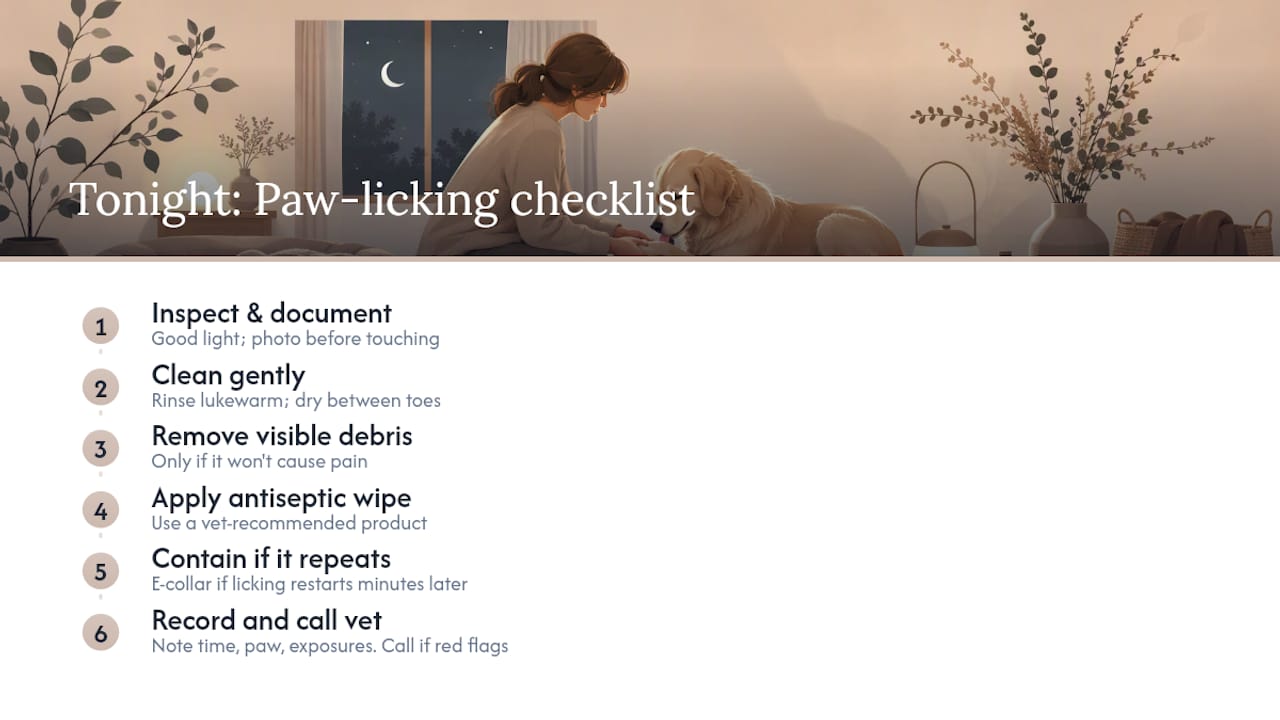
Inspect the paw under good light and take a photo before touching anything. Rinse with lukewarm water, dry it completely between the toes, and remove any obvious debris you can see without causing pain. Apply a vet-recommended antiseptic wipe. If the licking starts again within minutes, put on an E-collar for the night rather than let the cycle continue unchecked.
Write down when the licking started, which paw, and anything unusual that happened that day: a new trail, a new treat, a new cleaning product on the floor. Call your veterinarian if any red flag from earlier applies. And resist the urge to reach for leftover antibiotics or steroid cream from a past prescription. Using them without a current diagnosis can mask the real problem and delay proper treatment.
— CAVC
Book a Diagnostic Visit or House Call
Sorting out whether a licking paw is allergy, infection, injury, or something else usually takes an actual exam and a cytology slide, not another night of guessing. City Animal Veterinary Center runs in-clinic diagnostic testing alongside house-call visits for dogs who do better outside a waiting room, and the Fear Free approach keeps stressed pets calmer during the exam, which tends to make findings more reliable.

If your dog's licking fits any of the same-day red flags, urgent redness, swelling, bleeding, or a paw your dog won't put weight on, call the clinic directly rather than waiting for symptoms to settle on their own. For everything else, from a persistent lick spot to recurring interdigital irritation, you can book an appointment through City Animal Veterinary Center and start with the same history and exam steps covered above. Persistent cases involving suspected allergy often benefit from the clinic's dermatology consults and allergy testing options, which pair well with a multimodal treatment plan rather than a single prescription and a hope it sticks.
This article is general information, not a substitute for advice from a qualified doctor. Consult a qualified healthcare professional about your own circumstances before acting on anything here.
Sources
- Atopic dermatitis (atopy) — Cornell Riney Canine Health Center
- Pododermatitis in Dogs — PetMD
- Pododermatitis in dogs — American Kennel Club (AKC)