
If your dog has year-round itching, recurrent ear infections, or chronic paw licking that doesn't clear up with seasonal allergy treatment, a food allergy is a serious possibility. The most important things you can do right now are three:
- Stop all treats, table scraps, and flavored supplements until you've spoken with your vet. Even a single bite of the wrong protein can invalidate a diagnostic trial.
- Document everything: photograph affected skin areas, note when symptoms started, and write down every food your dog has eaten in the past several months, including chews, dental treats, and flavored medications.
- Schedule a veterinary appointment specifically to discuss a dietary elimination trial, which is the only reliable way to diagnose a food allergy in dogs.
Skin and blood IgE tests are widely marketed for pet food allergies, but veterinary dermatology research consistently shows they cannot reliably identify food allergens. The elimination diet trial is the diagnostic gold standard, and the sooner you start one under veterinary guidance, the sooner your dog gets relief.
Key Takeaways
An elimination diet trial lasting 6–10 weeks is the only reliable way to diagnose a food allergy in dogs, and long-term management almost always means strict avoidance of the confirmed trigger.
| Point | Details |
|---|---|
| Non-seasonal itch signals food allergy | Year-round pruritus with ear and paw involvement is the clearest early indicator to discuss with your vet. |
| Elimination trial is the only reliable test | Skin and blood IgE tests cannot reliably identify food allergens; a 6–10 week diet trial with rechallenge is required for diagnosis. |
| Prescription diets outperform OTC options | Hydrolyzed protein diets, processed to break down proteins into smaller components, and prescription novel-protein diets have stricter manufacturing controls than many store-bought limited-ingredient foods. |
| Every exposure counts | Flavored medications, dental chews, and supplements can invalidate a trial; document and eliminate all nontrial foods before starting. |
| City Animal Veterinary Center | Provides structured food-allergy workups in Brooklyn, NY, including Fear Free visits, in-house diagnostics, and home visit options for anxious dogs. |
Table of Contents
- What is a food allergy in dogs, and how is it different from intolerance?
- How does a food allergy show up in your dog?
- Which ingredients most often trigger food allergies in dogs?
- How do vets diagnose a food allergy? The elimination diet trial explained
- Treatment and long-term management after diagnosis
- Can food allergies be cured, or is this lifelong management?
- What to expect at your veterinary appointment
- How City Animal Veterinary Center handles suspected food-allergy cases
- Personalized food-allergy care starts with one appointment
- Sources
What is a food allergy in dogs, and how is it different from intolerance?
A food allergy is an immune-mediated reaction, meaning the dog's immune system incorrectly identifies a dietary protein as a threat and mounts a response against it. Food intolerance, by contrast, is a non-immune reaction, such as a digestive enzyme deficiency or a direct irritant effect. The frustrating clinical reality is that both can produce identical signs: itching, vomiting, diarrhea, and skin inflammation.
Here's the core distinction in plain terms:
- Food allergy: immune system involvement, typically IgE or T-cell mediated; reaction can occur even with tiny exposures; often involves proteins (beef, chicken, dairy)
- Food intolerance: no immune involvement; usually dose-dependent; may resolve with dietary adjustment alone
- Clinical overlap: both can cause GI upset and skin signs simultaneously, and a dog can have both conditions at once
According to JAVMA research on food allergy in dogs and cats, food allergies are estimated to account for between 8% and 62% of pruritic dogs across different studies, and they frequently coexist with environmental atopic dermatitis. That coexistence is exactly why appearance alone can't separate the causes.
The immune pathway matters for one practical reason: because the reaction is immune-driven, even trace contamination in a food can trigger a response. This is why over-the-counter blood tests and home IgE kits mislead owners so often. They test for antibodies to specific proteins, but the immune response in food allergy involves multiple pathways, and the correlation between a positive test result and a true clinical reaction is poor. A dog can test "positive" to a protein it tolerates perfectly well, and "negative" to the one actually causing the problem.
Pro Tip: If you've already tried an at-home elimination diet using a store-bought "limited ingredient" food and saw no improvement, that doesn't rule out food allergy. Many commercial limited-ingredient diets share production lines with other formulas and carry cross-contamination risk. A true diagnostic trial requires a prescription diet with strict manufacturing controls.
How does a food allergy show up in your dog?
The hallmark of a food allergy in dogs is chronic, non-seasonal pruritus, meaning itching that persists year-round rather than flaring only in spring or fall. That non-seasonal pattern is one of the clearest early signals that separates food allergy from environmental triggers like pollen.
Skin and ear signs
The most commonly affected areas are the ears, paws, groin, armpits, and the skin around the face and muzzle. Recurrent otitis externa (ear infections) that keep coming back despite treatment is a classic presentation. Paw licking and chewing often leave a characteristic reddish-brown staining from saliva. Over time, repeated skin trauma and moisture create the conditions for secondary bacterial or yeast infections, which add another layer of inflammation and itch on top of the underlying allergy.

Gastrointestinal signs
Not every food-allergic dog shows obvious GI symptoms, but vomiting, loose stools, increased frequency of defecation, and flatulence can all appear alongside or instead of skin signs. When a dog has both skin and GI signs simultaneously, food allergy moves up the differential list quickly.

Age of onset
One thing that surprises many owners: food allergies aren't just a puppy problem. JAVMA data shows some food-induced cases begin early in life before 6 months or within the first year, but onset can occur at any age up to older adulthood. A dog that ate the same food for years without issue can still develop an allergy to it.
Documenting signs before your appointment
Good documentation makes the veterinary visit far more productive. Three things to capture before you go:
Photographs: Take clear, well-lit photos of all affected skin areas every few days. Include close-ups of ear canals, paw webbing, and any areas of hair loss or redness. Timestamps matter.
A stool diary: Note consistency, frequency, and any blood or mucus for at least two weeks before the appointment. A simple daily log on your phone works fine.
A food and exposure log: Write down every food, treat, chew, flavored medication, and supplement your dog receives, including who feeds them and when. This last point matters more than most owners realize.
Partial improvement with antihistamines, steroids, or Apoquel doesn't rule out food allergy. Symptomatic medications reduce itch without addressing the underlying trigger, which can make it harder to assess whether a diet trial is working. Your vet needs to know exactly which medications your dog is on and at what doses before designing a trial.
Pro Tip: Ask everyone in your household to write down what they feed the dog for one week before the vet visit. You'll almost certainly discover treats or "just a bite" of human food that weren't on your mental list.
Which ingredients most often trigger food allergies in dogs?
The most commonly reported allergens in dogs are proteins, not grains. Based on compiled datasets cited in the Small and Large Animal Dermatology Handbook, the leading offenders are commonly reported as beef, dairy, chicken, wheat, and lamb, though exact proportions vary by dataset and region
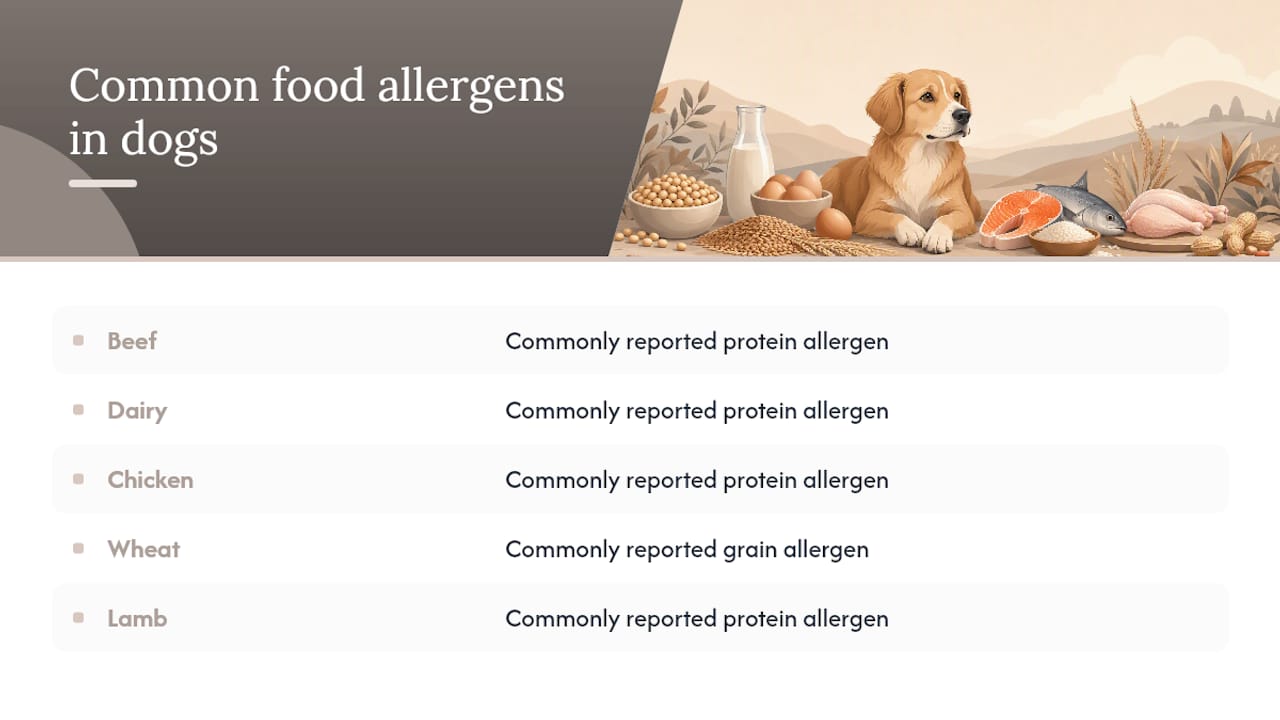
These figures come from compiled case reports and vary by region and study design, so treat them as a general guide rather than a definitive ranking. The practical implication is that the most common proteins in mainstream commercial dog foods are also the most common allergens, which is why novel protein selection during a trial requires a careful diet history.
How do vets diagnose a food allergy? The elimination diet trial explained
The elimination diet trial is the only reliable diagnostic method for food allergy in dogs. Research published in JAVMA confirms that diet trials are the only reliable diagnostic test, with over 95% of responders identified by 8 weeks when trials are conducted correctly.
Choosing the right trial diet
Three main options exist, and the choice depends on your dog's diet history:
Prescription hydrolyzed protein diets are often the first choice. Today's Veterinary Practice explains that enzymatic hydrolysis breaks proteins down to typically less than 13 kDa, small enough that the immune system is less likely to recognize them as threats. Strict manufacturing controls also reduce cross-contamination risk. Clinicians often prefer single-source hydrolyzed proteins paired with an isolated carbohydrate to minimize confounding variables.
Prescription novel protein diets use a protein source the dog has never eaten before (venison, kangaroo, rabbit, for example). These work well when a thorough diet history confirms the protein is genuinely novel for that individual dog.
Home-cooked diets are technically possible but require veterinary nutritionist oversight. The Merck Veterinary Manual cautions that formulating a nutritionally complete homemade elimination diet is error-prone and difficult to sustain correctly without expert guidance.
Avoid over-the-counter limited-ingredient or grain-free diets for a diagnostic trial. AAHA notes that these commonly lack the manufacturing controls needed to prevent cross-contamination and are a frequent reason trials fail.
Trial timeline and rechallenge
The rechallenge step is non-negotiable for a confirmed diagnosis. Without it, improvement during the trial could reflect spontaneous remission, seasonal change, or concurrent treatment effects rather than dietary cause.
Why trials fail
The most common reasons a trial produces inconclusive results:
- Someone in the household gives the dog a treat or table scrap
- Flavored medications or supplements continue during the trial
- The chosen diet contains a protein the dog has been exposed to before
- The trial ends too early (before 8 weeks for skin signs)
- The dog accesses another pet's food
Owner compliance is the single most important success factor. Clinics that schedule regular check-ins and provide structured documentation tools see significantly better trial completion rates.
Pro Tip: Put a note on your refrigerator and brief every family member and dog walker before the trial starts. One accidental treat can mean restarting from week one.
Treatment and long-term management after diagnosis
Once a food allergy is confirmed through a completed trial and rechallenge, management centers on one core principle: avoid the identified trigger permanently.
Dietary management
For most dogs, long-term management means either continuing the prescription trial diet indefinitely or transitioning to a different tolerated diet that avoids the confirmed allergen. PetMD's overview of hydrolyzed protein dog food notes that prescription hydrolyzed diets are commonly prescribed for long-term management because they minimize antigenicity and contamination risk compared with many nonprescription options. For dogs with a confirmed single allergen and a clean diet history, a carefully selected novel protein diet can also serve as a long-term solution.
Nutritional planning for therapeutic diets benefits from professional input. Resources like pet food therapy guidance can help owners understand how to work with a clinician to select and sustain an appropriate diet long-term.
Treating secondary infections and itch
Active skin infections need treatment regardless of the diet trial status. Your vet will likely recommend:
- Antimicrobial therapy (topical or systemic) for secondary bacterial or yeast infections
- Short-term anti-pruritics such as Apoquel (oclacitinib) or Cytopoint (lokivetmab) to control itch while the diet trial runs, with a plan to taper for final assessment
- Medicated shampoos to reduce surface bacterial load and soothe inflamed skin
Referral to a veterinary dermatologist is appropriate when the diagnosis remains unclear after a properly conducted trial, when multiple allergies are suspected, or when secondary infections are severe or recurrent. For additional at-home supportive strategies, veterinarian-reviewed natural remedies can complement, though never replace, the core dietary management plan.
Household strategies
- In multi-pet homes, feed all animals separately and store trial diet in a sealed container away from other pet foods
- Replace all treats with a small amount of the trial diet kibble or a vet-approved single-ingredient treat that matches the trial protein
- Read every label before introducing any new food, supplement, or medication
- Notify your groomer about the allergy so they can avoid protein-containing shampoos
Follow-up schedule
Plan rechecks at 4 weeks, 8 weeks, and after rechallenge. Once on a long-term maintenance diet, an annual recheck is reasonable unless new signs appear. If your dog's skin or GI signs return despite strict dietary compliance, that warrants a reassessment: either there's a new allergen, cross-contamination has crept in, or a concurrent condition like atopic dermatitis needs separate management.
Pro Tip: Keep a small supply of the trial diet on hand at all times so you're never forced to substitute. Running out and feeding a different food for even a few days can reset weeks of progress.
Can food allergies be cured, or is this lifelong management?
The honest answer is that food allergies in dogs are generally managed rather than cured. The immune system's sensitization to a specific protein doesn't simply reverse itself. Some dogs may tolerate a previously offending food later in life, but the evidence for this is limited and unpredictable, so it's not a strategy to plan around.
What owners can realistically expect:
- Long-term avoidance of confirmed triggers is the most reliable management approach
- New allergies can develop over time, particularly if the dog is repeatedly exposed to a limited range of proteins; rotating proteins unnecessarily can actually increase sensitization risk
- Skin health maintenance matters: dogs with compromised skin barriers are more susceptible to secondary infections that complicate allergy management; regular bathing with appropriate shampoos and good parasite control reduce this risk
- Re-evaluation is warranted if a dog that was stable on a tolerated diet starts showing new signs; this may indicate a new food allergen, environmental allergy progression, or an unrelated condition
For prevention in dogs not yet diagnosed, avoid unnecessary dietary changes and introduce novel proteins deliberately rather than casually. If your dog has a first-degree relative with food allergies, early attention to skin health and a stable, simple diet is a reasonable precaution.
What to expect at your veterinary appointment
A well-prepared owner makes the appointment significantly more productive. Here's what to bring and what will likely happen.
What to bring
- A complete diet history: every food, treat, chew, supplement, and flavored medication your dog has received in the past 6–12 months, with brand names and approximate frequency
- Label photos: photographs of every product's ingredient list, taken on your phone
- Lesion photos: timestamped photos showing the progression and location of skin signs
- A stool diary: at least two weeks of notes on consistency, frequency, and any abnormalities
- A medication log: current and recent medications with doses and dates, including any over-the-counter products
What the vet will do
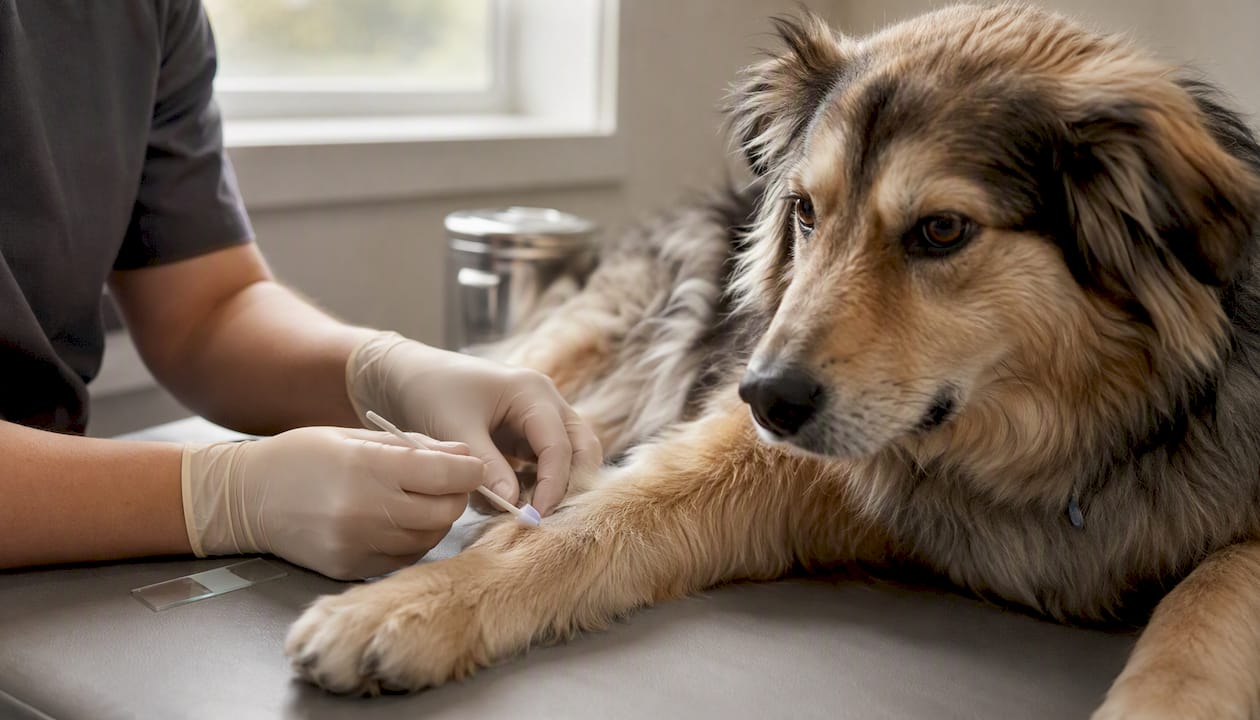
The appointment typically includes a full physical exam with attention to skin, ears, and coat condition. Expect skin cytology to check for secondary bacterial or yeast infections, which guides immediate treatment decisions. A skin cytology procedure is quick, non-invasive, and gives the vet critical information about what's living on the skin surface right now. Fecal testing rules out parasites as a contributing cause of GI signs. Targeted bloodwork may be ordered to rule out metabolic or endocrine conditions that can mimic or worsen allergy signs. From there, the vet will design a diet-trial plan specific to your dog's history.
Skin and blood allergy tests may be offered, but it's worth understanding their limits. They are useful for environmental allergens (for planning immunotherapy), but veterinary dermatology consensus is clear that serum and skin testing is unreliable for identifying food allergens. The elimination trial remains the only method that actually confirms a food allergy.
Pro Tip: Take label photos of every product before the appointment, not the night before. Owners consistently underestimate how many products their dog encounters. A week of active logging usually surfaces two or three exposures they had completely forgotten.
How City Animal Veterinary Center handles suspected food-allergy cases
At City Animal Veterinary Center in Brooklyn, NY, suspected food-allergy cases follow a structured, evidence-based workflow from the first visit through long-term maintenance.
The process typically looks like this:
- Initial consult: comprehensive diet history intake, full physical exam, skin cytology, and fecal testing; Fear Free visit protocols keep anxious dogs calm enough for a thorough exam without the stress that can interfere with clinical assessment
- Diet trial design: selection of an appropriate prescription hydrolyzed or novel-protein diet based on the dog's complete exposure history, with a written feeding plan and a list of prohibited items
- Scheduled check-ins: follow-up appointments at 4 and 8 weeks to assess response, address secondary infections, and troubleshoot compliance issues; home visit options are available for dogs who find clinic travel stressful
- Structured rechallenge: once improvement is confirmed, a supervised rechallenge protocol to confirm the diagnosis
- Maintenance planning: long-term diet selection, label-reading guidance, and referral to a veterinary dermatologist when the case warrants specialist input
Owners can request a dermatology-focused appointment when scheduling. Bringing the documentation checklist from the section above to the first visit gives the clinical team everything needed to design a reliable trial from day one.
A perspective from the City Animal team
The most common thing we hear from owners at the first food-allergy appointment is some version of "I already tried changing his food and it didn't help." Almost every time, the switch was to a different commercial diet, often one labeled "limited ingredient" or "grain-free," without a full diet history review or a prescription-grade trial diet. The dog kept getting the same treats, the same flavored heartworm chew, the same dental stick. The trial was never really a trial.
What we've found is that when owners understand exactly why every single exposure matters, compliance improves dramatically. The elimination trial isn't complicated. It's just strict. And when it's done correctly, it gives you a clear answer, which is something no blood test can reliably provide. We walk through the full plan at the first visit, check in regularly, and adjust as needed. Most dogs do well. The process takes patience, but it works.
Personalized food-allergy care starts with one appointment
Chronic itching, recurring ear infections, and persistent GI upset deserve a real answer, not another round of symptomatic treatment. At City Animal Veterinary Center, food-allergy workups include in-house diagnostics, a structured elimination trial plan, and follow-up support throughout the process. Fear Free visit protocols and home visit options mean even anxious or mobility-limited dogs get the thorough evaluation they need.

The first step is a comprehensive consult where the clinical team reviews your dog's full history, performs a physical exam and skin cytology, and designs a trial specific to your dog. Request an appointment at City Animal Veterinary Center and bring your documentation. The sooner the trial starts, the sooner your dog gets relief.
Sources
- Adverse food reaction/food allergy – Small and Large Animal Dermatology Handbook
- Hydrolyzed Protein and Amino Acid–Based Diets | Today's Veterinary Practice
- Nutrition in disease management in small animals - Merck Veterinary Manual
- Dog allergies: symptoms, testing, and treatment | American Animal Hospital Association
- What Is Hydrolyzed Protein Dog Food? | PetMD
This article is general information, not a substitute for advice from a qualified doctor. Consult a qualified healthcare professional about your own circumstances before acting on anything here.