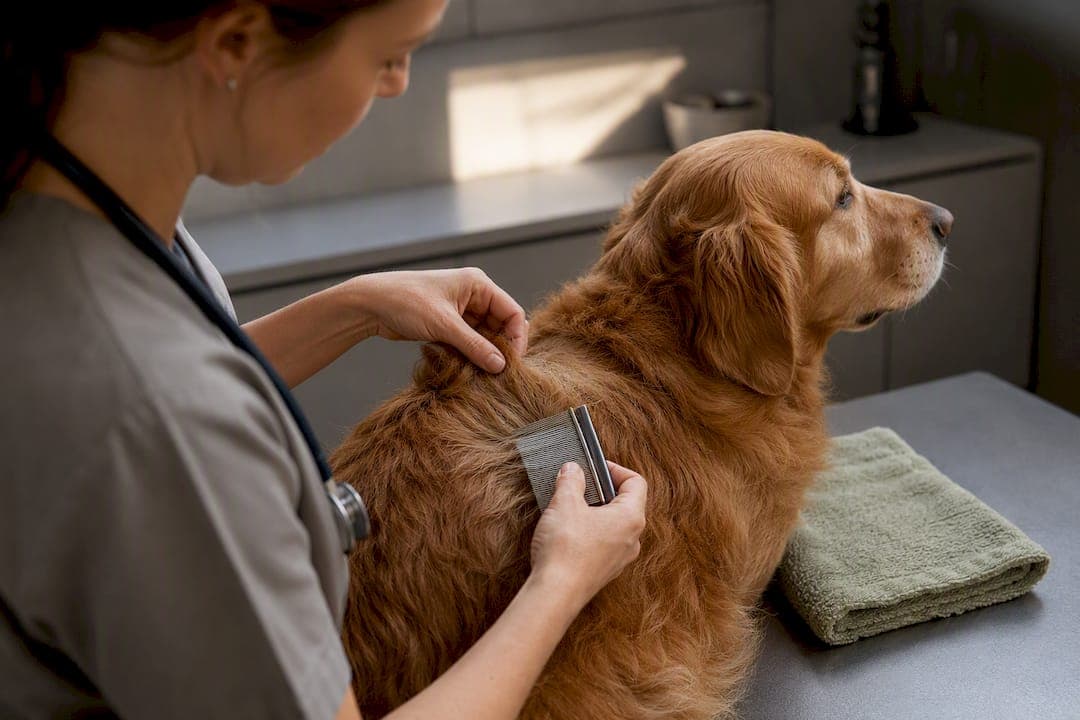
Flea allergy dermatitis is an allergic skin reaction to proteins in flea saliva, and it can turn a single bite into weeks of misery for a dog or cat. If you spot the signs, your first move is to knock out fleas on your pet and in the home immediately, then get your veterinarian involved for itch and infection control. Expect some itching to linger for days even after the fleas are gone.
TL;DR:
- Holding every pet on a year-round flea preventive with consistent application is essential, as fleas can survive indoors during winter.
- Environmental cleanup like vacuuming, washing bedding, and yard maintenance helps eliminate flea pupae, which linger for weeks to months.
- Rapid and thorough treatment of secondary infections with antibiotics or antifungals is crucial if bacterial or yeast overgrowth appears.
- Severe or spreading skin issues, lethargy, or signs of anemia require prompt veterinary attention to prevent complications.
- Accurate diagnosis often relies on clinical signs and response to flea elimination, with additional tests used in complex or unresponsive cases.
Table of Contents
- What Is Flea Allergy Dermatitis? Why One Bite Is Enough
- Symptoms and Lesion Patterns: Dogs vs. Cats
- How Vets Diagnose Flea Allergy Dermatitis
- Treating Flea Allergy: The Checklist Vets Actually Use
- When a Flea Allergy Becomes an Emergency
- Preventing the Next Flea Allergy Flare-Up
- Fear Free Care for Itchy, Anxious Pets
- Book a Dermatology Visit or Home Exam
- Sources
What Is Flea Allergy Dermatitis? Why One Bite Is Enough
Flea allergy dermatitis (FAD) develops when a pet's immune system overreacts to allergens in flea saliva, triggering both an immediate hypersensitivity response and a delayed one. Together, these produce histamine release and inflammatory cascades that make the itching far worse than a normal bite reaction. The Merck Veterinary Manual describes FAD as a hypersensitivity disorder rooted specifically in flea saliva antigens, not the flea bite itself.
This is why a heavily flea-infested dog and a mildly exposed, allergic dog can look identical on the outside. A few things tend to set off flare-ups in sensitized pets:
- Intermittent flea exposure, which keeps the immune system primed rather than tolerant
- Pets with existing atopic dermatitis or other allergies, who tend to react more intensely
- Older pets encountering flea saliva for the first time, sometimes triggering a stronger initial response
- Even a single flea bite in a sensitized pet, since the reaction depends on immune memory, not bite volume
That last point catches owners off guard constantly. You do not need to see fleas crawling on your pet for FAD to be the answer.
Symptoms and Lesion Patterns: Dogs vs. Cats
FAD shows up differently depending on the species, and knowing the pattern helps you describe what you are seeing accurately to your veterinarian.
- Dogs typically break out along the tailhead and lower back. Look for small red bumps, crusting, hair loss, and raw patches where repeated scratching or licking has created a hot spot.
- Cats often develop miliary dermatitis, a scattering of tiny crusty bumps, frequently around the head, neck, and back.
- Cats may also self-groom to the point of bald patches, particularly on the belly and inner thighs, sometimes without any visible lesions at all.
- Some cats develop eosinophilic skin lesions, including raised ulcerated patches on the lip or thickened plaques on the abdomen.
- Check for flea dirt, the small dark specks of flea feces that turn reddish brown when wetted, often found at the base of the tail or along the spine.
- Watch for secondary infection signs, such as greasy yellow crusting, a foul odor, or pimple-like pustules, which usually mean bacteria or yeast have moved into damaged skin.
Cats are notorious groomers, and Cornell's Feline Health Center notes that allergic cats often lick away the evidence of fleas before an owner ever sees one, which is exactly why the skin pattern matters more than finding bugs.
How Vets Diagnose Flea Allergy Dermatitis
Diagnosing FAD is usually a clinical judgment call, not a single definitive lab test. Your veterinarian leans on your pet's history, the distribution of lesions, and whether fleas or flea dirt turn up on exam. The 2023 AAHA allergic skin disease guidelines confirm that history and clinical signs carry most of the diagnostic weight.
During the visit, expect your veterinarian to reach for a handful of tools:
- Skin cytology, a quick in-clinic test that identifies bacteria or yeast contributing to the itch and infection
- Skin scraping, used to rule out mites like Sarcoptes or Demodex that mimic FAD
- Fungal testing, when ringworm is a reasonable differential
- A trial of strict flea control, which is often the most reliable diagnostic tool of all. If signs resolve once fleas are eliminated, that response confirms the diagnosis retroactively.
Flea-specific IgE blood testing exists, but it has real limitations. Results do not always correlate with clinical severity, so most veterinarians treat it as a secondary tool rather than a stand-alone answer. Cases that don't respond as expected, or that show unusual lesion patterns, may warrant referral to a veterinary dermatologist or a skin biopsy, something AAHA specifically recommends for complex or nonresponsive cases.
Treating Flea Allergy: The Checklist Vets Actually Use
Treating flea allergy dermatitis means working three angles at once: kill the fleas, calm the skin, and clear any infection. Skipping one of these usually means the itching comes right back.
Start with fast, reliable flea elimination. AAHA's guidelines point to the isoxazoline class of preventives as the front-line recommendation because of their potent, fast-acting kill rate against adult fleas. Every animal in the household needs to be on a product, not just the itchy one. Treating a single pet while others go uncovered is one of the most common reasons FAD treatment fails in multi-pet homes.
Treat the environment, not just the pet. Vacuum carpets and furniture regularly, wash bedding in hot water, and mow the yard if outdoor exposure is a factor. Flea pupae can sit dormant in carpet fibers for weeks to months, which means visible improvement on your pet doesn't always mean the infestation is gone. The University of Minnesota's dermatology reference specifically warns that clinical signs can persist well after the last adult flea is killed, simply because new fleas keep emerging from the environment.

Address the itch directly. Veterinarians commonly use a short course of systemic glucocorticoids for fast relief in the first days of treatment, then transition to longer-term options like oclacitinib (brand name Apoquel) or Cytopoint injections for ongoing pruritus control.
Treat secondary infections based on what cytology shows. Bacterial overgrowth typically calls for topical or systemic antibiotics, while yeast usually responds to antifungal shampoos or oral medication.
Consider bloodwork in heavy infestations. A CBC and PCV can catch flea-related anemia, which shows up occasionally in young, small, or heavily infested pets.
- Reliable adulticide prevention on every pet in the home, applied consistently
- Environmental cleanup: vacuuming, hot-water laundering, yard maintenance
- Short-term antipruritic medication for immediate comfort
- Cytology-guided treatment for secondary bacterial or yeast infection
- Follow-up bloodwork if anemia is a concern
Pro Tip: Keep every pet's flea prevention on the same monthly schedule and mark it on a calendar. Staggered dosing is one of the sneakiest reasons owners think a product "stopped working" when the real problem is a gap in coverage.
When a Flea Allergy Becomes an Emergency
Most FAD cases are uncomfortable but manageable at home once treatment starts. A smaller number cross into urgent territory, and those need same-day veterinary attention.
Call your veterinarian promptly if you notice any of the following:
- Loss of appetite or a pet that suddenly seems withdrawn or unusually tired
- Large weeping or oozing patches of skin, especially if they're spreading fast
- Pale or white gums, which can signal anemia from a heavy flea burden
- Constant, frantic scratching that interferes with sleep or normal activity
Texas A&M's veterinary team advises that itching severe enough to disrupt normal routines is reason enough to get evaluated, since untreated inflammation tends to snowball into secondary infections. At that stage, your veterinarian will likely run cytology, start antibiotics if bacteria or yeast show up, and may recommend fluids or urgent antipruritic therapy if the skin damage is extensive.
Preventing the Next Flea Allergy Flare-Up
Year-round prevention is the single biggest factor separating pets with one bad flea season from pets who deal with recurring flare-ups.
- Put every pet in the household on a veterinary-recommended flea preventive, all year, without seasonal breaks. Fleas survive indoors through winter regardless of outdoor temperatures.
- Apply products exactly as directed. Missed doses or incorrect application are common reasons pets "break through" a product that should be working.
- Wash pet bedding weekly during an active infestation, and vacuum carpets, rugs, and upholstery to interrupt the flea life cycle at the egg and larval stages.
- Keep the yard mowed and shaded areas clear of debris, since fleas thrive in cool, moist outdoor spots.
- Call a professional exterminator if a home infestation doesn't resolve within a few weeks of consistent treatment, particularly in multi-unit buildings where fleas can travel between apartments.
- Watch for early scratching or chewing and mention it at your pet's next visit, rather than waiting for a full flare to develop.
Fear Free Care for Itchy, Anxious Pets
An itchy pet is often a stressed pet, and a stressed pet does not sit still for a thorough skin exam. A Fear Free approach using low-stress handling helps dermatology exams and cytology sampling go smoothly for pets that are already uncomfortable. For owners who cannot easily transport a scratching, anxious animal, home visit services can bring the diagnostic process to the pet's home. Our skin cytology guide walks through what that testing actually involves.

Book a Dermatology Visit or Home Exam
Getting an accurate diagnosis matters more than guessing at another over-the-counter product. Diagnostic exams, dermatology guidance, and Fear Free handling are available for pets who struggle with clinic visits, plus home visits can be arranged for owners who have trouble transporting a scratching, anxious pet.

Your first appointment typically includes a physical exam, skin cytology if lesions are present, and a treatment plan built around your pet's specific pattern of symptoms rather than a one-size-fits-all product swap. If your dog's paw licking or coat changes have you wondering whether allergies are behind it, our dog paw licking checklist is a useful next read, and our multimodal skin allergy guide covers what a full treatment plan looks like in practice. Ready to get your pet evaluated? Book an appointment with City Animal Veterinary Center in Brooklyn today, or ask about scheduling a home visit if travel is the barrier.
Sources
- 2023 AAHA management of allergic skin diseases in dogs and cats guidelines
- Flea allergy dermatitis in dogs and cats — Merck Veterinary Manual
- Flea bite allergy — Small and Large Animal Dermatology Handbook (UMN Open Text)
- Fleas & flea allergy dermatitis — Texas A&M Veterinary Medicine (Pet Talk)