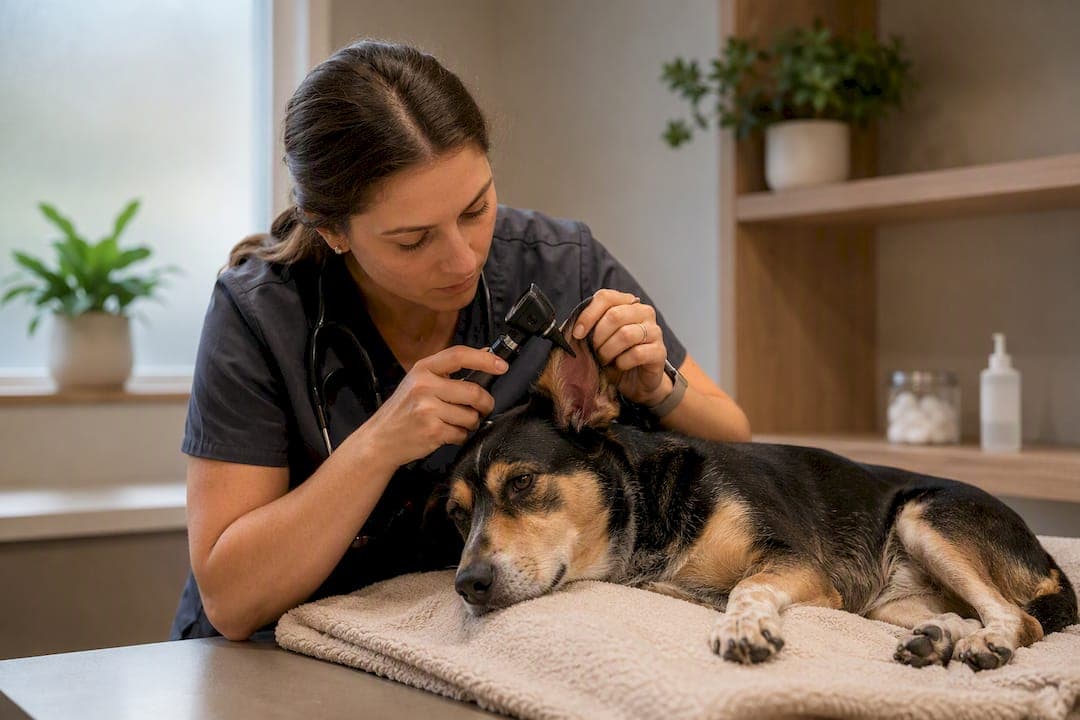
Most ear problems in dogs come down to otitis externa, an infection or inflammation of the outer ear canal that is uncomfortable but very treatable. What it is not is a job for guesswork. Skip the peroxide-and-cotton-swab routine you saw online and get your dog seen by a veterinarian for an otoscopic exam and ear cytology. That's the only way to know what's actually causing the problem and pick a treatment that will work.
TL;DR:
- Accurate diagnosis relies on otoscopic exam and ear cytology to identify whether bacteria, yeast, or mites are causing the infection.
- Breed, anatomy, and environmental factors like moisture and allergies significantly influence the likelihood of recurring ear infections.
- Treatment requires ear cleaning, medication tailored to the specific organism, and sometimes culture testing, with chronic cases possibly needing surgery.
- Owners should avoid self-medicating with online remedies, never use cotton swabs, and seek veterinary guidance for proper cleaning and diagnosis.
- Preventative care includes thorough drying after swimming or bathing, regular vet-recommended cleaning, and addressing underlying allergies or health issues.
Table of Contents
- What Are Ear Infections in Dogs, and What Types Exist?
- What Are the Signs of an Ear Infection in Dogs?
- Why Do Dogs Get Ear Infections?
- How Do Vets Diagnose an Ear Infection?
- What Treatments Do Vets Use for Dog Ear Infections?
- How Do You Safely Clean a Dog's Ears at Home?
- How Can You Prevent Ear Infections in Dogs Long Term?
- City Animal Veterinary Center's Approach to Ear Infections
- What's the One Thing Owners Should Prioritize Tonight?
- How City Animal Veterinary Center Can Help Your Dog's Ears
- Sources
What Are Ear Infections in Dogs, and What Types Exist?
Veterinarians break ear infections into three categories based on location: otitis externa (outer ear canal), otitis media (middle ear), and otitis interna (inner ear). The distinction matters because each carries different risks and different urgency.
- Otitis externa is by far the most common form and usually stays confined to the canal and eardrum.
- Otitis media develops when infection crosses a damaged eardrum into the middle ear, often causing more pain.
- Otitis interna is rare but serious, involving structures tied to balance and hearing.
A dog's ear canal is L-shaped, bending sharply before reaching the eardrum. That bend is great for protecting the inner ear from debris, but it also traps moisture, wax, and bacteria in a warm, dark space that some vets describe as a built-in incubator, according to the American College of Veterinary Surgeons. Left untreated, outer ear infections can progress inward, which is exactly why catching one early matters.
What Are the Signs of an Ear Infection in Dogs?
Dogs can't tell you their ear hurts, so you're reading behavior and body language instead. Here's the progression to watch for:
- Head shaking or ear scratching is usually the first thing owners notice, often before anything looks visibly wrong.
- A yeasty or "corn chip" odor coming from the ear can signal yeast overgrowth before discharge even appears, according to PDSA.
- Discharge, redness, or swelling inside the ear flap or canal points to active inflammation.
- Behavior shifts, like a dog avoiding having its head touched or seeming irritable, can be a subtler early clue than physical symptoms.
- Head tilt, loss of balance, or facial paralysis are urgent red flags that suggest the infection has reached the middle or inner ear.
- Severe pain, heat, or swelling around the ear warrants same-day veterinary attention, not a wait-and-see approach.
Clinical signs like these, including malodor, erythema, and pain, are exactly what vets look for during an exam, per the MSD Veterinary Manual.
Why Do Dogs Get Ear Infections?
Ear infections rarely happen in isolation. Something usually sets the stage, and bacteria or yeast just take advantage of it.
- Allergies, whether food-related or environmental, are among the most common underlying triggers and a major reason infections keep coming back, according to the American Kennel Club.
- Moisture from swimming, bathing, or humid weather softens the canal's skin and invites overgrowth.
- Foreign bodies, like grass seeds or debris, and ear mites can irritate the canal enough to trigger secondary infection.
- Bacterial or yeast overgrowth is often secondary. Thick, yellow discharge tends to point toward bacteria, while a greasy, dark brown discharge with that corn-chip smell usually signals yeast.
Breed matters too. Dogs with floppy ears (Cocker Spaniels, Basset Hounds), hairy canals (Poodles, Doodles), or a habit of swimming face a higher baseline risk simply because their anatomy keeps the canal warmer and wetter.
How Do Vets Diagnose an Ear Infection?
A vet doesn't just glance in the ear and prescribe drops. The workup follows a specific sequence, and skipping steps is how treatment fails.
- History and physical exam come first, covering swimming habits, allergy history, and how long symptoms have been present.
- Otoscopic exam lets the vet see the canal and eardrum directly. Painful or heavily inflamed ears sometimes need mild sedation to get a clear, non-traumatic look.
- Ear cytology, a swab sample examined under a microscope, identifies whether bacteria, yeast, or mites are driving the problem. This step is considered standard for diagnosing otitis externa by the Merck Veterinary Manual.
- Culture and sensitivity testing gets added for chronic or non-responsive cases, especially when resistant bacteria like Pseudomonas are suspected.
- Imaging (X-rays or CT) comes into play when middle or inner ear involvement is suspected.
Cytology is the piece owners underestimate most. It's what separates a yeast infection from a bacterial one, and mixing that up means treating with the wrong medication entirely, a point echoed in clinical reviews of canine otitis externa. The same logic applies to other infections vets diagnose by sample, similar to how a skin cytology workup or a urine culture pinpoints the actual organism before treatment starts.
Pro Tip: Ask your vet to show you the cytology slide or describe what they saw. It helps you understand why one medication was chosen over another, and it makes follow-up visits easier to track.

What Treatments Do Vets Use for Dog Ear Infections?
Treatment isn't one-size-fits-all, and the plan changes based on what the cytology reveals.
- Ear cleaning happens first, almost always, because built-up wax and discharge can inactivate topical medication before it ever reaches the infection.
- Topical medications typically combine an antimicrobial, an antifungal, and a steroid to fight infection and calm inflammation in one application.
- Oral antibiotics or systemic steroids get added for infections that have moved past the outer canal or involve significant swelling.
- Recovery timelines vary widely. Acute cases usually clear in two to four weeks with proper treatment and follow-up cytology to confirm resolution. Chronic cases can take months and often require repeated rechecks.
- Surgery, specifically total ear canal ablation (TECA), is reserved for severe, recurrent cases where the canal has become permanently narrowed or diseased, per guidance from the MSD Veterinary Manual.
Refractory infections sometimes involve resistant organisms, which is why culture-guided treatment matters so much in cases that don't respond to the first round of medication.
How Do You Safely Clean a Dog's Ears at Home?
Cleaning helps, but only when it's the right technique at the right time. If your dog's ear looks painful, or you suspect the eardrum might be ruptured, skip cleaning and call your vet instead.
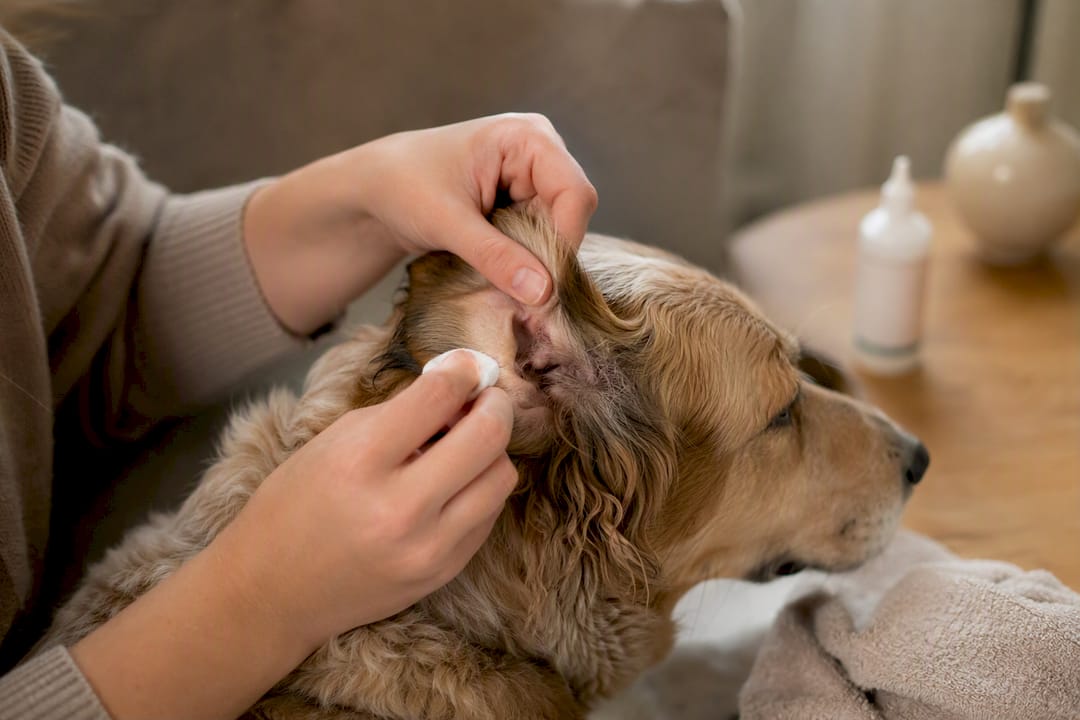
- Fill the ear canal generously with a vet-approved cleaning solution, never plain water or a vinegar mixture you found online.
- Massage the base of the ear for about 20 to 30 seconds. You should hear a soft squelching sound as the solution loosens debris.
- Let your dog shake its head, then wipe the visible parts of the canal and ear flap with gauze or a cotton ball.
- Wait at least 10 minutes before applying any prescribed medication so the cleaner has time to evaporate and doesn't dilute the drug.
Never use cotton swabs inside the canal. They pack debris deeper rather than removing it, a warning that shows up consistently in veterinary guidance on ear care. After swimming or bathing, dry the ears thoroughly with a towel, and consider a vet-recommended drying agent for dogs that swim often.
Pro Tip: Overcleaning is a real problem too. Wiping ears daily "just in case" can strip protective wax and irritate the canal, which sometimes triggers the very infection you're trying to prevent.
How Can You Prevent Ear Infections in Dogs Long Term?
Prevention isn't a single habit. It's a maintenance routine paired with figuring out why infections keep happening in the first place.
- Dry ears after every swim or bath, using a vet-approved drying solution if your dog is prone to moisture-related flare-ups.
- Set a cleaning schedule with your vet rather than guessing at frequency. Some dogs need weekly maintenance; others need almost none.
- Investigate allergies if infections recur more than once or twice a year. A multimodal allergy treatment plan or formal allergy testing often uncovers the root cause that topical treatment alone never fixes.
- Rule out endocrine disease, like hypothyroidism, in dogs with chronic, hard-to-clear infections.
- Ask about specialist referral if infections persist beyond two months. At that point, anatomical or immune factors may need dedicated workup, and in rare cases, surgical correction. Owners exploring gentler adjuncts alongside medical treatment sometimes look into natural remedies for allergy-related symptoms as a complement, not a replacement, for veterinary care.
City Animal Veterinary Center's Approach to Ear Infections
At City Animal Veterinary Center, ear exams use Fear Free handling, meaning slower introductions, treats, and calm restraint that reduce the need for sedation during otoscopy. For dogs who panic at the sight of a carrier, our house-call service brings the exam, cleaning, and cytology directly to your home. Every visit includes a follow-up plan tailored to whether we're treating a first-time infection or a recurring one tied to allergies.
What's the One Thing Owners Should Prioritize Tonight?
If your dog has an ear infection, the single biggest mistake owners make is treating the smell or the scratching instead of the cause behind it. Cytology should come before any medication decision, full stop. And if this is the second or third infection this year, stop treating each flare-up in isolation. Start asking whether allergies or ear anatomy are the real problem. Tonight's action is simple: book the exam, don't reach for last time's leftover ear drops.
— CAVC
How City Animal Veterinary Center Can Help Your Dog's Ears
If your dog is shaking its head or you caught that telltale odor early, City Animal Veterinary Center offers Fear Free exams built specifically to make otoscopy and ear cytology less stressful for anxious pets. Instead of wrestling a scared dog into a waiting room, our home visit service brings diagnostics right to your living room, no carrier meltdown required.

Before your visit, jot down when symptoms started, whether your dog has been swimming recently, and any past ear issues. That history speeds up diagnosis. Diagnostics available include otoscopic exams, ear cytology, and follow-up rechecks to confirm the infection has cleared, with individualized plans for dogs dealing with recurrent or allergy-driven cases. If you're outside our Brooklyn service area, reach out to a local Fear Free certified vet for the same standard of care. Ready to get your dog's ears checked properly? Book an appointment with City Animal Veterinary Center and skip the guesswork.
Sources
- Otitis externa in animals - Merck Veterinary Manual
- Otitis externa in animals - MSD Veterinary Manual
- Otitis externa - American College of Veterinary Surgeons
- Canine otitis externa — Treatment and complications - PMC