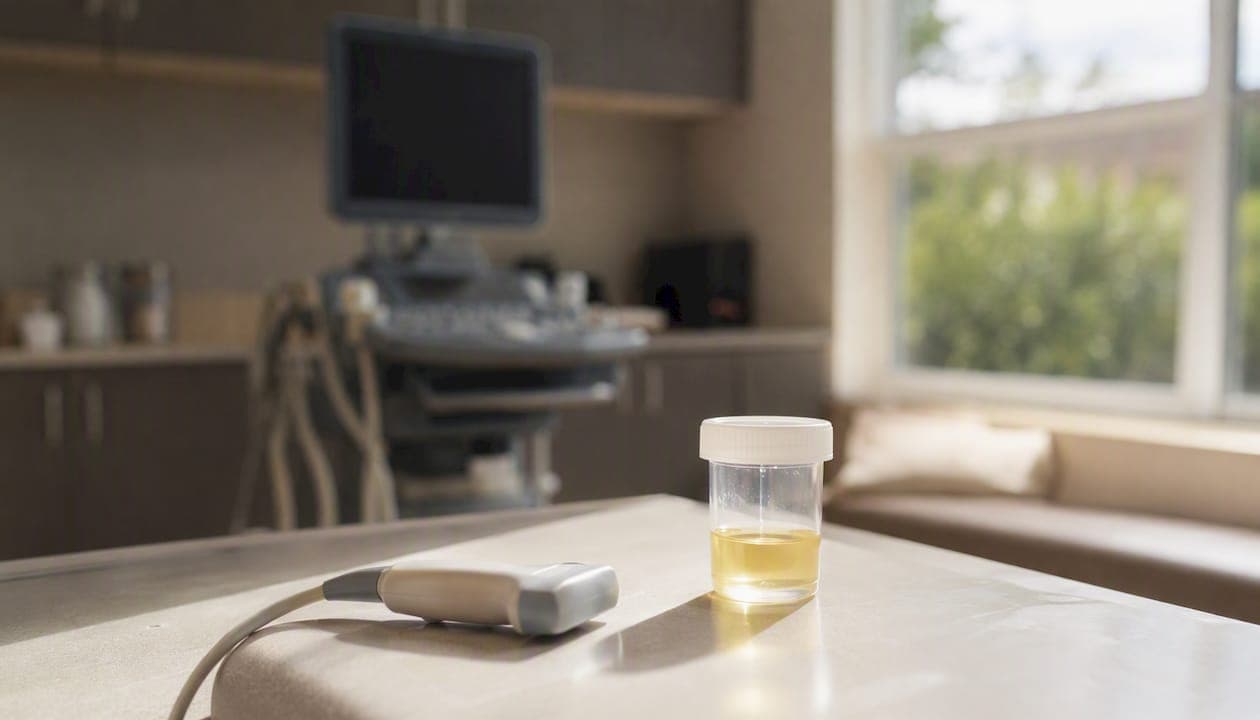
A urine culture confirms whether bacteria are actually growing in your dog's bladder and, critically, which antibiotics are likely to work. That second part, the sensitivity result, is what separates a culture from a basic urinalysis and what guides your vet toward the right treatment rather than a best guess. The International Society for Companion Animal Infectious Diseases (ISCAID) recommends culture from a cystocentesis sample as the standard for suspected bacterial cystitis. A retrospective study of 1,049 canine urine samples found only about 3.4% of samples with inactive sediment tested positive, which is why vets at City Animal Veterinary Center reserve cultures for cases where signs or sediment actually point to infection.
Three things to do right now if you suspect your dog has a urinary tract infection:
- Call your veterinarian if your dog is straining, urinating frequently, or showing blood in the urine.
- Do not give leftover antibiotics or over-the-counter remedies without veterinary direction.
- If the clinic asks for a urine sample, bring a fresh one collected as instructed, or be ready to collect one on arrival.
Key Takeaways
A urine culture is the only test that identifies the bacterial species causing your dog's infection and confirms which antibiotics will work, making it the foundation of targeted, effective treatment.
| Point | Details |
|---|---|
| Culture confirms infection | A positive culture identifies the organism and its antibiotic susceptibilities; urinalysis alone cannot do this. |
| Cystocentesis is the gold standard | ISCAID guidelines and multiple studies favor cystocentesis over voided samples for diagnostic accuracy. |
| Culture before antibiotics | Collecting urine before starting antibiotics preserves diagnostic value and prevents false-negative results. |
| Selective, not routine | Only about 3.4% of samples with inactive sediment test positive, so culture is reserved for symptomatic or complicated cases. |
| City Animal Veterinary Center | Offers Fear Free cystocentesis and house call options for sample collection in Brooklyn, NY. |
Where this guidance comes from
The recommendations in this article draw from ISCAID's 2019 guidelines for bacterial UTI diagnosis and management in dogs and cats, Cornell University College of Veterinary Medicine's canine health resources, peer-reviewed studies published in the Journal of Veterinary Internal Medicine and the Journal of the American Veterinary Medical Association, and a PubMed-indexed randomized controlled trial on free-catch collection methods. For your dog's specific case, a veterinarian who can review the full clinical picture, urinalysis, and culture report is the right person to interpret results and guide treatment.
This article is general information, not a substitute for advice from a qualified doctor. Consult a qualified healthcare professional about your own circumstances before acting on anything here.
Table of Contents
- What a urine culture is, and how it differs from a urinalysis
- How vets collect urine samples for a dog urine culture test
- How to read a urine culture report: CFU, organism ID, and susceptibility
- When your veterinarian will recommend a urine culture
- How culture results change treatment for dog urinary tract infection
- What the research says about sampling methods and point-of-care testing
- What happens at the clinic: logistics and City Animal Veterinary Center's approach
- How to prepare your dog for the urine culture test
- Post-test care and monitoring after urine culture and treatment
- How to discuss urine culture results with your veterinarian
- A clinic perspective on cultures and antibiotic stewardship
- City Animal Veterinary Center for urinary health in dogs
- Sources
What a urine culture is, and how it differs from a urinalysis
A urinalysis is a screening test. It checks urine concentration, pH, protein, glucose, and looks at the sediment under a microscope for cells, crystals, and bacteria. Fast, inexpensive, and done in-clinic, it tells your vet whether something looks wrong. A urine culture and sensitivity (C&S) goes further: it grows any bacteria present on a culture medium over several days, identifies the species, and tests which antibiotics can kill it.
The distinction matters because bacteria visible on a urinalysis sediment are not always confirmed infection, and a clean sediment does not always rule it out. Only C&S tells you the organism and its drug susceptibilities.
| Feature | Urinalysis | Urine Culture + Sensitivity |
|---|---|---|
| Purpose | Screening | Diagnostic confirmation |
| Turnaround time | Minutes to hours | 3–5 days typically |
| Detects cells, crystals | Yes | No |
| Identifies bacterial species | No | Yes |
| Antibiotic susceptibility | No | Yes (S/I/R categories) |
| Typical use | Routine wellness, initial workup | Recurrent, complicated, or treatment-failing UTI |
Cornell University College of Veterinary Medicine describes this two-step approach, screen with urinalysis and confirm with culture when indicated, as the standard for reducing unnecessary antibiotic use while still catching real infections.
How vets collect urine samples for a dog urine culture test
Collection method is not a minor detail. It directly affects whether the culture result is trustworthy.
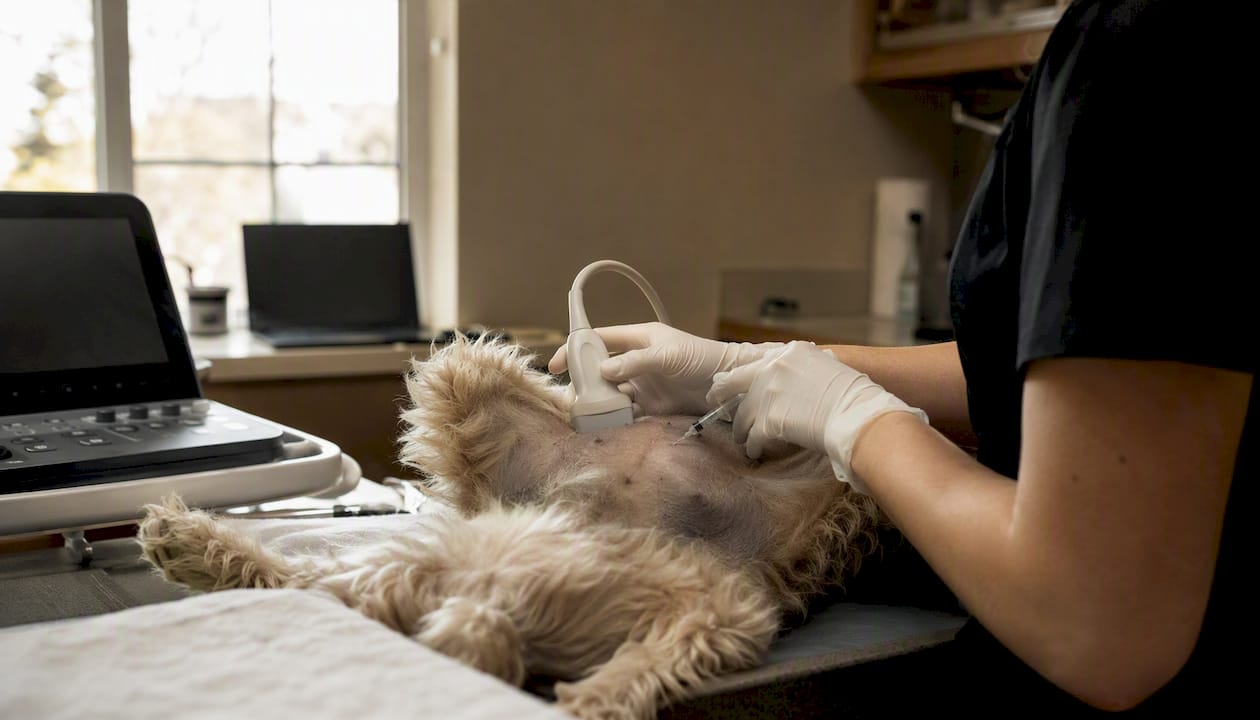
Cystocentesis uses a needle inserted through the abdominal wall into the bladder under ultrasound guidance. It is the gold standard because it bypasses the urethra entirely, eliminating contamination from skin, prepuce, or vaginal flora. ISCAID guidelines recommend it as the preferred method for diagnostic culture.
Urethral catheterization threads a sterile catheter into the bladder. It is more invasive than cystocentesis and carries some contamination risk from the urethra, but it is useful when cystocentesis is not feasible.
Free-catch (midstream voided) is the easiest for owners to collect at home but carries the highest contamination risk, particularly in female dogs. A JAVMA study found that voided samples from female dogs had only fair agreement with cystocentesis results, with sensitivity ranging roughly 64–75% depending on cutoffs.
Pros and cons at a glance:
- Cystocentesis: lowest contamination risk, no sedation needed in most dogs, preferred for culture; requires ultrasound guidance and a calm or Fear Free-handled patient.
- Catheterization: acceptable when cystocentesis is contraindicated; moderate contamination risk; may require sedation in anxious dogs.
- Free-catch: no equipment needed; highest contamination risk; a randomized controlled trial found no significant difference between prepped and unprepped free-catch for culture positivity, suggesting prep steps do not eliminate contamination risk.
If your vet asks you to collect a free-catch at home: use a clean, dry container, catch midstream urine (let the first stream hit the ground), refrigerate immediately, and deliver to the clinic within 4–6 hours. Most importantly, do not start antibiotics before collection unless your vet explicitly tells you to, because antibiotics suppress bacterial growth and can produce a false-negative result.
How to read a urine culture report: CFU, organism ID, and susceptibility
The report your vet receives will show whether bacteria grew, how much grew (reported as colony-forming units per milliliter, or CFU/mL), which organism was identified, and how it responds to a panel of antibiotics.
| Report Element | What It Means |
|---|---|
| No growth | No significant bacteria cultured; infection unlikely if sample was collected properly |
| CFU/mL (e.g., ≥10⁵) | Colony count; higher counts from voided samples are more likely to represent true infection; cystocentesis samples are interpreted at lower thresholds |
| Organism ID | The bacterial species (e.g., Escherichia coli, Proteus mirabilis) |
| MIC | Minimum inhibitory concentration; the lowest antibiotic concentration that stops growth |
| S (Susceptible) | The antibiotic is likely to work at standard doses |
| I (Intermediate) | May work at higher doses or in sites where the drug concentrates (like urine) |
| R (Resistant) | The antibiotic is unlikely to work; avoid it |
| Turnaround | Typically 3–5 business days for standard aerobic culture |
Note that collection method must be reported to the lab. A count of 10³ CFU/mL from a cystocentesis sample carries different clinical weight than the same count from a voided sample, where contamination is more likely.
Common canine uropathogens, in rough order of frequency:
- Escherichia coli is the most frequently isolated organism in canine urinary tract infections.
- Proteus mirabilis and Staphylococcus pseudintermedius are common secondary isolates.
- Enterococcus species appear frequently, particularly in dogs with recurrent infections or prior antibiotic exposure.
- Multidrug-resistant strains, including extended-spectrum beta-lactamase (ESBL)-producing E. coli, are an increasing clinical concern and make C&S results essential rather than optional.
Urinary cytology can complement culture by showing inflammation and visible bacteria, but cytology and culture do not always agree. A positive culture is not automatically synonymous with clinical infection.
When your veterinarian will recommend a urine culture
Cultures are indicated for symptomatic dogs with lower urinary tract signs and for complicated or recurrent infections. Routine culture for asymptomatic dogs is rarely appropriate.
Specific indications include:
- Recurrent or persistent lower urinary tract signs (straining, frequent urination, blood in urine, accidents indoors)
- Suspected pyelonephritis (kidney infection), which typically presents with fever, lethargy, or back pain alongside urinary signs
- Recent antibiotic exposure, which can suppress growth and make empiric therapy unreliable
- Pre-surgical evaluation when urolithiasis (bladder stones) or urinary catheterization is planned
- Immunocompromised patients (dogs on steroids, chemotherapy, or with diabetes or Cushing's disease)
- Empiric therapy that is not resolving signs within the expected timeframe
Subclinical bacteriuria vs. symptomatic infection: some dogs have bacteria in their urine without any signs of illness. ISCAID guidelines explicitly discourage treating asymptomatic bacteriuria because it does not improve outcomes and actively promotes antibiotic resistance. The presence of bacteria on a culture report does not automatically mean your dog needs antibiotics.
How culture results change treatment for dog urinary tract infection
Culture results let your vet switch from empiric antibiotics to a targeted antibiotic based on susceptibility, or stop antibiotics entirely if culture rules out infection.
The typical workflow looks like this:
- Collect urine sample before starting antibiotics whenever clinically safe to do so.
- Start empiric therapy if the dog is symptomatic and waiting 3–5 days for results is not appropriate.
- Review C&S when results arrive and adjust the antibiotic if the empiric choice does not match the susceptibility profile.
- Plan a follow-up urinalysis or culture 5–7 days after completing treatment for complicated or recurrent cases.
Pro Tip: Whenever safe, collect or have your vet collect a urine sample before starting antibiotics. If antibiotics were already started, tell your vet immediately, because it affects how the culture result is interpreted and may require repeating the test after a washout period.
For recurrent infections, a single culture is rarely the end of the workup. Vets commonly add abdominal ultrasound to look for bladder stones, structural abnormalities, or kidney involvement. Screening for diabetes mellitus or hyperadrenocorticism (Cushing's disease) is also standard, since both conditions predispose dogs to persistent infections. Anatomic abnormalities, particularly in female dogs (recessed vulva, ectopic ureters), can make infections nearly impossible to clear without addressing the underlying anatomy.
What the research says about sampling methods and point-of-care testing
Multiple studies and current guidelines favor cystocentesis for diagnostic culture when feasible. Voided samples are more likely to carry contaminants and can miss clinically important infections in some cases.
| Study / Source | Key Finding |
|---|---|
| J Vet Intern Med retrospective (n=1,049) | Only 3.4% of samples with inactive sediment had positive cultures, supporting selective rather than routine culture |
| RCT on free-catch collection (PubMed) | No significant difference between prepped and unprepped free-catch; male dogs had significantly higher odds of a positive culture |
| JAVMA CCSP validation | In-clinic culture plates showed very high specificity but somewhat lower sensitivity compared to standard aerobic culture |
| JAVMA female dog voided study | Voided samples had fair-to-moderate agreement with cystocentesis; sensitivity was moderate depending on cutoffs |
In-clinic compartmented culture and susceptibility plates (CCSPs) can rule out infection quickly in many straightforward cases, which is genuinely useful for same-day decisions. Their lower sensitivity means that in complicated, recurrent, or treatment-failing cases, standard aerobic microbiological culture from a reference lab remains the right call.
What happens at the clinic: logistics and City Animal Veterinary Center's approach
The clinic decides the collection method based on your dog's size, temperament, and clinical picture. They will collect the sample, label it with the collection method (critical for lab interpretation), refrigerate it if not processed immediately, and submit it to an external lab or process it in-house.
Before your visit:
- Withhold home antibiotics unless your vet has specifically told you to continue them.
- Bring a fresh urine sample if the clinic requested one (collected within 4–6 hours, refrigerated).
- Note any recent antibiotic use, including the drug name, dose, and when it was last given.
- Write down the signs you have observed and when they started.
At City Animal Veterinary Center, cystocentesis is performed using Fear Free handling techniques that minimize stress for the dog during the procedure. For dogs or owners who cannot easily travel to the clinic, house call appointments are available for sample collection and initial assessment. Once results arrive, the team contacts owners directly to explain findings and next steps, so you are never left decoding a lab report on your own.
How to prepare your dog for the urine culture test
Preparation depends on the collection method your vet plans to use.
For cystocentesis, your dog should ideally have a moderately full bladder. Withhold outdoor bathroom breaks for 2–3 hours before the appointment if your vet advises it, but do not restrict water. A full bladder makes the procedure easier and reduces the number of needle passes needed.
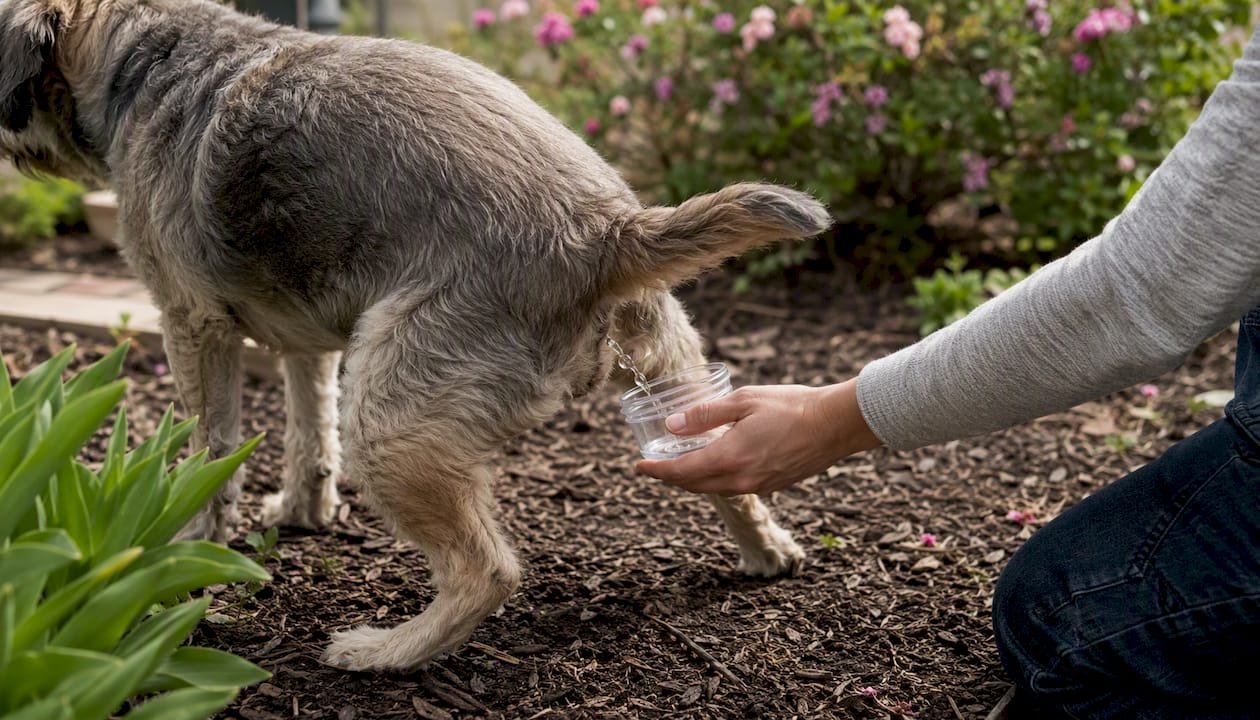
For a free-catch sample collected at home, take your dog outside with a clean, wide-mouthed container. Let the first stream hit the ground, then slide the container into the stream to catch a midstream portion. Refrigerate immediately in a sealed container and bring it to the clinic within 4–6 hours. Do not freeze it.
No fasting is required for a urine collection alone. If your dog is also having bloodwork or imaging the same day, follow your vet's specific fasting instructions for those procedures.
Post-test care and monitoring after urine culture and treatment
Once your dog starts the targeted antibiotic your vet selected based on C&S results, finish the full course even if signs resolve early. Stopping antibiotics prematurely is one of the most common reasons infections recur and resistance develops.
Watch for these signs during treatment:
- Signs should begin improving within 48–72 hours of starting the correct antibiotic.
- Persistent or worsening signs after 3–4 days warrant a call to your vet; the organism may be resistant to the chosen drug or there may be a complicating factor.
- After completing treatment, your vet may recommend a follow-up urinalysis or repeat culture 5–7 days post-treatment to confirm clearance, particularly for complicated or recurrent cases.
Long-term, dogs with recurrent urinary infections benefit from periodic urinalysis at wellness visits. Keeping a simple log of signs, dates, and treatments helps your vet spot patterns and decide when deeper diagnostics are warranted.
How to discuss urine culture results with your veterinarian
When your vet calls with results, ask four specific questions: Which organism was found? Which antibiotics does it respond to? Is the current antibiotic on the susceptible list? And when should we recheck?
If the culture shows no growth but your dog is still symptomatic, ask whether the sample was collected before antibiotics were started and whether a repeat culture is warranted. A negative culture from a voided sample does not definitively rule out infection.
If the report shows an intermediate (I) result for the antibiotic your dog is already taking, ask whether the urine concentration of that drug is high enough to be effective. Many antibiotics concentrate in urine at levels well above the MIC, which is why an "I" result in urine infections sometimes still works clinically.
Bring the written report home if you can. It is useful context if your dog has another infection months later and a different vet needs to understand the history.
A clinic perspective on cultures and antibiotic stewardship
At City Animal Veterinary Center, the decision to order a culture is deliberate, not reflexive. Urinalysis comes first. If the sediment is active and signs are clear, empiric therapy may start while culture results are pending. If sediment is inactive and signs are mild or absent, culture is often not the right next step, a position backed by the ISCAID guidelines and the low yield data from the J Vet Intern Med retrospective. The goal is to use antibiotics when they are genuinely needed, choose the right one based on susceptibility, and avoid contributing to resistance. Owners who call with urinary signs get a real conversation about what the signs suggest and whether a same-day or house-call visit makes sense. Fear Free handling means the collection itself is as calm as possible for the dog. If your dog is showing signs of a urinary infection, schedule a visit rather than waiting.
City Animal Veterinary Center for urinary health in dogs
When your dog needs a urine culture, the quality of the sample and the handling around it matter as much as the lab itself. City Animal Veterinary Center in Brooklyn offers cystocentesis with Fear Free techniques, so the procedure is as low-stress as possible for your dog. For owners who cannot bring their dog in, house call appointments are available for sample collection and initial assessment. Results come with a direct conversation, not just a lab printout, so you understand what the organism is, which antibiotic was chosen, and what follow-up looks like.
If your dog is straining, urinating frequently, or showing blood in the urine, do not wait to see if it resolves. Schedule an appointment with City Animal Veterinary Center and get a clear answer backed by the right diagnostic test.
Sources
- Urinary tract infections | Cornell University College of Veterinary Medicine
- Prevalence of positive urine culture in the presence of inactive urine sediment in 1049 urine samples from dogs
- Urinalysis and culture results of free-catch urine samples in dogs: a randomised controlled trial - PubMed
- Urinary Cytology: Potential Role in Canine Urinary Tract Infections