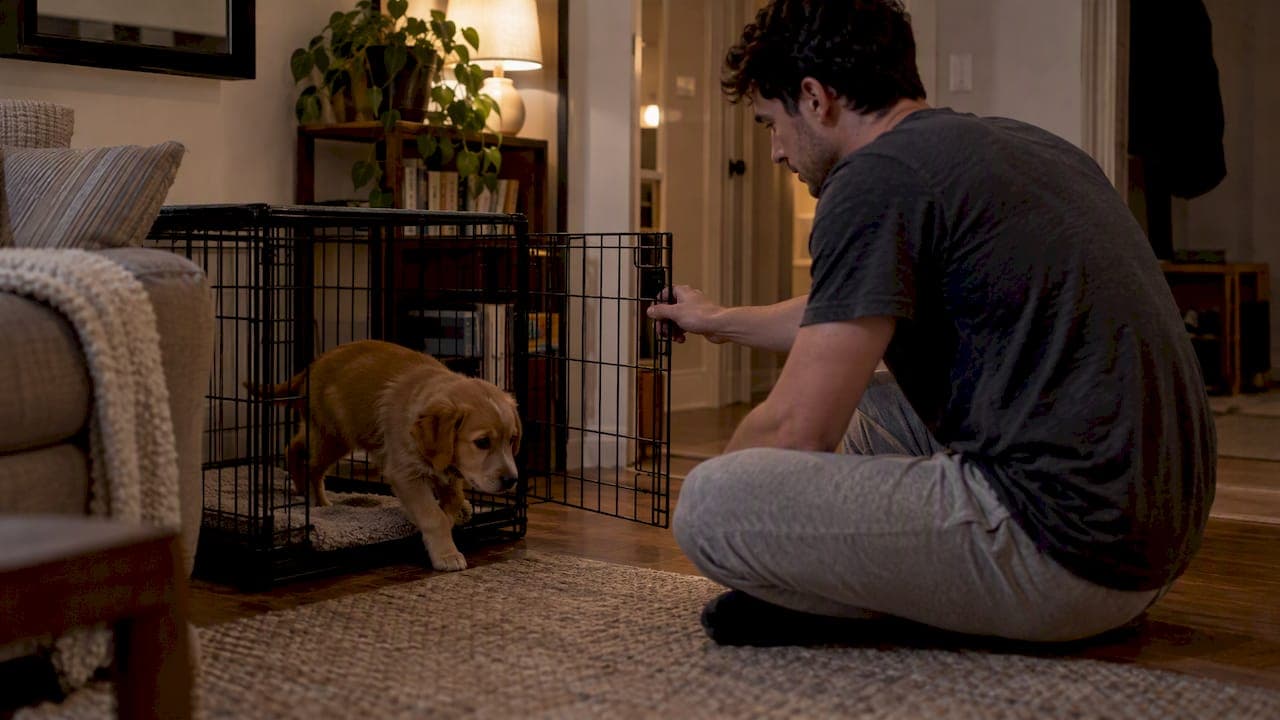
Yes, start crate training as soon as your puppy comes home, using short, reward-based sessions that build up to longer closed-door and nighttime periods. The core sequence is simple: feed meals in the crate, add brief closed-door stretches, extend time gradually, and manage nights with the crate nearby plus scheduled potty breaks. Expect some whining and at least one nighttime bathroom trip in the early weeks.
TL;DR:
- Most puppies come home around 8 weeks and need daytime potty breaks about every two hours; many sleep through nights by 16 to 20 weeks.
- Puppies attending socialization classes before 20 weeks show less fear of crates and new stimuli, so pair socialization with crate practice.
- Choose a crate with room for your puppy to stand, turn, and lie down, and use a divider to adjust its space as they grow.
- If whining starts immediately after the door closes, return to the previous training step and try again after a few more sessions.
- Frantic scratching, drooling, or escape attempts signal panic, not ordinary adjustment; stop crating and consult your veterinarian or a behavior specialist.
Table of Contents
- What crate training does for your puppy's safety and routine
- When to start and what to expect week by week
- Picking and setting up the right crate
- How to train your puppy to love the crate, step by step
- Getting through the night without losing sleep
- Why your puppy whines and how to respond
- Vet-backed tips that make crate training easier
- A clinic view on patience and setbacks
- How we support new puppy owners through crate training
- FAQ
- Sources
What crate training does for your puppy's safety and routine
Crate training teaches your puppy to see the crate as a safe, den-like space rather than a cage or a punishment. Once that association sticks, the crate becomes a tool you can lean on for years, not just during the puppy stage.
The payoff shows up in several parts of daily life:
- Keeps your puppy away from hazards like cords, cleaning supplies, or stairs when you can't watch them directly
- Speeds up potty training by limiting access to the house until bladder control improves
- Prepares your puppy for car rides, vet visits, and boarding without added stress
- Gives your puppy a quiet spot to settle and sleep without household distractions
Never use the crate as punishment. A puppy sent to the crate after misbehavior learns to fear it, which undoes the safety association you're trying to build. Watch for panic signs such as frantic scratching, drooling, or escape attempts, since those point to a bigger problem than normal adjustment.
When to start and what to expect week by week
Begin crate training the day your puppy comes home, typically around 8 weeks old. Waiting doesn't make it easier. The sooner the crate becomes part of the routine, the faster it feels normal.

Bladder control develops gradually, and a common rule of thumb is one hour of holding time per month of age, so a 2-month-old puppy generally needs a break roughly every two hours during the day. Nighttime guidance from veterinary behavior resources suggests many puppies need one or two overnight potty breaks, with most able to sleep through the night by around 16 to 20 weeks.
A few things shape how fast your puppy adjusts:
- Temperament: some puppies settle in days, others take several weeks
- Prior exposure: puppies with some crate or confinement experience often adapt faster
- Consistency: skipping sessions or rushing the timeline slows progress more than starting slow ever would
Socialization also plays a role. Puppies who attend socialization classes before 20 weeks show less fear toward crates and new stimuli than puppies without that exposure, so pairing crate work with broader socialization tends to pay off faster.
Picking and setting up the right crate
Size matters more than style. Your puppy needs just enough room to stand up, turn around, and lie down comfortably, not a space large enough to wander. A crate with a divider panel lets you shrink the space for a small puppy and expand it as they grow, so you're not buying a new crate every few months.
Wire crates offer better airflow and visibility, which some puppies find reassuring, while plastic crates feel more enclosed and den-like, which can calm anxious pups. Soft-sided crates work for travel but aren't sturdy enough for a puppy still learning not to chew or scratch at the walls.
Setup basics:
- Remove collars and tags before crating to prevent snagging
- Use chew-resistant bedding until you know your puppy won't shred it
- Place the crate in a family space or bedroom at first, not an isolated room
Pro Tip: Keep the crate door open during the day for the first week so your puppy can wander in and out on their own terms.
How to train your puppy to love the crate, step by step
Progression matters more than speed here. Rushing any step is the most common reason puppies start resisting the crate.
- Introduce the crate with the door open. Scatter treats and a favorite toy inside, and let your puppy explore at their own pace. Keep your voice calm and avoid forcing entry.
- Feed meals inside the crate. Start with the bowl near the entrance, then move it deeper over several sessions so your puppy walks fully inside without hesitation. Feeding meals in the crate builds a strong positive association while giving the day a predictable rhythm.
- Close the door for short periods. Begin with a few seconds while you stay in the room, then stretch to a few minutes. Reward quiet, relaxed behavior, not excitement at the door opening.
- Step away gradually. Once your puppy tolerates a closed door with you nearby, start leaving the room for brief stretches, then build up to short absences from the house.
- Mix up the timing. Crate your puppy at random points during the day, not only when you're leaving, so the crate doesn't become a signal that you're about to disappear.
- End on calm behavior. Open the door only when your puppy is settled, not mid-whine or mid-bark, so you're not rewarding noise.
Pro Tip: If whining starts within moments of closing the door, you've moved too fast. Back up to the previous step and hold there for a few more sessions before trying again.
A frozen, food-stuffed chew toy can occupy your puppy during longer sessions and reduce vocalizing out of boredom.
Getting through the night without losing sleep
Keep the crate in your bedroom or just outside it for the first few weeks. Proximity reduces separation-related crying and lets you hear genuine bathroom signals instead of guessing through a closed door.
Set an alarm for preemptive potty breaks based on your puppy's age rather than waiting for crying to start. Using the hour-per-month guideline, a young puppy may need a break every few hours overnight, with that interval stretching as bladder control improves.
Most puppies can manage a full night without a bathroom break by around 16 to 20 weeks, though individual puppies vary.
A few habits make nights smoother:
- Take your puppy out right before bed, even if they already went earlier
- Keep nighttime trips low-key: no play, no extended praise, straight out and back
- Learn the difference between a short, insistent bathroom whine and prolonged, escalating distress crying
- Check calmly if crying continues, then return your puppy to the crate once they've settled
Limiting water an hour before bed can help some puppies, but talk to your veterinarian first, especially for very young or small-breed puppies who dehydrate faster.
Why your puppy whines and how to respond
Whining and barking in the crate usually trace back to one of a few causes: a full bladder, separation distress, boredom, or a bad early association with the crate itself. Figuring out which one you're dealing with changes your next move.
- A puppy who just finished a nap and starts pacing before whining likely needs a bathroom break
- A puppy who whines the moment you leave the room, even after a walk and a meal, may be showing early separation distress
- A puppy who settles the second you hand over a chew toy was probably just bored
Immediate fixes include more exercise before crate time, a durable food-stuffed chew to redirect energy, and slower desensitization if the whining points to anxiety rather than a physical need.
Pro Tip: Never let your puppy out mid-tantrum. Wait for a pause, even a short one, before opening the door, or you'll teach them that louder crying works faster.
If whining escalates into frantic scratching, drooling, or attempts to chew through the crate, stop using it as the main confinement tool. Switch to a larger, puppy-proofed room and talk to your veterinarian or a behavior specialist about separation anxiety, since severe panic needs a different approach than standard crate training.
Vet-backed tips that make crate training easier
Our approach shapes how we talk to puppy owners about crate training, because the same principles that reduce stress at the clinic apply at home. We encourage pairing crate work with broader socialization, since early positive exposure to new sounds, surfaces, and situations tends to make puppies less reactive overall.
A few habits we recommend:
- Start socialization and crate training together rather than treating them as separate projects
- Keep early sessions short and calm instead of pushing for long stretches right away
- Lean on positive reinforcement: treats, calm praise, and toys, never scolding
Our puppy socialization checklist walks through a week-by-week plan that pairs well with the crate schedule above, and our PumpkinPups training program offers hands-on support if you want a trainer involved early.
A clinic view on patience and setbacks
Crate training rarely goes in a straight line, and a rough night doesn't mean you're doing it wrong. Puppies regress, owners get tired, and that's normal. What matters most is staying consistent and calm, and reaching out for help from your veterinarian or a trainer the moment progress stalls instead of waiting it out.
— CAVC
How we support new puppy owners through crate training
We know the early weeks with a new puppy are exhausting, and crate training doesn't have to be something you figure out alone. Our team offers puppy and kitten wellness visits where we can talk through your specific crate-training questions alongside vaccines and general care.
For owners who want structured, professional training support, our PumpkinPups program builds on the same positive-reinforcement foundation covered here. If your puppy struggles with separation distress or general anxiety, our behavior consultations dig into the specific triggers, and our home visit service brings Fear Free support directly to your puppy's own environment, which can make a real difference for pups who find clinic visits stressful. Book a wellness exam or a PumpkinPups session to get started.
FAQ
How long are you supposed to crate train a puppy?
Most puppies need active crate training for several weeks to a few months, with bladder control and comfort improving steadily as they age. Many puppies can comfortably hold it through the night by around 16 to 20 weeks, though the crate itself often stays part of the routine well beyond that.
Should I put food and water in the crate?
Feeding meals inside the crate is a recommended way to build a positive association with the space, but water is usually offered outside scheduled crate time to avoid overnight accidents. Ask your veterinarian before limiting water close to bedtime, especially for young or small puppies.
How do I stop my puppy from crying in the crate?
First, rule out a physical need like a full bladder, then address boredom with a food-stuffed chew toy or slow down your training pace if the crying points to separation distress. Gradual, low-pressure introduction and avoiding punishment are the most effective long-term fixes.
What size crate is right for a puppy?
Choose a crate that gives your puppy just enough room to stand, turn around, and lie down, not extra space to wander or use one corner as a bathroom. A crate with a removable divider panel lets you adjust the size as your puppy grows instead of buying multiple crates.
Sources
- Puppy socialization practices (JAVMA)
- How to crate-train your dog in 9 easy steps (AKC)
- Crate training a puppy (PetMD)