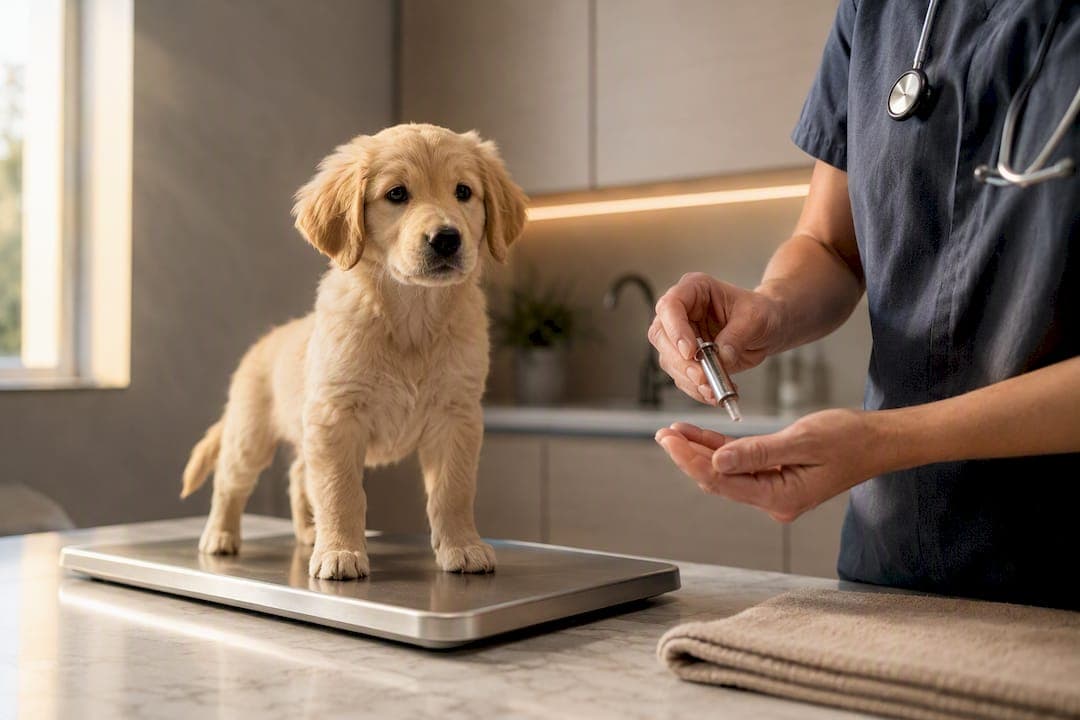
Start deworming at 2 weeks old, then repeat every two weeks through about 8 weeks of age. After that, switch to monthly parasite prevention with your veterinarian's guidance. This early rhythm follows CAPC and CDC recommendations because puppies are almost always born with or nurse their way into parasite exposure. Bring a fresh stool sample to your first visit and let your vet at City Animal Veterinary Center confirm the right product and dose for your puppy's weight.
TL;DR:
- Puppies are usually infected with parasites at birth or through nursing, requiring treatment every two weeks from age 2 to 8 weeks to catch maturing larvae.
- Accurate weight measurement before each dose is critical, and the correct medication depends on the specific parasite, with pyrantel pamoate being the common first-line treatment.
- Negative fecal tests in early weeks should not be relied on to skip doses, as larvae may not yet produce detectable eggs, making ongoing treatment essential.
- Deworming the mother and maintaining strict hygiene practices significantly reduce the risk of zoonotic transmission and environmental contamination.
- Transition to monthly parasite prevention around 8 to 16 weeks, combined with fecal exams, ensures continuous and effective parasite control for the puppy.
Table of Contents
- Why Puppies Need Frequent Early Deworming
- Age-Based Deworming Timeline
- Common Deworming Medications and What They Cover
- Fecal Testing: Timing, Limits, and How It Fits the Plan
- Monitoring, Side Effects, and When to Call Your Vet
- Special Situations: Nursing Mothers, Shelters, and Catch-Up Plans
- A Clinic Checklist for Your First Deworming Visit
- Where This Guidance Comes From
- Our Take on Getting This Right
- Let City Animal Veterinary Center Handle the Guesswork
- Sources
- FAQ
Why Puppies Need Frequent Early Deworming
Nearly every puppy arrives with parasites already on board, and it usually isn't from anything the owner did wrong. Roundworm larvae can migrate through a mother dog's tissue and activate during pregnancy, crossing the placenta before birth. Hookworms and roundworms also pass through nursing, meaning a puppy can pick up an infection from milk in the first days of life, long before it ever touches contaminated ground.
That's the biological reason a single dose never gets the job done. Most dewormers only kill adult worms living in the intestine at the moment of treatment. Larvae that haven't matured yet survive the first dose, then grow into egg-laying adults roughly two weeks later. Repeating treatment every two weeks catches each new wave of larvae as it matures, which is why veterinary guidelines call for dosing at 2, 4, 6, and 8 weeks rather than once and done.
There's a public health angle here too. Roundworms in puppies carry zoonotic risk. The CDC's guidance on toxocariasis flags them as a genuine concern for children and immunocompromised adults, since eggs shed in feces can survive in soil for months and cause illness if accidentally ingested. Simple habits cut that risk dramatically:
- Pick up feces promptly, every time, especially in yards where kids play.
- Wash your hands after handling puppy waste or bedding.
- Keep sandboxes and play areas covered when not in use.
- Wash toys and food bowls regularly during the early deworming series.
Roundworm eggs are shockingly durable in soil, which is a big part of why hygiene matters as much as the medication schedule itself.
Age-Based Deworming Timeline
A clear timeline removes the guesswork. Here's the sequence most vets follow, backed by Pets & Parasites guidance from the Companion Animal Parasite Council:
- 2 weeks old: First dose, typically pyrantel pamoate. Puppies this young are almost always dosed by weight under a breeder's or shelter's supervision.
- 4 weeks old: Second dose. This catches larvae that survived the first round and matured into egg-producing adults.
- 6 weeks old: Third dose, same logic. Consistency here matters more than which product is used, as long as it's vet-approved.
- 8 weeks old: Fourth dose, plus the first fecal exam. Many vets also discuss starting a monthly broad-spectrum preventive somewhere in the 8 to 16 week window, depending on the puppy's weight and the product's label requirements.
- 12 to 16 weeks and beyond: Transition fully to a monthly preventive. Most of these combine intestinal parasite control with heartworm prevention, so the puppy gets ongoing coverage instead of periodic dosing.
If you've adopted an older puppy with an unknown deworming history, don't try to catch up by guessing. A fecal test plus a vet visit will tell you what's actually present, and your veterinarian can direct a dosing plan from there. Giving repeated over-the-counter doses without knowing what you're treating wastes money and can mask a problem that needs a different drug entirely, such as a Giardia infection that a standard roundworm dewormer won't touch.
Common Deworming Medications and What They Cover
Not every dewormer treats every parasite, which is where a lot of owners get tripped up buying something off a store shelf. Here's what the three most common medications actually do:
- Pyrantel pamoate: The workhorse for the early series. It's reliable against roundworms and hookworms, safe from around 2 weeks of age when dosed correctly by weight, and it's the product shelters and breeders commonly reach for first because of that safety margin.
- Fenbendazole (often sold as Panacur) and combination products: These cover a broader range, including some Giardia protocols, but they're typically prescription strength and dosed over multiple consecutive days rather than a single treatment.
- Praziquantel: The go-to for tapeworms, usually added to a treatment plan once tapeworm segments are actually spotted or confirmed, since it doesn't touch roundworms or hookworms on its own.
The Merck Veterinary Manual notes that dosing accuracy depends heavily on getting the puppy's current weight right, not an estimate from last month. Weigh your puppy before every dose, use whatever measuring device came with the product rather than eyeballing it, and write the date and dose down somewhere you'll actually check later. It sounds tedious, but a missed or doubled dose is one of the more common preventable mistakes new owners make.
Experts generally steer owners toward vet-directed programs rather than DIY store-bought routines, mainly because prescription-strength options cover more ground and get paired with monitoring that an over-the-counter box can't offer.
Fecal Testing: Timing, Limits, and How It Fits the Plan
A stool sample won't always catch what's actually there, and that trips up a lot of first-time owners who expect a clean negative result to mean a clean puppy. Pets & Parasites recommends a fecal exam around 8 weeks of age, then two to four more checks across the first year as the puppy grows and gets exposed to new environments.
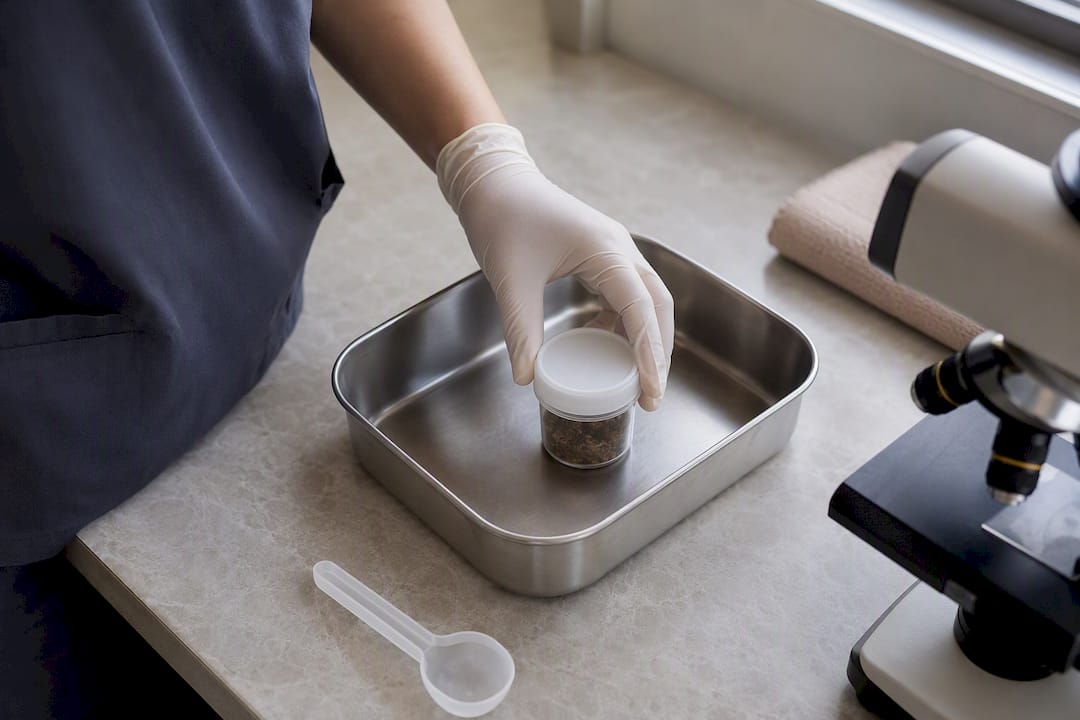
The catch: very young puppies can test negative even when they're infected. Worm larvae need time to mature into egg-laying adults, and a fecal test only detects eggs. If the sample is collected before that maturation happens, the test can come back clean despite an active infection. That's exactly why the every-two-week dosing schedule continues regardless of fecal results in the first few months. The deworming isn't waiting on confirmation. It's running on a preventive timeline that assumes exposure happened.
A few practical notes on the sample itself:
- Collect a fresh stool sample, ideally less than 12 hours old, in a clean container or bag.
- Keep it refrigerated (not frozen) if you can't drop it off the same day.
- Bring it to every early wellness visit, even if your puppy seems perfectly fine. Our fecal test guide walks through what to expect during the actual exam.
Don't skip the dose just because a fecal test came back negative in a puppy under 3 months old. That negative result often just means the timing was off, not that the parasite is gone.
Monitoring, Side Effects, and When to Call Your Vet
Most puppies handle deworming without any drama, but it helps to know what's normal and what isn't. A little softer stool or one bout of mild vomiting within the first day after dosing is common and usually resolves on its own within 24 hours.
What should send you straight to the phone: bloody stool, pale or white gums, severe lethargy that doesn't improve, or a puppy that flatly refuses to eat for more than a few hours. Those signs point to something beyond a normal medication reaction and deserve a same-day call, not a wait-and-see approach.
A simple routine keeps you ahead of problems:
- Weigh your puppy right before each dose, not from memory.
- Mark the date on a calendar or app the moment you give a dose.
- Keep a written log of what product was used and at what dose.
- Bring stool samples to every scheduled appointment, even routine ones.
Pro Tip: Keep a small notebook or phone note with every dose, date, and product name from week 2 onward. When you show up for the 8-week fecal exam with a complete history in hand, your vet can spot patterns (like a dewormer that isn't working as expected) far faster than starting from scratch.
Special Situations: Nursing Mothers, Shelters, and Catch-Up Plans
Treating the nursing mother is one of the highest-leverage moves in the whole process. Because larvae can pass through milk, deworming the dam alongside her litter cuts down the reinfection loop that otherwise keeps cycling parasites back into the puppies even after they're treated.

Shelters and breeders typically run the standard 2/4/6/8 week series before puppies ever go home, but the paperwork doesn't always travel with the puppy. Ask directly what was given and when. If nobody can confirm a clear history, treat it as unknown and start fresh under vet guidance rather than assuming the timeline is complete.
For puppies adopted later with no documented history, your vet may space treatments differently than the standard two-week rhythm, sometimes extending intervals while running fecal exams to guide decisions rather than dosing blind. This is one of the few spots in puppy care where more frequent unsupervised treatment isn't automatically the safer choice.
A Clinic Checklist for Your First Deworming Visit
Walking into that first appointment prepared makes the whole visit faster and less stressful, for you and for a wiggly puppy who's never been handled by a stranger before. Bring your puppy's current weight if you know it, any dosing history from the breeder or shelter, and a fresh stool sample collected that morning. Write down your questions ahead of time. It's easy to forget them once you're in the exam room.
Some veterinary practices fold deworming directly into puppy wellness and vaccine visits, so separate appointments may not be necessary for every piece of early care. For households where getting a wiggly, anxious puppy into a carrier feels like its own ordeal, some veterinarians offer home visit options to provide wellness and deworming care at home. Combined with stress-minimizing approaches to handling, the goal is straightforward: fewer stressful trips, and a puppy who doesn't dread the vet by the time it's old enough to remember.
Where This Guidance Comes From
The recommendations above track directly with the organizations that set the standard for parasite control in the United States. For readers who want to go straight to the source:
- CAPC General Guidelines: staged deworming schedules and species-specific parasite guidance.
- CDC Toxocariasis page: zoonotic roundworm risk and prevention basics.
- Merck Veterinary Manual, Roundworms in Small Animals: drug mechanisms and parasite life cycles.
- Pets & Parasites, Roundworms: dosing timeline and fecal testing frequency.
Our Take on Getting This Right
The schedule itself isn't the hard part. Two weeks, four weeks, six weeks, eight weeks, then monthly. Anyone can write that on a calendar. Where owners actually go wrong is treating a negative fecal test as permission to relax, or assuming one dose from the breeder covers everything going forward.
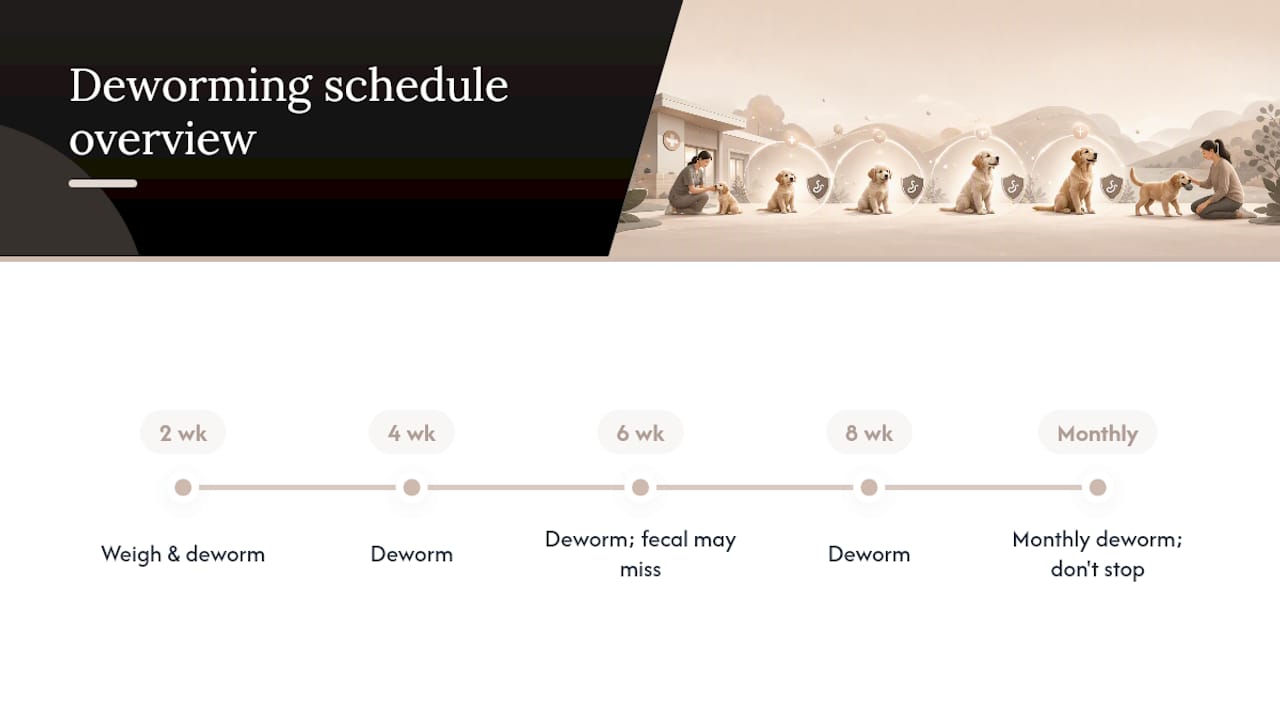
It doesn't. A negative result in a 6-week-old puppy often just means the larvae hadn't matured enough to show up yet, not that the puppy is clear. The conventional advice tends to overemphasize the testing and underemphasize the fact that dosing continues on schedule regardless of what that test says in the early months.
If we had to pick one thing for a new owner to prioritize, it's this: don't wing the medication choice. Pyrantel, fenbendazole, and praziquantel aren't interchangeable, and giving the wrong one because it was cheap or available doesn't protect your puppy from what's actually there. Get your puppy weighed accurately, get a professional recommendation, and treat the fecal exam as a tool for refining the plan, not a green light to skip a dose.
— CAVC
Let City Animal Veterinary Center Handle the Guesswork
Following a puppy deworming calendar correctly means weight-accurate dosing, the right product for what's actually present, and fecal testing timed to catch what a single exam might miss. That's a lot to manage alone, especially with a puppy who'd rather chew your shoe than sit still on a scale. City Animal Veterinary Center builds deworming directly into puppy wellness exams, so weight checks, dosing, and fecal collection happen together instead of across scattered appointments.

For owners who find transporting an anxious puppy stressful, the practice's home visit services bring the same wellness and deworming care to your living room, paired with a Fear Free approach designed to keep first vet experiences calm rather than traumatic. Puppy visits also cover vaccinations on the same early timeline, so you're not juggling separate schedules for shots and dewormer. Book a puppy wellness exam or request a home visit through City Animal Veterinary Center to get your puppy's deworming plan started on the right week, not a guessed one.
This article is general information, not a substitute for advice from a qualified doctor. Consult a qualified healthcare professional about your own circumstances before acting on anything here.
Sources
- Puppy Dewormer: Schedule, Signs & Best Picks — WebVet
- Deworming Puppies: What To Expect, Symptoms, and Schedule — Chewy Education
- Roundworms — Pets & Parasites
- Toxocariasis — CDC
FAQ
What happens if you don't deworm puppies?
Untreated parasites can cause malnutrition, anemia, diarrhea, and stunted growth in puppies, and severe infestations in very young or small puppies can become life-threatening. Roundworms also carry zoonotic risk to household members, particularly children, per CDC guidance on toxocariasis.
What is the 10-10-10 rule for puppies?
This isn't a standard veterinary term recognized by CAPC or AAHA guidelines, and it doesn't correspond to any deworming protocol covered here. The dosing rhythm that actually matters is the 2, 4, 6, and 8 week series followed by monthly prevention.
How do I deworm a puppy at home?
Home dosing should still follow your veterinarian's product choice and weight-based dosing instructions. Weigh your puppy immediately before each dose, use the measuring device included with the product, and confirm the schedule with your vet, especially before switching between pyrantel, fenbendazole, or praziquantel.
Is it okay to deworm a puppy every week?
No. The standard, vet-backed rhythm is every two weeks through about 8 weeks of age, timed to intercept larvae as they mature into egg-laying adults. Dosing more frequently than directed doesn't add protection and can increase the risk of side effects.
When should a puppy get its first fecal test?
Most vets recommend the first fecal exam around 8 weeks old, with two to four additional checks through the first year, following Pets & Parasites guidance. A negative result in a very young puppy doesn't rule out infection, since larvae may not yet be mature enough to produce detectable eggs.