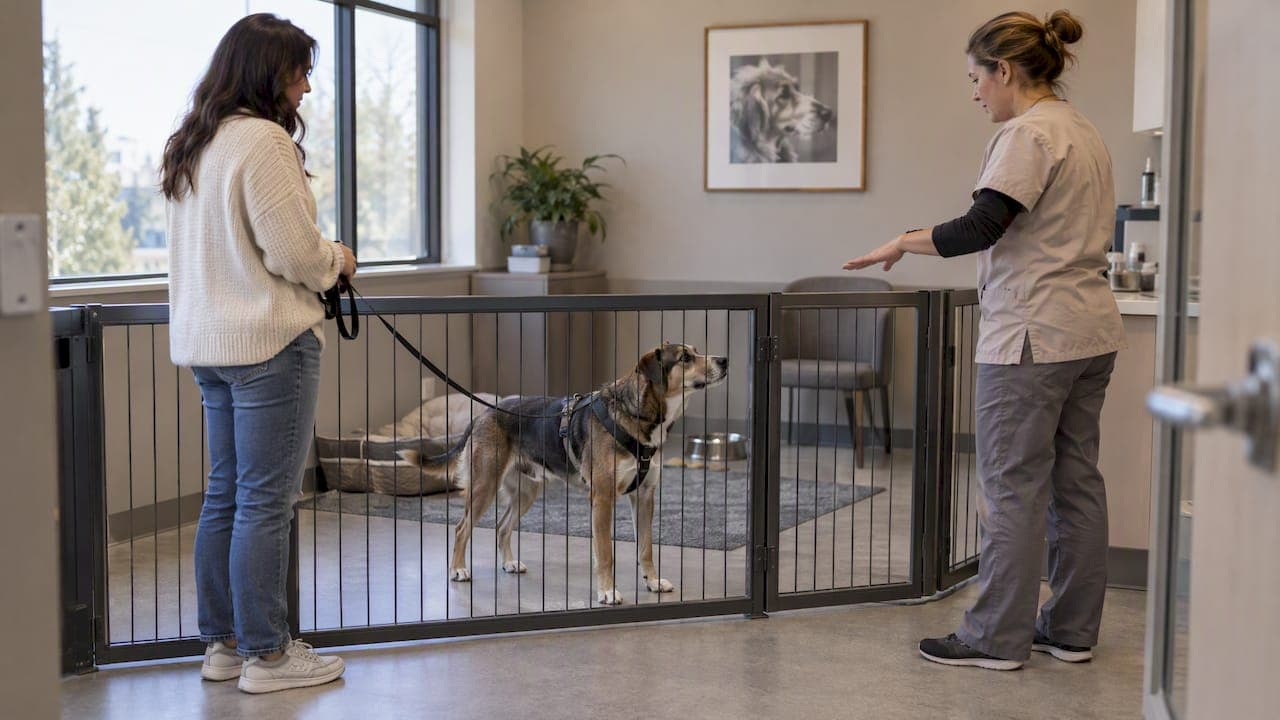
If your dog shows aggression, prioritize safety, avoid punishment, get a veterinary exam to rule out medical causes, and start a management and reward-based behavior plan with professional guidance. This combination, backing away from a trigger, protecting people and other animals, and treating the medical and emotional roots of the behavior, gives you the clearest path to a calmer, safer dog.
TL;DR:
- Physical safety measures, such as creating distance and using proper restraints, are crucial to prevent escalation while developing a long-term plan.
- Addressing medical issues through veterinarian exams is essential, as pain or illness often underlie aggressive behavior and influence treatment strategies.
- Behavior modification relies on desensitization, counterconditioning, and management techniques, all supported by reward-based methods and professional guidance.
- Medication, when prescribed and monitored by a veterinarian, can support behavior change by reducing anxiety and facilitating learning.
- Progress typically occurs over months, and careful tracking of incidents helps adapt safety measures and strategies early to prevent setbacks.
Table of Contents
- Immediate safety and short-term management steps you can take today
- What causes aggression and the warning signs to watch for
- When and how professionals help with a vet exam and behaviorist assessment
- Behavior-modification methods you'll use with professional guidance
- The role of medication and medical investigation in aggression cases
- Timeline and realistic expectations for progress and setbacks
- Steps for safely monitoring progress and setbacks during treatment
- Our approach to dog aggression cases
- How City Animal Veterinary Center can help you get started
- Sources
- FAQ
Immediate safety and short-term management steps you can take today
Before you think about training, think about preventing the next incident. Aggression that gets rehearsed, even once, tends to get worse, so your first job is making sure your dog has no opportunity to bite, lunge, or escalate while you figure out a longer plan.
- Create physical distance from triggers using baby gates, closed doors, or a second leash indoors.
- Secure high-value items like food bowls, bones, and toys that prompt guarding.
- Walk on a sturdy leash and harness in low-traffic areas until you have a plan.
- Introduce a basket muzzle gradually and positively if your dog may bite, never as a punishment.
- Keep children and visitors separated from the dog until a professional has assessed the situation.
A basket muzzle, fitted correctly, lets a dog pant, drink, and take treats while protecting everyone around it. Never use shock collars, prong collars, or physical corrections to suppress aggression. The Merck Veterinary Manual notes that physical punishment, including prong and shock collars, almost always worsens aggressive behavior.
Pro Tip: Film every incident on your phone, including what happened right before the growl or snap. That footage is often the single most useful piece of information you bring to a vet or behaviorist.
What causes aggression and the warning signs to watch for
Aggression is a symptom, not a personality trait. According to the Merck Veterinary Manual, fear is the most common underlying cause of aggression in dogs, though several other drivers often overlap.
- Fear or anxiety: the dog feels trapped or threatened and has no safe way to retreat.
- Resource guarding: food, toys, resting spots, or even a person trigger defensive behavior.
- Territoriality: the dog reacts to perceived intruders near the home or yard.
- Pain or an underlying medical condition: discomfort lowers a dog's tolerance for handling or proximity.
- Poor or limited socialization: the dog never learned that unfamiliar people, animals, or situations are safe.
Watch for early body language before a growl or bite ever happens: freezing, a quick lip lift, "whale eye" (showing the whites of the eyes), stiffening posture, or turning away repeatedly. These are warning signs, not disobedience. A growl is useful information, a dog telling you it is uncomfortable, and punishing it only removes the warning while leaving the underlying fear intact.
When and how professionals help with a vet exam and behaviorist assessment
A thorough veterinary exam comes first, because pain and medical conditions frequently contribute to aggression that looks purely behavioral. The Merck Veterinary Manual points out that a meaningful share of dogs referred for behavior problems have an underlying medical or pain-related contributor that changes both diagnosis and treatment.
- Your veterinarian examines the dog, checks for pain or illness, and coordinates medication if it's indicated.
- A board-certified veterinary behaviorist or a qualified behavior consultant builds a plan from history, video footage, and structured questionnaires rather than a single office visit.
- Assessments typically produce a written safety plan, specific management changes for the home, and a stepwise, individualized behavior-modification program.
Video and questionnaires matter more than owners expect. The Merck Veterinary Manual notes that recorded footage reveals context and behavior sequences that owners often miss or underreport, which speeds an accurate diagnosis and a safer plan.
Behavior-modification methods you'll use with professional guidance
Once medical causes are addressed, the real work is teaching your dog new associations and new choices. These are the methods a qualified trainer or behaviorist will typically build a plan around.
- Desensitization and counterconditioning: expose your dog to the trigger at a low intensity, below the point where it reacts, and pair that exposure with high-value rewards so the trigger starts to predict something good instead of something threatening.
- BAT (behavior adjustment training) and response substitution: teach the dog an alternative, safe behavior (like moving away or sitting) and give it more control over distance from a trigger, which reduces the need to escalate.
- Management and skill-building cues: teach "look at me," "go to mat," or a reliable recall so your dog has an off-ramp before arousal builds, which keeps the aggressive response from ever being rehearsed.
The AVSAB position statement on humane dog training recommends reward-based methods as offering the most benefit with the least harm, and advises against aversive techniques for treating aggression. Shock, prong, and choke-based corrections are consistently discouraged because they can suppress a warning signal without resolving the underlying fear or frustration driving it.
Pro Tip: Practice these techniques in short, calm sessions. Five focused minutes with clear rewards beats a long session that pushes your dog past its threshold.
The role of medication and medical investigation in aggression cases
Medication is never a stand-alone fix, but it can make behavior therapy work faster and more reliably. According to AVMA coverage of canine anxiety treatment, veterinary behaviorists often view aggression as an anxiety disorder at its core, and medication can help remodel the neural responses that keep a dog stuck in a fearful or reactive state.
- SSRIs, tricyclic antidepressants, dexmedetomidine, and imepitoin are among the drug classes a veterinarian may consider.
- These medications work by reducing anxiety, which gives the dog more capacity to learn new, calmer responses during training.
- Medication must be prescribed and monitored by a veterinarian. It supports a behavior plan, it doesn't replace one.
- A full medical workup to rule out pain or illness always comes before or alongside any medication decision.
Timeline and realistic expectations for progress and setbacks
Progress in aggression cases is usually measured in months, not days. The Merck Veterinary Manual describes long-term success as resting on preventing rehearsal of the aggressive response while gradually building new behaviors and lowering arousal, a process that takes sustained, supervised work.
Track progress by watching for fewer triggers setting your dog off, lower intensity when something does happen, and more predictable behavior overall. Early intervention improves the outlook, since every "successful" aggressive incident tends to reinforce the behavior. Keep every safety measure in place until your veterinarian or behaviorist tells you otherwise.

Steps for safely monitoring progress and setbacks during treatment
Treatment isn't linear, so you need a simple system for tracking what's actually happening, not just how you feel about a given week.
Keep a running log with the date, the trigger, your dog's body language, and what you did in response. Note the context every time: time of day, location, who else was present, and your dog's energy level beforehand. Patterns that seem random in the moment often show up clearly once you compare several weeks of entries.
Rate each incident on a simple scale, mild, moderate, severe, rather than treating every reaction as equal. A dog that stiffens and looks away is in a very different place than one that lunges and snaps, even if both get logged as "reacted."
Share this log with your veterinarian or behaviorist at every check-in instead of waiting for a dramatic setback. Small increases in reactivity are much easier to address early than after weeks of silence.
Watch for a specific pattern: setbacks that cluster around one particular trigger, time of day, or health change often point to something fixable, whether that's a management gap, a new pain source, or a step in the plan that moved too fast. Treat a setback as information, not failure, and loop your professional team in so the plan can adjust.

Our approach to dog aggression cases
We treat aggression as a medical and behavioral issue from the first conversation. Our Fear Free approach, thorough exams, and request for video footage help us build an accurate picture fast. We offer behavior management consultations and home visits for dogs that struggle to travel. Bring your incident log and any videos to your first visit.
— CAVC
How City Animal Veterinary Center can help you get started
Living with an aggressive dog is exhausting, and figuring out where to start shouldn't add to the load. At City Animal Veterinary Center, we start with a thorough medical check to rule out pain or illness, then build a management and behavior plan around your dog's specific triggers, not a generic template.
- Veterinary exam: a full medical workup to catch pain or illness contributing to the behavior.
- Behavior management consultation: a plan built from your dog's history, triggers, and video footage.
- Home visits: for dogs too stressed or reactive to travel comfortably to a clinic.
- Coordinated follow-up: medical and behavioral care tracked together as your dog progresses.
| What to bring | Why it helps |
|---|---|
| Video of recent incidents | Shows context and body language your vet can't see in the room |
| Written incident log | Reveals patterns across triggers, time, and location |
| List of current medications or supplements | Rules out interactions and guides next steps |
If your dog could benefit from a home visit or an in-depth behavior consultation, you can book an appointment with City Animal Veterinary Center to get started.
Sources
For deeper reading, see the Merck Veterinary Manual, AVSAB's position statements, and ASPCA guidance on canine aggression. For supplement-related background, PetGev's science resources cover adjunctive support options.
- Behavior Problems of Dogs - Merck Veterinary Manual
- AVSAB position statement on humane dog training
- Treating anxiety to prevent canine aggression - AVMA coverage
FAQ
What can I give my dog to stop aggression?
There's no over-the-counter product that reliably stops aggression, and giving a dog anything without a veterinary exam first can mask a medical cause. A veterinarian may prescribe medications such as SSRIs or other anxiety-reducing drugs as part of a broader behavior plan, never as a stand-alone fix.
What is the 7-7-7 rule for dogs?
Definitions vary online, and there's no single veterinary or behaviorist consensus version of this rule tied to treating aggression. If you've seen it referenced for puppy socialization, treat it as informal guidance rather than an established clinical standard.
Can aggression be trained out of a dog?
Aggression can often be significantly reduced and managed through consistent, reward-based behavior modification combined with medical care, though it isn't something you eliminate overnight. The Merck Veterinary Manual describes realistic progress as gradual, built on preventing rehearsal of the behavior while reinforcing calmer alternatives over months of supervised work.
What is the most common cause of aggression in dogs?
Fear is considered the most common underlying cause of aggression in dogs, according to the Merck Veterinary Manual. Resource guarding, territoriality, pain, and poor socialization are also frequent contributors, often layered on top of an underlying fear response.