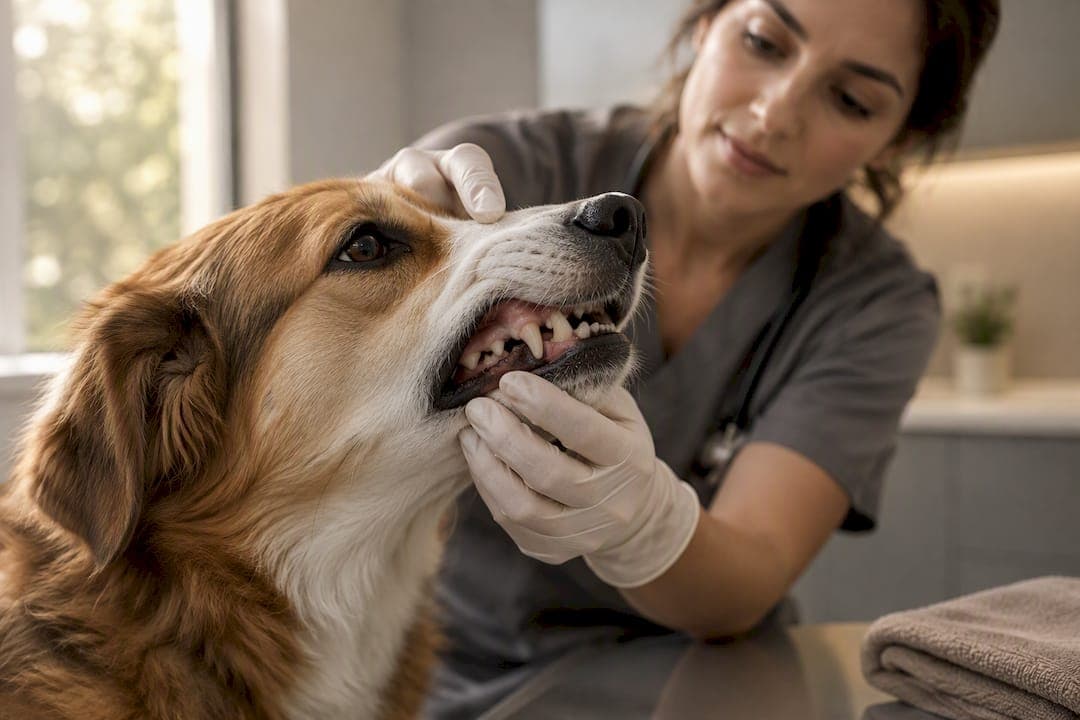
Most dog bad breath comes from dental disease, not diet or "doggy funk" you just have to live with. If the smell is mild and has been building for weeks, start a home dental routine, and book a dental check. If it appeared suddenly or smells like ammonia, fruit, or rot, call your veterinarian promptly, since that can point to kidney, liver, or diabetic disease instead of plaque.
TL;DR:
- Regular brushing every other day reduces plaque buildup significantly, but professional cleaning is necessary to remove hardened tartar under the gums.
- Sudden, strong, or ammonia-like breath signals urgent health issues such as kidney or liver disease, requiring immediate veterinary attention.
- Small and brachycephalic breeds are more prone to early and severe periodontal disease due to crowded teeth trapping food and plaque.
- Home dental care tools like water additives and dental chews supplements brushing but cannot treat existing tartar or advanced periodontal damage.
- Veterinarians may perform digital radiographs under anesthesia to identify hidden oral infections or bone loss, which are not visible in routine exams.
Table of Contents
- What Causes Dog Bad Breath (and What the Smell Tells You)
- How to Freshen Dog Breath at Home: Steps That Work
- When Dog Breath Means It's Time to Call the Vet
- Building a Dental Routine You Can Actually Keep Up
- Fear Free Dental Care at City Animal Veterinary Center
- What Home Dental Products Can and Can't Do Safely
- What Owners Get Wrong About Fixing Bad Breath
- Book a Dental Exam With City Animal Veterinary Center
- Sources
- FAQ
What Causes Dog Bad Breath (and What the Smell Tells You)
Plaque and tartar buildup along the gumline is the most common driver of dog bad breath, and it snowballs fast. Bacteria colonize the film on the teeth, harden into tartar within days, and inflame the gums into gingivitis. Left alone, that inflammation progresses to periodontitis, which is destructive, often painful, and the reason your dog's mouth suddenly smells worse than it did last month. The AVMA reports that roughly 80% of dogs show some degree of periodontal disease by age three, which makes it less an exception and more the default outcome of an unbrushed mouth.
Not every odor points to the teeth, though. The specific smell is actually a decent diagnostic clue:
- Ammonia or urine-like breath can signal kidney disease, since the body isn't clearing waste products the way it should.
- A musty or sweetish odor is sometimes tied to liver dysfunction.
- A sweet, almost acetone smell often shows up with uncontrolled diabetes.
- A sharply localized foul smell from one side of the mouth may mean a tooth abscess, an oral tumor, or something stuck between the teeth.
- A fecal or sour smell can point to coprophagia, dietary issues, or a GI problem worth a fecal test.
Anatomy matters too. Small breeds and brachycephalic dogs (think French Bulldogs, Pugs, and Shih Tzus) have crowded or malformed teeth that trap food and plaque more easily, so they tend to develop periodontal disease earlier and more severely than larger, longer-nosed breeds.
How to Freshen Dog Breath at Home: Steps That Work
Toothbrushing is the closest thing to a gold standard in dog oral hygiene. PetMD's veterinary guidance notes that brushing at least every other day produces meaningful plaque reduction, while brushing less often barely moves the needle. Here's how to actually get there without a fight:
- Start with your finger, not the brush. Dab pet-safe toothpaste on your finger and let your dog lick it off for a few days so the flavor and touch become normal.
- Introduce the brush gradually. Use a cooperative-care approach that lets your dog opt in, with short sessions and plenty of praise, rather than pinning the dog down.
- Brush the outer surfaces only. That's where most tartar accumulates; you don't need to fight for the inside of the mouth.
- Aim for daily, settle for every other day. Both frequencies show real benefit; anything less frequent doesn't.
- Layer in a water additive for extra plaque control on days you can't brush.
Never use human toothpaste. It often contains xylitol, which is toxic to dogs, along with fluoride levels that aren't meant to be swallowed, and dogs don't spit. Stick to enzymatic pet toothpaste made for canine use.
A controlled trial in unscaled dogs found that brushing every other day or giving a daily dental chew reduced deposits compared to no care at all, and that combining weekly brushing with a daily water additive improved periodontal health even more than either alone. Consistency beats intensity here.

Pro Tip: Run your finger along your dog's gumline once a week. If you feel a hard, sandpaper-like ridge where the tooth meets the gum, that's tartar you can't brush away. It's a sign to book a dental exam, not brush harder.
When Dog Breath Means It's Time to Call the Vet
Some signs shouldn't wait for a routine appointment. Contact your veterinarian promptly if you notice a sudden change in odor, an ammonia or fruity smell, loss of appetite, vomiting, increased thirst, bleeding gums, facial swelling, a loose tooth, or unusual lethargy. Any one of those alongside bad breath suggests something beyond simple plaque.
A veterinary workup for chronic or unexplained halitosis typically starts with a full oral exam, then moves to dental radiographs, since periodontal disease frequently hides below the gumline where a visual check can't reach. A mouth that looks reasonably clean on the surface can still have significant bone loss around the roots. If the oral exam doesn't explain the smell, veterinarians typically run blood and urine tests to check kidney and liver function and screen for diabetes.

That's the piece owners underestimate most: a dog's teeth can look fine from the outside while serious disease is progressing underneath, invisible until an X-ray shows it.
Building a Dental Routine You Can Actually Keep Up
A routine that survives busy weeks beats a perfect one you abandon after ten days. Pick a consistent time, evening works well for most households, and treat it the same as a nightly walk.
- Daily or every-other-day brushing with pet-safe toothpaste, focusing on outer tooth surfaces.
- A VOHC-accepted dental chew or diet on days brushing doesn't happen, chosen from the council's accepted products list rather than marketing claims alone.
- A water additive as a low-effort daily layer, especially useful for multi-dog households where brushing every dog daily isn't realistic.
- Calorie awareness, since dental chews and prescription dental diets add up and can contribute to weight gain if you're not adjusting the rest of the diet.
Home care manages plaque. It doesn't remove tartar that's already hardened below the gumline, and it can't treat periodontitis once bone and ligament damage has started. That requires professional scaling under anesthesia with dental radiographs, done with modern anesthesia-safety protocols that include pre-procedure bloodwork and continuous monitoring. Most dogs benefit from a professional cleaning and evaluation roughly once a year, though dogs with small mouths or a history of periodontal disease often need it more often. Watch for recurrence between visits: if breath odor returns within a few months of a cleaning, the home routine likely needs tightening, not abandoning.
Fear Free Dental Care at City Animal Veterinary Center
Dental exams at some veterinary centers may use approaches designed to keep dogs calm rather than restrained into cooperation. That matters for oral health specifically, since a stressed dog is a harder dog to examine thoroughly, and a rushed exam is how early periodontal disease gets missed.
A typical dental workup includes a hands-on oral exam, in-house digital radiographs to check below the gumline, and anesthesia protocols built around safety monitoring, rather than a one-size-fits-all approach. For dogs who get anxious at the sight of a carrier or a clinic parking lot, some providers offer a home-visit option that brings the initial exam to the living room instead.
What Home Dental Products Can and Can't Do Safely
Most home dental products are safe when used as directed, but "safe" doesn't mean "risk-free," and a few things deserve caution. Dental chews and rawhide-style products carry a real choking or intestinal blockage risk for dogs that gulp rather than chew, particularly in small dogs given a chew sized for a larger breed. Watch how your dog actually eats the product the first few times, not just whether they enjoy it.
Over-brushing or brushing too hard can irritate already-inflamed gums, sometimes causing minor bleeding that looks alarming but usually settles once the gum tissue heals with consistent gentle care. If bleeding is heavy, doesn't stop, or shows up without any brushing at all, that's a reason to call your vet rather than push through.
Water additives and oral gels are generally low risk, but always check the ingredient list against your dog's other health conditions. Some sweetened products aren't appropriate for diabetic dogs, and any product containing essential oils warrants a second look, since concentrated oils can irritate mucous membranes or cause toxicity in some pets. The same caution applies beyond the water bowl. Essential oil products used around the house, like scented candles or diffusers, can affect sensitive respiratory systems and, in some cases, cause oral or nasal irritation that gets mistaken for bad breath. When in doubt about a specific product, a quick call to your vet's office costs nothing and settles the question fast.
What Owners Get Wrong About Fixing Bad Breath
The biggest misconception is that a breath spray or a single dental chew is a fix rather than a maintenance tool. Chronic halitosis built up over months of plaque accumulation doesn't reverse in a week, no matter what the product label implies. Real improvement from a consistent home routine usually shows up over several weeks to a couple of months, and that's for mild to moderate cases. Dogs with established periodontitis need professional dentistry first. No amount of brushing removes tartar that's already mineralized under the gum.
The second mistake is waiting for a "bad enough" moment to see a vet, when a proactive dental check is far easier on the dog, and the owner, than treating advanced disease later.
— CAVC
Book a Dental Exam With City Animal Veterinary Center
If your dog's breath has you worried, the fastest path to an answer is a dental exam, not another product from the pet store aisle. Some veterinary centers offer dental care approaches aiming to reduce stress for nervous or reactive dogs, including thorough oral exams, digital radiographs, and professional cleanings under monitored anesthesia.
For dogs who struggle with car rides or clinic waiting rooms, the practice's home visit service brings the initial exam to your door instead. The team can then map out a plan that fits a dog's specific needs, whether that's a home dental routine, a scheduled cleaning, or further workup if the breath change points to something systemic. Start by scheduling a dental care evaluation to find out exactly what's behind the smell and what it will take to clear it up.
Sources
- Effectiveness of dental homecare protocols in unscaled dogs — PMC
- AVMA press release: 'Doggie breath' could be a sign of serious disease
- How to clean a dog’s teeth — PetMD
- Dog bad breath causes — WebVet
FAQ
How Do You Get Rid of Bad Breath in Dogs?
Daily or every-other-day toothbrushing with pet-safe toothpaste is the most effective home fix, backed by a controlled study showing reduced dental deposits with consistent brushing or dental chews. If breath doesn't improve within a few weeks, or if tartar is already visible, a professional cleaning is usually the next step.
Should I Be Worried if My Dog Has Bad Breath?
Mild, chronic bad breath usually points to ordinary plaque buildup and isn't an emergency, though it's worth a dental check. Sudden or strong-smelling breath, especially paired with appetite loss, vomiting, or increased thirst, warrants a prompt call to your veterinarian.
Why Does My Dog Suddenly Have Smelly Breath?
A sudden change often means something acute: a broken tooth, an oral infection, something lodged between the teeth, or in some cases a systemic issue like kidney or liver stress. Because oral exams don't always reveal the cause, vets often follow up with blood or urine testing.
What Does Kidney Failure Dog Breath Smell Like?
Kidney disease typically produces an ammonia or urine-like odor on the breath, caused by a buildup of waste products the kidneys aren't filtering properly. Any dog with this specific smell, especially alongside increased thirst or urination, needs veterinary bloodwork right away.