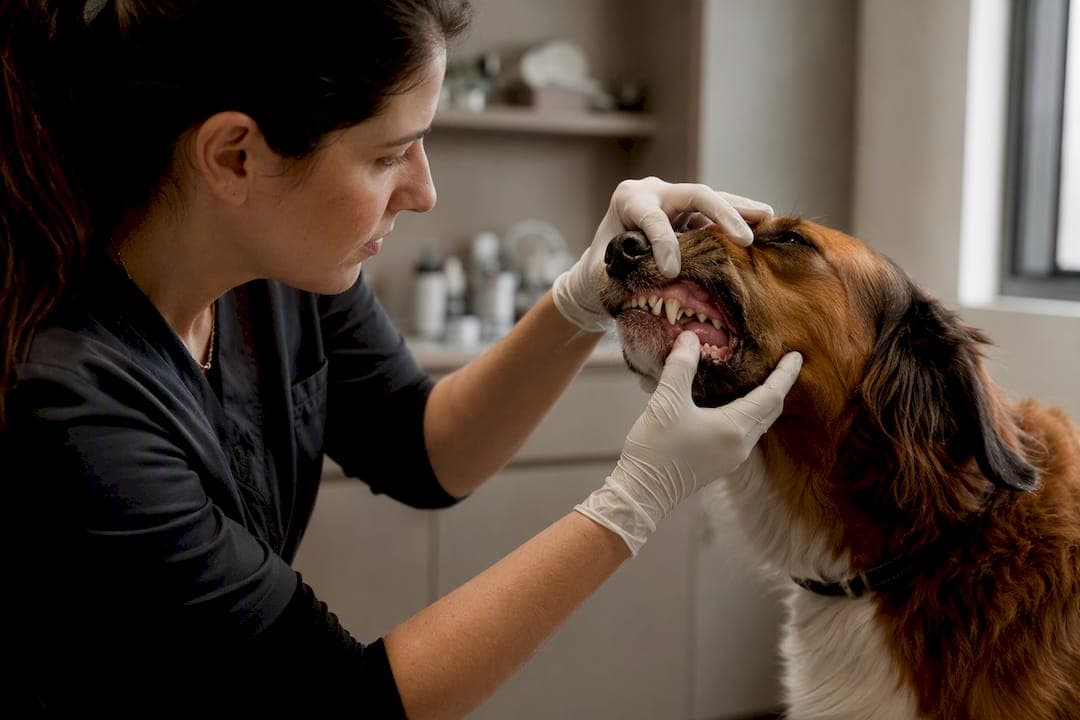
Periodontal disease in dogs is classified into five stages, 0 through 4, marking progressively worse and eventually irreversible damage to the gums and bone holding teeth in place. Stage 0 means healthy gums. Stage 1 is gingivitis, which reversible with a professional cleaning. Stages 2 through 4 involve actual bone and attachment loss, which cannot be undone, only managed. That loss can only be confirmed with periodontal probing and full-mouth intraoral X-rays, not a glance at your dog's teeth. If you've noticed bad breath, red gums, or a tooth that looks loose, skip the anesthesia-free cleaning services and call your veterinarian.
- Stage 0: Healthy gums, no attachment loss
- Stage 1: Gingivitis, reversible with cleaning
- Stage 2: Early periodontitis, under 25% attachment loss
- Stage 3: Moderate disease, 25 to 50% loss, teeth may loosen
- Stage 4: Advanced disease, over 50% loss, extractions likely
Key Takeaways
Periodontal disease in dogs progresses through five measurable stages, and only professional probing plus full-mouth X-rays can confirm which one your dog is actually in.
| Point | Details |
|---|---|
| Five stages exist | Stage 0 is healthy; Stage 1 (gingivitis) is reversible; Stages 2 through 4 involve permanent bone loss. |
| Visible signs lag behind damage | Bad breath, bleeding gums, and loose teeth often appear only after disease has already advanced. |
| Diagnosis requires anesthesia | Accurate staging needs periodontal probing and intraoral radiographs, not a visual check. |
| Homecare prevents, doesn't reverse | Brushing and dental chews protect healthy gums but cannot rebuild lost bone or attachment. |
| Fear Free, house call dental care | City Animal Veterinary Center offers Fear Free exams and home visits for accurate staging and treatment. |
Table of Contents
- The Stages of Periodontal Disease in Dogs, Explained
- How Vets Actually Diagnose the Stage
- Treatment Options by Stage and What to Expect
- Preventing Gum Disease Before It Progresses
- What Happens During a Dental Visit at the Vet
- City Animal Veterinary Center's Approach to Dental Care
- What Owners Get Wrong About Dental Staging
- Book a Fear Free Dental Exam With City Animal Veterinary Center
- Frequently Asked Questions
- Sources
The Stages of Periodontal Disease in Dogs, Explained
The staging system veterinarians use comes from the American Animal Hospital Association, which defines each stage by the percentage of attachment loss around a tooth, not by how the mouth looks to an untrained eye. Here's what actually happens at each level.
- Stage 0, healthy mouth. No gingivitis, no attachment loss, no odor beyond normal dog breath. The gums are pink and snug against the teeth. This is the stage to protect, not fix, through brushing and regular checkups.
- Stage 1, gingivitis. Plaque and tartar have irritated the gumline, causing redness and bleeding when you brush or when your dog chews something firm. No bone loss has occurred yet, which means this stage is fully reversible with a professional cleaning and consistent homecare afterward.
- Stage 2, early periodontitis. Attachment loss is under 25%. Gums may recede slightly, and you might notice mild odor that doesn't go away with a quick teeth wipe. This is where damage stops being reversible. Treatment usually means an anesthetized cleaning with targeted scaling below the gumline.
- Stage 3, moderate periodontitis. Attachment loss runs 25 to 50%. Teeth can feel slightly loose, gums may bleed spontaneously, and halitosis becomes hard to miss. Depending on the tooth and its location, your vet may recommend periodontal therapy to save it or move straight to extraction. Outcomes vary tooth by tooth.
- Stage 4, advanced periodontitis. More than half the attachment is gone. Teeth may be visibly mobile or already missing, and some dogs develop facial swelling from an abscess at the tooth root. Extraction is common at this stage, sometimes alongside more involved surgical treatment. Prognosis for keeping the tooth is poor, though the dog's comfort improves dramatically once the source of pain is gone.
Pro Tip: Bad breath is not a "dog thing" you have to live with. Persistent halitosis almost always signals Stage 2 or higher, even if the teeth look fine from across the room.
Bone loss doesn't announce itself. A dog's periodontal disease can look nearly invisible on the surface while the jawbone underneath is already compromised, which is exactly why owners are so often surprised at how far things have progressed by the time a vet examines the mouth properly.
How Vets Actually Diagnose the Stage
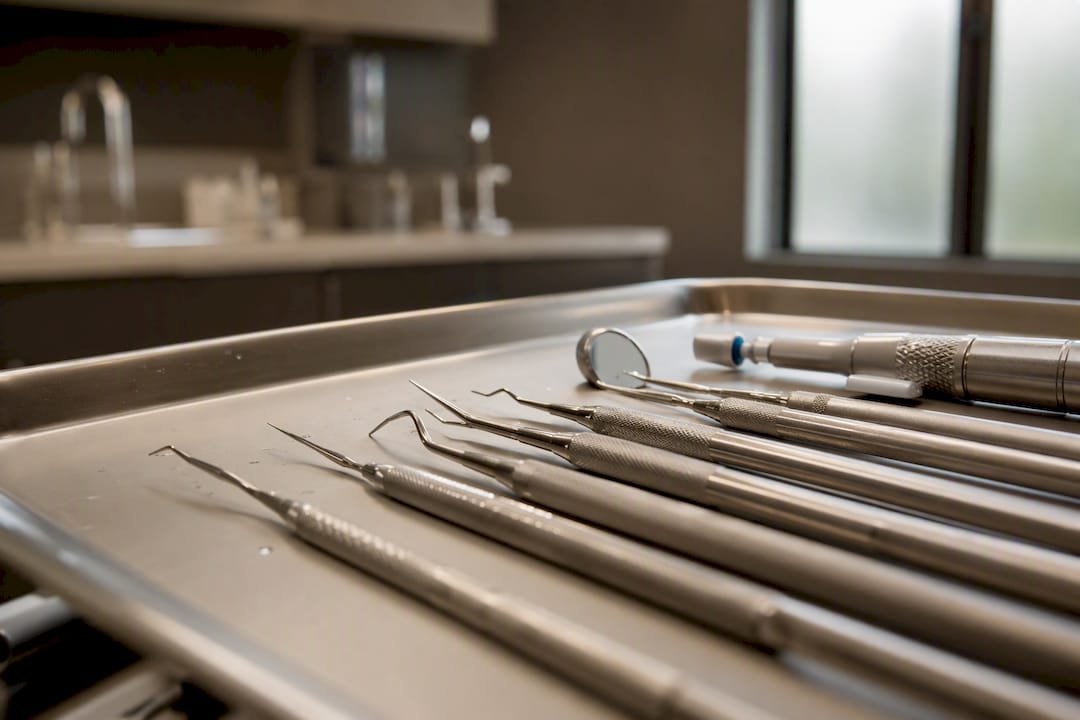
A visual check with your dog awake tells a veterinarian almost nothing about what's happening under the gumline. Real staging requires two tools used together, under anesthesia.
- Periodontal probing measures pocket depth around each tooth in millimeters, revealing how far the gum has detached from the tooth root.
- Full-mouth intraoral radiographs show bone density and loss that no amount of visual inspection can detect, since most of the damage happens below the gumline.
- Anesthesia keeps the dog still and pain-free during probing and imaging, and lets the vet get accurate millimeter measurements instead of a rough guess.
Between 80% and 90% of dogs over age 3 have some degree of periodontal disease, and a large share of that group has no cleaning underway to catch it early. Anesthesia-free "cosmetic" cleanings can scrape visible tartar off the crown, but they can't probe pockets or take X-rays, so they can't stage the disease or treat what's happening beneath the surface. They often give owners false reassurance while the real problem keeps advancing.
Treatment Options by Stage and What to Expect
Treatment escalates with severity, and none of it works as a one-time fix if homecare stops afterward.
- Professional cleaning under general anesthesia covers scaling above and below the gumline, probing, radiographs, and polishing, all typically done in one visit for Stage 1 and early Stage 2 cases.
- Periodontal therapy, including deeper root planing or localized antibiotic treatment, can sometimes save a tooth in Stage 2 or Stage 3 if attachment loss hasn't progressed too far around that specific tooth.
- Referral to a veterinary dentist comes up when a case involves complex root anatomy, suspected jaw fracture risk, or advanced surgical repair beyond a general practice setting.
- Extraction is the most common outcome for Stage 3 and Stage 4 teeth, and it's a humane choice, not a failure. Dogs typically eat and act more comfortable within days once a painful tooth is gone.
Homecare matters at every stage, but it has one hard limit: it cannot rebuild bone or reattach gum tissue once it's lost. Brushing after a Stage 3 extraction prevents the next tooth from following the same path. It does nothing to reverse what already happened. If your dog needs an extraction, our guide to what to expect during the procedure walks through recovery timing and aftercare in more detail.
Preventing Gum Disease Before It Progresses
The gap between Stage 0 and Stage 2 can close faster than most owners expect, especially in dogs with genetics working against them.
- Brush daily, using a soft-bristled pet toothbrush and dog-formulated toothpaste, working along the gumline in small circles for about 30 seconds per side.
- Add VOHC-accepted dental chews or diets as a supplement to brushing, never a replacement for it. The Veterinary Oral Health Council seal means a product met a real plaque or tartar reduction standard, not just a marketing claim.
- Watch small breeds and older dogs more closely. Crowded teeth in small breeds trap plaque faster, and periodontitis often takes hold around 4 to 6 years old, according to the Merck Veterinary Manual.
- Move up your exam schedule if you notice bleeding gums, new bad breath, or a dog suddenly favoring soft food over kibble.
Pro Tip: If your dog won't tolerate a toothbrush, try a finger brush or a gauze wrap first. Some resistance to a full-size brush disappears once the dog gets used to having a finger in its mouth.
What Happens During a Dental Visit at the Vet
Expect a structured process, not a quick scrape and polish. Your veterinarian will run pre-anesthetic bloodwork to check organ function and flag any anesthesia risk before your dog goes under. Once sedated, they'll probe every tooth and take full-mouth radiographs to confirm the actual stage, then clean, treat, or extract based on what they find in real time. Afterward, expect pain management, softened food for a few days, and a follow-up check. Contact your vet promptly if you see facial swelling, refusal to eat, or bleeding that doesn't stop within a day.
City Animal Veterinary Center's Approach to Dental Care
City Animal Veterinary Center uses a Fear Free approach designed to keep dental visits low-stress for anxious dogs. For clients who struggle to transport a pet, house call service brings evaluation and follow-up care home. Our senior wellness exam guide covers what to expect from anesthesia and imaging in older dogs specifically.
What Owners Get Wrong About Dental Staging
Most owners treat "my dog's breath is bad" as a cosmetic complaint instead of a diagnostic clue. That's backwards. Halitosis, bleeding gums, and visible tartar are downstream signs of a staging system built on measurements you can't see, pocket depth and bone loss, not on how the mouth smells or looks in good light.
The bigger failure in conventional advice is treating anesthesia-free cleanings as a reasonable middle ground between "do nothing" and "full veterinary workup." There isn't a middle ground here. Without probing and radiographs, nobody knows whether a dog is at Stage 1 or Stage 3, and treating a Stage 3 mouth like a Stage 1 mouth means real disease keeps progressing under a false sense of security.
What should change first: stop waiting for a loose tooth as your trigger to act. By the time a tooth wiggles, you're already well past the reversible window. Persistent odor or gum redness at any age is reason enough to book an exam.
Book a Fear Free Dental Exam With City Animal Veterinary Center
If your dog has any signs described above, bad breath that won't quit, gums that bleed, a tooth that looks off, the next step isn't a home remedy or a wait-and-see approach. It's an actual exam with probing and radiographs behind it. City Animal Veterinary Center offers that exam through a Fear Free process built to keep anxious dogs calm, plus house call visits for owners who find transporting a dog to a clinic difficult or stressful in itself. That combination means dogs who'd otherwise skip dental care because visits are traumatic, or because getting there is logistically hard, still get properly staged and treated. If you're in Brooklyn and unsure what stage your dog's mouth is at, schedule a visit with City Animal Veterinary Center and get a real answer instead of a guess.
Frequently Asked Questions
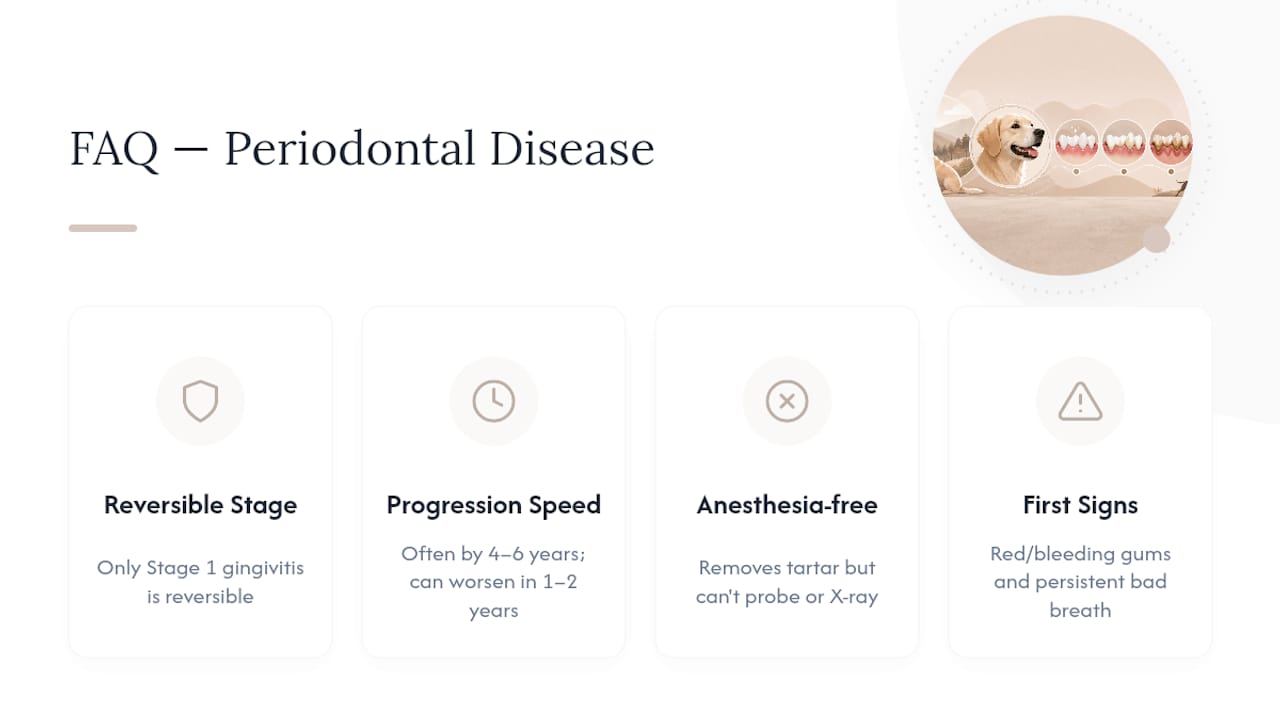
Can periodontal disease in dogs be reversed? Only Stage 1 gingivitis is reversible with professional cleaning and homecare. Once bone or attachment loss begins at Stage 2 and beyond, the damage is permanent, though further progression can be slowed.
How fast does periodontal disease progress in dogs? Progression speed varies by breed and genetics, but periodontitis often takes hold by 4 to 6 years old, and it can advance from mild to severe within a year or two without intervention.
Do anesthesia-free dental cleanings help with periodontal disease? They remove visible tartar but can't probe pockets or capture X-rays, so they can't diagnose or treat the actual disease happening below the gumline.
What are the first signs of gum disease in dogs? Red or bleeding gums along with persistent bad breath are usually the earliest noticeable signs, corresponding to Stage 1 gingivitis before permanent damage sets in.
Is tooth extraction bad for dogs with advanced periodontal disease? No. Extraction removes a painful, infected tooth and most dogs eat and behave more comfortably within days, making it a humane and often necessary treatment for Stage 3 and Stage 4 disease.
This article is general information, not a substitute for advice from a qualified doctor. Consult a qualified healthcare professional about your own circumstances before acting on anything here.
Sources
- Periodontal disease | Cornell University College of Veterinary Medicine
- Periodontal disease staging - AAHA
- Everything You Need to Know About Periodontal Disease in Dogs | AKC
- Dental disorders of dogs - Merck Veterinary Manual
- Periodontal Disease in Dogs | PetMD