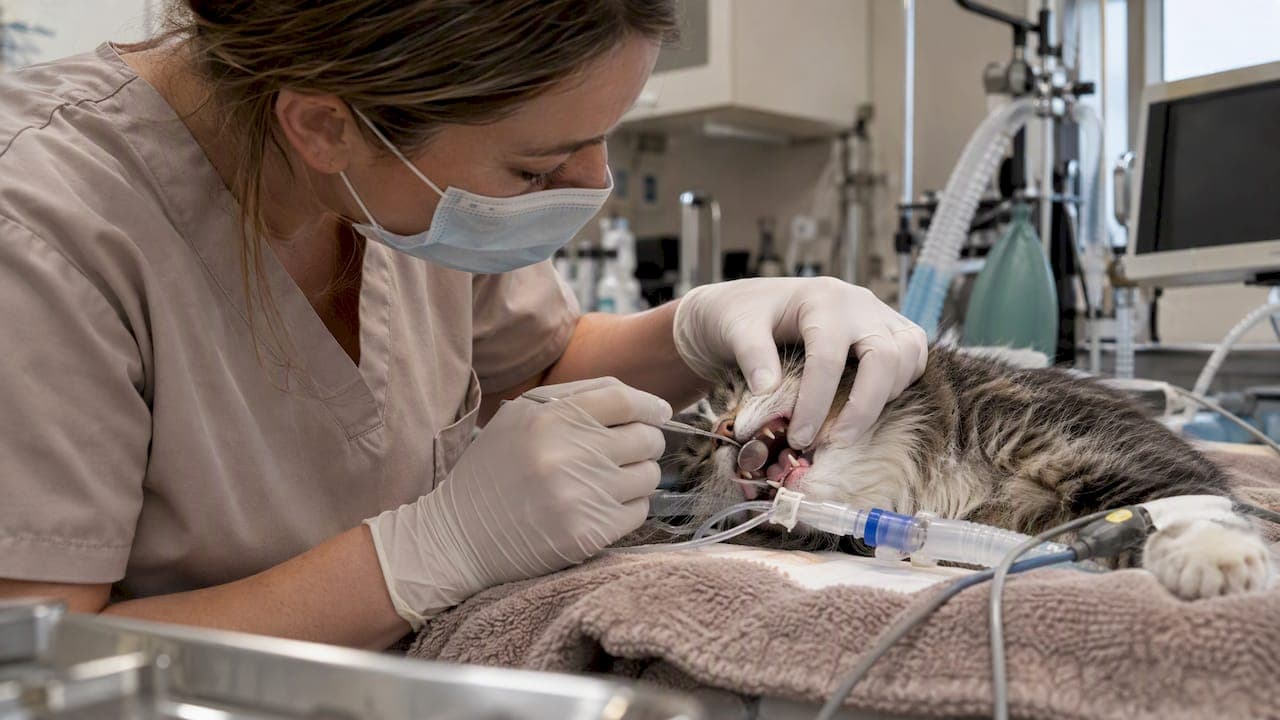
Surgical extraction, either partial or full-mouth depending on how far the disease has spread, is the primary evidence-based treatment for feline chronic gingivostomatitis (FCGS). The next step is a veterinary evaluation that includes a dental exam under anesthesia, full-mouth radiographs, and infectious disease testing. These findings shape the surgical plan and prognosis. Some cats also need short-term medical support or, in refractory cases, advanced immunomodulatory therapy alongside surgery.
TL;DR:
- A diagnosis requires an exam under anesthesia and full mouth radiographs; infectious disease testing and biopsy when indicated help shape prognosis and the surgical plan.
- Localized inflammation may call for partial extraction, while widespread disease or failed partial treatment can warrant removing all or nearly all teeth.
- About one third of cats remain refractory after extraction and may need ongoing medication or specialist referral for interferon or cell therapy.
- Postoperative radiographs can detect retained roots, a common reason for poor response; cats also need soft food for two to three weeks during healing.
Table of Contents
- What Feline Stomatitis Is and How It Differs From Routine Dental Disease
- How Stomatitis Is Diagnosed and What to Expect at the Appointment
- Surgical Extraction: Strategies and Expected Outcomes
- Medical Management: Pain Control, Steroids, and Immunosuppressives
- Refractory Stomatitis: Advanced Options When Surgery Isn't Enough
- Prognosis and What Affects the Outcome
- A Practical Checklist for Surgery, Recovery, and Follow-Up
- How We Support Cats With Stomatitis Through Diagnosis and Recovery
- Balancing Evidence and Compassion in Stomatitis Care
- Ready to Have Your Cat's Mouth Evaluated
- FAQ
- Sources
What Feline Stomatitis Is and How It Differs From Routine Dental Disease
Feline chronic gingivostomatitis is a painful, widespread inflammation of the gums, mouth lining, and sometimes the back of the throat. It looks different from ordinary gum disease because the inflammation is often severe, symmetrical, and disproportionate to the amount of visible plaque or tartar on the teeth.
Cats with FCGS typically show:
- Drooling, sometimes blood tinged
- Reluctance to eat or dropping food while chewing
- Bad breath that persists despite dental care
- Pawing at the mouth or reduced grooming
- Weight loss from reduced food intake
The disease is considered immune mediated. The cat's immune system overreacts to antigens from oral bacteria and plaque, and viral cofactors such as feline calicivirus are often involved in triggering or sustaining that response. This is a meaningfully different process from periodontal disease or tooth resorption, where damage comes from bacterial infection around the tooth root or from the tooth structure itself breaking down. Tooth resorption and periodontal disease can and often do coexist with stomatitis, which is part of why a full oral workup matters before any treatment plan is set. Treating FCGS like routine gum disease, with cleanings alone, usually falls short because the problem is the immune response itself, not just bacterial buildup.
How Stomatitis Is Diagnosed and What to Expect at the Appointment
A diagnosis of FCGS cannot be made by looking in an awake cat's mouth. The inflammation is painful enough that a thorough exam, radiographs, and sometimes a biopsy all require general anesthesia.
- Pre-anesthetic workup. Your veterinarian reviews the cat's health history and runs bloodwork to confirm anesthesia is safe, especially in cats with weight loss or chronic illness.
- Full oral exam under anesthesia. This is the only way to see the back of the mouth and throat clearly and assess how far the inflammation extends.
- Full-mouth dental radiographs. These reveal periodontal bone loss, tooth resorption, and retained roots that would otherwise be invisible, and they are considered essential for accurate diagnosis and surgical planning.
- Incisional biopsy. When the appearance is ambiguous or another condition such as an oral mass is possible, a biopsy confirms the diagnosis and rules out cancer or other causes of oral inflammation.
- Infectious disease testing. Testing for feline leukemia virus (FeLV), feline immunodeficiency virus (FIV), and feline calicivirus (FCV) helps guide prognosis and treatment planning, since positive status can change how a case is managed.
Pro Tip: Keep a short log of your cat's eating habits and any drooling or pawing at the mouth in the weeks before the visit, and bring a few photos if symptoms come and go. It gives your veterinarian a clearer picture than a single exam day can.
Professional dental assessment at this stage, including radiographs for tooth resorption and periodontal disease, often changes the surgical plan once hidden disease is found. A cat that looks like it needs a handful of extractions on exam may need many more once radiographs reveal disease below the gumline.
Surgical Extraction: Strategies and Expected Outcomes
Removing the teeth most involved in the inflammatory response reduces the chronic antigenic burden driving the disease, which is why surgery, not medication, is the standard first-line treatment for FCGS. Less bacterial and periodontal antigen for the immune system to react to generally means less inflammation.
Veterinarians choose between two main strategies based on how the inflammation is distributed:
- Partial extraction, removing teeth with the worst periodontal disease or resorption, when inflammation is localized.
- Full-mouth extraction, removing all or nearly all teeth, when inflammation is widespread or when a partial approach has already failed to control signs.
Owners preparing for surgery should ask their veterinary team about a few specific practices that specialist accounts link to better outcomes:
- Complete removal of tooth roots, not just the crown
- Postoperative radiographs to confirm no root fragments remain
- Alveoloplasty, smoothing the bone socket after extraction, to support healing and comfort
A significant minority of cats remain refractory to surgical extraction even after a complete procedure, according to a clinical review of FCGS management, meaning most cats see substantial improvement or full remission, but a meaningful minority need ongoing medical support. Specialist experience also suggests that earlier intervention tends to correlate with better postoperative outcomes, while delaying extractions can make the disease harder to control later.
Recovery is not instant. Clinical improvement often continues to evolve over weeks to months after surgery, not just in the days immediately following the procedure. Most cats need:
- Soft or softened food for two to three weeks while the mouth heals
- A consistent pain medication schedule rather than "as needed" dosing
- Close monitoring of appetite, since cats that stop eating for more than a day after surgery need a prompt recheck
Retained root fragments are one of the more common reasons a cat fails to improve as expected, which is why postoperative radiographic confirmation matters as much as the extraction itself.
Medical Management: Pain Control, Steroids, and Immunosuppressives
Medical therapy plays a supporting role around surgery rather than replacing it. Several drug classes come up at different points in treatment, each with a specific job and specific limits.
- Multimodal pain control is foundational before and after surgery. Effective analgesia during the diagnostic, surgical, and recovery phases is treated as essential in current veterinary dental guidance, not optional.
- Corticosteroids can reduce inflammation and provide meaningful symptomatic relief, but they come with side effects and diminishing benefit with long-term use, so they tend to be reserved for short courses or for cats who do not respond fully to surgery.
- Antibiotics address secondary bacterial infection when present, but they do not cure FCGS. The American Veterinary Dental College specifically advises against using antibiotics as a long-term monotherapy for this condition, citing antimicrobial stewardship concerns alongside the simple fact that antibiotics do not address the underlying immune process.
- Cyclosporine is a commonly used immunomodulator for cats with refractory disease or for managing inflammation after extractions when some signs persist.
Any cat on long-term corticosteroids or cyclosporine needs regular rechecks. Bloodwork and a physical exam at intervals set by your veterinarian catch side effects early and confirm the drug is still doing its job.
Between veterinary visits, tooth brushing is usually impractical and painful while stomatitis is active, so home hygiene routines wait until professional treatment has settled the inflammation. Once a cat is further along in recovery, gentle adjuncts such as oral hygiene wipes can be introduced if your veterinarian confirms the mouth is comfortable enough to tolerate handling.
Refractory Stomatitis: Advanced Options When Surgery Isn't Enough
A cat is generally considered refractory when significant oral pain and inflammation persist several weeks after an adequately performed extraction, meaning the roots are confirmed gone and healing has had time to progress. This is the group of cats, roughly one-third by published estimates, for whom surgery alone did not fully resolve the disease.
Two advanced therapies come up most often for these cases:
- Recombinant feline interferon-omega (rFeIFN-ω) has shown promising response rates in cats with refractory disease, used as an adjunct after surgery rather than a replacement for it.
- Mesenchymal stromal cell (MSC) therapy has also shown encouraging improvement in some refractory cats in published studies, though availability and protocols are still evolving.
A notable portion of cats remain refractory to extraction alone, which is the population these advanced immunomodulatory therapies are aimed at. Neither therapy works for every cat, and response varies considerably from one patient to the next.
These treatments are not something every general practice offers, and cats who do not respond adequately to extraction and standard medical management often benefit from referral to a veterinary dentist, an AVDC diplomate, or a university veterinary center with experience in refractory FCGS. Owners should go in with realistic expectations: some cats achieve lasting improvement, others need a combination of approaches managed over the long term.
Prognosis and What Affects the Outcome
Most owners start seeing meaningful improvement within the first few weeks after surgery, though full resolution of inflammation can take longer as the mouth finishes healing. Published clinical reviews describe a range of outcomes: many cats achieve substantial improvement or complete remission after extraction, while about one-third remain refractory and need continued medical management.
Several factors shape where an individual cat lands on that spectrum:
- FeLV, FIV, or FCV status. Positive infectious disease status can influence both the severity of disease and how well a cat responds to treatment, which is part of why testing happens before surgery rather than after.
- Extent of dental disease at diagnosis. Cats with extensive periodontal disease or resorption found on radiographs often need more extensive extractions, and more advanced disease at the start tends to mean a longer recovery.
- Time to intervention. Clinical experience suggests that earlier surgery correlates with better outcomes than delaying extractions after diagnosis.
For cats who respond well, quality of life improves substantially: normal eating, grooming, and activity return. For the refractory minority, long-term medical management, sometimes alongside advanced immunomodulatory therapy, becomes part of ongoing care rather than a short-term fix.
A Practical Checklist for Surgery, Recovery, and Follow-Up
Preparing well for the procedure and the weeks after it makes a real difference in how smoothly your cat recovers.
- Before surgery: Confirm fasting instructions with your veterinary team and review all current medications, including supplements, since some need to be paused beforehand.
- Transport: Use a covered carrier and a calm, quiet car ride. Cats that get anxious during travel may benefit from pre-visit sedation discussed with your veterinarian in advance.
- After surgery: Follow the pain medication schedule exactly as prescribed rather than waiting for visible discomfort, and offer soft or softened food for the first two to three weeks.
- Monitor recovery: Check daily for normal appetite, interest in food, and a clean, non-swollen surgical site.
- Call your veterinarian promptly if you see fever, vomiting, bleeding from the mouth, lethargy, or refusal to eat past the window your veterinarian specified.
Pro Tip: If your cat is difficult to handle or gets stressed at the clinic, ask about Fear Free pre-visit sedation options and whether a home visit for a recheck could reduce the stress of travel during recovery.
Cats recovering from extensive extractions often do better with smaller, more frequent meals rather than one or two large portions, since smaller bites are easier to manage with a healing mouth. Professional cleaning details and pre- and post-procedure care are worth reviewing ahead of the appointment so nothing at pickup comes as a surprise.

How We Support Cats With Stomatitis Through Diagnosis and Recovery
We use a Fear Free approach designed to reduce the stress that makes oral exams and dental work challenging for anxious cats, from the waiting room through anesthesia recovery. That matters most in a disease where the mouth is already painful and handling has to be gentle and deliberate.
Our services include a full diagnostic and surgical workflow suited to this condition: oral exams under anesthesia, full-mouth dental radiographs, biopsy when needed, and extraction surgery. For cats who struggle with travel or clinic visits, home visit services can provide follow-up checks and monitoring in a comfortable setting.
For more background on related oral health topics, our blog covers tooth resorption signs and radiographs, what a professional dental cleaning involves, and how to verify a clinic's cat-specific credentials if you're evaluating care options.
Balancing Evidence and Compassion in Stomatitis Care
Surgery remains the treatment we recommend first for most cats with stomatitis, because the evidence behind it is the strongest we have. That said, every cat's mouth and immune response are a little different, and a plan that works well for one cat may need adjusting for another.
What we'd ask owners to take from this: don't wait on diagnostics once you notice drooling, bad breath, or a cat that's suddenly picky about food. Early imaging and testing give your veterinarian the clearest shot at the right surgical plan the first time.
We also think the stress of getting there matters. A cat that fights every carrier ride or clinic visit is harder to treat well, which is part of why Fear Free handling and home visit options exist, not as an add-on, but as part of making the evidence-based plan actually workable for real cats and real households.
— CAVC
Ready to Have Your Cat's Mouth Evaluated
If your cat is drooling, avoiding food, or showing signs of oral pain, a proper workup benefits from a visit focused on comfort as well as efficiency. Our Dental Care services cover the exams, radiographs, and diagnostics that pin down what's actually going on, and our Surgery team handles extractions with the Fear Free handling that makes the whole process easier on an already uncomfortable cat.

For cats who struggle with travel or clinic visits, home visit services can bring certain follow-up checks to the pet's home. If you've noticed any signs of stomatitis, book an evaluation with our team and let's get a clear diagnosis and plan in place.
This article is general information, not a substitute for advice from a qualified doctor. Consult a qualified healthcare professional about your own circumstances before acting on anything here.
FAQ
Can stomatitis in cats go away on its own?
No, feline stomatitis does not typically resolve without treatment because it's driven by an ongoing immune response, not a simple infection that clears on its own. Without extraction or medical management, the inflammation and pain usually persist or worsen over time.
What is the life expectancy of a cat with stomatitis?
Stomatitis itself is not usually life-shortening when properly treated, since the disease affects the mouth rather than vital organs. Cats who undergo appropriate extraction and follow-up care generally go on to live normal lifespans, though refractory cases may need ongoing medical management for comfort.
Can a cat survive with stomatitis?
Yes, and most cats do well with proper treatment. Surgical extraction leads to substantial improvement or remission in many cats, though a portion of cases remain refractory and need continued medical or advanced therapy to stay comfortable.
Do all cats with stomatitis have FIV?
No, not every cat with stomatitis is FIV positive. FIV, FeLV, and FCV status all factor into diagnosis and prognosis, which is why infectious disease testing is part of a standard stomatitis workup, but stomatitis occurs in FIV-negative cats as well.
How is feline stomatitis different from a routine dental cleaning?
A routine cleaning addresses plaque and tartar on otherwise healthy gums, while stomatitis involves a more widespread immune-mediated inflammation that usually requires extractions, not just cleaning, to control. A full oral exam under anesthesia with radiographs is needed to tell the two apart.
Sources
- Feline chronic gingivostomatitis current concepts in clinical management
- Policy Statement: The Use of Antibiotics in Veterinary Dentistry (AVDC)
- How I treat stomatitis in cats - WSAVA 2018 Congress (VIN)
- Cornell Feline Health Center: oral cavity topics