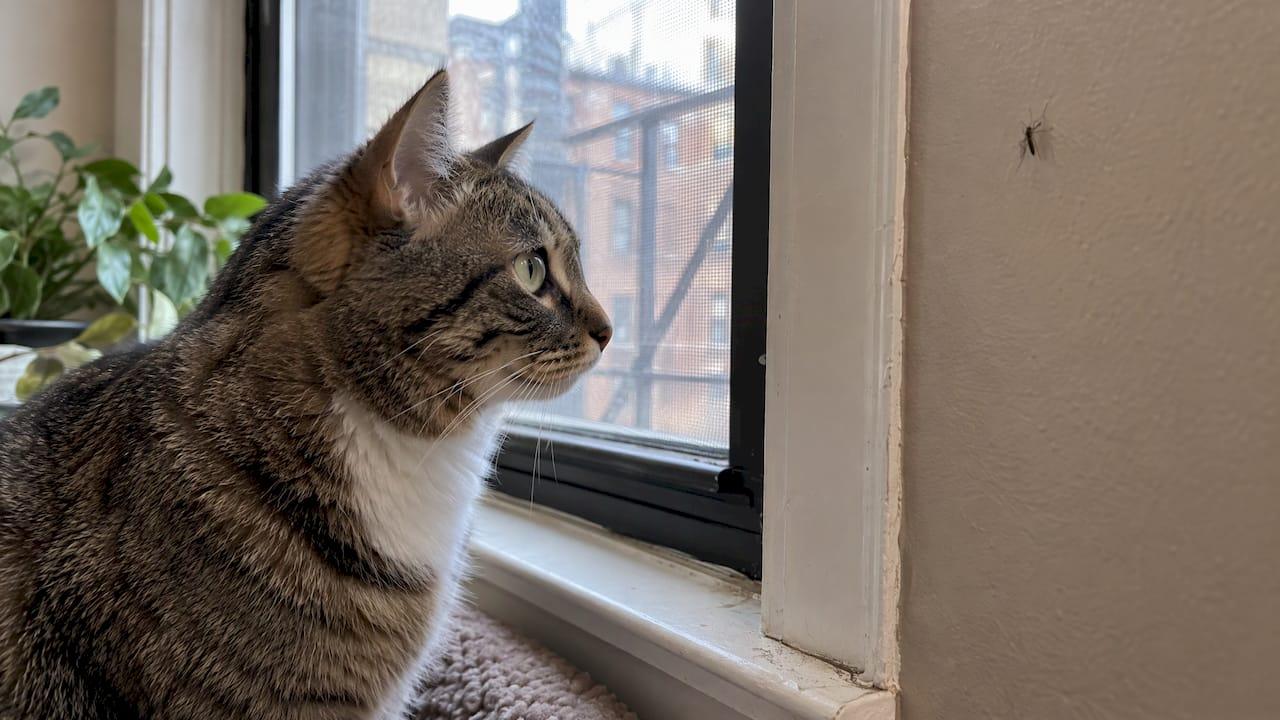
Heartworm risk in New York City is real, even though it is lower than in the Southeast. Mosquitoes that carry the parasite live here, infected dogs travel through here, and national veterinary guidelines call for year-round prevention and a yearly test for every dog, wherever it lives. For a Brooklyn pet, the practical answer is a yearly wellness visit that includes a heartworm test and a preventive plan sized to your pet. At City Animal Veterinary Center we build that into a calm, Fear Free visit, and we can do it at your home if getting your pet to a clinic is the hard part.
TL;DR
- Heartworm is spread by mosquitoes, and NYC Health says mosquitoes here are most active from April through October.
- A 2026 study puts New York's canine prevalence at 4.2%, well above most other northeastern states. Regional averages can hide local hotspots.
- Indoor cats are not exempt: the FDA says both indoor and outdoor cats are at risk.
- The American Heartworm Society recommends a yearly test and year-round prevention for dogs, and a yearly test for cats.
- Prevention is far simpler than treating an infection. A wellness exam is the natural place to set it up.
Table of Contents
- What heartworm is, in plain terms
- Is heartworm common in New York City?
- When is the mosquito season in NYC?
- Do indoor pets need heartworm prevention?
- What the guidelines say to do
- Signs to watch for
- Why a vet visit beats guessing
- Promo: a heartworm check without the stress
- Perspective
- Frequently asked questions
- Sources
What heartworm is, in plain terms
Heartworm disease is caused by a parasite called Dirofilaria immitis. A mosquito bites an infected animal, picks up microscopic larvae, and passes them to the next dog or cat it bites. Over roughly six months the larvae grow into adult worms that live in the heart and the blood vessels of the lungs. That is why the disease damages the lungs and heart rather than the gut, as many owners assume.
There is no way to catch it from another pet directly. Every case needs a mosquito in the middle. That one fact explains most of what follows: where the risk sits, when it peaks and why a pet that never goes outside can still be exposed.
Is heartworm common in New York City?
Honest answer: less common than in Florida or the Gulf states, more common than many New Yorkers think, and moving in the wrong direction.
A 2026 study in Parasites & Vectors found the highest canine heartworm incidence in the southeastern and south-central US, with isolated foci in the Northeast. The same paper lists New York at 4.2% prevalence, against negligible rates in most other northeastern states. It also projects that climate change will push heartworm risk northward through 2100.
A 2019 analysis of 57.7 million canine test results from 2012 to 2018 found prevalence rising across much of the South and northward, with county-level increases along most of the Atlantic coast. Its authors also point out that county data show striking differences even within a single state. In other words, a state or city average can hide a block-by-block reality, and a pet's own routine (parks, travel, rooftops, a ground-floor apartment near standing water) matters.
The rescue and travel factor
CAPC, the Companion Animal Parasite Council, said in its 2026 annual forecast that northward spread has not yet substantially reached much of the Northeast. It added that moving dogs from the South to urban centers like those in the Northeast poses a meaningful risk, and that a single heartworm-positive dog can increase local transmission where suitable mosquitoes already live. CAPC also notes that Asian tiger and yellow fever mosquitoes have expanded northward and that urban settings create breeding habitat.
For New Yorkers this matters in a specific way. Many city dogs come from southern rescues, shelters and transport programs, and many families travel south with pets. A dog adopted from a high-risk state may arrive already infected, with no symptoms for months. Testing a newly adopted dog is a sensible first step, and prevention should follow the test result.
When is the mosquito season in NYC?
NYC Health states that mosquitoes are most active in the city from April through October and lay eggs in slow-moving or standing water. It also notes that warmer temperatures, earlier springs, milder winters and heavier precipitation let mosquitoes spread into new areas, breed faster and stay active longer.
That last point is why veterinary groups have moved away from "summer only" prevention. Dr. Tom Nelson of the American Heartworm Society explains that some mosquitoes live up to three months, some species overwinter, and temperatures in protected spots such as basements, subway areas and building courtyards can run 8 to 17°F higher than weather-model readings. Transmission risk may never reach zero, and it is hard to predict. A pet's monthly dose is not tied to what the thermometer says on your stoop.
Do indoor pets need heartworm prevention?
Yes. This is the question New York apartment owners ask most, and the answer is the same for dogs and cats.
Dogs. The American Heartworm Society canine guidelines recommend that all dogs, regardless of lifestyle, stay on year-round prevention. CAPC's heartworm guidelines add that "low risk" does not mean "no risk." A small dog that only walks around the block still meets mosquitoes in stairwells, lobbies and at the curb.
Cats. The FDA states that both indoor and outdoor cats are at risk. CAPC reports that 25 to 30% of heartworm-infected cats were described by their owners as strictly indoor, and that certain mosquitoes feed indoors. Cats usually carry only one or two worms, which is a heavy burden for an animal that small.
A nationwide serosurvey of 2,165 apparently healthy pet cats found antibodies, a sign of exposure, in 3.5% overall. In New York, 7 of 189 cats (3.7%) were antibody-positive and 2 (1.1%) were antigen-positive, meaning an active adult-worm infection. The authors conclude that true feline prevalence is likely underestimated and stress routine testing, especially in areas not considered high-risk.
If you are also sorting out the rest of your indoor cat's protection, our guide to indoor cat vaccines in NYC covers what that visit should include.

What the guidelines say to do
Two professional bodies set the standard US vets follow: the American Heartworm Society (AHS) and CAPC. They agree on the core.
| Dogs | Cats | |
|---|---|---|
| Prevention | Year-round, every dog | Year-round prevention is part of the plan |
| Testing | Yearly, for dogs over 7 months of age, with an antigen test and a microfilaria test | Yearly, combining an antigen test and an antibody test |
| Why | Antigen tests detect mature infections with at least one female worm, so timing matters | No single test finds every feline case |
| Pre-test before starting prevention | Yes | Not required, per CAPC and the AHS |
Some details worth knowing:
- Antigen and microfilaria tests. The antigen test detects proteins from adult female worms. The microfilaria test looks for larvae circulating in the blood. The AHS recommends both for dogs, and says a positive antigen result should be confirmed with further testing before any treatment starts.
- Why a yearly test if your pet is on prevention? Doses get missed or vomited, and no preventive is a guarantee. CAPC notes that antigen tests usually pick up mature infections older than six months, which is why testing on a regular schedule matters. CAPC also says twice-yearly testing may suit dogs exposed to large numbers of mosquitoes for long periods.
- Cats need two kinds of test. The AHS feline guidelines strongly recommend annual testing with a heat-treated antigen test plus an antibody test, because only about 20% of infected cats have microfilariae in the blood, compared with 80 to 90% of dogs, per the FDA.
Our own explainer on when your dog or cat needs a heartworm test walks through the timing, and the SNAP 4Dx test for dogs page explains the single sample that screens for heartworm along with tick-borne diseases.
Signs to watch for
Early heartworm disease often looks like nothing. That is the reason testing, not symptom-watching, is the plan.
In cats, the AHS describes the most common chronic signs as fast breathing that persists, intermittent coughing and harder breathing effort. Some cats also lose their appetite, lose weight or vomit at times unrelated to meals. The AHS also describes a sudden syndrome of respiratory distress, collapse, seizures, coughing up blood or sudden death that can strike without warning. Cats can look like they have asthma, so a cat with repeated coughing or open-mouth breathing needs an exam rather than a wait-and-see week.
In dogs, owners typically notice a persistent cough, tiring on walks, or reluctance to exercise once the infection has advanced.
If your pet is struggling to breathe, collapses or coughs up blood, treat it as an emergency and call us right away about our urgent care service.
Why a vet visit beats guessing
Heartworm care is not something to improvise. Which product, which dose for your pet's weight, and when to start all depend on a current test result and your pet's history. The treatment side shows why. For dogs, the AHS protocol uses doxycycline plus a macrocyclic lactone before a three-dose melarsomine regimen, all under veterinary supervision. For cats, the AHS says melarsomine is not recommended because of the risk of severe lung inflammation and death. Most feline cases are managed with supportive care and corticosteroids, and radiographs and echocardiography are the most useful tools for evaluating a suspected case.
Diagnosis can therefore involve blood work, imaging and careful interpretation of results. We offer an in-house laboratory and diagnostic imaging including digital X-rays and ultrasound, so the pieces of a heartworm workup can sit under one roof with a team that already knows your pet.
What a good heartworm visit looks like
- History. Where did your pet come from? Any time in the South or in a rescue transport? Any missed doses?
- Testing. A blood sample for the antigen and, in dogs, microfilaria tests; for cats, the antigen plus antibody combination.
- Prevention plan. A year-round preventive matched to species and weight, ideally combined with flea and tick protection. Our tick guide for NYC explains why those belong in the same conversation.
- A reminder system. The most common failure is a forgotten dose, so tie the dose to a date you will remember.
The visit itself should not be a battle. Anxious pets that dread the car, the elevator and the waiting room often avoid testing altogether, which is how a preventable infection goes unnoticed.
Promo: a heartworm check without the stress
City Animal Veterinary Center is a Fear Free certified practice in Brooklyn, and our approach is designed to reduce pet anxiety at every step of a wellness visit. Heartworm testing and prevention planning fit naturally into a wellness exam, and our preventative care page lists what we cover for protecting your pet year-round. Preventives can also be handled through our pharmacy.
If your dog freezes at the clinic door, your cat panics in the carrier, or your schedule leaves no room for a trip across the borough, ask about our home visits.

To book an exam, start at cityanimalvet.com.
Perspective
Every spring, someone tells us their pet "never goes anywhere," so heartworm can't be a worry. We understand the thinking, and we answer it the same way each time: a mosquito does not need your pet to go anywhere.
The evidence supports that. The national guidelines recommend year-round prevention for every dog and yearly testing for cats, and the data on New York show a state prevalence well above its neighbors. A prevention plan is a small, regular commitment, and it protects the heart and lungs of an animal who cannot protect themselves.
What we care about most is that the plan actually gets done. A pet that is terrified of visits tends to get fewer visits, so we work Fear Free: unhurried handling, a calm room, and a team that treats your pet's emotional state as part of the medical picture. For pets who cannot comfortably travel, we bring care to the home. And because we offer in-house laboratory work, diagnostic imaging, and holistic options such as acupuncture and pain management alongside conventional medicine, we can look after a pet across their whole life, from puppy and kitten care through geriatric care.
Our advice is simple. Test every year, prevent all year, and make the visit something your pet can tolerate.
CAVC
Frequently asked questions
Where are dogs most likely to get heartworm?
The highest canine incidence in the US is in the southeastern and south-central states, according to the 2026 Parasites & Vectors study. Cases occur in every region, though, and rates have been rising along the Atlantic coast. New York dogs that came from or traveled to southern states have an added exposure.
Do dogs really need heartworm preventive in NYC?
Yes. The American Heartworm Society recommends year-round prevention for all dogs regardless of lifestyle, and CAPC stresses that low risk does not mean no risk. Mosquitoes in the city are active from April through October according to NYC Health, and some survive winter in sheltered spots.
What are the first signs of heartworm?
Often there are none. When signs appear in cats, they include persistent fast breathing, intermittent coughing and increased breathing effort, sometimes with vomiting or weight loss. A dog with a lasting cough or low stamina should be examined. Because early infection is quiet, a yearly test is the dependable way to find it.
Can my indoor cat get heartworm?
Yes. The FDA says indoor and outdoor cats are both at risk, and CAPC reports that 25 to 30% of infected cats were described by their owners as strictly indoor. Ask us about a yearly test, which pairs an antigen and an antibody test, and a prevention plan.
Sources
- Mosquitoes - NYC Health
- 2026 Annual Pet Parasite Forecasts, CAPC
- Potential risk of heartworm infection in the United States, Parasites & Vectors
- Regional and local temporal trends in the prevalence of canine heartworm
- A nationwide serological survey for Dirofilaria immitis in cats
- FDA: Keep the Worms Out of Your Pet's Heart
- Heartworm guidelines, CAPC
- Can You Outsmart a Mosquito? American Heartworm Society
- AHS Canine Guidelines
- AHS Feline Guidelines