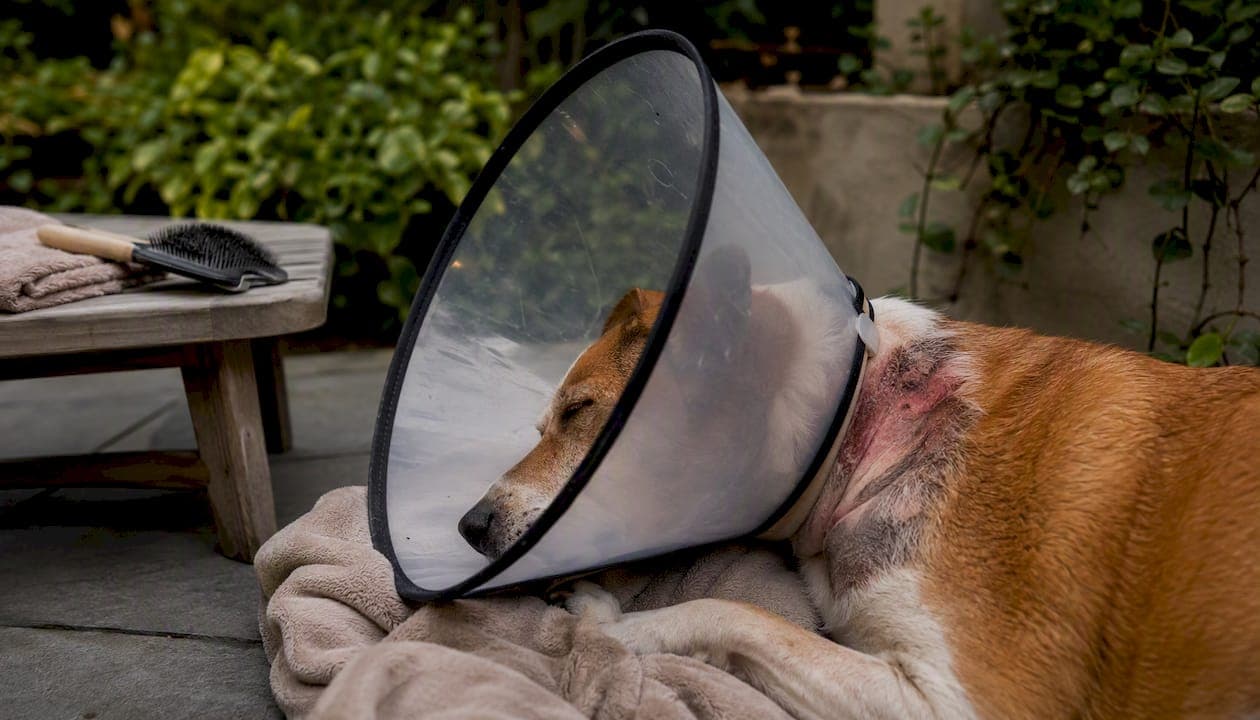
A hot spot is a raw, wet, rapidly worsening skin lesion caused by your dog's own licking, chewing, or scratching. The medical term is acute moist dermatitis (also called pyotraumatic dermatitis), and the single most important thing you can do right now is stop your dog from accessing the area. Every minute of continued licking spreads the inflammation and drives bacteria deeper.
Immediate first aid steps:
- Put an E-collar (cone) or soft donut collar on your dog before doing anything else
- Trim the hair around the lesion if you can do so safely and without causing pain
- Clean the area gently with diluted chlorhexidine solution or a saline rinse
- Pat dry and leave it open to air — do not bandage or cover with ointment
- Keep the collar on until you reach a vet
Get to a vet immediately if you see: a rapidly expanding lesion, discharge that is yellow or green, your dog crying or snapping when the area is touched, fever, or lethargy.
Pro Tip: An E-collar is the fastest, safest barrier you have at home. A soft donut collar works for some dogs but does not reliably prevent licking of body lesions — if your dog can still reach the spot, switch to a standard cone.
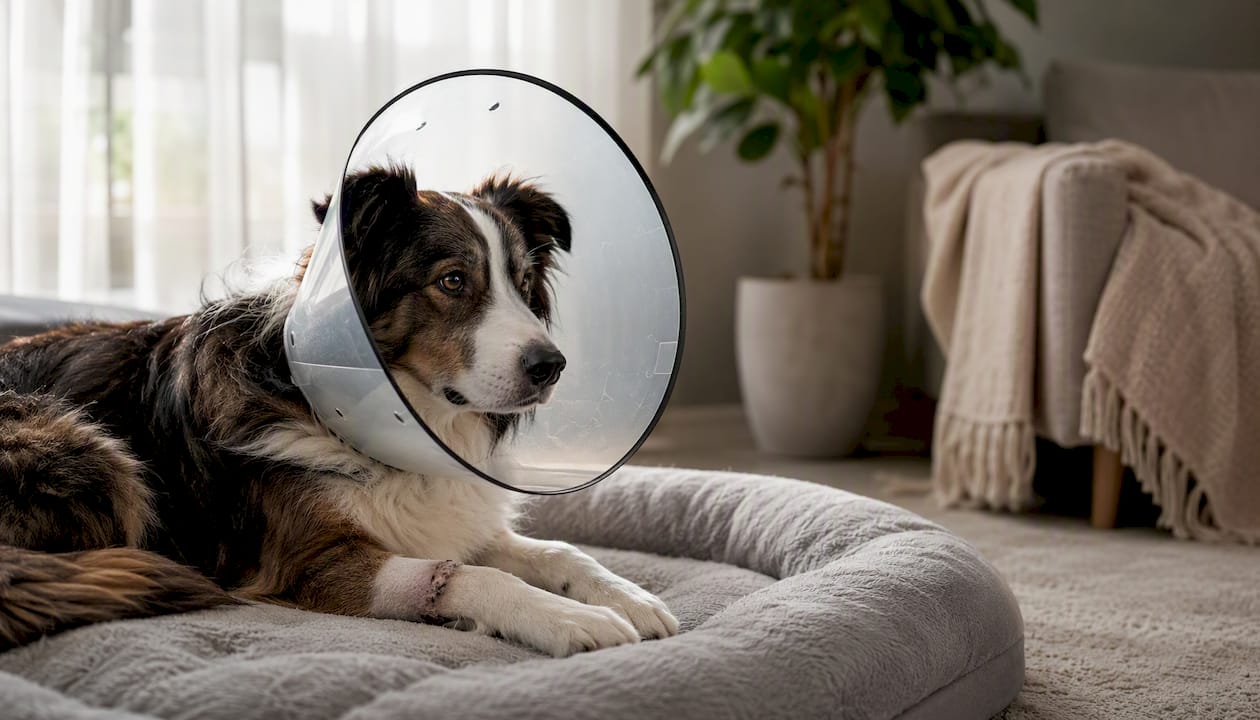
Table of Contents
- What are hot spots on dogs, exactly?
- How do you recognize a hot spot on your dog?
- What causes hot spots in dogs?
- How do vets diagnose a hot spot?
- How do you treat a hot spot? A stepwise plan
- How can you prevent hot spots from coming back?
- When does a hot spot need urgent veterinary care?
- What to expect at your vet visit for a hot spot
- Key Takeaways
- What vets actually see most often with hot spots
- City Animal Veterinary Center can help with hot spot care in Brooklyn
- Trusted sources for further reading
What are hot spots on dogs, exactly?
Hot spots go by several names: acute moist dermatitis, pyotraumatic dermatitis, and simply "hot spots" in everyday conversation. All three refer to the same thing: a localized area of skin that becomes inflamed, infected, and raw because the dog keeps traumatizing it.
The mechanism is a self-reinforcing cycle. Something irritates the skin — a flea bite, an itchy ear, a small mat of wet fur — and the dog responds by licking, chewing, or scratching. That physical trauma breaks the skin barrier, which lets normal skin bacteria (most often Staphylococcus pseudintermedius) multiply rapidly in the warm, wet environment. Bacterial growth intensifies the itch and pain, which drives more licking, which worsens the infection. A lesion can go from a dime-sized red patch to a palm-sized oozing wound in under 24 hours.
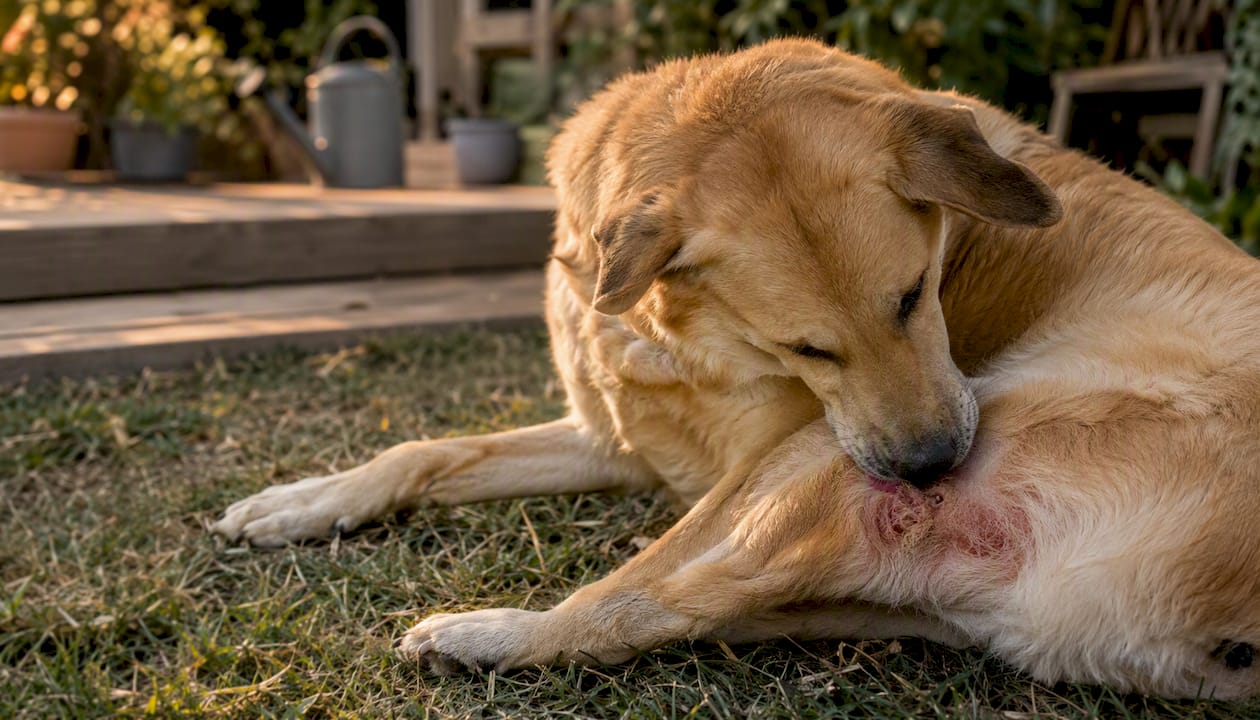
One common misunderstanding is that water causes hot spots. Swimming or bathing can contribute by leaving moisture trapped against the skin, but the lesion itself is created by the dog's behavior in response to an underlying itch or pain signal. A dog that never scratches can swim daily without developing one. The water is a risk factor; the self-trauma is the cause.
How do you recognize a hot spot on your dog?
Hot spots have a fairly distinctive appearance, though early-stage lesions are easy to miss under a thick coat.
Visual signs to look for:
- Red, inflamed skin that looks wet or "weeping"
- Hair loss or matted fur directly over the lesion
- A raw, sometimes crusted surface that may ooze clear fluid or pus
- A distinct border where healthy skin meets the affected area
- Odor from bacterial activity
Behavioral signs:
- Sudden, intense attention to one spot (licking, chewing, rubbing against furniture)
- Whimpering or pulling away when the area is touched
- Restlessness, especially at night
Location tells you a lot. A hot spot on the cheek or just below the ear strongly suggests an underlying ear infection. Lesions on the back or rump point toward fleas or flea-bite allergy. Sores near the base of the tail often indicate anal sac disease. Knowing where the lesion is can help your vet zero in on the trigger faster.
Progression is fast. What starts as a small red patch typically progresses through hair matting, then oozing, then a clearly defined raw wound with a moist surface. Golden Retrievers, Labrador Retrievers, Saint Bernards, and other dogs with dense or long coats are especially prone because moisture and debris stay trapped close to the skin.
What causes hot spots in dogs?
Hot spots do not appear randomly. There is always an underlying trigger, and finding it is what separates a one-time incident from a recurring problem. Virginia Tech veterinary experts emphasize that hot spots are usually a symptom of an underlying condition, not a standalone disease.
Most common triggers, roughly in order of frequency:
- Flea allergy dermatitis — even a single flea bite causes intense itching in allergic dogs; the dog scratches until the skin breaks
- Environmental allergies (atopy) — pollen, mold, dust mites, and grass can all trigger generalized itching that concentrates into a hot spot where the dog can reach
- Ear infections (otitis) — a dog with a painful or itchy ear will scratch at the cheek and jaw repeatedly
- Anal sac disease — impacted or infected anal glands cause dogs to scoot and chew at the base of the tail
- External parasites — mites, lice, and other parasites create focal irritation
- Matted or damp coat — moisture trapped under mats holds irritants against the skin and creates the warm, humid environment bacteria need
- Behavioral licking — stress, boredom, or separation anxiety can drive compulsive licking that creates a lesion even without an initial physical trigger (see our guide on separation anxiety in dogs for more on this)
- Contact irritants — certain grasses, cleaning products, or topical substances can cause localized reactions
Cornell University's veterinary college notes that hot spots are most common in dogs with long or thick coats and during warm, humid months — late spring through early fall in most of the United States. That seasonal pattern is largely driven by increased flea activity and more swimming or outdoor exposure.
Quick home checks before your vet visit:
- Run a fine-toothed flea comb through the coat near the base of the tail; look for flea dirt (tiny black specks that turn red when wet)
- Gently lift the ear flap and check for odor, redness, or dark discharge
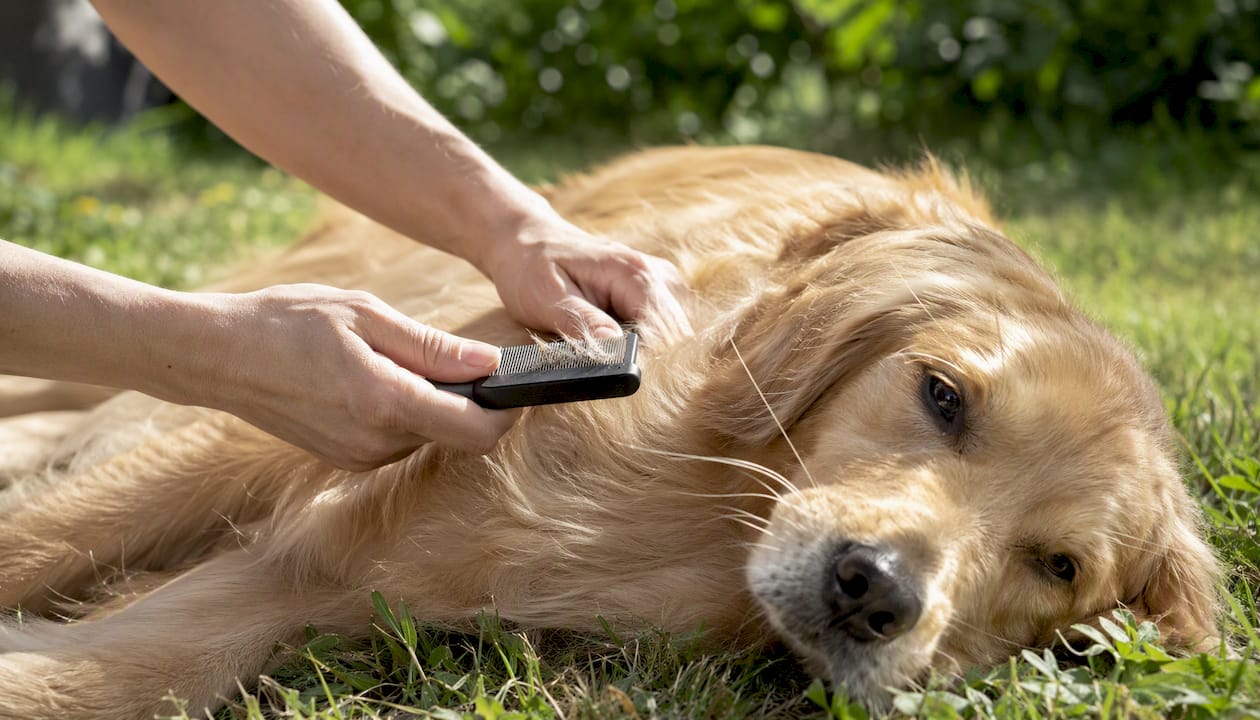
- Part the coat in several spots and look for mats, especially in the groin, armpits, and behind the ears
Pro Tip: Take a short video of your dog licking or scratching before you put the E-collar on. Vets find behavioral context genuinely useful, and the footage takes 30 seconds to capture.
How do vets diagnose a hot spot?
Most hot spots are diagnosed on physical exam alone. Your vet will assess the size, depth, and appearance of the lesion, check for signs of secondary bacterial or yeast infection, and look for clues about the underlying trigger.
What the physical exam covers:
- Extent and depth of the lesion (superficial vs. deeper tissue involvement)
- Signs of secondary infection: pus, odor, swelling beyond the wound margins
- Ear canals for signs of otitis
- Skin and coat for flea dirt or parasite evidence
- Anal glands if the lesion is near the tail
When the diagnosis is not straightforward, vets may run additional tests. A skin scrape rules out mange mites. Cytology (examining cells from the lesion under a microscope) confirms whether bacteria or yeast are present and in what numbers. This matters because skin cytology can determine whether a topical antimicrobial alone will be sufficient or whether systemic antibiotics are needed.
Topical therapy vs. systemic medications:
- Topical only: small, superficial lesion, caught early, no signs of deep infection, dog is not in severe pain
- Systemic antibiotics added: lesion is large, deep, spreading rapidly, or cytology shows heavy bacterial load
- Steroids or pain control added: significant inflammation, pain on palpation, or the dog cannot stop self-traumatizing despite a collar
Identifying the trigger changes everything. A dog whose hot spots are driven by ear disease needs otitis treatment, not just wound care. A flea-allergic dog needs year-round flea prevention. Without addressing the root cause, the lesion heals and another one appears within weeks.
How do you treat a hot spot? A stepwise plan
Virginia Tech's clinical guidance confirms that topical antimicrobial therapy is often the first-line treatment for true hot spots, frequently avoiding the need for oral antibiotics in localized cases. Here is what that looks like in practice.
Safe at-home first aid checklist
- Stop licking first — collar on before anything else
- Trim hair around the lesion only if your dog is calm and you can do it without scissors near raw skin (blunt-tipped scissors or a clipper guard are safer)
- Clean gently with diluted chlorhexidine (0.05% solution) or saline; one pass is enough
- Use a pet-formulated antimicrobial spray if you have one; these are designed to be safe if licked, unlike human products
- Keep the area dry and exposed to air
- Get to a vet within 24 hours for anything beyond a very small, brand-new lesion
Never apply to a hot spot: Neosporin, hydrocortisone cream, Vaseline, or any human topical ointment. The AKC explicitly warns that these products increase licking and pose ingestion risks. Veterinary-formulated sprays exist specifically because human ointments are not safe for dogs.
Signs that home care is failing: the lesion grows larger, discharge changes color, your dog's pain increases, or the wound develops a foul odor. Any of these means a vet visit cannot wait.
What to expect for healing
| Timeframe | What you should see |
|---|---|
| First 24 hours | Redness and oozing begin to decrease with correct care; licking stops with barrier in place |
| Days 3–7 | Wound dries, edges begin to close; new hair growth starts at the margins |
| Week 2 | Most superficial hot spots are largely healed; hair regrowth continues |
| Beyond 2 weeks | If not improving, reassess for deep infection or unaddressed underlying trigger |
PetMD notes that most hot spots respond within 3–7 days with correct management. Lesions that take longer to heal usually have an unresolved underlying cause or a deeper infection that needs systemic treatment.
How can you prevent hot spots from coming back?
Prevention is mostly about removing the triggers. A dog on year-round flea prevention who gets regular grooming and has well-managed allergies rarely develops hot spots. One who swims frequently, has untreated ear disease, and lives in a humid apartment is a repeat candidate.
Preventive actions to build into your routine:
- Regular ear checks and treatment — dogs prone to otitis should have ears cleaned and monitored on a schedule your vet recommends
A practical monthly rhythm: flea comb check and ear inspection every two weeks, full brush-out weekly for long-coated dogs, and a coat-drying routine after every swim or bath. That covers the majority of common triggers.
When does a hot spot need urgent veterinary care?
Home care is appropriate only for a very small, brand-new lesion in a dog with no history of recurrence. Most hot spots need a vet, and some need one today.
Go to the vet immediately if:
- The lesion is expanding visibly over a few hours
- Discharge is yellow, green, or has a strong odor
- Your dog cries, snaps, or shows aggression when the area is touched
- Your dog has a fever (rectal temperature above 102.5°F) or seems lethargic
- The skin around the lesion is swollen, warm, or hardened
Within 24 hours if:
- The lesion has been present for more than a day
- It is larger than a quarter
- Your dog cannot stop trying to lick despite wearing a collar
- You see any signs of spreading redness beyond the wound edge
Next-day appointment if:
- The lesion is small and new but you want a vet to confirm the diagnosis and check for an underlying trigger
The 24-hour rule matters. Virginia Tech's guidance is direct: lesions older than 24 hours or spreading rapidly usually require veterinary care because infection is almost certainly present by that point. Waiting longer risks deeper tissue involvement, which turns a straightforward topical case into one that needs systemic antibiotics and a longer recovery.
Untreated hot spots can develop into deep pyoderma, a more serious bacterial infection that extends below the skin surface. In severe cases, cellulitis or abscess formation can occur. These complications are entirely avoidable with prompt care.
What to expect at your vet visit for a hot spot
A hot spot visit is typically straightforward, but knowing what to expect reduces stress for both you and your dog. A routine wellness exam follows a similar structure: history, physical assessment, and a treatment plan.
What the visit typically includes:
- Full physical exam with focus on the lesion and surrounding skin
- Ear exam and anal gland check if the lesion location suggests those triggers
- Skin scrape or cytology if infection depth or type is unclear
- Clipping and cleaning of the lesion in clinic
- Topical treatment applied and dispensed for home use
- E-collar fitted or confirmed
- Prescription for oral antibiotics, anti-inflammatory medication, or pain control if needed
- A treatment plan for the underlying trigger (flea prevention, ear drops, allergy workup)
- Follow-up appointment scheduled
What to bring:
- Photos or a short video of the lesion and your dog's behavior before the collar went on
- A timeline: when you first noticed it, how fast it changed
- Any medications or topicals you have already applied
- A list of recent exposures (swimming, new food, new environment, recent grooming)
Reducing stress at the visit: City Animal Veterinary Center uses Fear Free techniques throughout every exam, which means the environment, handling approach, and pacing are all designed to keep your dog calm. For dogs who find clinic visits genuinely distressing, a house call is a real option. A vet examining a hot spot in your dog's own home, where the dog is relaxed, often gets a cleaner picture of behavioral triggers and coat condition than a stressed dog in a clinic allows.
Key Takeaways
Hot spots require stopping self-trauma first, then cleaning the wound, treating the underlying trigger, and using topical antimicrobials as the primary therapy for most localized cases.
| Point | Details |
|---|---|
| Stop licking immediately | An E-collar or cone is the first step — every minute of licking worsens the lesion. |
| Topical therapy is often enough | For small, superficial lesions, vet-applied topical antimicrobials frequently resolve the infection without oral antibiotics. |
| Location points to the trigger | Cheek lesions suggest ear disease; back lesions suggest fleas; tail-base lesions suggest anal sac problems. |
| Most lesions heal within about one week | With correct care, superficial hot spots typically resolve within one week; slow healing means an unresolved trigger. |
| City Animal Veterinary Center | Offers dermatology, Fear Free exams, and house call visits in Brooklyn for dogs who need hot spot diagnosis and trigger management. |
What vets actually see most often with hot spots
The pattern that shows up repeatedly in clinical practice is this: the hot spot gets treated, the dog heals, and then it comes back in the same spot three months later. That recurrence is almost always a sign that the underlying trigger was never fully addressed.
Owners sometimes focus entirely on the wound and consider the problem solved when the skin closes. But a dog with untreated flea allergy will develop another hot spot at the next flea exposure. A dog with chronic ear disease will scratch at the same cheek every time the otitis flares. The wound is the visible part of a problem that starts somewhere else.
The other thing worth saying plainly: stopping the licking is not optional, and it cannot wait. Dr. William Miller of Cornell's veterinary college has noted that owners are often their dog's worst enemy in these situations because they delay putting a collar on, or remove it because the dog seems uncomfortable. A few hours of uninterrupted licking can turn a superficial lesion into a deep infection. The collar is uncomfortable; the alternative is worse.
Good outcomes are genuinely common when the trigger is found and addressed. Dogs with well-managed allergies, consistent flea prevention, and regular grooming can go years without a recurrence after a first episode. That is the realistic goal, and it is achievable for most dogs.
City Animal Veterinary Center can help with hot spot care in Brooklyn
When your dog has a hot spot, the fastest path to relief is a vet who can clip, clean, and treat the lesion in one visit while also investigating the trigger. City Animal Veterinary Center in Brooklyn offers exactly that: in-clinic dermatology and skin care alongside the diagnostic tools (cytology, imaging, lab work) needed to identify whether allergies, ear disease, or parasites are driving the problem.

For dogs who become anxious at the clinic, the Fear Free approach at City Animal Veterinary Center changes the experience significantly. Calming techniques, careful handling, and a low-stress environment mean your dog is more cooperative and the exam is more thorough. And if your dog is too uncomfortable to travel, a house call brings the same quality of care to your home in Brooklyn, which is often the better setting for evaluating a dog's coat condition, environment, and behavioral triggers.
Book an appointment or request a house call to get your dog's hot spot assessed and a prevention plan in place.
Trusted sources for further reading
These are the primary sources behind this guide. Each covers a specific aspect of canine hot spot care and is worth reading in full.
- That itches! A guide to canine hot spots | Virginia Tech News | Virginia Tech
- Hot spots | Cornell University College of Veterinary Medicine
- Hot Spots on Dogs: Signs, Treatment, and Prevention
- Hot Spots on Dogs: Causes, Treatment, and Home Remedies | PetMD
- What to Know About Hot Spots on Dogs in Ukiah, CA
For personalized diagnosis and a treatment plan tailored to your dog, contact a licensed veterinarian directly. General information is not a substitute for a clinical exam.