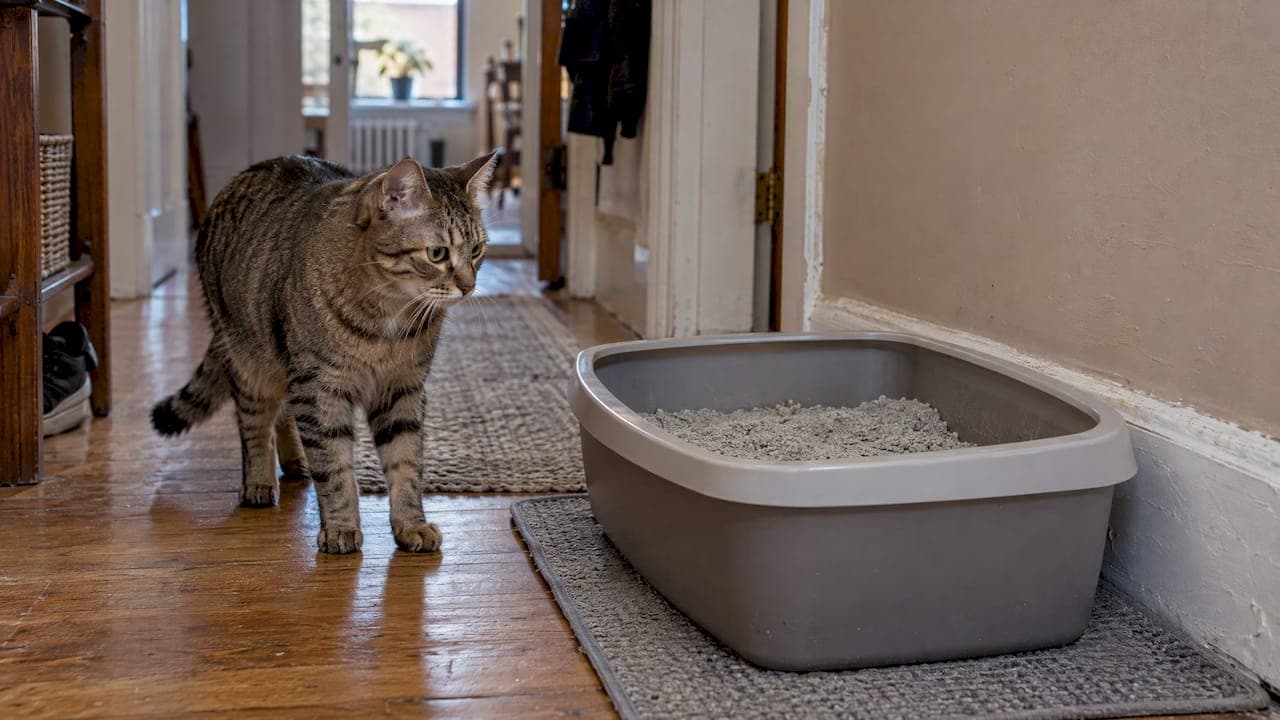
When a cat stops using the litter box, the cause is either medical, behavioral, or a problem with the box itself, and often it is a mix. Start with the vet, because pain and illness are among the most common reasons a cat eliminates elsewhere. Then work through the setup: box size, litter, location, cleaning and the other animals in the home. This guide walks through that order, step by step.
You are not alone, and your cat is not being spiteful. The ASPCA says at least 10% of all cats develop elimination problems. Most of those cats are telling you something is wrong.
TL;DR
- Book a vet exam first. Urinary disease, kidney disease, diabetes, arthritis and digestive problems can all change litter box habits, and a cat can look fine while being unwell.
- A cat straining to urinate with little or no urine coming out is an emergency. Do not wait for an appointment.
- If the exam is clear, look at the setup: one box per cat plus one extra, uncovered and large, scoop daily, unscented clumping litter at one to two inches deep.
- Stress, conflict with another pet and a bad experience in the box can create aversion. Fix the cause and keep the box spotless.
- Change one thing at a time and give each change a few days, so you know what worked.
Table of Contents
- Is it an emergency?
- Why cats stop using the litter box
- Medical causes to rule out first
- Litter box aversion
- Urine marking versus a missed box
- Fix the setup: box, litter, location, cleaning
- Multi-cat homes
- A simple plan to follow
- Perspective: what we see in practice
- How we can help
- FAQ
- Sources
Is it an emergency?
Sort this out before anything else. A urinary blockage, where a cat cannot urinate or cannot urinate normally, is a medical emergency that can be fatal. The RSPCA advises contacting a vet immediately if a cat strains to urinate without passing urine or a normal stream.
Go to a vet the same day, without trying home fixes first, if your cat:
- Makes repeated trips to the box and produces little or nothing
- Cries, licks at the genital area or hides while straining
- Vomits, seems lethargic or stops eating alongside urinary changes
- Has visible blood in the urine
Not sure whether this needs an urgent care visit or a full emergency hospital? Our guide to red flags that need an emergency vet explains the difference. If your cat is stable but something is clearly off, our urgent care team can see you in Brooklyn.
Why cats stop using the litter box
Cornell's Feline Health Center groups the common causes into medical problems, litter box aversion, poor litter box management, stress and conflict in multi-cat homes. The same page says medical conditions must be ruled out by a veterinarian before you treat the problem as behavioral.
A useful way to think about it: the cat is avoiding something, or preferring something else.
| Pattern | What you see | Likely direction |
|---|---|---|
| Sudden change in a previously reliable cat | Urine or stool outside the box, more trips, small puddles | Medical, check first |
| Avoids the box, goes on a specific surface | Soft rugs, bath mat, laundry, a sink | Aversion to box, litter or location |
| Urine on vertical surfaces | Spray on walls, doors, furniture | Marking, often stress or another cat |
| Goes just outside the box | Hops in, perches, or goes at the edge | Pain, dirty box or box too small or tall |
| Only one cat in a multi-cat home | Others use the box normally | Conflict, guarding or a medical issue in that cat |
This is a starting map, not a diagnosis. Our vet-first guide to cat litter box problems lays out short home tests you can run while you wait for your appointment.
Medical causes to rule out first
The Cornell page lists urinary tract inflammation, kidney disease, diabetes, thyroid disease, digestive tract problems and age-related diseases that interfere with mobility or cognitive function. Kidney disease and diabetes can increase drinking and urination, so a cat may simply not be able to wait or reach the box in time.

Cornell also notes that cats with medical conditions may not always appear sick. That is why a cat that begins house soiling deserves an exam even if she is eating, playing and grooming as usual.
What the vet will do
Published guidance for veterinarians describes urinalysis, urine culture, abdominal ultrasound, blood counts and biochemical profiles as tools to rule out medical issues in house-soiling cats. Not every cat needs every test. A physical exam, a urine sample and bloodwork often answer the first questions. If you want to know what to expect, read our explainer on urinalysis for cats.
A practice with its own diagnostics shortens the wait. We offer an in-house laboratory and digital imaging, so many of these answers can come during one visit rather than across several.
Arthritis and aging
A senior cat with sore joints may not want to climb over a high box wall or squat in a cramped one. She may also forget where the box is, or not make it in time. For older cats, the ASPCA recommends boxes with low entry points. If your older cat's habits are shifting, see what is normal and what is not in senior cat behavior. Pain management and geriatric care can change the picture, and some owners explore options such as acupuncture alongside conventional treatment.
Declawed cats
Declawed cats can develop litter box problems. The reasoning is straightforward: a cat that has had toe amputation may find digging and standing in litter uncomfortable, and she can come to associate the box with pain. If your cat is declawed and has started avoiding the box, tell your vet. Pain control is worth discussing, and softer, finer litter may feel better on sensitive paws. Stay with the vet's advice rather than guessing, because a declawed cat can also have the same urinary and behavioral causes as any other.
Litter box aversion
Once medical causes are handled, aversion is the next suspect. It means the cat has learned to dislike the box, the litter or the spot.
The ASPCA notes that aversion can be caused by negative experiences such as being startled by loud noises or trapped by people while using the box. A review in a veterinary journal adds that social anxiety can lead to aversion, such as when a cat is ambushed by another pet or fears passing new family members to reach the box. The same review advises keeping the box scrupulously clean for a cat suspected of aversion.
Medication is another trigger. Feline guidelines from AAFP and ISFM point out that using the litter box as the place to give medications can contribute to aversion. Give pills and treatments somewhere else, and keep the box a calm place.
Questions to ask yourself
- Did anything change in the last few weeks: new litter, new box, new location, a move, construction noise, a new pet, a new baby or roommate?
- Does the box sit near a loud appliance, a door that slams or a path another pet uses?
- Did your cat have a bad experience, like being startled while in the box or cornered for a nail trim or pill afterward?
- Is the box cleaned every day?
Write down the answers. They help your vet or a behavior consultation get to the root faster.
Urine marking versus a missed box
They look similar but are different problems. Marking usually means urine on vertical surfaces or small amounts in several spots. The RSPCA describes territorial marking as cats marking spots with urine, often in response to stress, anxiety, or the presence or odor of another cat.
If you share a Brooklyn apartment with a cat who watches neighborhood cats or street activity through a window, a visible outdoor cat can be enough to set off marking. Block the view at the lowest part of the window with film or a piece of furniture, and talk with your vet. Spaying and neutering status, other cats in the home and recent changes all matter.
Fix the setup: box, litter, location, cleaning
If the vet exam is clear, or alongside treatment, these are the changes with the best support from veterinary and animal welfare sources.
How many boxes and what size
Provide one box for each cat, plus one extra. The ASPCA also favors large, uncovered boxes. For size, the RSPCA recommends a tray at least 1.5 times the length of the cat from nose to tail, so she can turn and dig comfortably. Most store-bought boxes are smaller than that, which is why many owners move to a big storage tub with one side cut down. If you are comparing options, this guide to choosing a litter box size and style covers the practical points.
Litter type and depth
The ASPCA advises using unscented, clumping litter and filling the box with one to two inches of litter, because most cats prefer a shallower bed. The RSPCA likewise says to avoid scented litters that can deter use.
If you want to change litter, do not swap overnight. Set a second box beside the old one with the new litter and let your cat vote. Keep trying brands and types until you find one she accepts.
Where to put the box
Choose quiet, easily reached spots away from food and water. In a small New York apartment that is hard, but avoid the laundry room during spin cycles, the spot behind a door and a tight corner where she can be cornered. Put boxes on every floor of a multi-level home, and in separate rooms in a multi-cat home, so one cat cannot guard them all.
If your cat has already picked a spot, the RSPCA suggests placing a tray where she has been eliminating and moving it gradually to a more suitable location. A few inches a day is plenty.
Cleaning routine
Scoop at least daily and keep the box scrupulously clean if aversion is suspected. Wash the box regularly with mild unscented soap. Clean accident spots with an enzymatic cleaner made for pet urine rather than ammonia products, because lingering odor invites repeat visits.
Multi-cat homes
Tension between cats is a common hidden cause. One cat may sit at the box entrance, block the path or ambush the other. Extra boxes in different rooms, plus separate resources for food, water and rest, reduce the pressure. If one cat is clearly targeting another, our plan for inter-cat aggression shows how we approach it over days to months.
A simple plan to follow
- Day 1: Call your vet. Describe the changes and bring a fresh urine sample if you can collect one without stress. If there is straining, go now.
- Days 1 to 3: Scoop daily, add boxes, remove any hoods and liners, switch to unscented clumping litter at one to two inches, and move boxes away from noise.
- Days 3 to 7: Note where accidents happen, how often and what time of day. Clean spots with an enzymatic cleaner.
- Week 2: If the problem persists, return to your vet with your notes. A behavior consultation may be the next step.
- Ongoing: Keep routines steady. Praise quietly when she uses the box. Never punish her, which only teaches her to hide.
Perspective: what we see in practice
In our experience, owners often arrive having already tried three kinds of litter and two new boxes, when the real problem was pain or a urinary issue that no litter was going to solve. We would rather you start with the exam and rule out medical causes, then fix the environment, because it spares your cat weeks of discomfort.
We also know that a car ride can be the hardest part for an anxious cat. That is why we practice Fear Free handling and offer home visits: a cat who is relaxed in her own space is easier to examine, and we can see the actual boxes, rooms and traffic patterns that matter. Litter box trouble is rarely just a medical or just a behavioral problem, and the best outcomes come when both are looked at together, with the cat's emotional comfort in mind.
— CAVC
How we can help
City Animal Veterinary Center in Brooklyn offers wellness exams, diagnostics, behavior management and pain management, and Fear Free visits at the clinic or at your home. If your cat has stopped using the litter box, we can examine her, run the tests that make sense, and help you build a plan for the setup at home. New to us? Start on our new clients page.
FAQ
Why is my cat suddenly peeing outside the litter box?
A sudden change in a previously reliable cat most often points to a medical issue such as urinary tract inflammation, kidney disease or diabetes, or to stress or a bad experience in the box. Schedule a vet exam first. A cat that is straining or passing little urine needs care immediately.
Can a cat have litter box problems even if she seems healthy?
Yes. Cornell notes that cats with medical conditions do not always look sick. A healthy-looking cat that starts house soiling should still be examined before you assume it is behavioral.
How many litter boxes do I need?
One for each cat plus one more. Spread them across different rooms or floors if you can, so one cat cannot control access to all of them.
Does the kind of litter really matter?
Often, yes. Unscented, clumping litter at a depth of one to two inches is the common starting point. Test any new litter in a second box beside the old one rather than switching all at once.
Can declawed cats have litter box problems?
They can. Digging and standing in litter may be uncomfortable after declawing, and the box can become associated with pain. Ask your vet about pain control and try softer litter, but still rule out urinary and other medical causes.
Sources
- Feline Behavior Problems: House Soiling, Cornell Feline Health Center
- Litter Box Problems, ASPCA
- Why is my cat urinating inappropriately? RSPCA Knowledgebase
- Feline house-soiling: useful information for cat owners
- Thinking outside the box: Feline elimination
- AAFP and ISFM Guidelines for Diagnosing and Solving House-Soiling Behavior in Cats