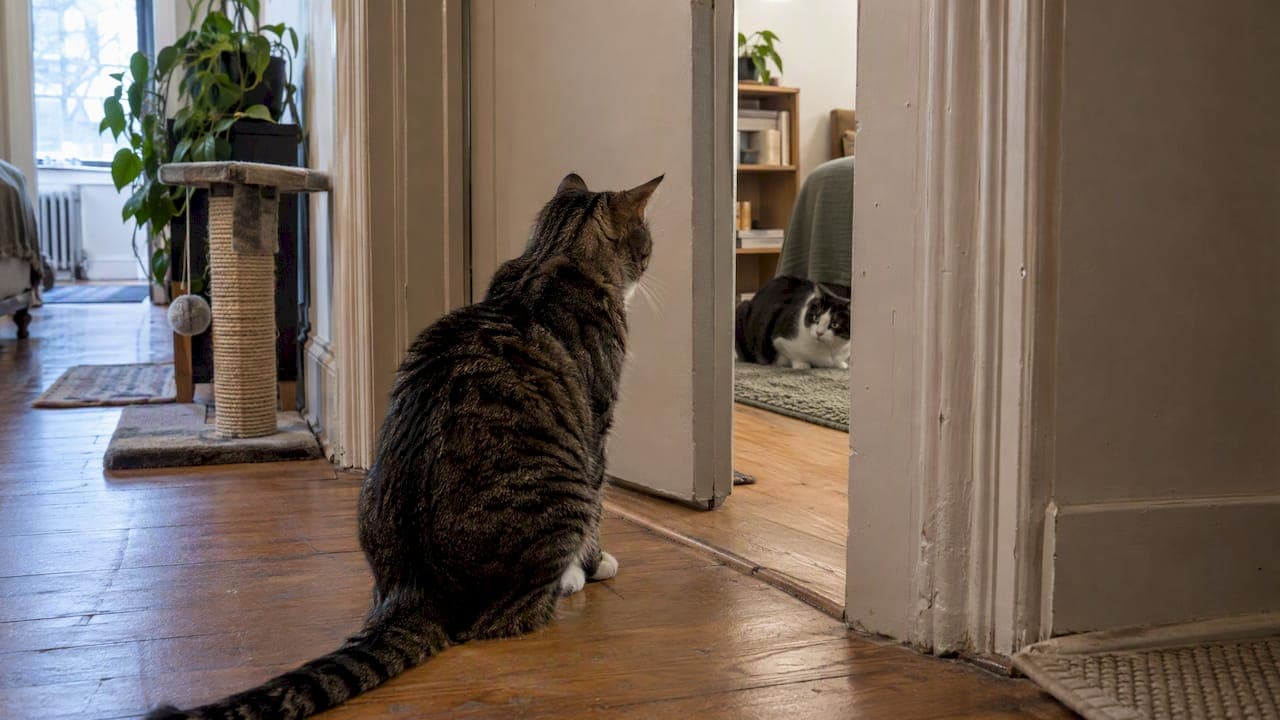
If your cats fight, separate them immediately and check both for wounds, then follow a staged, guideline-based reintroduction instead of forcing them back together. The timeline depends on their behavior, not the calendar, and can run from days to months. The approach below follows the 2024 AAFP intercat tension guidelines, the resources from the Cornell Feline Health Center, and clinical input from City Animal Veterinary Center.
TL;DR:
- Immediate separation of fighting cats and vet consultation are crucial if bites break skin, with a focus on preventing infection and assessing injuries.
- Recognizing early tension signals such as overstressed behaviors, prolonged staring, or overgrooming helps prevent escalation to full-blown aggression.
- Most inter-cat conflict stems from resource shortages, recent introductions, outdoor stimuli, or underlying pain, making vet checks essential before reintroduction.
- Reintroductions should proceed gradually through scent exchanges, visual contact, and supervised visits based on behavior, not a set timeline.
- Creating a home with ample resources, vertical space, and visual barriers significantly lowers the risk of tension and fights before they occur.
Table of Contents
- Immediate safety and triage after a fight
- Spotting tension before it turns into a fight
- What usually triggers aggression between cats
- A step-by-step reintroduction protocol you can follow
- Setting up the home to lower everyday tension
- When it is time to call in professional help
- How a Fear Free assessment changes the outcome
- Why the standard advice falls short for most owners
- Getting support from City Animal Veterinary Center
- FAQ
- Sources
Immediate safety and triage after a fight
Do not reach in with your hands. Use a tall barrier, a thrown towel, a pillow, or a loud noise like clapping to break up a fight safely. Grabbing a cat mid-fight is one of the most common ways owners get bitten or scratched, and those wounds can become infected fast.
Once the cats are apart, check each one for punctures, bleeding, limping, squinting, or hiding, since cat bites often look minor on the surface but drive bacteria deep into tissue. Watch for lethargy or loss of appetite over the next day, both signs that an infection may be setting in.
- Separate rooms with a closed door, not just a baby gate.
- Check teeth marks, swelling, or matted fur hiding a puncture.
- Note any limping, hissing when touched, or reluctance to move.
- Call your vet the same day for any bite that breaks skin.
If you were bitten or scratched during the fight, clean the wound and call your own doctor if it swells or reddens. The AAFP guidelines specifically advise against manually intervening in cat fights because of the high risk of redirected injury to the person breaking it up.
Pro Tip: Keep a spare towel near each cat's favorite spot so you can break up a fight fast without using your hands.

Spotting tension before it turns into a fight
Play fighting and real aggression look similar at a glance, but the details matter. Playful cats take turns chasing, keep claws retracted, and pause to reset. Tense cats freeze, stare, or block doorways and litter boxes without ever easing up.
- Subtle signs: prolonged staring, blocking hallways, overgrooming, hiding more than usual.
- Overt signs: hissing, repeated one-directional chasing, growling, swatting with claws out.
- Play usually includes pauses and role reversal; aggression does not.
Overgrooming in particular is an easy signal to miss, since owners often read it as a grooming habit rather than a stress response. If you notice bald patches or constant licking, it is worth reading more on how overgrooming connects to stress before assuming it is unrelated to the tension at home.
Recording short videos whenever you see these behaviors gives you (and any vet you consult later) a real timeline instead of a vague memory of "they've been off lately."
What usually triggers aggression between cats
Most inter-cat tension traces back to a handful of causes, and figuring out which one applies to your household shapes everything that follows.
- Resource competition: too few litter boxes, food bowls, or resting spots for the number of cats.
- A recent new-cat introduction that moved faster than the cats could adjust to.
- Outdoor cats visible through windows, which can trigger redirected aggression indoors.
- Pain or illness, since a cat in discomfort often lashes out at a housemate who gets too close.
The AAFP guidelines note that intercat tension shows up in many multi-cat homes, with surveys indicating it is quite common, and that many cases trace back to how a new cat was introduced. Before starting any reintroduction, rule out pain or illness with a vet check and confirm both cats are neutered, since intact cats are far more prone to territorial and hormonal conflict.
A step-by-step reintroduction protocol you can follow
Once injuries are treated and medical causes ruled out, reintroduction works best as a slow, staged process rather than a single dramatic reunion.
- Keep the cats fully separated for at least a few days, each with its own litter box, food, water, and hiding spots.
- Swap scents daily by trading bedding or rubbing a cloth on each cat's cheeks and placing it near the other.
- Feed both cats on opposite sides of a closed door so they associate each other's presence with something good.
- Introduce visual contact through a cracked door or baby gate, keeping sessions short and calm.
- Allow brief supervised time in the same room with distance, toys, or separate meals to keep tension low.
- Gradually extend unsupervised time only after repeated calm sessions.
Progress on behavior, not a schedule: calm eating near each other, relaxed body posture, and normal grooming all signal you can move forward. Hissing, growling, or a swipe means you step back a stage, not push through it.
The AAHA summary of the 2024 AAFP guidelines notes this process can take anywhere from a few days to several months, and that owners should let the cats' responses set the pace rather than forcing a deadline.
Pro Tip: If reintroduction stalls at the same stage for more than two weeks, that is the moment to call your vet rather than keep pushing forward.
Setting up the home to lower everyday tension
A calmer home environment prevents a lot of fights before they start. The core setup rests on a few pillars: enough litter boxes, separate feeding stations, vertical space like shelves or cat trees, and hiding spots such as covered beds or boxes.
- Provide one litter box per cat plus one extra, placed in different rooms.
- Feed cats in separate locations, even if that means different rooms entirely.
- Add vertical routes so a less confident cat can avoid a confrontation at floor level.
- Use visual barriers, like a piece of furniture, to break up staring contests between housemates.
Litter box setup alone solves a surprising number of tension cases, and our guide to litter box troubleshooting and this practical litter setup guide both walk through fixes you can test over a few days.
Prevention works better than correction. The AAHA summary points out that most intercat tension starts with how a new cat was introduced, which means the setup work above matters most before a new cat ever arrives.
Pheromone diffusers can take the edge off background stress for some cats, but they work as one part of a larger management plan, not a fix on their own.
When it is time to call in professional help
Some situations call for a vet visit before you attempt any reintroduction steps. Punctures, limping, swelling, or a cat that stops eating all need same-day attention. After a bite wound, vets commonly recommend retrovirus testing around the 60-day mark post-exposure, since seroconversion is not immediate.
- Recurrent fights despite a careful reintroduction plan.
- Any bite or scratch that breaks the skin.
- A cat showing new signs of stress-related illness, like overgrooming or appetite changes.
- No improvement after several weeks of staged reintroduction.
A veterinary behaviorist evaluates the full picture: medical history, environment, and specific triggers, and may recommend behavior modification alongside, occasionally, medication as an adjunct rather than a standalone fix. Punishment such as yelling or spraying water is not part of that plan. The Cornell Feline Health Center notes it is ineffective and can worsen fear-based aggression.
How a Fear Free assessment changes the outcome
City Animal Veterinary Center takes a Fear Free approach to behavior consults, which matters because a stressed exam room visit can mask or worsen the exact behaviors a vet needs to see. Home visits let a cat stay in its own territory, which often produces a more accurate read on triggers than a carrier ride across town. For any consult, the Cat Friendly Vet Certification standards shape how the visit is structured from the start.
Before a consult, gather short videos of the tense moments, a rough timeline of when the fighting started, and notes on anything that changed in the home around that time. That preparation alone shortens the diagnostic process considerably.
Why the standard advice falls short for most owners
Most advice on cat aggression treats it as a single event to punish or correct. The 2024 AAFP framing gets this right by calling it tension instead: a buildup of unresolved stress that shows up as staring and blocking long before it shows up as a bite. Owners who wait for the dramatic fight before acting are already behind.

The bigger failure in conventional advice is treating reintroduction like a fixed script: three days of scent swapping, a week of door feeding, done. Cats do not read the script. Some pairs need a single weekend, others need months, and forcing the pace because a blog post said ten days is up tends to undo weeks of progress in one bad session.
If there is one thing to prioritize first, it is ruling out pain or illness before assuming the problem is purely behavioral. A cat in discomfort will lash out at a housemate for reasons that have nothing to do with territory or history, and no amount of scent swapping fixes that.
— CAVC
Getting support from City Animal Veterinary Center
Working through inter-cat tension is easier with a vet who can rule out medical causes and observe both cats without adding stress to the visit. Our Fear Free approach is built for exactly this: calmer exams that give a truer read on behavior, plus home visits for cats who do not travel well.

Our behavior management and consult services cover the evaluation side, while a home visit keeps the assessment in a setting your cats already know. Before you book, pull together the videos and timeline you have gathered so the visit moves straight into a plan.
FAQ
How to stop intercat aggression?
Separate the cats immediately, treat any injuries, and rule out pain or illness with a vet visit before starting a staged reintroduction. Progress through scent swaps, visual contact, and supervised sessions based on calm behavior rather than a fixed schedule, as outlined in the 2024 AAFP guidelines.
What is Tarzan syndrome in cats?
This term describes outdoor or semi-feral cats that move through a territory via elevated routes like fences and trees rather than the ground. It is not a recognized clinical diagnosis in the veterinary literature reviewed here, so definitions vary depending on the source using the term.
What is the 3-3-3 rule for cats?
This is a general adjustment guideline sometimes used for newly adopted cats: roughly three days to decompress, three weeks to settle into a routine, and three months to feel fully at home. It is not part of the formal AAFP intercat tension guidance, so treat it as a loose rule of thumb rather than a clinical timeline.
At what age do male cats become aggressive?
Male cats can show increased territorial or hormonal aggression as they reach social maturity, often between one and two years of age, particularly if they are not neutered. Neutering and ruling out pain or illness are standard first steps when aggression appears around this age.
Sources
- Recognition, prevention, and management: What to know about the 2024 AAFP Intercat Tension Guidelines - AAHA
- 2024 AAFP intercat tension guidelines: recognition, prevention and management
- Feline Behavior Problems: Aggression - Cornell Feline Health Center
- 2024 AAFP intercat tension guidelines: recognition, prevention and management - full text (PMC)