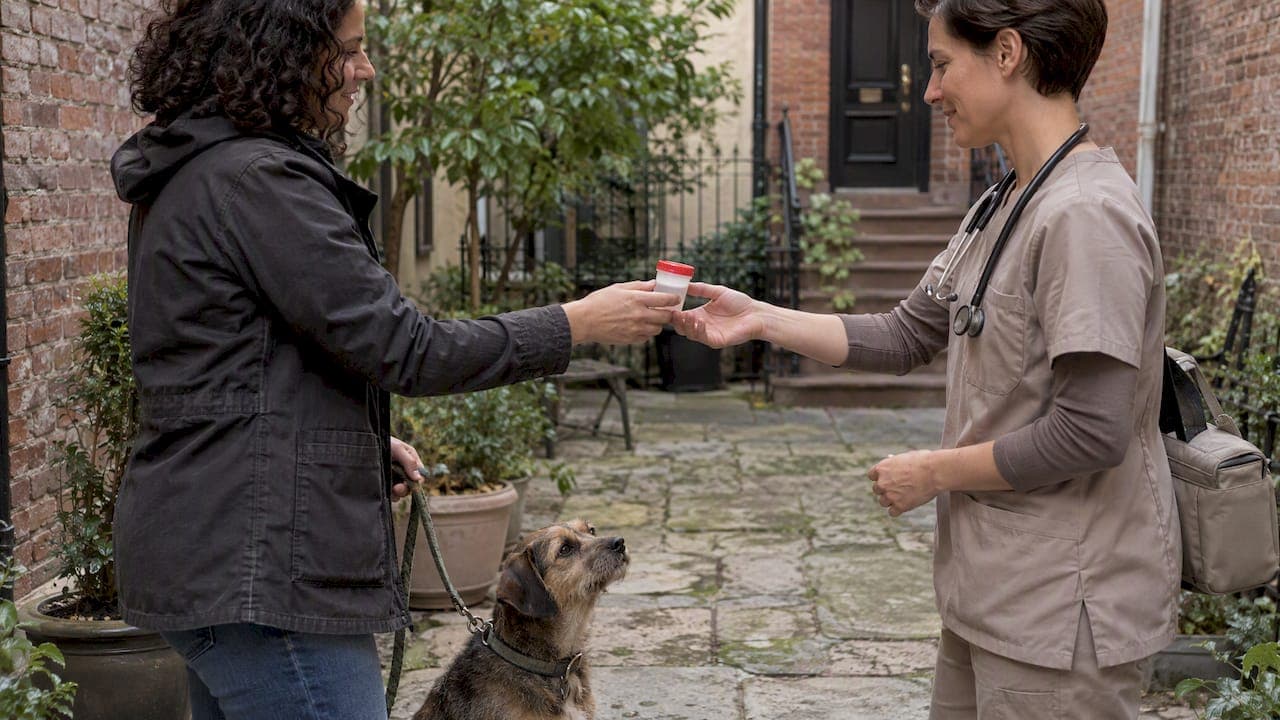
Collect a fresh sample right after your dog defecates, about 1 gram for formed stool, and get it to your vet within 2 hours when you can. If that is not possible, refrigerate it at around 4°C and most tests remain reliable for 2 to 3 days, unless your clinic asks for something fresher.
TL;DR:
- Wear gloves and collect about 1 gram of formed stool, 2 grams of soft stool, or 4 to 6 grams of liquid stool promptly.
- Deliver the sample within 2 hours when possible; otherwise, refrigerate it at about 4°C for 2 to 3 days, and never freeze it.
- A Giardia direct smear requires unrefrigerated stool collected less than 30 minutes earlier, because the organisms quickly die and become difficult to identify.
- For symptomatic dogs, vets may combine tests or repeat sampling over several days because parasites shed intermittently and one negative result may miss them.
- Bloody stool, repeated vomiting, collapse, fever, or severe lethargy call for urgent veterinary care, so collecting a routine sample must not delay treatment.
Table of Contents
- Step-by-step collection procedure and supplies
- How much stool do you actually need?
- Storage and transport: how long can a sample wait?
- What tests do vets run on a stool sample?
- Protecting yourself and your household during collection
- When clinics ask for samples on more than one day
- Clinic-tested tips for calmer collection
- When a stool sample should wait for urgent care
- How we can help with your dog's stool sample
- FAQ
- Sources
Step-by-step collection procedure and supplies
Before your next walk, gather a few basic items: disposable gloves, a sealable specimen container or a zip-top bag placed inside a rigid container, a disposable scoop or bag, and a permanent marker. Having these ready means you will not miss the moment your dog goes.
- Put on disposable gloves before touching anything.
- Stay close during the walk so you can collect the stool right after it is passed.
- Pick a clean, representative portion of the stool, avoiding any part that touched soil, grass, or gravel.
- Place the sample into your container or double-bag it securely.
- Seal the lid tightly and write your dog's name, the date, and the collection time on the container.
- Wash your hands thoroughly once the sample is sealed.
If you do not have a specimen pot on hand, a clean zip-top bag nested inside a second rigid container works as a substitute. Clinics prefer sealed specimen jars because they prevent leaks, keep odor contained, and protect the sample from air exposure that can degrade parasite eggs or trophozoites before testing. When you arrive, let the front desk know your dog's symptoms, roughly when the sample was collected, and whether it came from a single bowel movement or was pooled from more than one.
How much stool do you actually need?
Undersized samples are one of the most common reasons a fecal test comes back falsely negative, because too little material means too few eggs or organisms end up under the microscope. The Companion Animal Parasite Council recommends matching the amount to the consistency of the stool.
- Formed stool: about 1 gram, roughly the size of a walnut.
- Soft stool: about 2 grams, since looser stool contains less concentrated material.
- Liquid stool: 4 to 6 grams, because fluid dilutes parasite eggs and more volume is needed to recover them.
This is also why fecal loops and rectal swabs often underperform: they pull out such a small amount that parasites can be missed entirely. For puppies, small-breed dogs, or dogs with diarrhea, your vet may ask you to collect more frequently or to pool samples from consecutive bowel movements to reach an adequate volume.
Storage and transport: how long can a sample wait?
Fresh is always best, but life does not always cooperate with a dog's bathroom schedule. The Merck Veterinary Manual recommends submitting a sample within 2 hours of collection whenever possible. When that window is not realistic, refrigerating the sample at about 4°C keeps it usable for most parasitology testing for 2 to 3 days.
- Submit within 2 hours for the most accurate results.
- Refrigerate at roughly 4°C if same-day drop-off is not possible.
- Avoid freezing: freezing can damage the cell structures labs need to identify parasites accurately.
- Use an insulated bag with an ice pack for transport, and hand-carry the sample rather than leaving it in a hot car.
One important exception: a direct smear test for Giardia trophozoites requires an extremely fresh, unrefrigerated sample, ideally less than 30 minutes old, because the organisms die and become unrecognizable quickly outside the body.
Pro Tip: If your dog is scheduled for a morning appointment, collect the sample as close to drop-off time as you can rather than the night before.

What tests do vets run on a stool sample?
Once your sample reaches the lab, the method used affects how reliable the results are. Several tests exist, each suited to different organisms and situations.
- Direct smear: a thin layer of fresh stool viewed immediately under a microscope, mainly used to catch active Giardia trophozoites.
- Centrifugal flotation: spins the sample to separate parasite eggs and cysts from debris, and is considered more sensitive than passive flotation for routine screening.
- ELISA antigen testing: detects proteins shed by organisms like Giardia even when no visible cysts are present in that particular sample.
- PCR testing: identifies parasite or pathogen DNA and is typically reserved for cases where standard tests are negative but symptoms persist.
For symptomatic dogs, the Companion Animal Parasite Council recommends combining methods rather than relying on a single test, since some parasites shed eggs intermittently and can be missed on any given day. That intermittent shedding is also why your vet might ask for repeat testing over several days rather than accepting one negative result as final. When symptoms continue despite clean results, a reference lab running PCR panels can pick up pathogens that routine in-house testing is not designed to catch.
Protecting yourself and your household during collection
Stool samples can carry organisms that affect people as well as dogs, so basic hygiene matters here as much as it does in the clinic.
- Wear disposable gloves every time, and avoid any bare-hand contact with the sample.
- Seal the container tightly, and double-bag it if you are at all unsure about the seal.
- Wash your hands thoroughly with soap and water immediately after handling the sample, and disinfect any surface it touched.
- Keep the sample out of your household food refrigerator when possible; if you must refrigerate it at home, use solid secondary containment and clean the area afterward.
A leak-proof option like these waste bags from Fetch & Co. makes outdoor collection considerably less messy, especially for soft or liquid stool.
When clinics ask for samples on more than one day
A single sample does not always tell the whole story. Some parasites, including lungworm, shed intermittently, so your vet may ask you to collect on three consecutive days or every two to three days to improve the odds of catching them.
- Collect each day's sample into its own labeled container unless your clinic specifically asks you to pool them.
- Keep each sample refrigerated separately and bring them all in together once the series is complete.
- Call ahead to confirm whether your clinic wants separate or pooled samples, since preferences vary by lab and by the test being run.
When in doubt, a quick call to the front desk before you start collecting saves a second round of visits.
Clinic-tested tips for calmer collection
We built our approach around reducing the stress that comes with vet visits, and that extends to how we handle stool samples too. A short leash, a familiar blanket, and a few treats during collection help keep an anxious dog settled, both at home and at drop-off.

For clients who find transporting an anxious or mobility-limited dog difficult, our home visit service can include sample collection as part of a house call, so the entire process happens in a space your dog already feels comfortable in. When owners bring in a sample that is smaller than ideal, the team accepts what is available and advises on next steps, and routinely talks clients through serial sampling schedules when a single collection is not enough.
When a stool sample should wait for urgent care
Fever, bloody stool, repeated vomiting, collapse, or severe lethargy are signs that need immediate attention, not a scheduled fecal test. A stool sample is a useful diagnostic tool, but it should never delay getting a dog with these symptoms seen right away.
— CAVC
How we can help with your dog's stool sample
We keep an in-house laboratory on site, so many fecal tests get processed without waiting on an outside courier or lab turnaround. If getting your dog into the clinic is the hard part, our home visit and house call services can include sample pickup, and our urgent care team is available when symptoms point to something that cannot wait for a routine appointment.
A few concrete next steps:
- Call ahead to ask whether your dog's symptoms call for a specific sample size, freshness window, or repeat collection.
- Request a specimen jar from us in advance so you are ready the next time your dog goes.
- Ask about a home visit if transporting your dog is stressful or difficult.
Our wellness exam and lab services page has more on what to expect, and our front desk can walk you through drop-off logistics before your appointment.
FAQ
How far in advance can you collect a stool sample for a dog?
For most routine parasite screening, collect the sample no more than 2 to 3 days before your appointment, as long as it stays refrigerated at around 4°C the whole time. If your vet is checking for Giardia trophozoites specifically, the sample needs to be far fresher, ideally under 30 minutes old, so plan to collect it the same day.
What is the best way to collect a dog stool sample?
Wait near your dog during a walk or yard time, then scoop a clean, representative portion immediately after it is passed using gloves and a sealed container. Avoid any part of the stool that touched soil or grass, since contamination can lead to misleading results.
How much poop should you collect for a dog stool sample?
The Companion Animal Parasite Council recommends about 1 gram of formed stool, 2 grams if it is soft, and 4 to 6 grams if it is liquid. A formed sample about the size of a walnut is usually enough for most routine tests.
What symptoms mean my dog needs a stool sample tested?
Diarrhea, vomiting, visible worms, weight loss, or a dull coat are common reasons a vet will request fecal testing. Routine wellness visits and puppy checkups also typically include a stool sample as a standard part of parasite screening.
Sources
- Parasitology in Veterinary Practice - Merck Veterinary Manual
- Fecal exam procedures - Companion Animal Parasite Council (CAPC)