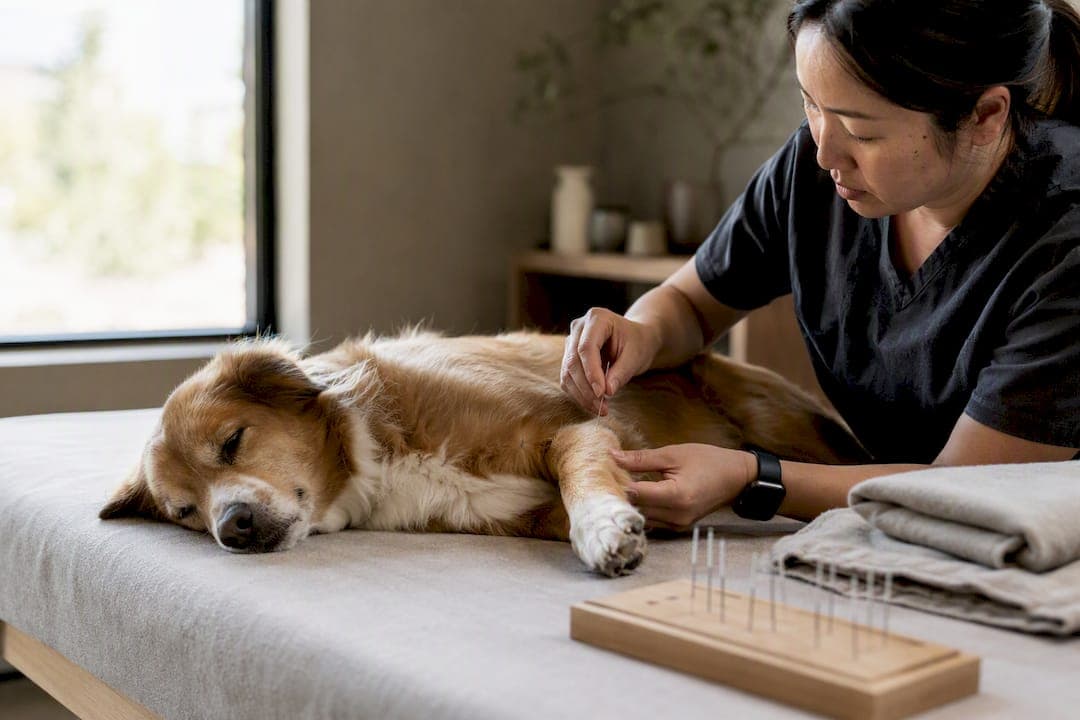
Acupuncture can help many dogs manage chronic pain, especially arthritis and back conditions like IVDD, when it's used alongside conventional veterinary care rather than in place of it. It is rarely a standalone cure. Research from the Washington State University Veterinary Teaching Hospital and multiple randomized clinical trials on canine osteoarthritis support its use as one tool among several, not a replacement for medication, surgery, or physical rehab.
Owners who try acupuncture for dogs often report:
- Reduced stiffness getting up from rest
- Better comfort during walks or play
- Improved overall quality of life at home
Pro Tip: Set expectations for a series of sessions, not a single fix. Most dogs need weekly visits for several weeks before you'll notice a real difference, and acupuncture typically works best paired with other therapies your vet recommends.
Key Takeaways
Acupuncture helps many dogs manage chronic pain most reliably when combined with conventional veterinary care, not used as a standalone treatment.
| Point | Details |
|---|---|
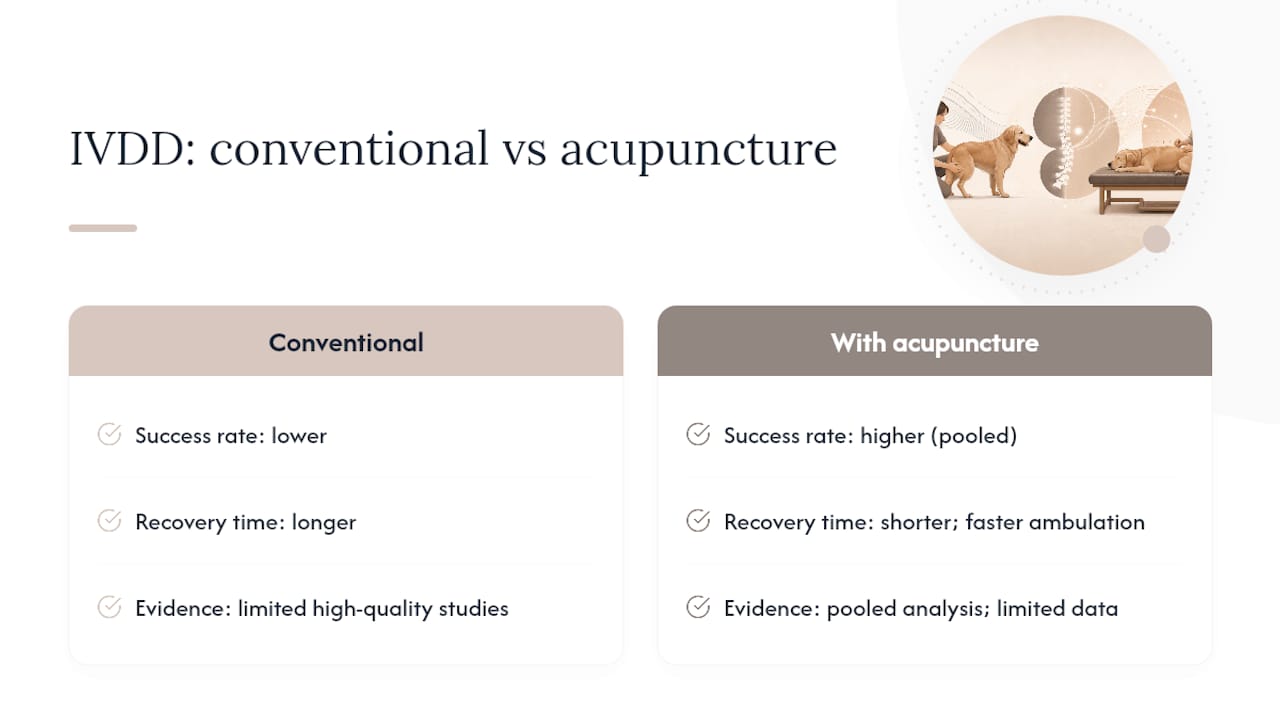
| Best evidence for IVDD | Combining acupuncture with conventional care raised treatment success rates (p=0.0006) and cut recovery time (p=0.0012). |
| Osteoarthritis results are mixed | Owner-reported comfort often improves even when objective measures like ground reaction forces don't change. |
| Expect a series, not a single visit | Most dogs need weekly sessions for several weeks, then maintenance every two to four weeks. |
| Safety depends on the practitioner | Side effects are typically mild, but anatomy knowledge and calm handling matter for minimizing risk. |
| Fit acupuncture into a full plan | City Animal Veterinary Center integrates acupuncture with diagnostics, rehab, and Fear Free handling for a multimodal approach. |
Table of Contents
- What Is Acupuncture for Dogs and How Does It Differ From Human Treatment?
- Which Conditions Does Acupuncture Commonly Treat in Dogs?
- Does Dog Acupuncture Work? What the Research Actually Shows
- How Does Acupuncture Relieve Pain in Dogs?
- What Happens During a Dog Acupuncture Appointment?
- Is Acupuncture Safe for Dogs? Side Effects and Contraindications
- Where Does Acupuncture Fit Into a Multimodal Pain-Management Plan?
- Who Can Perform Veterinary Acupuncture and How Do You Vet a Provider?
- How City Animal Veterinary Center Approaches Acupuncture for Dogs
- Frequently Asked Questions
- Sources
What Is Acupuncture for Dogs and How Does It Differ From Human Treatment?
Veterinary acupuncture involves inserting thin needles into specific points on a dog's body to stimulate nerves, ease pain, calm inflammation, and improve local blood flow. The Merck Veterinary Manual describes the underlying goal as activating somatic afferent fibers, the nerve pathways that trigger the body's own pain-modulating and healing responses.
The biggest difference from human acupuncture isn't the theory. It's the anatomy. A veterinary acupuncturist has to know canine musculoskeletal and neurologic structure cold, because point locations and needle depth shift dramatically between a 6-pound Chihuahua and a 90-pound Mastiff. Dense fur, thicker skin in some regions, and a very different skeletal frame all change how treatment gets delivered.
Several techniques show up in practice, often combined in the same session:
- Dry needling — thin, sterile needles placed at specific points and left in place for several minutes
- Electroacupuncture — a mild electrical current passed between needle pairs to intensify stimulation, common for chronic pain and nerve injuries
- Aquapuncture — injecting small amounts of liquid (often vitamin B12) into acupuncture points for a sustained effect
- Moxibustion — applying gentle, controlled heat near acupuncture points to boost circulation, useful in cases involving cold, stiff joints
There's no universal protocol. A trained veterinary professional builds the point selection and technique around the dog's specific diagnosis, body condition, and temperament, not a template borrowed from human medicine.
Which Conditions Does Acupuncture Commonly Treat in Dogs?
Osteoarthritis and degenerative joint disease top the list, followed closely by hip dysplasia, intervertebral disc disease (IVDD), postoperative pain, and various neurologic or soft-tissue injuries. Acupuncture for arthritis in dogs is one of the most requested applications, largely because it offers a drug-free option for owners trying to reduce reliance on long-term NSAIDs.
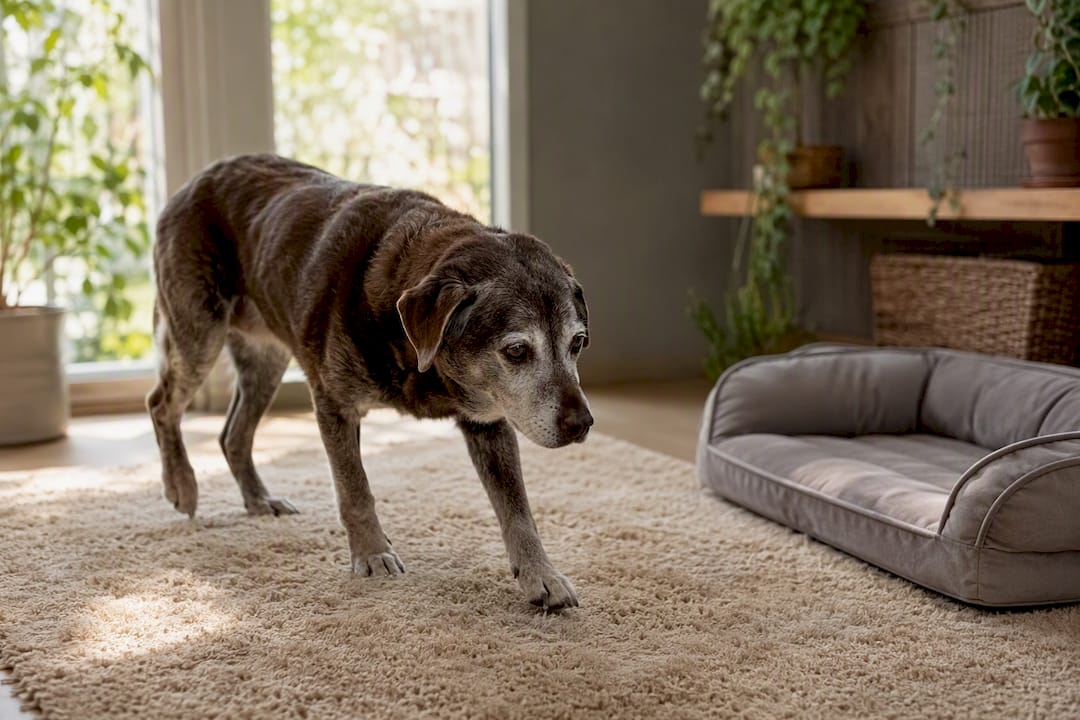
The strength of evidence varies by condition. IVDD rehabilitation shows some of the more encouraging data when acupuncture is combined with standard veterinary care, an important distinction covered in the next section. Osteoarthritis results are more mixed, with outcomes depending heavily on how "improvement" gets measured.
Common scenarios where dogs typically receive this therapy include:
- A senior dog with worsening hip or spine arthritis who's slowing down on walks
- A dog recovering from hemilaminectomy surgery who needs help regaining mobility
- A paraparetic dog (weakness in the hind limbs) working through a structured rehab plan
- A dog with chronic soft-tissue pain that hasn't fully resolved with rest or medication alone
Retrospective case series on cervical IVDD have reported clinical effective rates in the 70 to 93 percent range, though these studies weren't randomized controlled trials, so the numbers deserve some skepticism about how well they generalize. Still, the pattern is consistent enough across multiple case series that many rehabilitation specialists consider acupuncture a reasonable add-on for IVDD recovery, not a fringe option.
Does Dog Acupuncture Work? What the Research Actually Shows
The honest answer: it depends on what you're measuring. Evidence supports real benefit in specific contexts, particularly when acupuncture is combined with conventional treatment, but well-controlled trials often show a gap between what owners notice and what objective instruments record.
Start with osteoarthritis, where the research is most rigorous. A prospective, randomized, placebo-controlled, blinded clinical trial had 32 client-owned dogs complete a crossover design with weekly acupuncture treatments over four weeks. Owner-completed questionnaires showed a treatment response. Objective measures, including ground reaction forces and accelerometry, did not show a significant improvement. That's not a contradiction so much as a known limitation of pain research generally: subjective comfort can shift before, or without, measurable gait changes.
The gap between owner-reported comfort and instrument-measured mobility is one of the most consistent findings across canine acupuncture trials. Dogs seem more relaxed and willing to move at home, even when a force plate in a lab setting doesn't pick up a statistically significant change.
IVDD tells a more favorable story when acupuncture is paired with standard treatment rather than tested alone. A systematic review and meta-analysis found that combining acupuncture with conventional therapy raised treatment success rates and shortened recovery time compared to conventional therapy by itself.
Statistic Callout: Dogs receiving acupuncture alongside conventional IVDD treatment showed higher treatment success rates and shorter recovery times than dogs treated conventionally alone, according to the pooled analysis. The authors caution that the number of high-quality canine studies feeding into that analysis is still small, so treat the effect size as a promising signal rather than settled science.
Postoperative rehabilitation adds another data point. A clinical study on dogs recovering from acute thoracolumbar disc herniation found that dogs receiving acupuncture and electroacupuncture as part of their post-op physiotherapy had a higher probability of regaining the ability to walk compared with physiotherapy alone, a statistically meaningful difference in time-to-ambulation.
Trial protocols typically involve weekly sessions, needle retention times of 10 to 20 minutes, and electroacupuncture delivered at low frequencies over several weeks. That consistency matters for owners trying to interpret results: a single session, done once, isn't what any of these studies tested.
The practical takeaway is straightforward. If you're deciding whether to try acupuncture for your dog's chronic pain, go in expecting a supportive role rather than a cure, with better odds of a visible difference when it's layered onto the treatment plan your veterinarian already has in place.
How Does Acupuncture Relieve Pain in Dogs?
The short answer involves three overlapping mechanisms. Needling activates sensory nerve fibers, which triggers local, spinal, and brain-level responses that dial down pain signaling and support tissue repair.
- Local effects — increased blood flow to the treated area and a reduction in localized inflammation
- Spinal-level modulation — altered pain signal transmission at the level of the spinal cord
- Central nervous system response — release of endorphins and other neurochemicals that shift how the brain processes pain
Electroacupuncture amplifies this stimulation with a mild electrical current, often used when a condition calls for a stronger, more sustained nerve response, such as chronic nerve pain or slow-healing injuries. Aquapuncture provides a similar sustained-release effect through injected liquid at the treatment site.
Pro Tip: Point selection and stimulation method aren't interchangeable across dogs. Two dogs with the same diagnosis might get different point maps and techniques based on body size, temperament, and how they respond to the first session. That individualization is exactly why a trained practitioner, not a generic protocol, drives better odds of a response.
What Happens During a Dog Acupuncture Appointment?
A first visit typically starts the same way any specialty consult does: a thorough exam. The practitioner reviews the dog's history, evaluates gait and neurologic status, and builds a treatment plan around the specific diagnosis before a single needle goes in.
Here's the general sequence for a typical session:
- Intake exam and review of medical history, current medications, and mobility concerns
- Assessment of gait, posture, and any neurologic deficits
- Development or adjustment of an individualized treatment plan
- Needle placement at selected points, with retention times generally running 10 to 20 minutes
- Optional electroacupuncture or aquapuncture added based on the condition being treated
- A calm recovery period before the dog heads home
Most dogs tolerate the needles well. Many actually relax or doze during the session, though some feel a brief tingling or muscle twitch when a point is stimulated. The Washington State University Veterinary Teaching Hospital notes that a single session is rarely enough. Practice patterns generally follow weekly treatments for several weeks, followed by reassessment, then spacing out to a maintenance schedule every two to four weeks depending on how the dog responds.
At home, improvement tends to show up gradually and subtly: a bit more willingness to jump on the couch, less morning stiffness, more interest in a walk.
Pro Tip: Bring copies of recent medical records, a current medication list, and anything that keeps your dog calm, whether that's a favorite blanket or a familiar harness. A relaxed dog gets more out of the session, and a stressed one may need extra time or a modified plan.
Is Acupuncture Safe for Dogs? Side Effects and Contraindications
Acupuncture is generally considered a low-risk therapy when performed by a trained veterinary professional who understands canine anatomy. Reported side effects tend to be mild and short-lived: temporary fatigue, slight soreness at needle sites, or rare minor bruising.
Severe systemic adverse reactions are not commonly reported in dogs treated by trained practitioners, and the Washington State University Veterinary Teaching Hospital notes that iatrogenic injury risk stays low when the practitioner knows the anatomical landmarks well.
Certain situations call for caution or a different approach entirely:
- Dogs that can't stay calm or safely handled during needle placement
- Severe bleeding disorders or clotting abnormalities
- Skin infections or open lesions at a planned treatment site
- Anatomical regions where needle placement carries elevated risk without precise technique
Handling matters as much as anatomy. A dog with an anxious or aggressive temperament may not tolerate needling well and might do better with Fear Free handling adjustments or a different modality altogether. Owners should flag anything unusual after a session, including persistent lethargy, swelling, or new pain, since poor handling or an ill-fitting restraint approach raises the risk of a bad outcome more than the needles themselves.
Where Does Acupuncture Fit Into a Multimodal Pain-Management Plan?
Acupuncture works best as one piece of a larger plan, not the whole plan. Veterinarians typically layer it with NSAIDs, physical rehabilitation, weight management, joint supplements, and sometimes laser therapy, adjusting the mix based on how the dog responds over time.
Common combinations look like this:
- Acupuncture plus structured rehab exercises following IVDD surgery
- Acupuncture alongside a gradual NSAID taper for dogs with osteoarthritis
- Acupuncture combined with weight loss support for overweight dogs carrying extra joint stress
- Acupuncture integrated with laser therapy for dogs with chronic soft-tissue pain
Talk with your veterinarian about measurable goals before starting, whether that's walking a certain distance without stopping or climbing stairs more easily. Clear benchmarks make it much easier to tell whether the combined approach is actually working, rather than guessing based on a good day here or there.
Who Can Perform Veterinary Acupuncture and How Do You Vet a Provider?
Look for a licensed veterinarian (DVM) who holds additional certification specifically in veterinary acupuncture, sometimes through recognized certifying bodies for veterinary medical acupuncture. General wellness training isn't the same credential, and it matters here more than in almost any other integrative therapy.
Before booking, ask:
- What certification or additional training do they hold in veterinary acupuncture?
- Have they treated dogs with your dog's specific condition before?
- Do they use Fear Free handling techniques for anxious or reactive dogs?
- How do they document progress, through owner-reported changes, objective measures, or both?
- Can they walk you through a realistic timeline for your dog's case?
A credentialed provider should be comfortable answering all of these without hesitation. If you want a broader sense of how to vet veterinary credentials generally, this guide on finding a USDA accredited veterinarian covers verification steps that apply well beyond travel certificates.
How City Animal Veterinary Center Approaches Acupuncture for Dogs
City Animal Veterinary Center offers acupuncture as part of a broader integrative medicine approach, built around the practice's Fear Free philosophy. That matters more than it might sound: a dog who's anxious about needles or unfamiliar handling won't get the full benefit of treatment, so minimizing stress before the first needle goes in is treated as part of the therapy itself, not a nice extra.
Acupuncture here gets built into a multimodal plan alongside conventional diagnostics and treatment, with reassessment points built in so the plan can shift if a dog isn't responding the way expected. Owners get counseled on realistic timelines from the start.
- Fear Free handling adapted to each dog's comfort level
- Integration with diagnostics, rehab guidance, and medication management
- Home visit availability for dogs who struggle with clinic travel or car anxiety
Pro Tip: Bring your dog's recent medical records and current medication list to the first acupuncture consult, along with anything that helps them settle, whether that's a familiar towel or a favorite treat.
Why We Offer Acupuncture and How We Set Expectations With Owners
City Animal Veterinary Center includes acupuncture in its treatment options because chronic pain management works better with more tools, not fewer, and some dogs respond meaningfully to it when conventional care alone hasn't gotten them all the way there. Staff walk owners through what the evidence actually supports before starting, rather than overpromising a cure.
Outcomes get tracked collaboratively between the veterinary team and the owner, comparing what's observed at home against what's measured in the clinic. That evidence-informed approach means adjusting the plan honestly if a particular dog isn't responding, rather than sticking with a therapy out of habit.
Ready to Book an Acupuncture Consult?
If your dog is dealing with arthritis, recovering from disc surgery, or managing chronic pain that hasn't fully responded to standard treatment, an acupuncture consult at City Animal Veterinary Center is a straightforward next step. Appointments start with a full assessment of your dog's condition and mobility before any treatment plan gets built, so you'll know exactly what to expect before committing to a series of sessions.
Getting started is simple:
- Book online or call the clinic to schedule an initial consult
- Expect an exam, gait assessment, and treatment plan discussion at the first visit
- Bring recent medical records, a current medication list, and a familiar item that helps your dog stay calm
City Animal Veterinary Center's Fear Free approach means the visit is built around keeping your dog relaxed from check-in to needle placement, and the clinic's house call option is available if travel adds unnecessary stress. Schedule your dog's acupuncture consult through City Animal Veterinary Center and get a clear, honest read on whether it fits your dog's care plan.
Frequently Asked Questions
Does acupuncture really work for dogs, or is it placebo? Owner-reported comfort improves in multiple studies, though objective measures like ground reaction forces don't always show the same change. The strongest evidence comes from IVDD recovery, where acupuncture combined with conventional treatment measurably improved success rates and recovery time.
How many acupuncture sessions does a dog typically need? Most treatment plans start with weekly sessions for several weeks, then shift to maintenance visits every two to four weeks depending on how the dog responds. A single session rarely produces a lasting result.
Is acupuncture safe for older dogs with multiple health conditions? Generally yes, when performed by a trained veterinary professional who reviews the dog's full medical history first. A senior wellness exam beforehand helps identify any conditions that could affect the treatment plan.
Can acupuncture replace pain medication for arthritis? Rarely on its own. It works best alongside NSAIDs, weight management, and rehab, often supporting a gradual medication taper rather than replacing medication outright.
What should I look for in a veterinary acupuncturist? A licensed DVM with specific certification in veterinary acupuncture, experience treating your dog's condition, and a practice that uses Fear Free handling for anxious dogs.
This article is general information, not a substitute for advice from a qualified doctor. Consult a qualified healthcare professional about your own circumstances before acting on anything here.
Sources
- Acupuncture for chronic pain in dogs | Veterinary Teaching Hospital | Washington State University
- Evaluation of acupuncture for the treatment of pain associated with naturally-occurring osteoarthritis in dogs: a prospective, randomized, placebo-controlled, blinded clinical trial (PMC7517673)
- Evaluating the Efficacy of Acupuncture for the Treatment of Intervertebral Disc Disease: A Systematic Review and Meta-analysis
- Clinical Study on the Application of Acupuncture in the Postoperative Rehabilitation of Dogs Affected by Acute Thoracolumbar Disc Herniation
- Acupuncture in Veterinary Patients - Therapeutics - Merck Veterinary Manual