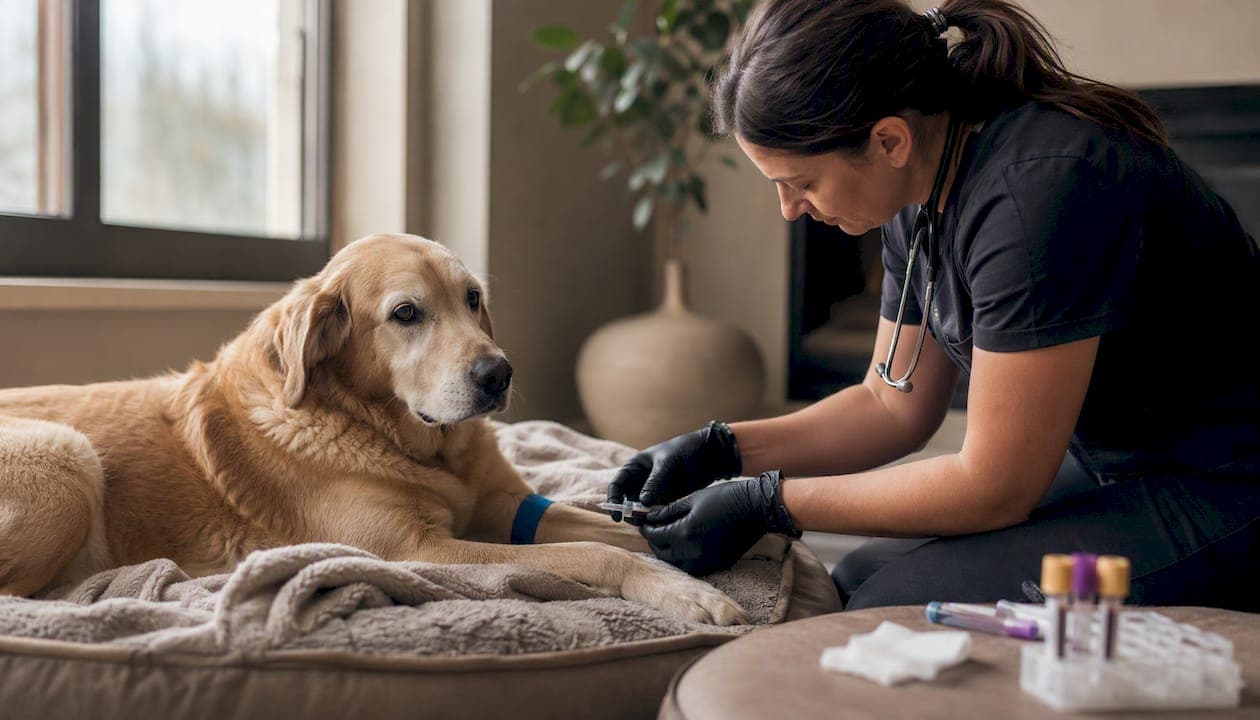
Dog blood work typically costs a moderate amount for a routine panel though the final figure depends heavily on which tests your vet recommends, whether samples are run in-house or sent to a reference lab, and where you live. The AVMA and ASPCA both support routine diagnostic screening as a core part of preventive care, and most veterinary practices, including City Animal Veterinary Center, will provide a written, itemized estimate before any testing begins. City Animal Veterinary Center does not publish a price list online. Call or send a message to request a patient-specific estimate before your visit.
Key Takeaways
Routine dog blood work covers a CBC and chemistry panel as the standard baseline, and the final scope and fee depend on test type, lab setup, and clinic setting.
| Point | Details |
|---|---|
| Ask for an itemized estimate | Request a written breakdown listing each test, the draw fee, handling, and any sedation before the appointment. |
| Confirm in-house vs. send-out | This single factor most affects turnaround time and how the clinic structures its fees. |
| Check insurance with test names | Call your insurer with the exact panel names your vet provides to confirm coverage before the visit. |
| Prepare your dog for the draw | Fast as directed, bring prior results, and tell the team about your dog's temperament upfront. |
| City Animal Veterinary Center | Offers on-site analyzers, Fear Free handling, send-out lab access, and individualized written estimates on request. |
Table of Contents
- What does dog blood work actually include?
- Why do prices vary so much between clinics?
- How to get an accurate, itemized estimate from your vet
- How pet insurance and wellness plans handle blood work
- Is blood work actually worth it?
- How to prepare your dog and what to expect
- Practical ways to manage the expense
- When should you call your vet about blood work?
- City Animal Veterinary Center is ready to help you plan
- A note from the City Animal Veterinary Center team
- Sources
What does dog blood work actually include?
Routine blood work for dogs typically consists of two core panels: a complete blood count (CBC) and a blood chemistry panel. Together, they give your vet a broad baseline picture of your dog's health. Beyond those two, vets often add targeted tests depending on your dog's age, symptoms, or history.
Here is what you will commonly see on a blood work order:
- Complete blood count (CBC): Measures red blood cells, white blood cells, and platelets. Flags anemia, infection, clotting problems, and immune responses.
- Blood chemistry panel: Evaluates organ function, including the liver, kidneys, and pancreas, along with blood glucose and electrolytes. This is the panel that catches early kidney disease or diabetes.
- Urinalysis (when paired): Not a blood test itself, but frequently ordered alongside blood work to complete the kidney and metabolic picture.
- Thyroid (T4): Measures thyroid hormone. Hypothyroidism is common in middle-aged and older dogs and often missed without this test.
- Heartworm antigen test: A quick in-house test that checks for adult heartworm infection. Most vets run it annually.
- Pre-anesthetic screen: A targeted panel run before any procedure requiring sedation or general anesthesia. Checks that the liver and kidneys can safely process anesthetic drugs.
- Drug-level monitoring: Used for dogs on long-term medications like phenobarbital for seizures. Confirms the drug is at a therapeutic level without reaching toxicity.
- Allergy panels (serum/RAST): Blood-based allergy testing that screens for environmental and food allergens. More involved than a screening panel and typically requires specialist interpretation.
- Infectious disease panels: Tests for tick-borne illnesses like Lyme, Ehrlichia, and Anaplasmosis, often bundled with the heartworm test in a 4Dx or similar combination test.
Pro Tip: Ask your vet to run a baseline CBC and chemistry panel at your dog's first healthy adult visit. That initial result becomes a personal reference point, so when values shift years later, your vet can distinguish a meaningful change from normal variation for your specific dog.
The difference between a basic panel and a comprehensive senior screen is scope. A basic panel covers the essentials. A comprehensive screen adds thyroid, a urinalysis, and sometimes a blood pressure check. The broader the scope, the more line items appear on the estimate.
Why do prices vary so much between clinics?
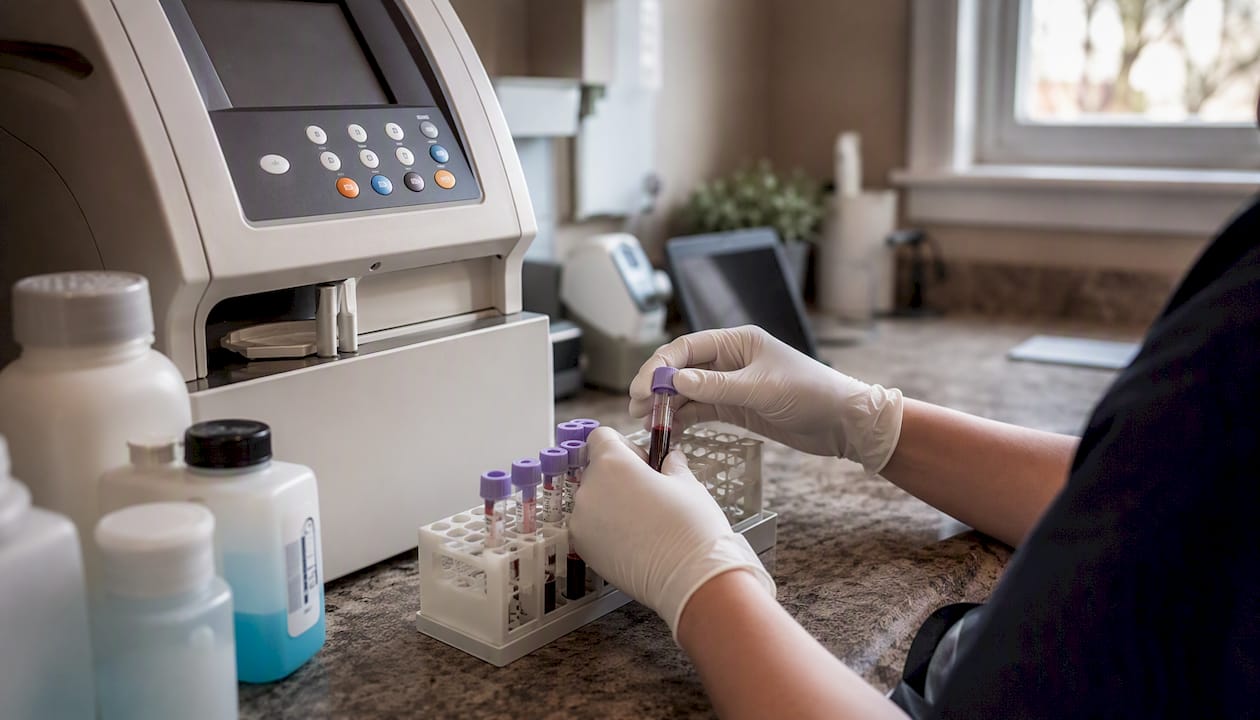
The single biggest driver of price differences between clinics is whether the sample is analyzed on an in-house machine or shipped to an outside reference laboratory. According to WebVet, this in-house versus send-out distinction is the primary reason two clinics can charge very differently for what looks like the same panel.
In-house vs. send-out labs
| Dimension | In-house analyzer | Send-out reference lab |
|---|---|---|
| Turnaround time | Minutes to one hour | Typically 24–72 hours |
| Typical use case | Urgent or same-day results needed; routine wellness | Complex panels, specialty tests, confirmation testing |
| Factors that add to client price | Equipment maintenance, reagent costs, technician time | Courier/handling fees, lab processing fees, reporting fees |
In-house analyzers are fast and convenient, but clinics carry the overhead of maintaining the equipment and stocking reagents. Reference labs offer a wider test menu and often handle specialty panels that no in-house machine can run, but the sample has to travel, and that adds handling fees and a delay.
Clinic type and setting
A general practice, an emergency hospital, and a low-cost community clinic all charge differently for the same test. Emergency and specialty hospitals carry higher overhead and often apply urgency premiums for stat processing. Low-cost clinics may offer narrower panels at reduced fees, though the test menu and follow-up interpretation may be more limited.
Test scope
A limited panel covering just the CBC and basic chemistry is a smaller bill than a comprehensive senior screen that adds thyroid, urinalysis, and an infectious disease panel. When a vet recommends a broader workup, it is usually because the clinical picture warrants it. As MarketWatch notes, add-on tests like heartworm and thyroid can accumulate quickly across a single visit or multiple monitoring appointments.
Operational costs owners rarely see
Interpretation time matters. A veterinarian reviewing results and calling you with a clinical explanation is a professional service, not a formality. After-hours or stat processing, courier fees for send-out samples, and reporting fees for specialist panels all appear as line items on a detailed estimate.
Pro Tip: When you call for an estimate, ask specifically whether the clinic charges a separate "sample handling" or "courier" fee for send-out tests. That line item is easy to miss and can be a meaningful addition to the total.
How to get an accurate, itemized estimate from your vet
The most reliable way to budget for a canine blood test is to ask for a written, itemized estimate before the appointment. Here is a phone or email script you can use:
- State your dog's basics: "I have a [age]-year-old [breed]. My vet has recommended [panel name, if you know it] before [reason: annual wellness / upcoming procedure / monitoring]."
- Ask for an itemized breakdown: "Can you send me an itemized estimate that lists each test separately, including the draw fee, any send-out handling, and the interpretation or reporting fee?"
- Confirm the lab setup: "Will these tests be run in-house, or will the sample go to an outside lab? And how long should I expect to wait for results?"
- Ask about the exam fee: "Is the exam fee included in the estimate, or is that billed separately?"
- Clarify sedation: "Is there any chance my dog will need sedation for the draw? If so, can that be included in the estimate?"
Suggested line items to request on your estimate
- Draw/phlebotomy/technician fee
- Panel name and individual test codes
- Send-out handling or courier fee (if applicable)
- Office or exam fee
- Sedation or anesthesia fee (if applicable)
- Reporting or interpretation fee
CareCredit's veterinary cost overview frames blood work as a common diagnostic line item within a broader visit charge, which is exactly why separating those lines matters for budgeting.
Pro Tip: If you are on a strict budget, ask the clinic to set an authorization limit before the appointment. This means the team will call you before adding any unplanned tests rather than billing you for extras after the fact.
How pet insurance and wellness plans handle blood work
Coverage depends entirely on why the blood work is ordered. MetLife Pet Insurance explains that diagnostic testing is typically covered when a vet orders it in response to an illness or injury, but routine wellness blood work is usually excluded from standard accident-and-illness policies unless the plan includes a preventive care or wellness add-on.
In practical terms: if your dog comes in vomiting and the vet runs a chemistry panel to check organ function, that is likely a covered diagnostic claim. If your healthy dog gets an annual wellness screen, that same panel may not be reimbursed unless you have a wellness rider.
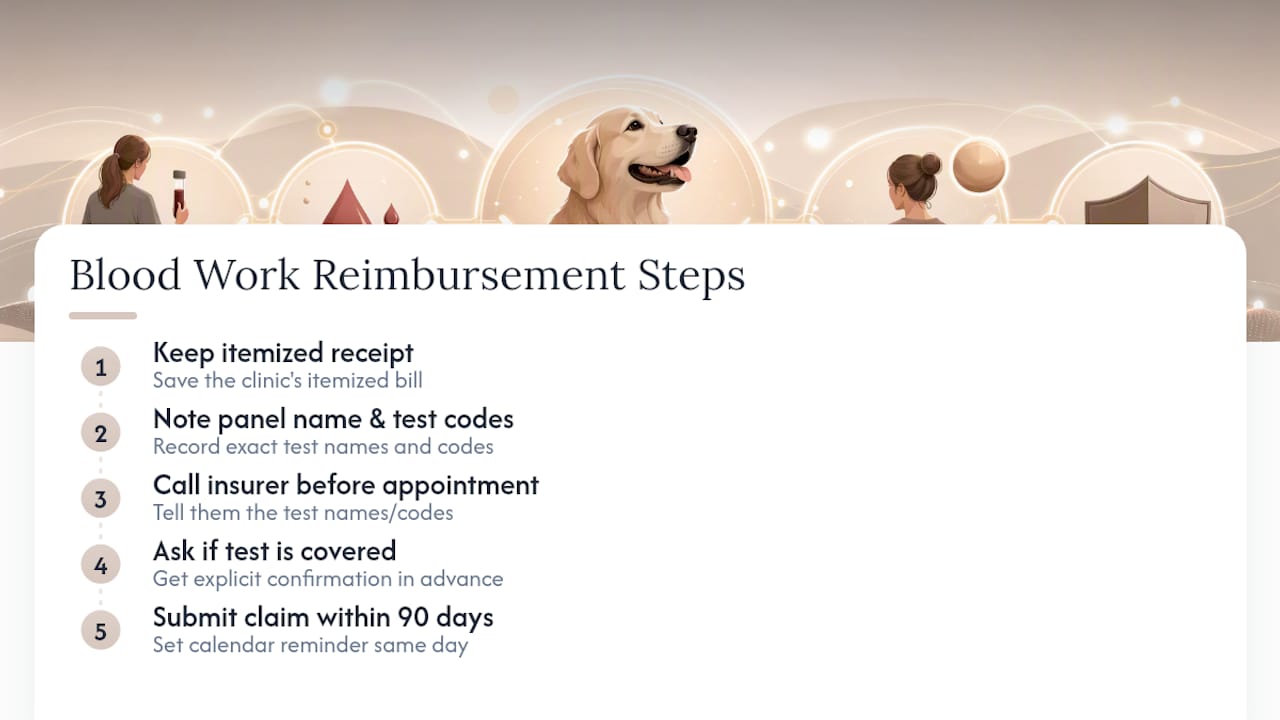
The reimbursement workflow is straightforward. Keep the itemized receipt from your clinic. Note the exact panel name and any test codes your vet provides. Call your insurer before the appointment and read them those names. Ask directly: "Is this specific test covered under my current plan?" Getting that confirmation in advance prevents surprises at claims time.
Pro Tip: Many insurers require that the claim be submitted within 90 days of the service date. Set a calendar reminder the day of the appointment so the paperwork does not slip.
Is blood work actually worth it?
Yes, and the clinical case is straightforward. Routine and problem-driven blood tests provide real value for early detection, ongoing monitoring, and anesthesia safety. The question is not really whether to do it but when and which panels.
PetMD emphasizes that blood work is a vital diagnostic tool for both sick and apparently healthy pets, because organ dysfunction and metabolic changes often develop silently before any outward symptoms appear. The AVMA's preventive care guidance aligns with routine screening as part of responsible pet ownership, and the ASPCA supports diagnostic testing as a tool for identifying hidden illness and guiding treatment decisions.
Three specific situations where blood work pays off:
- Early detection: A chemistry panel on a seven-year-old Labrador with no symptoms catches mildly elevated kidney values. The vet recommends a prescription diet and increased hydration. Two years later, the dog's kidney function is stable. Without that baseline, the change would have gone unnoticed until the dog was symptomatic.
- Monitoring chronic conditions: Dogs on long-term medications or managing conditions like Cushing's disease, hypothyroidism, or diabetes need regular blood panels to confirm the treatment is working and the organs are tolerating it.
- Pre-anesthetic safety: A pre-op screen before a tooth extraction or other procedure tells the vet whether the liver and kidneys can safely process anesthetic drugs. Skipping it is a genuine risk, not a cost-saving measure.
Blood work gives veterinarians a window into what is happening inside a dog's body that a physical exam alone cannot provide. For senior dogs especially, annual panels are one of the most reliable ways to catch a problem while it is still manageable.
That said, results need a veterinarian's interpretation. A number outside the reference range is not automatically a diagnosis. The context, clinical signs, and your dog's history all factor into what the result actually means.
How to prepare your dog and what to expect
Preparation is simple, but skipping it can affect sample quality and result accuracy.
- Fasting: Your vet will tell you if fasting is required. For a basic chemistry panel, most vets ask for 8–12 hours without food. Water is usually fine unless instructed otherwise.
- Bring a leash and your dog's medical history: If this is a new clinic, bring any prior blood work results. Trend data is more useful than a single snapshot.
- Describe your dog's temperament honestly: Tell the team upfront if your dog is anxious, reactive, or has had difficult draws before. That information lets the clinic prepare the right handling approach before your dog is stressed.
- Expect a short blood draw: The technician typically draws from the jugular vein or a leg vein. It takes under a minute for most dogs.
- Sedation is occasionally needed: For dogs who cannot be safely or humanely restrained, mild sedation may be recommended. This is not a failure. It protects the dog and produces a better sample.
What to expect for results
- In-house panels: Results are often available within the same appointment or within a few hours.
- Send-out panels: Expect 24–72 hours, sometimes longer for specialty tests like allergy panels or hormone assays.
- Follow-up call: Your vet should contact you to walk through the results, not just send a portal notification. If you have not heard back within the expected window, call the clinic.
For senior dog wellness visits, blood work is typically part of a broader workup that may include a physical exam, blood pressure check, and urinalysis. Plan for a slightly longer appointment.
Practical ways to manage the expense
Managing the cost of dog blood work does not mean cutting corners on care. It means being strategic about what you ask for and how you plan.
What works:
- Ask about wellness or preventive care plans. Many practices offer bundled annual plans that include a wellness exam and basic blood panel at a lower combined rate than booking each separately.
- Request a targeted panel rather than a blanket screen when your vet agrees it is clinically appropriate. If your dog is young and healthy, a basic CBC and chemistry may be all that is needed.
- Discuss phased testing with your vet. If a comprehensive workup is recommended but the full scope is not urgent, ask whether some tests can be deferred to a follow-up visit.
- Get estimates from two or three clinics for non-urgent testing. Fees vary, and a phone call takes five minutes.
- Ask about payment plans. Many practices offer in-house payment options or work with third-party financing programs.
What to avoid:
- At-home blood test kits marketed directly to pet owners. These are not a substitute for veterinary-grade laboratory analysis, and results without a veterinarian's interpretation can be misleading or outright wrong.
- Unaccredited labs or mail-in services that bypass your vet entirely. Lab accreditation matters for result accuracy, and the interpretation step is not optional.
Skipping the veterinarian's interpretation of blood results is the one shortcut that genuinely costs more in the long run. A number on a page is not a diagnosis.
If blood work reveals a metabolic issue or organ change, your vet may recommend a dietary adjustment. Resources like this guide on veterinary diets can help you understand when a prescription diet becomes part of the management plan.
When should you call your vet about blood work?
Some situations call for an immediate phone call. Others warrant scheduling a wellness appointment within the next week or two.
Call your vet right away if your dog shows:
- Sudden, unexplained lethargy or collapse
- Vomiting or diarrhea that persists beyond 24 hours
- Abnormal bleeding or bruising with no clear cause
- Seizures or sudden neurological changes
- Extreme thirst or urination that appears overnight
- Pale or yellow-tinged gums
Schedule a diagnostic or wellness appointment soon for:
- Annual screening for dogs seven years and older
- A new diagnosis requiring baseline values before starting medication
- Ongoing monitoring for a known condition (thyroid disease, kidney disease, diabetes)
- Pre-surgical clearance before any elective procedure
For dogs with behavioral changes that might have a medical component, a blood panel is often part of the initial workup. A separation anxiety evaluation, for example, sometimes begins with ruling out a medical cause through diagnostics.
City Animal Veterinary Center is ready to help you plan
Fear-free diagnostic care and a clear estimate before any testing begins are the two things dog owners in Brooklyn tell us they want most. City Animal Veterinary Center offers both.
The clinic runs on-site analyzers for same-day results on routine panels and maintains send-out lab relationships for specialty testing, including allergy panels, hormone assays, and infectious disease screens. Fear Free handling protocols are used throughout, which matters especially for dogs who have had stressful draws elsewhere. Home visit services are available for dogs who do better in a familiar environment. Pre-op screening is part of the standard workflow before any procedure requiring anesthesia.
City Animal Veterinary Center does not publish a price list online. Every estimate is individualized and provided on request before the appointment. To request a written, itemized estimate or to schedule a diagnostic appointment, contact the clinic directly at Cityanimalvet.
A note from the City Animal Veterinary Center team
We know that recommending blood work can feel like an unexpected addition to a routine visit, and we want you to understand exactly what we are looking for and why. Diagnostic testing is one of the most direct ways we can advocate for your dog's health, particularly for conditions that develop quietly before any symptoms appear. Our Fear Free approach means the draw itself is handled as calmly and gently as possible, and for dogs who find clinic visits difficult, our home visit option keeps the experience low-stress from start to finish. If you have questions about which tests your dog needs, whether your insurance may cover them, or what to expect on the day of the appointment, call us or reach out through Cityanimalvet. We will walk through it with you before you ever walk through the door.
Sources
- Blood Tests for Dogs and Cats: Costs and How To Read Results | PetMD
- Dog Blood Work Cost in 2026: Full Price Breakdown | WebVet
- Dog blood test cost guide | MarketWatch
- Avma
- Aspca
For clinic-specific details and a written estimate tailored to your dog, contact City Animal Veterinary Center directly rather than relying on published national averages, which may not reflect your dog's specific testing needs or your local clinic's fee structure.