
Out-of-pocket price for a dog ultrasound varies widely depending on scan type, provider skill level, facility setting, urgency, and whether sedation or additional procedures are needed. The fastest way to get an accurate number is to contact your clinic directly for a written estimate and check your pet insurance policy before scheduling. According to MarketWatch, national pricing shows broad variation across all of these drivers, so a generic figure pulled from the internet is rarely what you'll actually pay.
Different scan types carry meaningfully different price profiles. A focused single-organ scan is typically less involved than a full abdominal study, and a cardiac ultrasound or biopsy-guided procedure sits at the higher end of the spectrum. Sedation, specialist interpretation, and emergency timing can each add to the total.
Request a written estimate from your clinic and verify your insurance coverage before the appointment. Those two steps will give you a far clearer picture than any national average.
Key Takeaways
Dog ultrasound pricing varies by scan type, facility, and clinical complexity, making a personalized written estimate the most reliable guide to what you'll actually pay.
| Point | Details |
|---|---|
| Get a written estimate | Ask the clinic for a line-item quote covering imaging, exam fee, sedation, and specialist report. |
| Check insurance before scheduling | Accident and illness plans often cover diagnostic ultrasounds for new conditions; accident-only and pregnancy scans are frequently excluded. |
| Scan type drives relative cost | Cardiac, Doppler, and biopsy-guided exams trend higher than single-organ or pregnancy checks. |
| Ask what's included | Sedation and specialist interpretation are the most common unbundled line items that surprise owners at checkout. |
| City Animal Veterinary Center | Brooklyn-based Fear Free clinic offering onsite ultrasound, home visits, and transparent written estimates for your dog's specific needs. |
This article is general information, not a substitute for advice from a qualified doctor. Consult a qualified healthcare professional about your own circumstances before acting on anything here.
Table of Contents
- What is a dog ultrasound, and when does a vet recommend one?
- How scan type affects what you'll be charged
- What factors drive the final price up or down?
- What does a quoted ultrasound fee typically include?
- Does pet insurance cover dog ultrasounds?
- How to prepare your dog and what to expect on the day
- What are your options if you can't pay upfront?
- When is an ultrasound worth the expense?
- How City Animal Veterinary Center approaches ultrasound diagnostics
- A note on transparency and asking the right questions
- City Animal Veterinary Center is ready to help
- Sources
What is a dog ultrasound, and when does a vet recommend one?
A veterinary ultrasound uses high-frequency sound waves to produce real-time images of soft tissue and internal organs, giving your vet a window into structures that X-rays can't fully capture. It's non-invasive, doesn't use radiation, and can be performed in most general practice settings.
Vets commonly recommend ultrasound for:
- Abdominal pain or unexplained vomiting and weight loss
- Suspected foreign body ingestion
- Pregnancy confirmation and fetal count
- Cardiac murmurs or new heart signs
- Monitoring known tumors or masses
- Assessing organ size, texture, and blood flow
- Evaluating fluid accumulation in the abdomen or chest
A few real-world scenarios illustrate how much diagnostic weight this test can carry. A dog presenting with sudden lethargy and a distended abdomen might have internal bleeding or a splenic mass, and an ultrasound can confirm that within minutes. A dog with a newly detected heart murmur needs an echocardiogram to determine whether medication is warranted. A dog that swallowed something it shouldn't have may show a foreign body on ultrasound when X-rays are inconclusive. In each case, the imaging directly changes what happens next.
PetMD notes that full abdominal or specialist scans are typically more involved than quick single-organ or pregnancy checks, which is why the clinical indication matters so much when estimating what you'll pay.
Pro Tip: If your vet recommends an ultrasound, ask specifically what clinical question they're trying to answer. That one question determines the scan type, which is the single biggest driver of how the bill is structured.
How scan type affects what you'll be charged
The scope of the exam is the most direct cost driver. A focused scan looking at one organ takes less time, requires less equipment calibration, and may not need a specialist read. A full abdominal study covers the liver, spleen, kidneys, bladder, intestines, lymph nodes, and more, and it takes considerably longer. Cardiac ultrasound (echocardiography) requires specialized probe settings and is almost always performed or reviewed by a board-certified cardiologist, which is why it trends higher.
| Scan Type | Relative Cost | Key Factors |
|---|---|---|
| Focused/FAST | Lower to moderate | Speed, emergency context |
| Single-organ | Lower | Limited scope, shorter time |
| Full abdominal | Moderate | Comprehensive, longer exam |
| Cardiac/echocardiogram | Higher | Specialist equipment and expertise |
| Doppler | Higher | Vascular flow analysis, specialist read |
| Ultrasound-guided biopsy/FNA | Higher | Procedure time, pathology fees |
| Pregnancy check | Lower to moderate | Fetal count adds time |
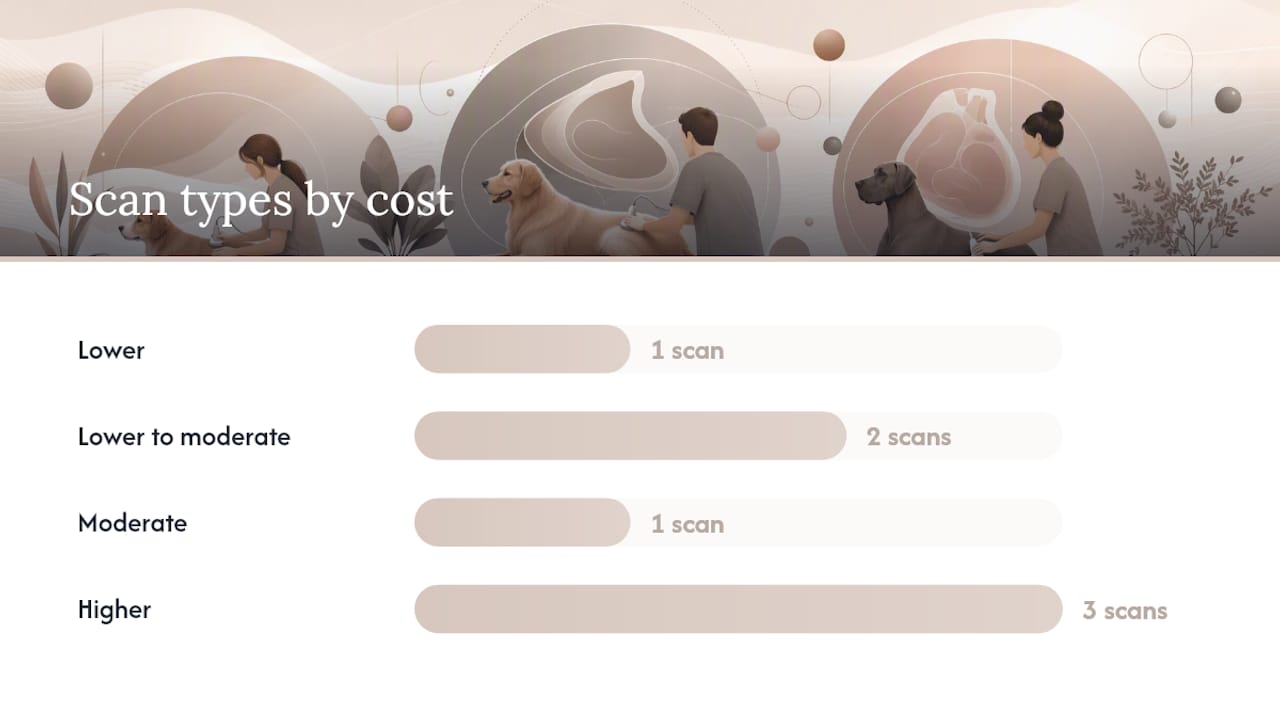
Dogster confirms that primary care vets can handle basic scans at lower cost than specialists, while emergency or specialty settings charge premium fees for urgent or highly technical work.
A few factors that push cardiac and biopsy-guided exams toward the higher end:
- Cardiac studies require a cardiologist or a GP with advanced echocardiography training
- Doppler analysis adds vascular flow assessment on top of structural imaging
- Biopsy-guided procedures involve real-time needle guidance plus pathology lab fees
- Emergency FAST scans, while quick, often carry an emergency facility surcharge
Pro Tip: When you receive a quoted price, ask directly: "Does this include a written radiologist or cardiologist report?" Many clinics quote the imaging fee alone. The specialist interpretation, if billed separately, can add meaningfully to your total, and knowing upfront prevents a surprise line item on checkout.
What factors drive the final price up or down?
Scan type sets the baseline, but several other variables determine where your bill actually lands. VetReceipt's analysis of 104 real vet invoices shows that billing structure, not just the scan itself, is a key determinant of the final price.
Primary cost drivers:
- Facility type. A general practice vet charges less than a specialty clinic or emergency hospital. Emergency facilities add a facility fee on top of the imaging charge.
- Region and city. Urban markets, including New York City, typically run higher than rural or suburban areas due to overhead differences. Geographic variation is one of the most consistent findings across pricing analyses.
- Who performs the scan. A GP with ultrasound training, a traveling sonographer, or a board-certified radiologist each represent different skill levels and fee structures. Specialist involvement adds cost but also adds diagnostic precision.
- Sedation or anesthesia. A calm, cooperative dog may not need sedation. An anxious, large, or painful dog often does, and sedation is almost always billed as a separate line item.
- Urgency. Scheduled appointments during regular hours cost less than after-hours or emergency ultrasounds.
- Additional procedures. Biopsies, fine needle aspirates (FNA), and lab work are typically billed separately from the imaging itself.
- Dog size and temperament. Larger dogs require more time and probe repositioning. A dog that won't stay still may need sedation that a smaller, calmer dog wouldn't.
The most commonly overlooked add-ons are sedation, the written radiologist interpretation, and the exam or consultation fee. Many clinics charge a separate exam fee even when the ultrasound is the primary reason for the visit. Ask about each of these explicitly when requesting your estimate.
Pro Tip: Ask the clinic: "Is the exam fee included in the ultrasound quote, or is it billed separately?" This single question catches the most common source of billing surprises.
What does a quoted ultrasound fee typically include?
A quoted price rarely covers everything. Knowing what's usually bundled versus what's typically added on lets you read a clinic estimate accurately.
Commonly included in the imaging fee:
- Ultrasound probe time and machine use
- Basic real-time interpretation by the performing clinician
- Ultrasound gel and, in most cases, shaving the scan site
Frequently billed as separate line items:
- Exam or consultation fee
- Sedation or anesthesia (plus monitoring if needed)
- Written specialist report from a board-certified radiologist or cardiologist
- Biopsy or FNA procedure
- Pathology or cytology lab fees
- Follow-up imaging or additional organ views
A typical itemized estimate might look like this:
- Ultrasound imaging — the core scan procedure
- Exam fee — the clinician's time for the visit (often separate)
- Sedation — listed only if clinically indicated
- Specialist interpretation — a written report from a radiologist (optional or add-on)
- Biopsy/FNA — only if a mass or lesion warrants sampling
- Pathology — lab processing of any collected sample
Items 1 and 2 are almost always present. Items 3 through 6 depend on your dog's specific case. When you call for an estimate, ask the clinic to walk through each of these categories so you know which apply to your dog's situation.
VetReceipt's invoice data confirms that clinics frequently bill imaging, exam fees, sedation, and specialist interpretation as separate line items, making the billing structure as important as the scan type itself.
Does pet insurance cover dog ultrasounds?
Coverage depends heavily on your policy type and the reason for the scan. Here's how the main policy categories typically handle it:
- Accident and illness plans generally cover diagnostic ultrasounds when the scan is ordered for a new, non-preexisting condition. This is the most common type of comprehensive pet insurance and the most likely to pay out for an ultrasound.
- Accident-only plans may cover ultrasounds tied to a traumatic injury (a car accident, a fall) but typically won't cover illness-related imaging.
- Wellness riders sometimes cover routine screening, but standard wellness add-ons rarely include ultrasounds unless specifically listed.
- Pregnancy scans are frequently excluded from standard policies. If you're breeding, you may need a separate breeding or wellness rider.
MetLife Pet Insurance explains that coverage depends on policy type, with accident and illness plans commonly covering diagnostic ultrasounds for new conditions, while accident-only policies and routine pregnancy checks are often excluded.
How the claim mechanics work:
- Deductible: You pay this amount before insurance kicks in. Annual deductibles are more common than per-incident ones.
- Reimbursement rate: Most plans reimburse 70–90% of covered costs after the deductible.
- Co-insurance: Your share of the remaining bill after the deductible.
- Documentation: Insurers typically require the vet's clinical notes, a diagnosis code, and an itemized invoice. Get all three before submitting.
Pro Tip: When requesting pre-authorization, describe the clinical reason for the scan (e.g., "abdominal mass detected on physical exam") rather than just the procedure name. Insurers evaluate medical necessity, and a clear clinical indication strengthens your case. For pregnancy-related scans, check our cat pregnancy ultrasound guide for context on how timing and policy exclusions interact.
How to prepare your dog and what to expect on the day
Preparation is straightforward, but a few missteps can complicate the exam or delay results.
Before the appointment:
- Fast your dog if the clinic requests it, typically for abdominal scans where a full stomach reduces image quality
- Bring any prior imaging, lab results, or referral notes
- Let the clinic know in advance if your dog is anxious, reactive, or large, so they can plan for sedation if needed
- For house call visits, clear a calm, well-lit space and have your dog's records accessible
- Confirm whether shaving is included or whether you should arrive with the area already clipped
What happens during the appointment:
The check-in and history review are brief. The clinician will position your dog on a padded table, apply gel to the shaved area, and move the probe across the skin surface. The scan itself is usually short to medium in duration for a focused study and longer for a full abdominal exam. Your vet will typically review findings with you immediately after, though a formal written report from a specialist may take a day or two if it's sent out for interpretation.
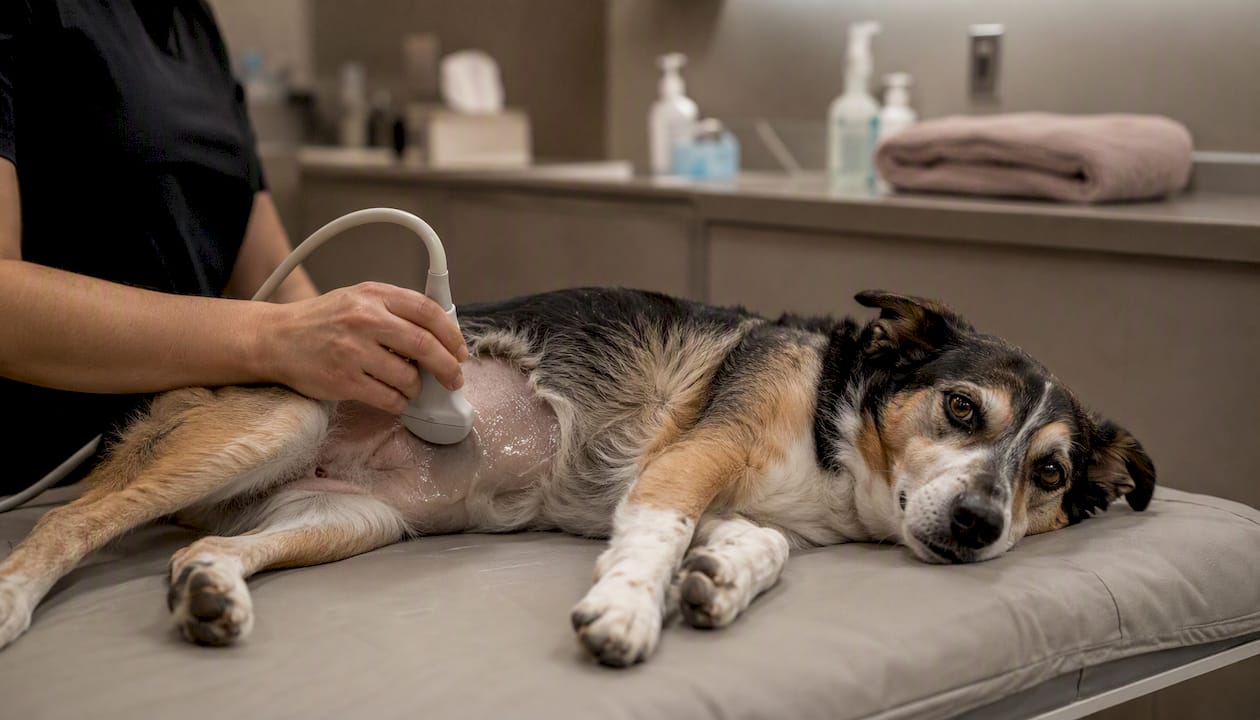
Sedation, when used, adds time for induction and recovery. Plan for a longer visit if your dog is likely to need it.
Pro Tip: Ask the clinic at booking: "Will a written radiologist report be included, and what's the turnaround time?" If the report is sent to an external radiologist, results may come back the next business day. Knowing this upfront helps you plan follow-up conversations with your vet.
What are your options if you can't pay upfront?
Diagnostic costs can be unexpected. Here are practical steps to take before delaying or skipping a recommended scan.
Payment options most clinics offer:
- CareCredit and similar medical credit lines offer deferred-interest financing for veterinary bills
- Clinic payment plans are available at some practices, especially for established clients
- Third-party financing through services like Scratchpay provides installment options
- Splitting services across visits when clinically appropriate (ultrasound first, biopsy only if needed)
- Insurance pre-authorization to confirm coverage before the appointment so you know your out-of-pocket share
If you're facing a gap between what you can pay and what's needed:
- Talk to the clinic before the appointment, not after. Most practices have more flexibility when the conversation happens early.
- Ask for a staged diagnostic plan: perform the ultrasound first and move to biopsy only if the imaging warrants it.
- Request a written low/high estimate that includes likely next steps, so you're not surprised if the scan reveals something that needs immediate follow-up.
- Ask about local nonprofit funds or veterinary assistance programs. Organizations like the Brown Dog Foundation or RedRover Relief provide emergency financial assistance for pet owners.
- In an emergency, communicate urgency clearly and ask what immediate assistance options exist. Most clinics would rather work out a payment arrangement than see a pet go without needed care.
When is an ultrasound worth the expense?
Ultrasound delivers the most diagnostic value when the clinical question can only be answered by real-time soft tissue imaging. It's less useful as a routine screening tool in an otherwise healthy dog with no clinical signs.
High-value scenarios:
- Suspected internal bleeding or fluid in the abdomen
- Unexplained abdominal pain, distension, or rapid weight loss
- A newly detected cardiac murmur requiring echocardiographic staging
- Suspected foreign body when X-rays are inconclusive
- Pre-surgical staging for a known mass or tumor
- Monitoring a previously identified lesion for growth or change
Lower-value scenarios:
- Routine annual screening in a young, healthy dog with no clinical signs
- Confirming a diagnosis already clear from physical exam and bloodwork alone
- Repeat imaging when findings are unlikely to change the treatment plan
The most useful question to ask your vet is: "Will the ultrasound result change what we do next?" If the answer is yes, the scan is almost always worth pursuing. If the answer is "probably not," it's worth discussing whether a different diagnostic step makes more sense first.
Pro Tip: Ask your vet: "If the ultrasound shows X, what's the next step? And if it shows Y?" Walking through the decision tree before the scan helps you understand its clinical weight and prepares you for possible follow-up costs. For senior dogs, our senior dog wellness exam guide covers how imaging fits into a broader diagnostic picture.
How City Animal Veterinary Center approaches ultrasound diagnostics
City Animal Veterinary Center in Brooklyn offers onsite ultrasound capability as part of its diagnostic imaging services, alongside digital X-rays and in-house lab testing. The clinic's Fear Free approach means the exam environment is designed to reduce stress for anxious dogs, which can directly affect whether sedation is needed and how smoothly the scan proceeds.
For dogs that don't travel well or owners who can't easily get to a clinic, City Animal also offers home visit services. An in-home ultrasound consultation follows the same clinical standards as an in-clinic exam, with the added benefit of a familiar environment for your dog.
When you contact City Animal for an ultrasound estimate, have the following ready:
- The clinical reason your vet recommended the scan (or your dog's current symptoms)
- Your dog's size, breed, and approximate weight
- Any prior imaging or lab results
- Whether your dog tends to be anxious or difficult to handle during exams
- Your pet insurance policy details, if applicable
Pro Tip: Ask specifically whether the estimate includes a written specialist report and whether sedation is anticipated. Those two line items are the most common sources of billing surprises, and City Animal's team can walk you through what's included before you commit to scheduling.
A note on transparency and asking the right questions
Every owner who calls a clinic asking about imaging costs deserves a straight answer. At City Animal Veterinary Center, the goal is to give you a written estimate that reflects your dog's specific situation, not a generic range that leaves you guessing. The clinical team will tell you what's included, what might be added depending on findings, and what the likely next steps look like.
Diagnostics aren't just about the scan. They're about making a clear decision together: what does your dog need, what will the information tell us, and what happens next? Asking those questions before the appointment is the most effective way to avoid surprises and make sure the imaging actually moves your dog's care forward.
Pro Tip: Request a staged diagnostic plan in writing. Ask the clinic to outline the likely low and high scenarios so you understand the full range of what the visit might involve. That one document changes the entire dynamic of the conversation.
City Animal Veterinary Center is ready to help
Fear Free diagnostics and home visits in one Brooklyn practice, with no guesswork about what's included.
City Animal Veterinary Center offers in-clinic and in-home ultrasound appointments for Brooklyn pet owners who want a clear, transparent diagnostic experience. The Fear Free approach means your dog's comfort is built into the exam, not an afterthought. The clinical team will walk you through what the scan covers, what's included in the estimate, and what follow-up might look like based on your dog's specific situation. Book an appointment or request an estimate by contacting the clinic directly. Have your dog's clinical history and insurance details ready, and the team will take it from there.
Sources
- How Much Does an Ultrasound for a Dog Cost? | MarketWatch
- Dog Ultrasounds: What Are They, and Why Would a Dog Need One? | PetMD
- Dog Ultrasound Cost $92–$495 (2026) | 104 Real Vet Bills
- Dog Ultrasound Cost | MetLife Pet Insurance
- How Much Does a Dog Ultrasound Cost? 2026 Price Guide – Dogster