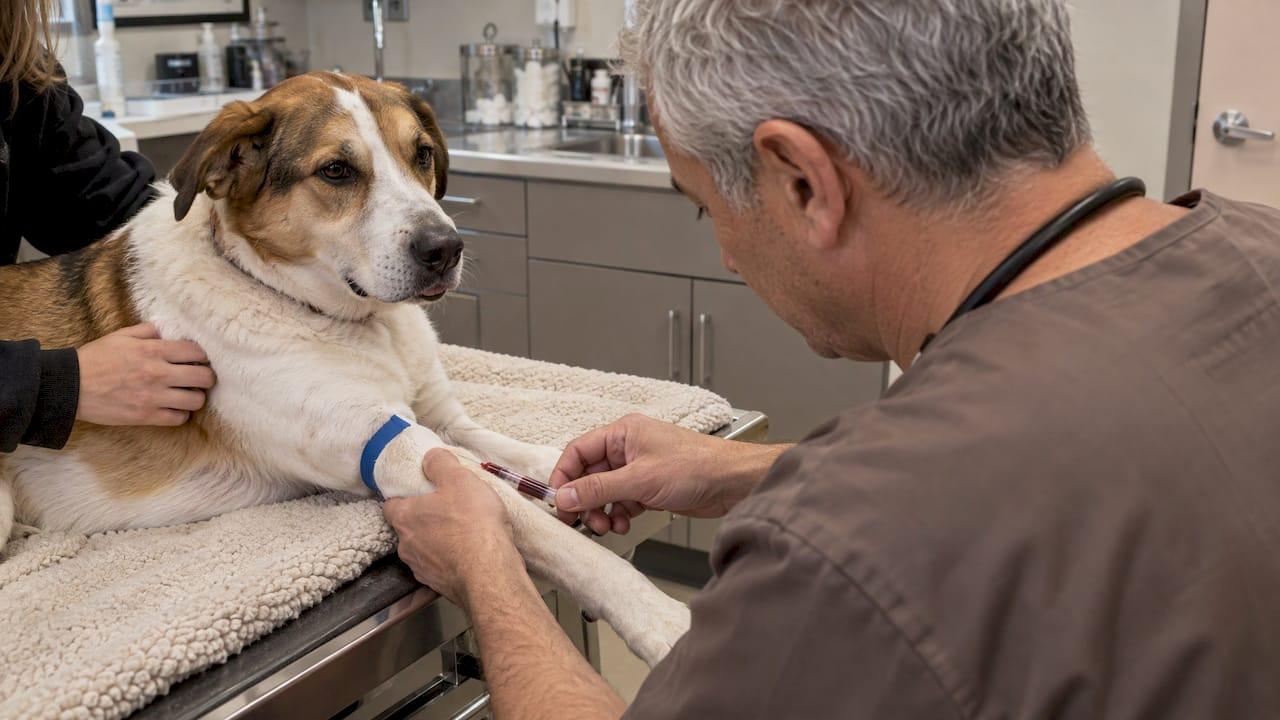
Dog blood work is usually two tests run together. A complete blood count (CBC) looks at your dog's blood cells. A chemistry panel looks at the chemicals and enzymes that show how organs such as the liver and kidneys are working. Read together, they give your vet a detailed picture of your dog's health. Often they do this before your dog shows any symptoms. This guide walks through each part of the report, what the numbers mean and what to do when one is flagged.
TL;DR
- A CBC counts red cells, white cells and platelets. It points to anemia, infection, inflammation and clotting problems.
- A chemistry panel (the "chem") checks organ function, electrolytes, blood sugar and proteins.
- A number outside the reference range gets a flag. A flag is a reason to look closer, not a diagnosis.
- Reference ranges differ between labs, so always read your dog's results against the range printed on your own report.
- Your vet interprets blood work alongside your dog's symptoms, exam and history, and may order follow-up tests.
Table of Contents
- What blood work can show about your dog
- The main types of dog blood tests
- The CBC: reading your dog's blood cells
- The chemistry panel: what the organs are doing
- What normal values look like
- How to read flags and abnormal results
- How vets take blood from dogs
- Blood work at City Animal Veterinary Center
- Getting your dog ready for a blood draw
- Questions to ask when you get results
- FAQ
- Sources
What blood work can show about your dog
Blood carries oxygen, nutrients, hormones and waste, so changes in it often reflect changes elsewhere in the body. The American Animal Hospital Association (AAHA) explains that a routine CBC gives insight into a dog's overall health, while a chemistry panel helps evaluate how the organs are functioning.
The Merck Veterinary Manual splits the work into two fields. Hematology studies blood cells, and clinical chemistry studies the chemicals in serum or plasma. Measuring markers, electrolytes, blood sugar and other chemicals helps assess liver and kidney function. It also helps diagnose conditions such as diabetes.
Vets order blood work in a few common situations:
- Wellness visits. The CBC and chem are often run together during annual exams. That gives your dog a baseline to compare against later.
- Sick visits. Vomiting, diarrhea, lethargy, excessive thirst or appetite changes all call for a look inside.
- Before anesthesia or dental work. Results help your vet plan safe care.
- Senior and ongoing care. Dogs on long-term medication or with chronic conditions are rechecked to track changes.
The main types of dog blood tests
Owners often ask about the "three types" of blood tests. In everyday practice, three results are commonly reviewed together:
- Complete blood count (CBC): the cells in the blood.
- Blood chemistry panel: organ function, electrolytes, proteins and sugar.
- Urinalysis: not a blood test, but often paired with one because urine shows how the kidneys concentrate and filter. Our guide to urinalysis in dogs covers what it shows and how to collect a sample at home.
Specific disease screens sit on top of these. Tick-borne disease screens, pancreas tests and thyroid tests are examples. Your vet adds them when the history or the basic panel suggests a reason.
The CBC: reading your dog's blood cells
The Merck Veterinary Manual calls the CBC the most common blood test. It shows how many and what types of blood cells are in the blood. There are three groups to understand.
Red blood cells
Red cells carry oxygen. Your report lists the red cell count, hemoglobin (the oxygen-carrying protein) and hematocrit (the percentage of blood made up of red cells). Examining red cells helps identify anemia and other disorders. Low values mean your dog may not be carrying enough oxygen. Your vet then looks for the cause, which may be blood loss, destruction of cells or reduced production.
White blood cells
White cells are the immune system's front line. Merck states that changes in white cell numbers and types give clues about infection, inflammation and other diseases. Different types rise with inflammation or infection, short-term stress, allergies and certain cancers. That is why a nervous dog can show a mild white cell change. The pattern across cell types matters more than one number.
The report breaks white cells into neutrophils, lymphocytes, monocytes, eosinophils and basophils. Each tells a slightly different story, and your vet reads them as a group.
Platelets
Platelets plug damaged blood vessels. According to Merck, platelet counts can rise with injury and can drop with autoimmune disease, clotting disorders or bone marrow problems. A low count matters before surgery and when a dog has unexplained bruising or bleeding.
The chemistry panel: what the organs are doing
AAHA says a chemistry panel assesses organ function, including the liver and kidneys. It also covers electrolytes, minerals and metabolism-related enzymes. Merck adds that the results can give clues about hydration, inflammation, kidney and liver function, and blood sugar control.
Here is what the most common lines look at:
| Test | What it generally reflects |
|---|---|
| ALT, ALP | Liver and bile system enzymes |
| Creatinine, BUN | Kidney filtration |
| Glucose | Blood sugar control |
| Total protein, albumin | Hydration, nutrition, inflammation, protein loss |
| Sodium, potassium, chloride | Electrolyte and fluid balance |
Total protein is a good example of why context matters. Merck notes it can be above normal with dehydration or inflammation and below normal with bleeding, poor nutrition or heart failure. The same number can point in different directions, which is why a vet reads it with the physical exam.
What normal values look like
The ranges below come from published veterinary references. They are examples, not a standard to grade your dog's report by. Your lab's own range is the one that counts.
| Test | Example dog reference range |
|---|---|
| White blood cells | 6,000 to 13,000 cells/µl |
| Neutrophils | 3,000 to 10,500 cells/µl |
| Platelets | 150 to 400 x10^3/µl |
The CBC figures come from the UC Davis Veterinary Medical Teaching Hospital reference intervals. That document also lists several subgroups and columns.
The Merck Veterinary Manual's serum biochemical reference ranges in US units include these dog examples:
| Test | Example dog reference range |
|---|---|
| ALT | 10 to 109 U/L |
| Alkaline phosphatase | 1 to 114 U/L |
| Creatinine | 0.5 to 1.7 mg/dL |
| Glucose | 76 to 119 mg/dL |
| Total protein | 5.4 to 7.5 g/dL |
| Albumin | 2.3 to 3.1 g/dL |
| Sodium | 142 to 152 mEq/L |
| Potassium | 3.9 to 5.1 mEq/L |
| Chloride | 110 to 124 mEq/L |
Ranges shift with the analyzer, the lab and sometimes your dog's age, which is why the range printed beside each result is the one to use.
How to read flags and abnormal results
Most reports print the reference range next to each result and mark anything outside it. PetMD advises owners to check the reference ranges and flags, then go over them with a veterinarian alongside symptoms, since a flag's severity can vary.
A few habits make the report easier to read:
- Look at the size of the gap. A value just past the edge of the range is a different story from one far outside it.
- Look for patterns. Several related values moving together, such as multiple liver enzymes, say more than one lone result.
- Compare with the past. A number that is slightly high but stable for years is different from one that has climbed since last visit. This is why baseline blood work during healthy years is so useful.
- Remember the dog on the table. Stress, recent meals, dehydration and medications can all nudge results.
When a chemistry result is abnormal, Merck describes the usual next move: based on the panel, the vet might order more specific tests. For example, a dog with vomiting and abdominal pain may get a pancreas-specific test. Read how that works in our guides to how vets diagnose pancreatitis and the cPL test for dogs.
Call your vet promptly if your dog is vomiting repeatedly, collapses, has pale gums, bleeds, or cannot keep water down, rather than waiting for a scheduled recheck.
How vets take blood from dogs
The draw itself is quick. Veterinary protocols describe common sites as the external jugular vein and the cephalic vein, the vein on the front leg. The same Virginia Tech procedure describes clipping the site if needed or wiping it with alcohol for visibility, and holding the vein off with a tourniquet or finger pressure. The needle goes in bevel up at roughly 25 degrees, and pressure is released before the needle comes out.

Cornell's sampling instructions for special coagulation samples add that the cephalic or saphenous vein can be used with a Vacutainer or syringe. Afterward, direct pressure goes on the site.
For most dogs, that means a brief restraint, a small poke and a few minutes of gentle pressure. The only part owners really notice is whether their dog was comfortable.
Our perspective: calm dogs give better blood work
We see blood work as one of the most useful tools in a wellness visit, and a calm dog makes the experience better for everyone. Our practice is Fear Free certified, and our approach is designed to lower stress before the needle ever comes out. That can mean letting your dog settle in, using gentle handling and giving the visit the time it needs.
Stress is not just a comfort issue. Short-term stress is one of the things that can change white cell counts, so a relaxed dog gives a cleaner picture to interpret. It also makes your dog more willing to come back next time, and regular baseline testing is how subtle changes get caught early.
We also know that some dogs find the trip itself the hardest part. That is why we offer home visits, and why our in-house laboratory lets us look at results in the context of the exam you just had. A number on a page means the most when your vet can connect it to your dog.
CAVC
Blood work at City Animal Veterinary Center
If your dog is due for routine testing or you have a lab report you want explained, we can help. Blood work fits naturally into our wellness exams, and our in-house laboratory means your vet can review results with you in the context of your dog's exam. For dogs who struggle with car rides or waiting rooms, we also offer home visit veterinary care.
Book a visit through City Animal Veterinary Center in Brooklyn, and tell us if your dog is anxious. We will plan the visit around that.
Getting your dog ready for a blood draw
A little preparation helps the visit go smoothly:
- Ask about food. Some clinics ask you to hold breakfast before testing. Check with the team when you book, because instructions can vary by test.
- Bring a medication list. Include supplements, flea and tick products and anything given recently.
- Note symptoms. Write down changes in thirst, urination, appetite, energy, stool and weight, with dates if you can.
- Bring past results. Older reports let your vet compare trends.
- Bring comfort items. A favorite treat or blanket can help an anxious dog settle.
If your dog is also being tested for other conditions, a few guides may help you prepare. They cover tick disease testing, the SNAP 4Dx test and allergy testing.
Questions to ask when you get results
Whether you hear results by phone or in the exam room, a few questions turn numbers into a plan:
- Which values are outside the range, and how far?
- What are the possible explanations, given my dog's symptoms and age?
- Do we need a recheck, and when?
- Do any results change my dog's food, medication or activity?
- What should I watch for at home, and when should I call?
Ask for a copy of the report for your records. Keeping every report in one folder makes it much easier to spot slow trends.
FAQ
What does dog blood work show?
It shows how your dog's blood cells and organs are doing. The CBC reports on red cells, white cells and platelets, which can hint at anemia, infection or clotting problems. The chemistry panel evaluates organs such as the liver and kidneys, along with electrolytes and blood sugar.
Are my dog's blood test results normal if one value is flagged?
Not necessarily abnormal in a meaningful way. A flag only means a value fell outside the lab's reference range, and its importance depends on how far off it is and what else is going on. Your vet reads it with the exam and your dog's history, and may suggest a recheck or a more specific test.
Why do reference ranges differ between labs?
Different labs use different equipment and may set intervals from different groups of dogs. That is why the example figures here are guides only. Use the range printed on your own dog's report, and let your vet interpret it.
Does my dog need blood work if they seem healthy?
Often yes. Routine CBC and chemistry testing is commonly run during wellness exams, and results from a healthy period give your vet a baseline. Ask your vet how often it makes sense for your dog's age and health.
Does drawing blood hurt?
Most dogs feel a brief poke, similar to a vaccine, and the draw takes only a short time. Calm handling and a relaxed setting make a real difference. If your dog is fearful, tell your vet in advance so the visit can be planned around that.
Sources
- AAHA: The ABCs of Dog Blood Work
- Merck Veterinary Manual: Veterinary Medical Tests
- Merck Veterinary Manual: Common Laboratory Tests in Veterinary Medicine
- Merck Veterinary Manual: Serum Biochemical Analysis Reference Ranges
- UC Davis VMTH: CBC Reference Intervals
- PetMD: Blood Tests for Dogs and Cats
- Cornell University: Sampling Instructions
- Virginia Tech: SOP Venipuncture in Dogs and Cats