A urinalysis is a lab test that looks at the physical, chemical and microscopic makeup of your dog's urine. It tells your vet how the kidneys and bladder are working. It also gives clues about blood sugar, liver health and hidden infection. It is one of the most informative tests in veterinary medicine, and it needs only a small sample of urine. How that sample is collected and handled has a big effect on how much the result can be trusted.
This guide explains what the test checks, how to read the numbers your vet mentions, which collection method fits which situation, and what to do with a sample at home.
TL;DR
- A urinalysis checks urine color and clarity, concentration (specific gravity), pH, chemistry strips and a microscopic look at cells, crystals and bacteria.
- It is a wellness test as much as a sick-pet test. It can reveal early kidney or metabolic changes before your dog looks ill.
- Sample quality matters most. A needle-collected (cystocentesis) sample is the cleanest. A mid-stream catch is convenient but easily contaminated.
- Test within 30 minutes of collection, or refrigerate the sample and bring it in promptly. Use a clean glass container if you can.
- Bacteria in urine do not always mean an infection that needs antibiotics. Your vet reads the result alongside symptoms.
Table of Contents
- What a urinalysis actually checks
- When your vet will recommend one
- How the sample is collected
- Collecting a free-catch sample at home
- Reading the results: what the common findings can mean
- Our perspective at City Animal
- Making it easy: how we can help
- Related tests your vet may pair with a urinalysis
- Mistakes that make a urine test less useful
- FAQ
- Sources
What a urinalysis actually checks
A complete urinalysis has three parts: the physical exam of the urine (color, odor, clarity, volume), the chemical exam (pH, specific gravity, protein, glucose and other pads on a reagent strip), and a microscopic exam of the sediment. The Merck Veterinary Manual describes urinalysis as part of a minimum database, meaning a basic set of tests a vet wants on most patients.

Physical exam: color, clarity and smell
Normal urine is pale to deep yellow and mostly clear. Cloudiness can come from cells, crystals, mucus or bacteria. Red or brown urine can mean blood or other pigments. The physical exam is a starting point only. A clear sample can still hide a problem, and a dramatic color can have a harmless cause, so the next two steps matter.
Chemical exam: concentration, pH and strips
Urine specific gravity (USG) shows how well the kidneys concentrate urine. Per Cornell's Animal Health Diagnostic Center, a USG above 1.030 is often used as a benchmark for concentrated urine in dogs. Dilute urine in a dog that is also drinking and urinating more is one of the reasons a vet may look closer at the kidneys, hormones or other causes.
Urine pH shows how acidic or alkaline the sample is. Abnormal pH values are often linked to struvite stones, which form more readily in alkaline, concentrated urine. Struvite stones are one of the most common types of bladder stones in dogs, especially in females. Vets also watch for pH changes because of what they can mean for infection and stone risk.
One practical point: the reagent strip pads are handy for protein, glucose and blood, but a conference review of the step-by-step approach is not needed to know that strip readings of specific gravity in dogs are considered unreliable. That is why the specific gravity is normally measured with a refractometer instead of read off the strip.
Microscopic exam: the sediment
The sample is spun down and the sediment is examined under a microscope. This is where the vet looks for red and white blood cells, bacteria, crystals and casts (tiny tube-shaped particles formed in the kidney). Each of these tells a different story. Many white cells with bacteria point toward infection. Crystals may be harmless or may signal stone risk, depending on type and the rest of the picture.
Protein: the UP:UC ratio
When the strip shows protein, vets often follow up with a urine protein-to-creatinine ratio (UP:UC). Per Cornell, healthy dogs generally have a ratio below 0.5, and values above 1.0 are considered abnormal and warrant further evaluation. Protein in urine can come from the kidneys, but also from infection or bleeding, so the sediment exam helps decide how to read it.
When your vet will recommend one
Most owners think of a urine test after something goes wrong. These are the common triggers:
- Straining to urinate, frequent small puddles, or accidents in a house-trained dog
- Blood in the urine or a strong change in odor
- Drinking much more water than usual, or urinating much more
- Vomiting, weight loss or low energy that has no clear cause
- Before anesthesia or dental work, especially in older dogs
- Along with blood work, since Cornell notes that a urine sample should be taken whenever a chemistry profile is run, especially at the first sampling
The test is also a preventive tool. A published review of urinalysis in dogs and cats calls it an easy and vital initial diagnostic test. Because pets hide early signs of illness, subtle shifts in specific gravity, pH or sediment can lead to earlier diagnosis of chronic conditions like kidney disease. That is why we include it in routine senior and wellness visits. If your senior dog is due for a checkup, our guide to the senior dog wellness exam shows what to expect.
How the sample is collected
The three standard methods differ mainly in how clean the sample is.
| Method | How it works | Best for | Main drawback |
|---|---|---|---|
| Free catch (mid-stream) | Collect urine as your dog voids | Routine screening, easy repeat checks | Picks up bacteria and debris from the skin, fur and ground |
| Catheterization | A sterile catheter is passed into the bladder | Cases where a needle sample is not suitable | Needs a clinic, can irritate the urethra |
| Cystocentesis | A thin needle draws urine directly from the bladder, often with ultrasound guidance | Suspected infection, culture, complex cases | Done by the vet, not at home |
For infection questions, the method matters a great deal. In a classic JAVMA study of clinically normal dogs, bacterial growth occurred in 85% of voided specimens, compared with sterile results from cystocentesis. Those were healthy dogs, so a positive result from a free catch can simply reflect contamination on the way out.
Veterinary internal medicine specialists make the same point in continuing education for renal and urologic care: a clean, diagnostic-quality sample is the biggest factor in reliable results, and for complex cases a needle sample may be the only truly accurate option.
Cystocentesis sounds worse than it is. It takes seconds, and with a calm, Fear Free approach (gentle handling, treats, a quiet room, no forced restraint) most dogs tolerate it well. Your vet will tell you whether it is the right choice for your dog's situation.
Collecting a free-catch sample at home
Sometimes your vet asks you to bring a sample. A few habits make it much more useful.
- Pick the right container. Cornell advises avoiding plastic tubes where possible, because they can contain microscopic crystalline material that interferes with the sediment exam. Sterile glass containers are preferred. Ask us for one if you can. If you only have a clean, dry, well-rinsed container, that is far better than waiting.
- Aim for first morning urine if you can. It is usually more concentrated, which helps with reading specific gravity. Tell your vet if it was collected at another time.
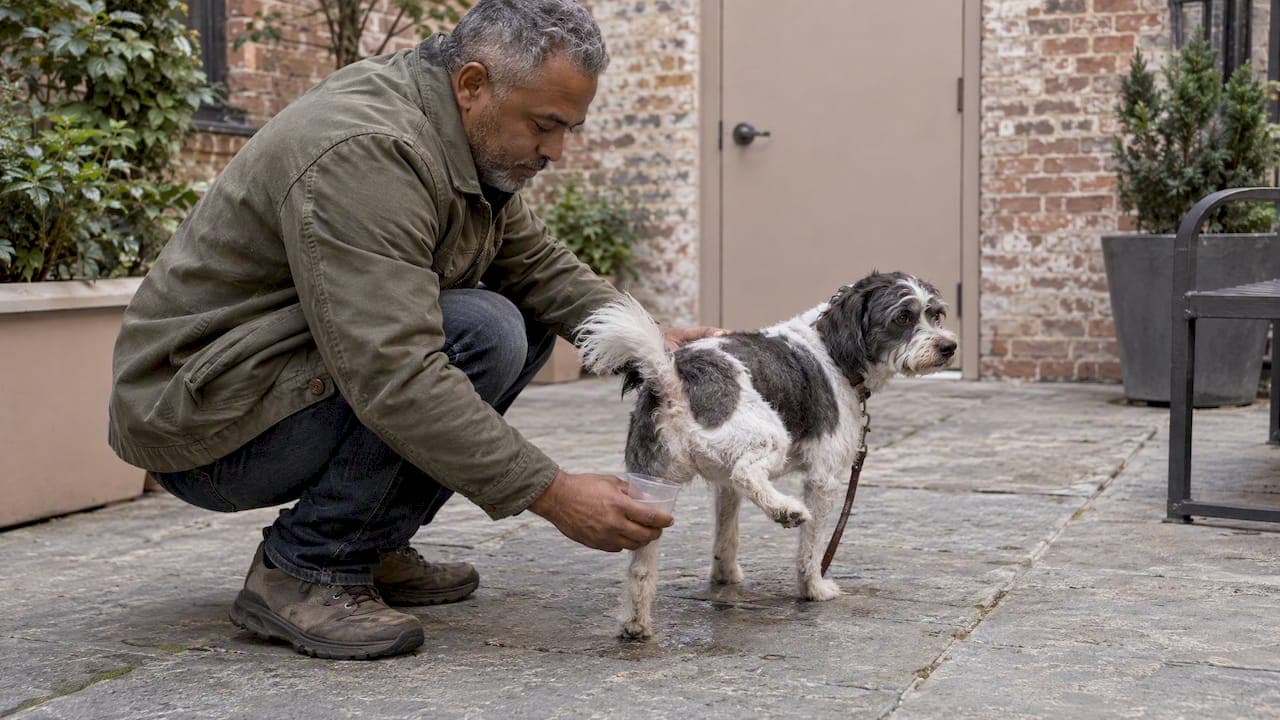
- Catch mid-stream. Let the first part of the stream pass, then slide a shallow, clean container (a clean pie plate or a ladle-style cup works for many dogs) into the flow. Walk your dog on a leash and stay calm. A relaxed dog urinates sooner.
- Transfer and label. Pour the sample into the container, close it, and write your dog's name and the time on it.
- Store it correctly. The Merck Veterinary Manual says urine should ideally be evaluated within 30 minutes. If you cannot get to the clinic in time, refrigerate it at about 5°C (41°F), and keep it cold on the way in. Refrigeration for up to 24 hours is acceptable for many parameters. For bacterial culture, fast processing is still best, and a JAVMA study looked specifically at what 24 hours in the fridge does to culture results in dogs with UTI signs. Your vet will let you know if a culture is planned.
Brooklyn apartment living adds its own wrinkles: no yard, busy sidewalks and a dog that will not go on command. A short, quiet walk to a calm corner, or a morning walk before the street gets busy, tends to work better than waiting on the curb of a crowded block. If a dog refuses to cooperate, tell us. A sample taken in the clinic is often easier than a dozen failed attempts.
Reading the results: what the common findings can mean
A result is never a diagnosis by itself. Your vet combines it with your dog's symptoms, exam and often blood work. These are common patterns:
- Dilute urine with increased thirst: may prompt blood work to look at kidney function, hormones or other causes.
- Protein with a raised UP:UC: may call for a repeat test and a closer look at the kidneys or an underlying cause.
- Glucose in the urine: can point toward diabetes or other metabolic issues, and is confirmed with blood work.
- Blood, white cells and bacteria: can fit a urinary tract infection or bladder inflammation, and often lead to a culture. Our guide to urine culture in dogs explains that next step.
- Crystals: may be a normal finding, or a sign of stone risk. Their type and your dog's pH and concentration give context.
Bacteria in urine are not always an infection
This is one of the most misunderstood parts. Vets distinguish between asymptomatic (subclinical) bacteriuria, meaning bacteria without signs of illness, and a true urinary tract infection. Infectious disease specialists teaching on UTI guidelines frame this distinction as central to antimicrobial stewardship: not every positive culture needs antibiotics, and unnecessary antibiotic use can contribute to resistance. Research in dogs with chronic kidney disease has looked at how to characterize subclinical bacteriuria versus bacterial cystitis and pyelonephritis.
In practice, that means a dog with no symptoms and a few bacteria may be watched rather than treated. A dog with straining, blood and bacteria will usually be treated. If your vet suggests waiting, it is a considered decision, not neglect.

Our perspective at City Animal
We see urinalysis as one of the most underused tests in routine care. Owners often come in for a limp or an ear problem and never think about urine. But pets hide illness, and a urine sample taken during a healthy visit gives us a baseline to compare against later. That baseline is especially useful for senior dogs, where small shifts in concentration or protein can come before any visible sign.
We also know the test only helps if the sample is good. So we talk through collection before you leave the exam room, and we decide with you whether a free catch will do or a cystocentesis is worth it. Many dogs find clinic visits stressful, and stress makes everything harder, including getting a urine sample. As a Fear Free practice, we work to keep visits low-stress: slow introductions, treats, and handling that follows your dog's cues. A relaxed dog is easier to examine and easier to sample.
For owners who struggle to bring a pet in, a house call can take much of the stress out of the visit. We run an in-house laboratory, so we can handle testing under one roof. We would rather answer a question about a sample before you collect it than get one that can't be used.
— CAVC
Making it easy: how we can help
If your dog is overdue for a checkup, or you have noticed changes in drinking, urinating or accidents, book a wellness exam with us in Brooklyn. If your dog is straining, in obvious discomfort, or has not urinated, call us right away and ask about urgent care. A dog that cannot pass urine needs prompt veterinary attention. If travel to the clinic is the obstacle, ask about our home visit service. New to us? Our new client page explains how to get started.
Related tests your vet may pair with a urinalysis
Urine results rarely stand alone. A blood chemistry panel helps separate kidney, liver and metabolic causes of changes. A culture is added if infection is likely. Imaging, such as X-rays or ultrasound, can look for stones or bladder wall changes. Dogs with skin or ear problems that keep returning may need other diagnostics, for example skin cytology. If your dog is also having digestive trouble, a stool sample is a separate but equally simple test, and our guide on stool sample collection covers it. Cat owners can read our companion piece on urinalysis for cats.
Mistakes that make a urine test less useful
- Waiting too long. A sample left on the counter for hours changes as bacteria grow and crystals form or dissolve.
- Using a plastic cup that was not clean. Residue and soap film can interfere with the strip and the microscope.
- Collecting after a long antibiotic course. If your dog is already on antibiotics, tell your vet. It can affect culture results.
- Skipping the history. Note the time, how the sample was collected, any medications, and any recent changes in thirst or appetite.
- Assuming a normal result means nothing is wrong. A single normal urinalysis is reassuring, but symptoms that persist deserve a recheck.
FAQ
What can be detected in a dog's urine sample?
A urinalysis can show how concentrated the urine is, its pH, and whether protein, glucose or blood are present. Under the microscope, we can find white and red blood cells, bacteria, crystals and casts. Together these help evaluate the kidneys, bladder, and sometimes diabetes or liver problems.
How long can a dog urine sample sit before testing?
Urine is best evaluated within 30 minutes of collection. If that is not possible, refrigerate it, and bring it in cold. Refrigeration for up to 24 hours is acceptable for many parameters, but bacterial culture is best done as soon as possible.
Does a positive bacteria result always mean a UTI?
No. Bacteria can be present without any signs of illness, and a free-catch sample can also pick up bacteria on the way out. Your vet weighs the result against symptoms, the sediment findings and often a culture before deciding whether antibiotics are needed.
What is the best way to collect urine from my dog?
For routine screening, a clean mid-stream catch is usually fine. For suspected infection, cystocentesis gives the cleanest sample because it avoids contamination from the urethra and skin. Your vet will recommend the method based on your dog's signs.
Is urinalysis only for sick dogs?
No. It is a routine part of wellness care, and it can reveal early changes in kidney or metabolic health before symptoms appear. Many vets recommend it at senior checkups and before anesthesia.
Sources
- Urinalysis in dog and cat: A review (PMC)
- Urinalysis, Merck Veterinary Manual
- Urinalysis, Cornell University College of Veterinary Medicine
- Struvite bladder stones in dogs, Cornell
- Urinalysis and bacterial culture of canine urine by three collection methods, JAVMA 1981
- Effect of refrigeration on canine urine bacterial culture, JAVMA 2018
- Subclinical bacteriuria in dogs with chronic kidney disease, JAVMA 2018
- Advanced Strategies in Renal and Urologic Care, ACVIM
- Infectious Diseases course agenda, ACVIM