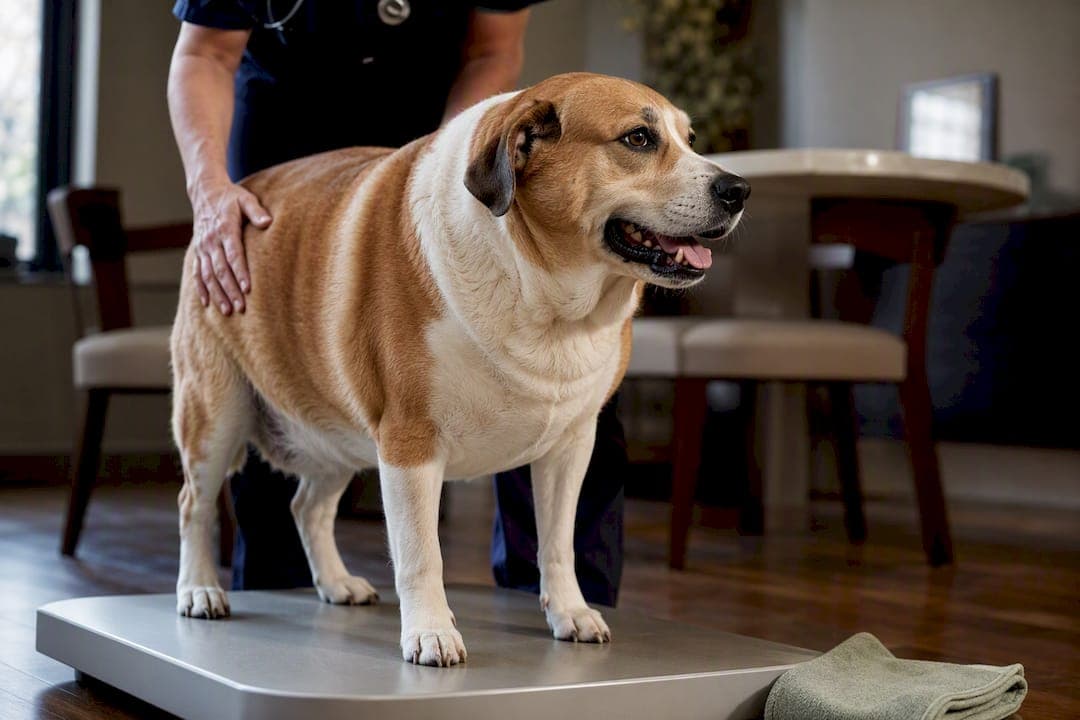
Safe dog weight management is a veterinarian-guided program built around gradual loss, roughly 1 to 2% of body weight per week, achieved through measured calorie control, smart treat limits, and supportive exercise. Guidelines from Cornell, the AAHA, and the Association for Pet Obesity Prevention all point the same direction. The first move: check your dog's body condition score and book a veterinary visit to set individualized calorie targets before changing anything at home.
TL;DR:
- A veterinarian should calculate a personalized calorie target for weight loss using the dog's weight, body condition score, and activity level, applying an appropriate multiplier to the resting energy requirement.
- Switching to a therapeutic weight-loss diet that emphasizes higher protein and fiber content helps preserve muscle mass and improves satiety compared to over-the-counter "light" formulas.
- Treats must not exceed 10% of daily calories, with pre-portioned treats and non-food rewards recommended to prevent sabotaging weight-loss efforts.
- Regular biweekly weigh-ins and body condition assessments are essential to monitor progress and adjust calorie intake before weight loss stalls or becomes too rapid.
- Exercise supports weight management by maintaining muscle and overall fitness but should complement, not replace, diet control, with at least 20 to 30 minutes of brisk activity for effective calorie burn.
Table of Contents
- How Do You Check Your Dog's Body Condition at Home?
- What's the Right Calorie Target for Weight Loss?
- Should You Switch to a Therapeutic Weight-Loss Diet?
- How Many Treats Can a Dog Have While Losing Weight?
- Does Exercise Alone Help a Dog Lose Weight?
- How Do You Know if the Weight-Loss Plan Is Working?
- What Medical Conditions Can Block Weight Loss?
- City Animal Veterinary Center: How We Help With Weight Management
- What Vets Wish Every Owner Knew About This Process
- Book a Nutritional Counseling Visit or Home Consult
- Sources
- FAQ
How Do You Check Your Dog's Body Condition at Home?
Body condition score, or BCS, tells you more than a bathroom scale ever will. Vets typically use a 1 to 9 scale, where 4 or 5 is ideal, and you can estimate it yourself with your hands before your dog ever sees a clinic.
Run your fingers along the rib cage with light pressure. You should feel ribs easily, like knuckles under a thin glove, without heavy pressing. Look down at your dog from above: there should be a visible waist behind the ribs, not a straight barrel shape. Then check the side profile for an abdominal tuck, where the belly rises up toward the hind legs instead of hanging level with the chest. A dog scoring 6 or higher on that 9-point scale usually needs a structured plan.
Baseline weight matters just as much as the visual check, and accuracy counts. A kitchen scale works fine for small dogs; larger breeds need a walk-on vet scale or a bathroom scale with a before-and-after carrying method. Record the number in both pounds and kilograms, since most veterinary calorie formulas run in metric units.
A few habits make the first vet visit far more productive:
- Take a photo from above and from the side under consistent lighting, so you and your vet can compare later.
- Measure waist circumference with a soft tape if you want a numeric baseline alongside the photos.
- Write down what your dog currently eats, including brand, cup size, and every treat given in a typical day, using practical templates from this pet feeding schedule documentation to bring to your veterinary consult.
- Note any recent weight change, especially sudden gain or loss, which can signal something other than simple overfeeding.
Puppies, pregnant or nursing dogs, and senior dogs with other health conditions need veterinary evaluation before starting any calorie restriction. The same goes for any dog that has lost weight unexpectedly. That pattern points to illness, not excess food, and deserves a workup, not a diet plan. This senior wellness exam guide covers what that visit typically involves for older dogs.
What's the Right Calorie Target for Weight Loss?
The safe rate of loss sits at 1 to 2% of body weight per week for most overweight dogs, according to Cornell's veterinary obesity guidance.
Getting to that target starts with a number called Resting Energy Requirement, or RER. The formula is straightforward: RER = (weight in kg × 30) + 70. A 30-kilogram Labrador, for example, lands around 970 calories a day at rest. That figure is a baseline only, not a feeding instruction.
The actual number a dog eats each day is called Maintenance Energy Requirement, or MER, and it's calculated by applying a multiplier to RER based on age, activity, spay/neuter status, and how much weight loss is needed. This is where a formula on a website stops being useful and a veterinarian's judgment takes over. The multiplier for a sedentary, overweight dog looks nothing like the one for an active young dog holding steady weight, and getting it wrong in either direction undermines the entire plan.
Turning a calorie target into a daily plan usually looks like this:
- Your vet calculates RER, then applies an individualized MER multiplier based on your dog's exam findings and history.
- That daily calorie number gets converted into a measured amount of food, using the actual calorie content per cup or per can, not the general feeding chart on the bag.
- You weigh or measure that portion with a kitchen scale or measuring cup, every meal, no eyeballing.
- You recheck weight and body condition at intervals tied to the target rate, adjusting calories if progress runs too fast or too slow.
Why bag feeding charts fail so often: they're built for average dogs at maintenance, not individual dogs on a restricted-calorie plan, and they routinely overestimate what an overweight, less active dog actually needs.
Expect the first 8 to 12 weeks to be the calibration window. Weight rarely drops in a straight line, and your vet will use early check-ins to fine-tune the calorie target rather than locking it in permanently on day one. The AAHA guidelines stress this individualized, iterative approach over any one-size-fits-all number, and it's the biggest reason DIY calorie math often stalls out around week four.
Should You Switch to a Therapeutic Weight-Loss Diet?
Therapeutic veterinary diets exist because cutting portions of a regular food often backfires. Shrinking a maintenance diet by 30% also shrinks the protein, vitamins, and minerals your dog needs by that same 30%, which can create deficiencies well before the weight comes off. Clinical weight-loss formulas solve this by packing more protein and fiber into fewer calories per cup, which helps preserve muscle and keeps dogs feeling satisfied on a smaller portion, according to Cornell's veterinary nutrition guidance.
Over-the-counter "light" or "healthy weight" foods are not the same thing, and the label can be misleading. Common pitfalls:
- Many OTC light formulas cut fat but not enough to meaningfully lower calorie density.
- Feeding charts on OTC bags are often generic and don't reflect an individual dog's restricted calorie target.
- Some "light" foods are lower in protein, which works against muscle preservation during weight loss.
- Fiber content varies widely, and low-fiber light foods often leave dogs hungrier, not less hungry.
Switching from an OTC light formula to a proper therapeutic diet frequently improves both satiety and how well owners stick with the plan, since clinical formulas are built specifically around calorie density and the fiber-to-protein balance that curbs begging behavior.
Fresh-food or home-prepared diets can work too, but only when a veterinarian or veterinary nutritionist calculates and approves the recipe for calorie count and complete nutrition. A homemade diet built from guesswork online is one of the fastest ways to create a nutrient gap disguised as a weight-loss success.
Whatever diet you land on, switch gradually. A 7 to 10 day transition, blending increasing amounts of the new food with decreasing amounts of the old, protects against the vomiting and diarrhea that come from an abrupt switch.
Pro Tip: Keep the last bag or can of the old food until the transition is fully done. If GI upset shows up midway, you can step back a stage instead of guessing at the cause. For dogs prone to digestive sensitivity, this pancreatitis diet guide covers fat targets worth discussing with your vet before any diet change.
How Many Treats Can a Dog Have While Losing Weight?
Treats should never exceed 10% of a dog's total daily calories, a limit backed by UC Davis veterinary guidance and echoed by the American Kennel Club. That sounds generous until you do the math. A 20-pound dog on roughly 500 daily calories has about 50 calories of treat room, which is one small training biscuit, not a handful.
Three household rules stop treats from quietly wrecking a calorie budget:
- Pre-portion the day's treat allowance every morning into a small container, so nobody in the house is estimating by feel later.
- Assign one treat-giver, or track every treat in a shared note, so a dog fed a full daily plan by one person doesn't get a second round from another family member.
- Reallocate kibble instead of adding extra calories, using pieces of the dog's own measured daily food as training rewards rather than separate high-calorie treats.
Good low-calorie swaps include plain green beans, small carrot pieces, and single-ingredient freeze-dried meat treats used sparingly. Avoid anything containing xylitol, a sweetener found in some peanut butters and baked goods that is toxic to dogs even in small amounts, and skip high-fat table scraps entirely.
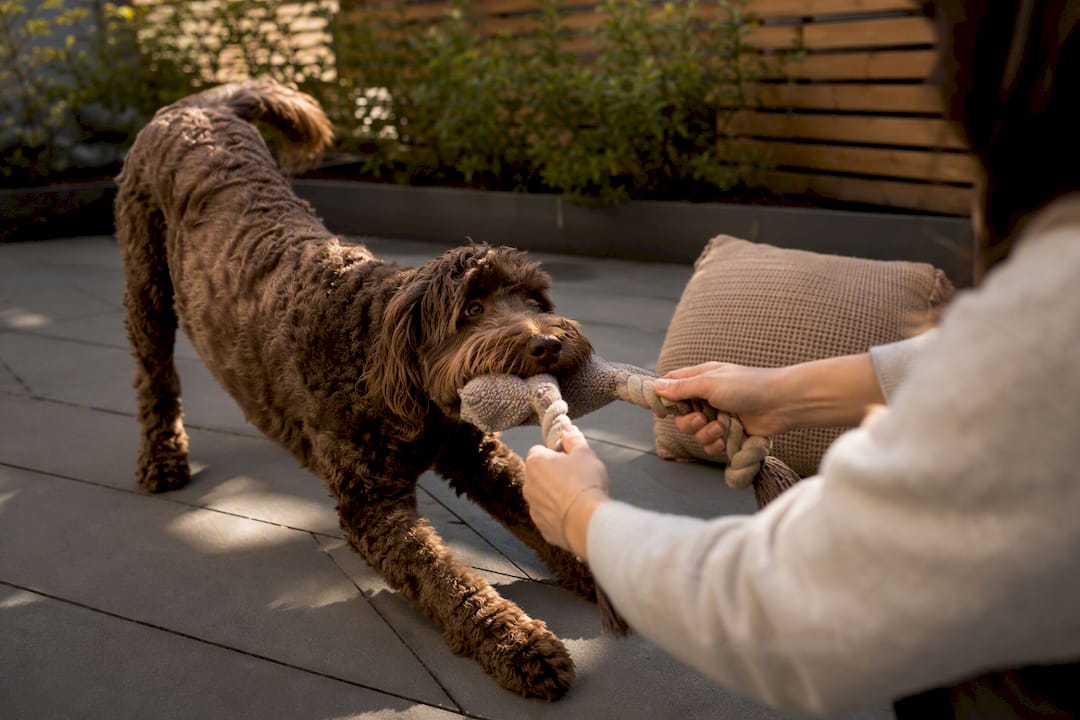
Nonfood rewards deserve more credit than they get. A dog that's food-motivated will also work for a favorite toy, a game of tug, or enthusiastic praise paired with physical affection. Rotating in nonfood rewards during training sessions keeps reinforcement frequent without spending a single calorie, which matters most in households where treats have become the default way of showing affection.
Does Exercise Alone Help a Dog Lose Weight?
Exercise helps, but it's not the main driver of weight loss. A randomized clinical trial comparing dietary restriction to increased physical activity found dogs on calorie-restricted diets lost a median of 10% of their starting body weight, while dogs on an activity-only program lost a median of just 2%, a difference that wasn't statistically significant, according to the Liverpool study. Diet does the heavy lifting; exercise supports it.
That doesn't mean exercise is optional. The same research found that increased activity helped preserve lean muscle mass and improved overall fitness, even without dramatic weight change on its own. Combined with calorie control, exercise rounds out a plan that protects muscle while fat comes off.
Not all walks count the same toward this goal. A leisurely walk full of sniffing and stopping burns very little compared to a sustained, brisk pace. For real aerobic benefit, aim for at least 20 to 30 continuous minutes of steady walking, since frequent stops sharply cut the caloric burn of the outing.
Building activity safely:
- Start with whatever your dog can currently manage without limping, panting excessively, or refusing to continue.
- Add five minutes or a slightly faster pace every one to two weeks, not both at once.
- Watch for joint stress in heavier dogs, especially large breeds carrying significant excess weight on aging hips or knees.
- For dogs with mobility limits or arthritis, swap brisk walks for swimming, short structured play sessions, or a referral to a rehabilitation specialist for a supervised program.
Pro Tip: Log walk duration and pace alongside your dog's feeding log. If weight loss stalls despite steady calorie intake, an activity dip is often the first thing to check before assuming the diet itself has failed.
How Do You Know if the Weight-Loss Plan Is Working?
Weigh your dog at home every two weeks on the same scale, at roughly the same time of day, and bring that log to scheduled veterinary rechecks. Between visits, track feeding amounts, treat totals, and any changes in appetite or energy so your vet has real data instead of a general impression.
Reading the numbers matters as much as collecting them:
- Loss tracking close to the 1 to 2% weekly target means the plan is on pace, and you should stay the course.
- Faster loss than that range can signal too aggressive a calorie cut and warrants a check-in before continuing.
- Slower loss, or a stall lasting several weeks, usually means hidden calories are creeping in somewhere.
When a plateau hits, work through a short troubleshooting checklist before assuming the diet has failed:
- Re-measure the food portion with an actual kitchen scale, not a scoop, since scoops vary in fill level.
- Recount every treat given that week, including ones other family members may not have mentioned.
- Check for free feeding, counter-surfing, or a second household member feeding the dog without knowing about the plan.
- Rule out food that's ending up on the floor or in another pet's bowl.
Owner adherence remains the single biggest predictor of whether a weight-loss plan succeeds, and clinics that follow up early with clients tend to see far better completion rates than ones that hand out instructions and wait months to check back in, per AAHA's guidelines.
Some signs need a same-week vet call rather than waiting for the next scheduled recheck: rapid, unexplained weight loss, vomiting or diarrhea, a sudden behavior change, or increased drinking and urination. Those symptoms can point to a medical cause that has nothing to do with the diet plan itself.
What Medical Conditions Can Block Weight Loss?
Some dogs do everything right on paper, measured food, limited treats, regular walks, and still don't lose weight at the expected rate. That's when an underlying medical condition deserves a look.
Conditions worth ruling out include:
- Hypothyroidism, which slows metabolism and is common in middle-aged and senior dogs of certain breeds.
- Hyperadrenocorticism, or Cushing's disease, which alters fat distribution and appetite regulation.
- Medication side effects, since some steroids and seizure medications increase appetite or promote fat storage independent of calorie intake.
- Other metabolic conditions that a general physical exam alone won't catch.
A reasonable diagnostic workup usually starts with a focused physical exam and bloodwork, a CBC and chemistry panel, with thyroid testing added when clinical signs point that direction. More advanced imaging or specialist referral comes into play only when initial results suggest something needs a closer look.
Dogs managing arthritis, heart disease, or other chronic conditions alongside excess weight often need adjusted goals: a slower weight-loss rate, joint-friendly exercise substitutions, and closer coordination between multiple specialists rather than a single standard timeline.
City Animal Veterinary Center: How We Help With Weight Management
Weight-loss plans work better when vet visits aren't a source of dread. A Fear Free approach helps lower that stress, which matters directly for weight management since it depends on repeat visits, calm handling for weigh-ins, and honest conversations about feeding habits.
For clients who find clinic visits difficult, whether due to a dog's anxiety or a household's logistics, home visits can bring nutritional counseling and monitoring into a familiar environment. If your dog gets anxious around vet care in general, this guide to easing vet visit anxiety pairs well with a weight-management consult.
Coming prepared makes the first appointment far more productive. Bring a feeding history, a treat log covering a typical week, notes on current activity levels, and the baseline photos and weight measurements described earlier. That information lets the clinical team calculate an individualized calorie target on the spot rather than starting from scratch.
What Vets Wish Every Owner Knew About This Process
Feeding is emotional, not just logistical. Cutting a dog's portion or saying no to a begging stare feels, to a lot of owners, like withholding love. That guilt is normal, and it's also the single biggest reason weight-loss plans quietly fall apart at home.
The fix isn't willpower. It's household rules everyone follows, consistently, and a shift toward nonfood affection like a longer walk or a play session instead of a biscuit. Plateaus happen to nearly every dog on a plan at some point. They're a signal to adjust, not a verdict on whether the plan failed. Celebrate the small wins along the way, a looser collar, more energy on walks, because those show up before the scale fully agrees.
— CAVC
Book a Nutritional Counseling Visit or Home Consult
A calorie target only works if it's calculated for your specific dog, not copied from a chart. City Animal Veterinary Center builds that number through nutritional counseling and wellness exams, and for dogs who do better outside a clinic waiting room, our home visit service brings the same weigh-ins and consultation to your living room.
A typical weight-management consult starts with a body condition assessment and weigh-in, moves into a review of your feeding and treat log, and ends with an individualized calorie target and a follow-up schedule. If bloodwork is needed to rule out a medical cause, our in-house lab can often turn results around during the same visit. Reach out through our wellness exam page to schedule, and mention whether an in-clinic or home visit fits your household better.
This article is general information, not a substitute for advice from a qualified doctor. Consult a qualified healthcare professional about your own circumstances before acting on anything here.
Sources
- Obesity and weight loss in dogs | Cornell University College of Veterinary Medicine
- 2014 AAHA Weight Management Guidelines for Dogs and Cats
- Randomized clinical trial — dietary caloric restriction vs physical activity (Liverpool repository)
- How to Help Your Dog Lose Weight — American Kennel Club
FAQ
What's the Quickest Safe Way for a Dog to Lose Weight?
There is no safe shortcut. The fastest responsible rate is around 1 to 2% of body weight per week, achieved through a veterinarian-calculated calorie target rather than a crash diet, according to Cornell's guidance. Pushing faster than that risks muscle loss and other health complications.
What Can I Feed My Dog to Help Them Lose Weight?
A therapeutic weight-loss diet formulated with higher protein and fiber, fed at a measured portion tied to your dog's individual calorie target, is generally the most reliable approach. Over-the-counter "light" foods can work but often fall short on satiety compared to clinical formulas, and any homemade diet needs veterinary approval to stay nutritionally complete.
Can an Overweight Dog Actually Lose Weight?
Yes, and most overweight dogs do well on a structured plan combining calorie control, treat limits, and exercise. A randomized trial found dogs on calorie-restricted diets lost a median of 10% of starting body weight, far outpacing an activity-only approach at 2%, per the Liverpool study.
Does Weight-Management Dog Food Really Work?
It works when it's the right formula fed at the right portion for that individual dog, not just any bag labeled "weight control." Therapeutic diets are built with lower calorie density and higher protein and fiber specifically to preserve muscle and satisfy appetite during restriction, which is why they tend to outperform generic light formulas.
How Much Should Treats Count Toward a Dog's Diet Plan?
Treats should stay under 10% of total daily calories, a limit supported by UC Davis veterinary guidance. Pre-portioning a daily treat allowance and reallocating a dog's own kibble as training rewards are simple ways to stay inside that limit without giving up training opportunities.