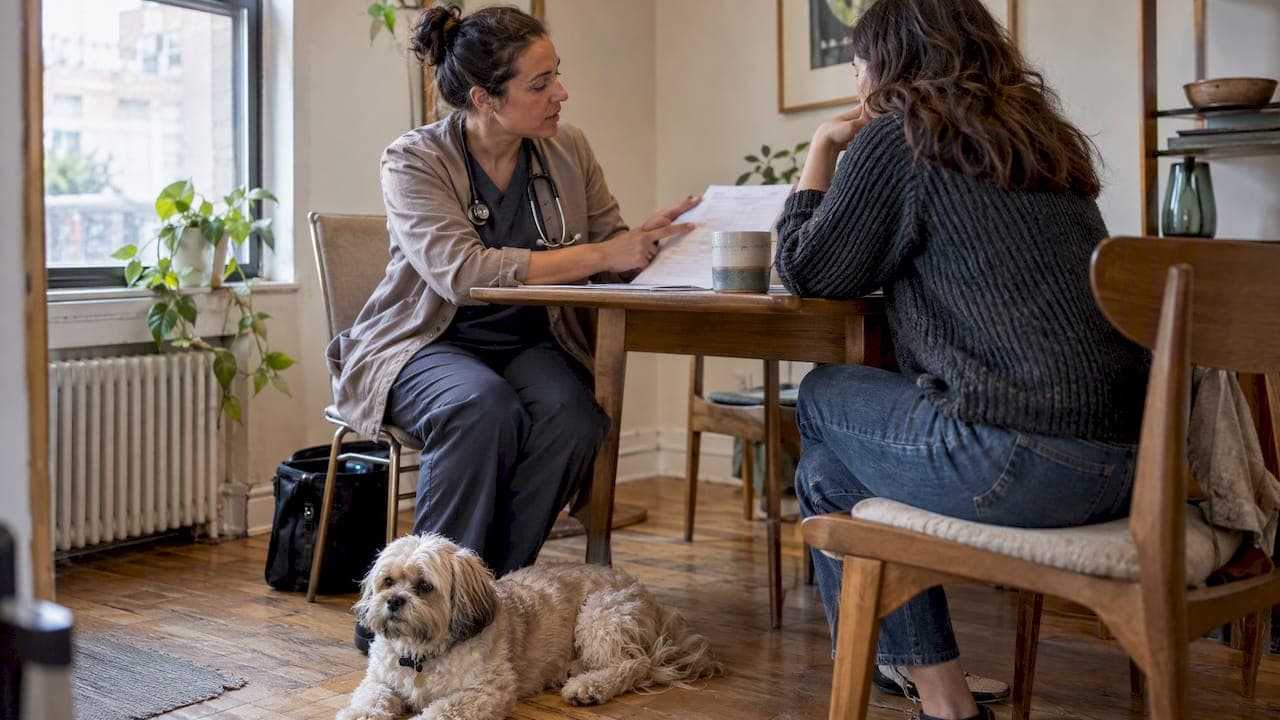
A house call vet visit almost always combines two separate charges: a travel or house-call fee for coming to your home, and a standard exam or consultation fee for the actual care, with diagnostics, medications, or clinic referrals added on top. Before booking, ask for an itemized estimate so you know exactly what's covered and what might cost more once the vet sees your pet in person.
TL;DR:
- House call fees include a flat travel charge and an exam fee per pet, with diagnostics and medications adding to the total bill.
- Longer travel distances, multiple pets, urgent or after-hours visits, and specialized equipment increase the overall cost significantly.
- Mobile vets are typically more expensive than clinics because of added travel fees and limited on-site equipment, which often requires referrals for advanced care.
- Preparation with an itemized estimate, understanding referral and payment policies, and asking about costs beforehand can prevent billing surprises.
- Most in-home services are limited to wellness exams, vaccines, and basic diagnostics, while imaging, surgery, or overnight care require a clinic referral.
Table of Contents
- How a house call bill breaks down, line by line
- What makes the price go up or down
- What house-call vets can and can't do at home
- Questions to ask before you book, and warning signs to watch for
- Planning around the cost: insurance, financing, and recurring care
- How we approach home visits and clear communication
- A candid note on pricing conversations
- Book a home visit with City Animal Veterinary Center
- FAQ
- Sources
How a house call bill breaks down, line by line
Reading a mobile vet invoice gets easier once you know what each line represents. The house-call or travel fee covers the vet's time and mileage to reach you, and it's billed once per visit regardless of how long the appointment runs. Layered on top is the exam or consultation fee, which is often charged per pet rather than per household, so a two-cat visit typically shows two exam charges.

According to AVMA coverage of mobile veterinary care, house calls are commonly billed as a separate travel or convenience fee plus an exam fee, with exact pricing left to each provider's discretion.
From there, the bill can grow depending on what happens during the visit:
- House-call or travel fee: one flat charge per visit, independent of the exam itself.
- Exam or consultation fee: usually assessed per pet seen.
- On-site diagnostics: rapid tests done in your home versus panels that require a clinic lab.
- Medications, vaccines, and supplies: dispensed and charged at the time of the visit.
- Referral or transport fees: added only if your pet needs clinic-based imaging or surgery.
Some practices bundle these into tiered wellness packages, which can make the invoice look simpler even though the same components are still priced underneath.
What makes the price go up or down
House call pricing shifts based on a handful of predictable factors, and knowing them helps you anticipate what a quote will look like before you ever pick up the phone. Distance plays an obvious role: a vet driving across a dense city covers less ground than one serving a spread-out rural area, and that travel time factors into the fee structure. The number of pets matters too, since many practices charge a per-pet surcharge once you're past the first animal.
The type of visit changes the math as well. A routine wellness check is simpler to price than an urgent same-day call or a hospice visit that requires extra time and emotional support. Scheduling also carries weight: after-hours, weekend, and holiday appointments commonly carry a premium because they pull a vet outside normal working hours.
- Travel distance: longer drives or rural routes tend to raise the house-call fee.
- Pet count: multiple animals in one household often mean additional per-pet charges.
- Visit complexity: routine care costs differently than urgent or hospice care.
- Timing: evenings, weekends, and holidays frequently carry added fees.
- Equipment and sedation: specialized gear or calming medication adds to the total.
Behind all of this sits each practice's own pricing approach. AAHA's guidance on preventive care economics notes that many practices lean on tiered or compliance-driven pricing rather than strict cost-based markup, which is part of why two mobile vets in the same city can quote noticeably different numbers for what looks like the same visit.
Pro Tip: Ask whether your preferred appointment window falls into an after-hours or weekend rate before you lock in a time.
What house-call vets can and can't do at home
Understanding the limits of in-home care matters just as much as understanding the fees, because hitting one of those limits is often where surprise charges creep in. Most house-call providers can comfortably handle the following without a clinic visit:
- Wellness exams and vaccinations: standard preventive care travels well.
- Basic rapid diagnostic tests: quick bloodwork or urine screens done on-site.
- Hospice and palliative care: end-of-life comfort care is often better suited to home than a clinic.
Beyond that, certain services simply require equipment a mobile vet can't bring along. X-rays, ultrasounds, surgery, and any care requiring overnight monitoring typically mean a referral to a brick-and-mortar clinic. A discussion of mobile veterinary surgery limitations points out that mobile vets commonly lack on-site imaging or surgical facilities and rely on a referral relationship with a clinic for anything beyond that scope. Asking about these boundaries before booking prevents the unpleasant surprise of a referral fee tacked onto what you expected to be a single visit.
Questions to ask before you book, and warning signs to watch for
A few minutes on the phone can save you from an inflated or confusing invoice later. Before confirming an appointment, give the practice your pet's details and the total number of animals you need seen, since that alone changes the quote. Then push for specifics rather than a vague range.
- Request an itemized estimate: ask it to separate the house-call fee, exam fee, and any likely diagnostics or medications.
- Clarify transfer costs: confirm whether a clinic referral would trigger an additional fee and how that gets billed.
- Ask about payment timing: find out when payment is due, which methods are accepted, and what happens with a cancellation or no-show.
- Get it in writing: a text or e-mail confirmation of the estimate protects both sides if the final bill looks different.
Treat vague answers as a red flag. A provider who won't commit to a written estimate, hedges every question about fees, or mentions transfer charges only after the fact is one to be cautious about.
Planning around the cost: insurance, financing, and recurring care
Most pet insurance plans reimburse house calls the same way they handle clinic visits: you pay at the time of service, then submit the itemized receipt for reimbursement, so keeping that paperwork organized matters more with mobile care than with a single clinic file. Checking your policy's terms for house-call coverage before your appointment avoids a reimbursement denial later.
Financing is also common in veterinary care generally. Programs like CareCredit let owners split payments over time, which matters because a large majority of pet owners report facing unexpected pet care costs exceeding $250 according to the 2025 Lifetime of Care study. That figure is a useful reminder to plan for something beyond the base visit, not just the visit itself.
- Check your insurance policy: confirm house calls are reimbursable and keep every itemized receipt.
- Ask about financing: programs such as CareCredit are widely used for larger or unexpected bills.
- Look into membership plans: some practices offer subscription-style preventive packages for recurring visits.
- Build a small emergency fund: even a modest cushion helps absorb diagnostics or medication costs that aren't part of a routine exam.
How we approach home visits and clear communication
We built our home visit option for pets who find clinic trips stressful, along with owners who have trouble transporting an anxious, senior, or mobility-limited animal. A senior dog managing arthritis, for instance, often does better with a wellness exam done at home than with a car ride and waiting room.
When a visit reveals something that needs clinic-level equipment, we walk owners through what comes next before any referral happens, including what that next step typically involves for care like imaging. We also lean on calming techniques consistent with reducing vet-related anxiety in pets who get stressed by any kind of handling, whether at home or in a clinic setting.
- We offer home visits alongside standard wellness exam services for pets who don't travel well.
- We explain referral steps clearly whenever a case needs equipment beyond what a home visit can provide.
A candid note on pricing conversations
We'd rather spend an extra two minutes on the phone walking through fees than have a client surprised by the final invoice. A phone estimate is always a starting point, because what we find during the exam can change the plan, but we tell owners that up front instead of after the fact. Call and ask the specific questions above before you book: a practice that answers them clearly is one that respects your time and your budget.
— CAVC
Book a home visit with City Animal Veterinary Center
For pets who dread the carrier or struggle with mobility, a home visit brings Fear Free care straight to your living room, covering routine exams, vaccines, and the kind of calm handling explained in Our Methods that clinic visits don't always allow. If something more involved comes up, we'll walk you through next steps clearly before anything proceeds.
Ready to schedule? Visit our Home Visits and House Call Services page to see what's available, or check our Urgent Care page if your pet needs sooner attention.
FAQ
How much does it cost for a vet to come out to your house?
A house call typically bills a separate travel fee on top of the standard exam fee, and the total depends on distance, the number of pets, and whether diagnostics or medications are added. Ask any provider for a written, itemized estimate before booking so you know exactly what's included.
Are mobile veterinarians more expensive?
Mobile vets often charge more than a brick-and-mortar clinic for the same exam because house calls add a separate travel fee that clinic visits don't carry. That premium reflects the convenience of in-home care and the fact that mobile vets typically see fewer patients per day.
Will a vet do a home visit?
Many practices, including ours, offer home visits for pets that struggle with travel, stress, or mobility limits, covering wellness exams, vaccines, and basic care. Services requiring imaging, surgery, or overnight monitoring usually still require a referral to a clinic.
What are the drawbacks of a mobile vet?
The main drawback is limited equipment: mobile vets generally can't perform X-rays, ultrasounds, or surgery on-site, which means a clinic referral for anything beyond basic care. House calls can also cost more per visit than an equivalent clinic appointment due to the added travel fee.
Sources
- 2025 Lifetime of Care: Pet Ownership Costs and Insights
- Homeward bound | American Veterinary Medical Association
- Preventive Care Protocols and Practice Economics (AAHA)