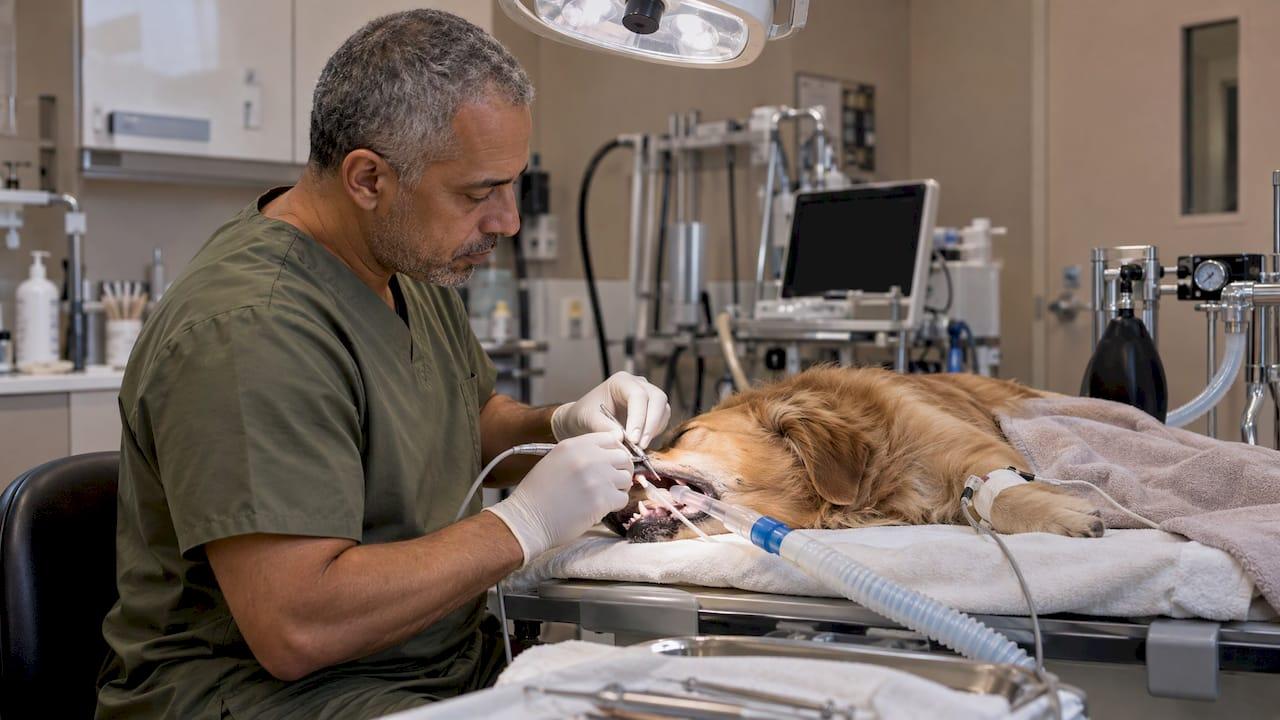
Most dogs need a professional dental cleaning at a veterinary hospital every 1 to 2 years, according to the American Animal Hospital Association (AAHA). Small dogs and some breeds need them more often. The exact interval for your dog depends on its mouth, not the calendar, which is why the best schedule comes from a veterinarian who has looked at the teeth and the gumline. At City Animal Veterinary Center in Brooklyn, our dental care is delivered with a Fear Free approach, so an anxious dog is not made to dread the visit.
TL;DR
- Plan on a professional cleaning every 1 to 2 years for most dogs. Small and flat-faced dogs often need one every 6 to 12 months.
- Your dog's size, age, breed and the quality of your home care set the real interval.
- Bad breath, visible tartar, drooling, or dropping food mean the cleaning should not wait for the next scheduled date.
- Brushing at least three times a week helps between cleanings, but it does not replace the work done under the gumline.
- A proper cleaning is done under anesthesia and includes dental X-rays.
Table of Contents
- The short answer: how often by type of dog
- What decides your dog's schedule
- Signs your dog should not wait for the next cleaning
- What a professional cleaning includes, and why it matters for timing
- What to do between cleanings
- A practical plan you can follow
- Why we think of dental care as part of whole-dog care
- Book your dog's dental evaluation in Brooklyn
- FAQ
- Sources
The short answer: how often by type of dog
Veterinary sources agree on the range, and they differ only in how they phrase it. The ranges below come from several of them.
| Dog | Typical professional cleaning interval | Source |
|---|---|---|
| Most dogs | Every 1 to 2 years | AAHA |
| Healthy adult dogs, as a baseline | Yearly, starting at 2 to 3 years of age | Purdue University Extension |
| Small dogs and flat-faced breeds | Once or twice a year | Veterinary Partner (VIN) |
| Larger dogs with healthy mouths | Every 18 to 24 months | Veterinary Partner (VIN) |
| Dogs whose teeth are never brushed | Probably two or three cleaning visits a year | Veterinary Partner (VIN) |
Treat these as starting points. A two-year-old Labrador with clean teeth and a nine-pound Chihuahua with crowded teeth are on different tracks, even though both are "dogs who need dental care."
What decides your dog's schedule
No single number fits every dog, because several things push the interval up or down. Purdue Extension lists size, age, breed, and the type, frequency and success of home preventive care as the factors a veterinarian adjusts for. Cornell's Riney Canine Health Center adds dental health and medical history to that list in its guidance on dental disease.
Size and breed
Small and toy dogs often have more crowded teeth, and tartar tends to collect faster between them. Flat-faced breeds such as pugs, bulldogs and Boston terriers are in the same group because of how their jaws and teeth are arranged. This is why veterinary sources point these dogs toward one or two cleanings a year, while a big dog with a healthy mouth can often go longer.
Age
Plaque builds up over a lifetime, so the 2 to 3 year mark is when most dogs should have their first professional dental evaluation. Older dogs often have more established disease and benefit from tighter monitoring. If your dog is a senior, our guide to the senior dog wellness exam explains how the mouth fits into a full checkup. For puppies, the first months are about baby teeth and habits, and our puppy and kitten wellness exam guide covers what happens then.
Home care
Home care is the factor you control. A dog whose teeth are brushed regularly can stretch the interval between cleanings. A dog whose teeth are never brushed usually needs more frequent visits. The VIN toothbrushing article puts it at two or three cleaning visits a year when brushing is not possible.
Existing disease
A dog with gum inflammation, loose teeth or pockets around the roots is no longer on a maintenance schedule. It is being treated. In that case the veterinarian sets the timing based on the findings. If you want to know how advanced disease is staged, see our explanation of dog periodontal disease stages.
Signs your dog should not wait for the next cleaning
A schedule is a floor, not a ceiling. Many dogs hide pain, which is one reason AAHA stresses regular exams. The AVMA's pet dental brochure says to have the teeth checked sooner for any of these:
- Bad breath
- Broken or loose teeth
- Discolored or tartar-covered teeth
- Abnormal chewing, drooling, or dropping food
- Reduced appetite or refusing to eat
- Pain around the mouth
- Bleeding or swelling around the mouth
AAHA adds red, swollen gums, blood on chew toys, tilting the head or eating on one side, and nasal or eye discharge. Irritability or a change in behavior can also point to a painful mouth.
You can do a quick check at home each month. Lift the lip and look along the gumline for yellow or brown buildup, especially over the cheek teeth and the canines, as the VIN toothbrushing article suggests. Visible tartar means a professional exam is due. Persistent bad breath is common and is not normal, and we explain what vets look for in why so many dogs get bad breath.
Some signs call for a prompt visit rather than a routine one: bleeding from the mouth, swelling on the jaw or face, a dog that will not eat, or bloody nasal discharge. Cornell lists these as reasons to call your veterinarian. Our urgent care team can see dogs with these problems.
What a professional cleaning includes, and why it matters for timing
The reason the interval is measured in months and years is that the real work happens where you cannot see. According to AAHA, more than half of a tooth's structure lies below the gumline and shows up only on X-rays. A complete professional cleaning typically includes:
- Pre-anesthetic blood work and an exam.
- Dental X-rays of the teeth and the bone around the roots.
- Scaling above and below the gumline.
- Polishing and periodontal probing.
- Extractions or antibiotics when the findings call for them.
Cornell describes the same process, with ultrasonic and hand scalers and a full check of the mouth, including under the tongue, the tonsils, the palate and the lips. Our overview of digital X-rays for pets explains how imaging works, and a separate guide covers whether dogs need sedation for X-rays.
Why anesthesia is part of it
The AVMA, AAHA and the American Veterinary Dental College do not recommend anesthesia-free dental cleanings. They do not allow cleaning or inspection below the gumline, where most dental disease occurs, and they can injure the pet or the person doing the procedure. Anesthesia lets the team clean below the gumline, control pain, and protect the airway with a breathing tube so bacteria do not reach the lungs, as the VIN toothbrushing article explains.
Many owners worry about anesthesia, and that is understandable. Veterinary Partner notes that modern hospitals use pre-procedure blood tests and exams, IV fluids, specialized monitoring and warming, which keeps the risk very low in healthy pets when a trained team handles it. We go into this in detail in safe dental anesthesia for dogs.
If the exam finds a tooth that cannot be saved, extraction is part of treating the problem and relieving pain. Our guide to dog tooth extraction walks through what to expect.

What to do between cleanings
Home care does not replace a professional cleaning. Purdue Extension notes that even the best home care cannot remove plaque and bacteria under the gumline. What it can do is slow the buildup, and that is what protects the length of your interval.
Brushing: how often
The numbers are consistent across sources:
- Daily is the goal. Today's Veterinary Nurse calls brushing the gold standard and says twice daily suits dogs that already have periodontal disease.
- At least three times a week is the minimum for a dog in good oral health, according to the same article and to Purdue.
- Consistency matters. The article reports that stopping brushing for even a month can bring gum inflammation back to where it started.
Use a soft-bristle brush and a pet-specific toothpaste, and angle the brush about 45 degrees toward the gumline. Never use human toothpaste, which AAHA and Purdue warn can be toxic to dogs. Gauze and washcloths are generally not recommended, since they cannot clean below the gumline.
Purdue's author notes that 50 to 70 percent of owners do not follow brushing recommendations, mostly for lack of time or because the dog will not tolerate handling. If your dog hates the brush, you are in good company. Start with a few seconds a day, reward calmly, and ask us about stress-reducing handling. Our Fear Free approach and behavior management services are built for dogs who find handling hard.

Chews, diets and water additives
AAHA lists dental chews, water additives and dental diets as additions to brushing. Look for the seal of the Veterinary Oral Health Council (VOHC), a nonprofit of board-certified veterinary dentists that accepts products shown to reduce plaque or tartar. Be careful with hard chews. Cornell warns that bones, antlers, hooves, rawhide and hard manufactured toys can wear down or fracture teeth and may cause gastrointestinal damage or blockage. Our nutritional counseling can help you match a diet and chew to your dog.
A practical plan you can follow
- Book a baseline dental evaluation at 2 to 3 years of age, earlier for small or flat-faced breeds. Your veterinarian will tell you whether your dog is on a 6-, 12- or 24-month track.
- Brush at least three times a week, and daily if you can.
- Check the gumline monthly for yellow or brown buildup, redness, or odor.
- Keep the checkup schedule. Cornell notes the vet does an oral exam at annual visits or more often based on age, breed, dental health and history, so your regular wellness exam is where timing gets adjusted.
- Act on warning signs instead of waiting for the date on the calendar.
We see the same pattern in dogs that come in for dental care: owners who ask early get shorter, simpler visits.
Why we think of dental care as part of whole-dog care
At City Animal Veterinary Center, we do not treat teeth as a separate topic. A painful mouth changes how a dog eats, plays and behaves, so we look at the mouth during wellness exams, in geriatric care, and when a dog comes to us with a change in appetite.
Our approach is Fear Free. Many dogs dread the clinic more than the procedure, and a calm dog is easier to examine and easier to care for. We aim to reduce stress at every step, so that your dog's next visit is easier than the last.
We also know that some of our clients find travel with a pet difficult. Our home visit service exists for them, and we would be glad to talk through what is the best way to keep your dog's care on track.
Because our work covers dental care, diagnostic imaging, an in-house laboratory, pain management and acupuncture, we can keep your dog's whole picture in one place. That is what we believe a trusted neighborhood vet should be.
CAVC
Book your dog's dental evaluation in Brooklyn
If you are not sure where your dog falls on the 6-month to 2-year range, the answer starts with an exam. Our dental care team in Brooklyn looks at the teeth, gums and overall health, and then sets an interval that fits your dog. We offer Fear Free visits for anxious pets, in-house laboratory work, and digital imaging, and a home visit option for owners who find it hard to travel with a pet.
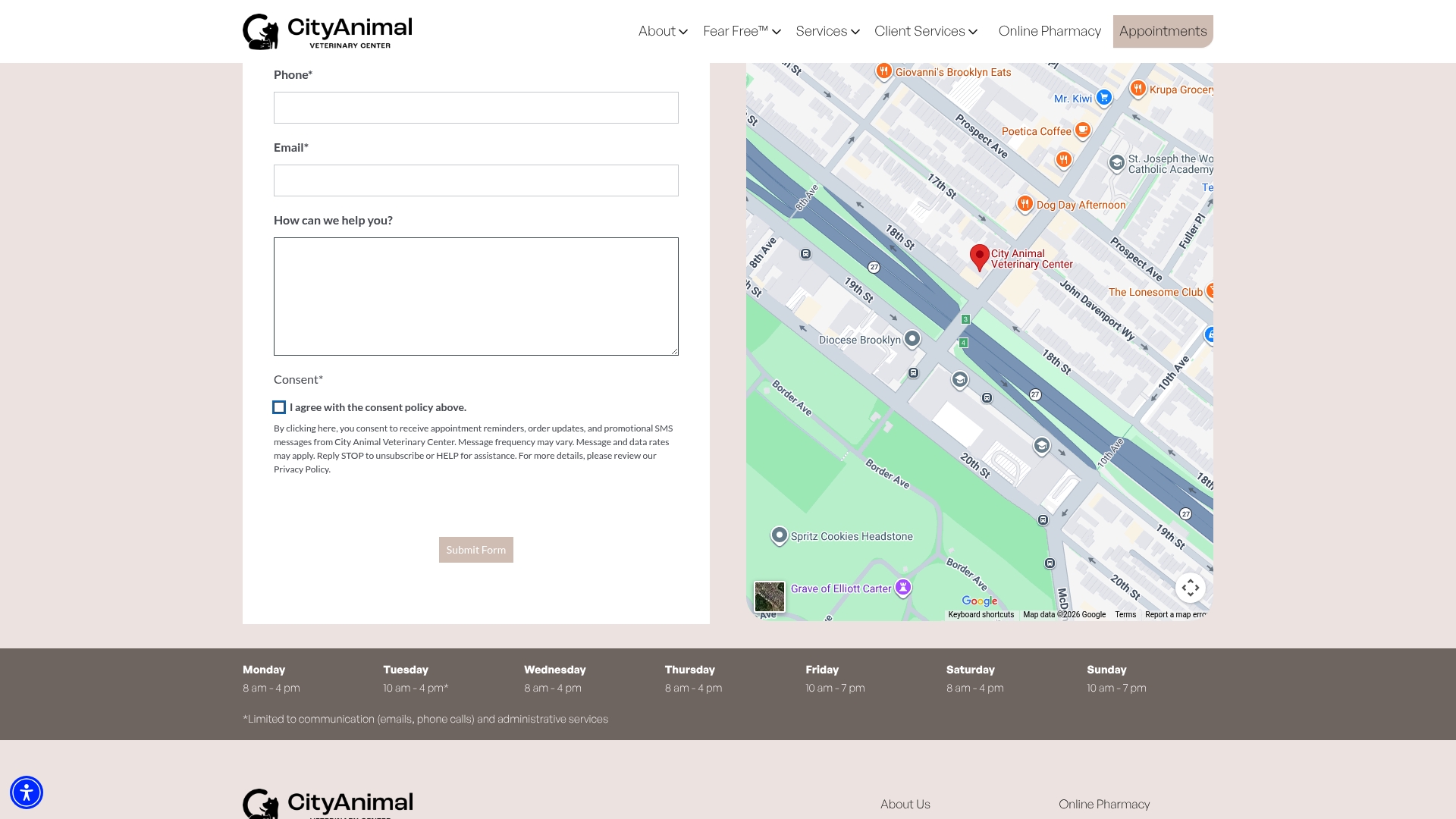
To get started, contact City Animal Veterinary Center and tell us what you have noticed about your dog's mouth.
FAQ
Is once a year enough for my dog?
For many adult dogs, yes. Purdue Extension recommends a yearly veterinary dental exam and cleaning starting at 2 to 3 years of age, and AAHA says most pets need one every 1 to 2 years. Small dogs, flat-faced breeds and dogs that are never brushed may need more. Your veterinarian will confirm after examining the mouth.
Can I skip professional cleanings if I brush every day?
Brushing is the most effective thing you can do between cleanings, and the AVMA says it may reduce how often cleanings are needed. Even so, plaque and bacteria below the gumline cannot be removed at home, and X-rays are the only way to see the roots. Keep the yearly exam so your veterinarian can confirm what daily brushing is doing.
At what age should a dog get its first dental cleaning?
Purdue Extension suggests beginning yearly veterinary dental exams and cleanings at 2 to 3 years of age. Small breeds with crowded teeth may need attention earlier. Puppies should have their mouths checked at their early wellness visits, which helps you spot retained baby teeth.
Is a cleaning without anesthesia a good alternative?
The AVMA, AAHA and the American Veterinary Dental College do not recommend it. Without anesthesia, the area below the gumline cannot be cleaned or inspected, and that is where most dental disease occurs. A cleaning under anesthesia with dental X-rays covers the whole tooth.
What are the signs my dog needs a cleaning sooner?
Bad breath, tartar on the teeth, drooling, dropping food, chewing on one side, red or bleeding gums, and a lower appetite are the most common. Facial swelling or bloody nasal discharge calls for a prompt visit. Call your veterinarian if you notice any of these.
Sources
- AAHA: Dog and cat dental disease, signs and professional cleanings
- Purdue University Extension: Preventing Periodontal Disease in Dogs
- Veterinary Partner (VIN): Dental Care in Dogs and Cats and What to Expect
- Veterinary Partner (VIN): Toothbrushing and Dental Prophylaxis in Cats and Dogs
- AVMA: Pet dental care brochure
- Cornell University Riney Canine Health Center: Dental disease and home dental care
- Today's Veterinary Nurse: Periodontal Disease in Dogs and Cats