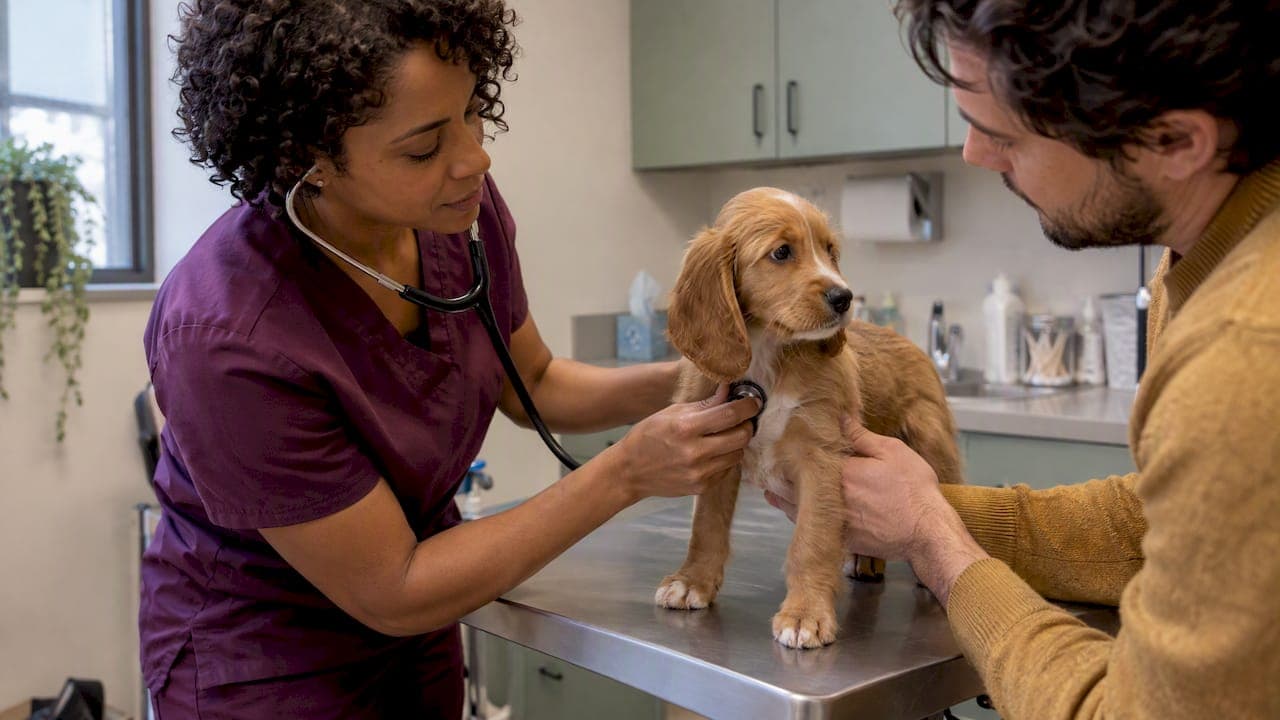
A pediatric pet wellness exam is a series of checkups for a puppy or kitten, usually starting at 6 to 8 weeks of age and repeating every three to four weeks until about 16 to 20 weeks, according to PetMD's wellness exam guide. Each visit combines a nose-to-tail physical exam, vaccines, parasite prevention, and coaching on feeding, training and behavior. If you just brought a young pet home to Brooklyn, this guide walks through the schedule, what happens in the room, how to prepare, and how to make the first visits gentle.
TL;DR
- Book the first visit within about a week of bringing your puppy or kitten home, even if the breeder or shelter already started vaccines.
- Expect follow-up exams every 3 to 4 weeks until your pet is roughly 16 to 20 weeks old, then a yearly exam if your pet is healthy.
- Bring adoption or breeder papers, vaccine history, a diet and supplement list, your questions, and a fresh stool sample if you can.
- Rabies vaccination is required by law in New York, and the first dose is due no later than four months of age.
- Fear Free handling, and home visits for pets who struggle with travel, make early exams a positive experience that lasts into adulthood.
Table of Contents
- What makes a wellness exam "pediatric"
- When to schedule the first visit and the follow-ups
- What happens during a pediatric wellness exam
- How to prepare for the visit
- Why Fear Free matters most for young pets
- Our perspective: the first visits are an investment in the next fifteen years
- Book your pet's first visit
- Signs that should not wait for the next scheduled exam
- Common mistakes in the first months
- FAQ
- Sources
What makes a wellness exam "pediatric"
The word simply means the patient is a baby. A puppy or kitten changes weight, teeth, immune protection and behavior every few weeks, so the checkup schedule is much tighter than the one for an adult dog or cat. Think of it as the well-baby visits of the pet world.
The goals are different from an adult visit, too. Veterinary teaching has moved on from the old picture of a quick shot and a deworming. The MSD Veterinary Manual describes modern preventive care as covering overall medical, nutritional and behavioral wellness, not only vaccination. That is how we approach it: the exam, the vaccine plan, the diet, the socialization window and your household routine are all one conversation.
When to schedule the first visit and the follow-ups
The first visit
The North Carolina Veterinary Medical Association advises scheduling a new puppy or kitten's first vet visit within seven days of coming home. There are two reasons. A vet can catch a congenital problem, a parasite or an upper respiratory infection early. And many adoption and sale agreements require a prompt health check.
If your pet is younger than 6 weeks, or you are not sure of the age, call us. Age affects everything from vaccine timing to which questions we ask about feeding.
The series
Most pediatric pets are seen every 3 to 4 weeks, starting at 6 to 8 weeks and ending between 16 and 20 weeks, per PetMD. Here is what that usually looks like in practice:
| Approximate age | Typical focus of the visit |
|---|---|
| 6 to 8 weeks | First full exam, weight baseline, first vaccines, deworming and parasite plan, feeding advice |
| 9 to 12 weeks | Growth check, booster vaccines, parasite prevention, socialization and house-training questions |
| 12 to 16 weeks | Booster vaccines, rabies vaccination when age-appropriate, microchip discussion, early dental check |
| 16 to 20 weeks | Final booster in the series, review of growth and behavior, spay or neuter planning |
This is a general pattern, not a prescription. Your pet's breed, size, history, and the vaccines already given decide the real calendar. We build the plan at the first visit and write the next date down before you leave.
When the schedule shifts to adult care
After the puppy or kitten series, the next exam is usually about one year after the last visit, and healthy adult dogs and cats are then seen annually, as PetMD explains. Large-breed dogs, cats with chronic conditions and, later, seniors may need more frequent checkups. If you want a preview of that later chapter, our senior dog wellness exam guide covers it.
What happens during a pediatric wellness exam
Every clinic runs its own flow, but a thorough pediatric exam covers the same ground. Here is what you can expect with us.
The history conversation
We start by listening. Where did your pet come from? What does it eat, how often, and how much? Any sneezing, soft stool, vomiting, scratching or odd behavior? What is your household like: other pets, children, stairs, a roommate who works from home? Small details here often steer the rest of the visit.
The hands-on exam
The physical exam is the heart of the visit. Your veterinarian will typically:
- Weigh your pet and score body condition, so growth can be tracked from one visit to the next.
- Listen to the heart and lungs for murmurs or abnormal sounds.
- Check eyes, ears and nose for discharge, mites, infection or structural issues.
- Look at the mouth, gums and baby teeth, and watch for retained teeth as adult teeth come in.
- Feel the abdomen, and check the umbilical area and, in males, that both testicles have descended.
- Examine skin and coat for fleas, ringworm, dryness or irritation.
- Assess joints, gait and the hips and kneecaps, which matters especially in larger dogs and some cat breeds.
We do this slowly, with treats and breaks, which brings us to the Fear Free part below.
Stool testing and in-house diagnostics
Intestinal parasites are common in young animals, and many are passed from the mother or picked up in early life. A fresh stool sample lets us check for them. Our in-house laboratory means that, when tests are needed, results can often guide decisions during the same appointment. If something looks off, digital imaging and other diagnostics are available through our diagnostic imaging service.
Vaccines and boosters
At wellness visits, veterinarians assess which vaccines and boosters your pet needs, and some boosters are given every three years; non-core vaccines depend on lifestyle, age and health, according to PetMD. A dog who goes to daycare or boarding in Brooklyn, for example, has a different risk profile than a cat who never leaves a fourth-floor apartment.
Two of our blog guides go deeper on the shots themselves. For dogs, read about the five core vaccines backed by AAHA and WSAVA. For cats, see our Fear Free kitten vaccination schedule. You can also review our vaccinations service page.

Rabies and the law in New York
Rabies vaccination is mandatory for dogs, cats and domesticated ferrets in New York. The first dose must be given no later than four months after birth, with a second within a year of the first, according to the Rabies Aware state summary for New York. The same page notes that USDA-licensed rabies vaccines are labeled for animals older than three months, which is why the shot typically falls in the later visits of the series. Keep your certificate: you will need it for licensing, boarding, grooming and travel.
Parasite prevention
Parasite prevention is tailored to age, location and lifestyle, and may cover fleas, ticks, heartworm and intestinal worms, per PetMD. In a city, many owners assume indoor pets are safe. Fleas ride in on clothing and other animals, and mosquitoes get into apartments. Your vet will recommend products by your pet's weight and age; do not borrow an adult dog's treatment for a puppy, because dosing and age limits matter.
Nutrition, microchipping and behavior
A good pediatric visit also covers:
- Nutrition: the right growth formula, portion size, treat limits, and when to switch to adult food. Our team offers nutritional counseling as part of wellness care.
- Microchipping: a permanent ID that can be placed at a routine visit. It is one of the most useful things you can do for a pet who might slip out of an open door.
- Behavior: house-training, crate routines, biting, scratching and sleep. Early guidance prevents habits that are hard to undo.
All of this is available under our wellness exams service.
How to prepare for the visit
A little planning makes the appointment smoother for you and calmer for your pet. The NCVMA checklist suggests bringing medical records, such as breeder or adoption papers and vaccine history, plus information about diet, medications and supplements, a fresh stool sample if possible, a list of written questions, and arriving about 10 minutes early (NCVMA). The same page also suggests practicing travel in a carrier or with a collar and leash.
Your checklist
- Paperwork: adoption or breeder records, any vaccine or deworming dates, microchip number if there is one.
- Food details: the brand and formula, how much and how often. A photo of the label works.
- Stool sample: fresh, collected the same day if possible, in a sealed bag or container.
- Questions: write them as they come up. Biting, sneezing, litter box trouble and sleep are all fair game.
- Carrier or leash: cats in a hard-sided carrier with a towel inside, small dogs in a carrier or secure harness, larger puppies in a well-fitted collar or harness on a short leash.
- Treats: a few of your pet's favorites. Hold back part of a meal so your pet arrives a little hungry and motivated.
It also helps to keep the records, the vet's number and feeding notes together in one folder. That folder is the core of a pet care plan for hospitalization, should someone else ever need to bring your puppy or kitten in on your behalf.
Practice the trip
For kittens, leave the carrier out at home with a blanket and a treat inside for several days before the visit, so it becomes a bed rather than a trap. For puppies, short car rides that end somewhere pleasant teach that the car does not always mean the clinic. Our guide to calm car rides for dogs has a step-by-step approach. In Brooklyn many of our clients arrive on foot or by subway: a carrier with a covered top and a secure grip keeps a nervous pet from feeling overwhelmed by the street.

Why Fear Free matters most for young pets
The first handful of vet visits shape how a pet feels about veterinary care for life. A puppy who is restrained, scolded or startled at 8 weeks may become a dog who hides under the chair at every checkup. A kitten who has a calm, treat-filled first exam is far easier to handle at 10 years old.
That is why our team is Fear Free certified and why the approach is built into every pediatric appointment. In practice, it means:
- Slower introductions, with time for your pet to sniff, explore and take treats before anything is touched.
- Gentle handling, non-slip surfaces and calming positions in place of forceful restraint.
- Letting your pet's body language set the pace, and pausing when it asks for a break.
- Keeping you in the room whenever possible, because your calm helps your pet stay calm.
If you are worried about a particular fear, these two guides give practical steps you can start at home: dog vet anxiety and cat vet anxiety.
Pair vet visits with socialization
The early weeks are also the prime window to introduce your puppy to people, surfaces, sounds and other vaccinated dogs. Ask us during the exam what is safe for your pet's vaccine stage, and use our puppy socialization checklist as a six-week plan. For kittens, our first vet visit guide for kittens explains what the room, the exam and the follow-up look like.
Our perspective: the first visits are an investment in the next fifteen years
We see pediatric exams as the start of a relationship, not a vaccination appointment. A young pet's health, fears and habits are all being formed at once, so the most valuable things we offer are time and consistency. We would rather spend an extra ten minutes letting a trembling kitten settle than rush through an exam and have that kitten dread every visit afterward.
We also know city life is demanding. Many of our clients are busy professionals and families juggling work, school and small apartments. That is why we offer home visits for pets who find travel stressful, and why we encourage owners to bring questions about behavior, nutrition and daily routines to a wellness exam, not only concerns about illness. Our approach combines conventional medicine with options such as acupuncture and pain management later in life, so the same team can follow your pet from the first booster to the senior years.
If you remember one thing, make it this: a pediatric exam is the cheapest, calmest time to catch a problem, so never skip a scheduled visit because your pet looks fine. Looking fine is exactly what we are checking.
— CAVC
Book your pet's first visit
If you have a new puppy or kitten in Brooklyn, we would love to meet them. Our team offers pediatric wellness exams, vaccinations, parasite prevention, microchipping, nutritional counseling and behavior guidance, all delivered with a Fear Free approach. If getting your pet into a carrier or a car is the hard part, ask about our home visit service.

New to us? Start on our new clients page or go straight to the wellness exams page to request an appointment.
Signs that should not wait for the next scheduled exam
Puppies and kittens can go downhill quickly. Do not wait for the next checkup if you notice any of the following, and call us, or use our urgent care service:
- Repeated vomiting or diarrhea, especially with lethargy or refusal to eat.
- Difficulty breathing, persistent coughing, or heavy nasal discharge.
- Pale gums, a swollen belly, or a pet who is hard to wake or unusually floppy.
- Straining to urinate, or crying while using the litter box.
- Limping, a fall from furniture, or a suspected ingestion of a toxin, medication or foreign object.
If your pet is in severe distress outside our hours, go to the nearest emergency veterinary hospital rather than waiting. A young animal can dehydrate or lose blood sugar in hours.
Common mistakes in the first months
A few patterns come up again and again at pediatric visits:
- Skipping visits after the first one. The series exists because vaccines are given in stages and growth changes quickly. Missing a booster can leave a gap in protection.
- Assuming indoor pets do not need prevention. Fleas, intestinal parasites and even heartworm can reach indoor pets.
- Switching food too fast. Sudden changes cause stomach upset. Ask us before changing formulas, and change over several days.
- Putting off dental habits. Start touching your pet's mouth early, with treats, so brushing is normal by adolescence.
- Letting socialization slide. Waiting until all vaccines are done to introduce anything new can close the window. Ask what is safe at each stage.
- Not asking the "silly" questions. There are none. Every behavior question is better answered early.
FAQ
How soon should I take a new puppy or kitten to the vet?
Within about a week of bringing them home is the standard advice from veterinary professionals. Do this even if the breeder or shelter has already given some vaccines, because a full exam can catch issues that are not obvious at home. Bring all of the paperwork you received.
How many wellness visits does a puppy or kitten need?
Typically a visit every three to four weeks from about 6 to 8 weeks of age until 16 to 20 weeks, which usually works out to three or four visits (PetMD). Your veterinarian may adjust this based on the vaccines already given and your pet's health. After the series, healthy pets move to a yearly exam.
Is a pediatric wellness exam only about vaccines?
No. Vaccines are important, but the visit also covers a full physical exam, parasite testing and prevention, nutrition, microchipping, dental development and behavior. Modern preventive care looks at medical, nutritional and behavioral health together, as the MSD Veterinary Manual notes.
What if my puppy or kitten is scared of the car or the clinic?
Start with carrier or car practice at home, bring treats, and tell us about your pet's fears when you book. We use Fear Free handling to keep visits low-stress. If travel is too difficult, ask about a home visit for your pet's exam.
What should I bring to the first appointment?
Bring adoption or breeder records, vaccine history, a note on diet and any supplements, a fresh stool sample if possible, and your questions. A carrier for cats and small dogs, or a collar and leash for larger puppies, keeps everyone safe. Arriving about 10 minutes early gives your pet time to settle.
Sources
- Pet Wellness Exams, PetMD
- First Puppy or Kitten Vet Visit: What to Expect and Checklist, NCVMA
- Preventive Health Care for Small Animals, MSD Veterinary Manual
- New York rabies vaccination requirements, Rabies Aware
- A Pet Care Plan for Hospitalization