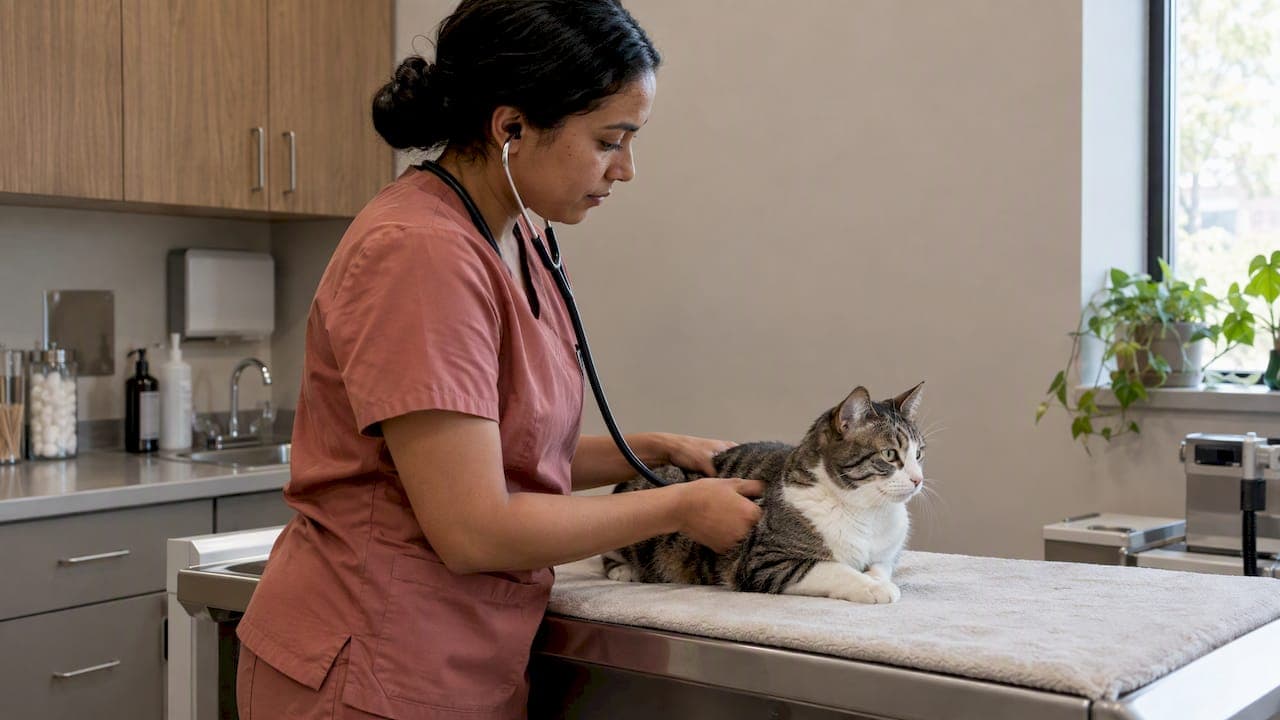
A wellness visit is a preventive checkup for a pet who seems healthy. A sick visit is an appointment about a specific problem you have already noticed, such as vomiting, limping or a loss of appetite. The goals, the length, the tests and even the way you prepare are different, and knowing which one you need helps your pet get the right care sooner.
Below, we explain what happens at each type of appointment, how often healthy and senior pets should be seen, which signs mean you should not wait for the next checkup, and what to do when your pet falls somewhere in between.
TL;DR
- A wellness visit is preventive care for an apparently healthy pet. A sick visit is diagnosis and treatment for a problem you can already see.
- Healthy adult dogs and cats should have at least one wellness exam every year. Senior pets do better with a visit every six months.
- Pets hide pain and illness, so a pet who looks fine can still have a developing problem.
- Persistent vomiting or diarrhea, trouble breathing, bleeding, appetite loss and unexplained pain or lameness call for a sick visit, not a wait-and-see approach.
- Anxious pets and owners who cannot travel easily have options: Fear Free™ handling and home visits.
Table of Contents
- The difference in one minute
- What happens at a wellness visit
- What happens at a sick visit
- Why a healthy-looking pet still needs a checkup
- How often should each type of visit happen?
- Signs you should book a sick visit now
- When a visit is a little of both
- Our perspective: treat the checkup as the first sick visit you never needed
- Make either visit easier on your pet
- FAQ
- Sources
The difference in one minute
The American Animal Hospital Association (AAHA) describes a wellness visit as a preventive checkup for an apparently healthy pet, meant to detect disease early and keep preventive care current. Its guidance also says a pet that looks well should not make these visits optional. A sick visit starts from the opposite end: something has changed, and you want to know what and what to do about it.
That difference in purpose shapes everything else.
| Wellness visit | Sick visit | |
|---|---|---|
| Why you come | Prevention and early detection | A symptom or change you have noticed |
| Pet's condition | Appears healthy | Appears unwell, uncomfortable or different |
| Main focus | Full-body exam, vaccines, parasite control, nutrition, dental review | A focused exam on the problem, then diagnosis and treatment |
| Typical add-ons | Screening tests, vaccine updates, microchip check | Bloodwork, X-rays, medications, follow-up plan |
| Timing | Scheduled in advance, on a regular rhythm | As soon as the problem appears |
| Questions you bring | Diet, behavior, weight, travel, life stage | When it started, how often, what changed |
Neither visit is better than the other. They do different jobs, and a pet who gets regular wellness care usually has fewer sick visits that begin with "I wish we had caught this sooner."
What happens at a wellness visit
A wellness exam is a systematic look at the whole animal. According to AAHA, preventive visits commonly cover lifestyle and life stage, weight, dental evaluation, parasite control, heartworm and internal-parasite testing, vaccination decisions, microchip checks and spay/neuter timing.
A panel published in the Journal of the American Veterinary Medical Association stresses that taking the patient's history and performing a physical exam are central to a wellness appointment. The same panel notes that these visits may also cover parasite prevention, diet, microchipping, dental care, behavior, breed-specific risks and core or lifestyle-based vaccinations.
In practice, here is how that tends to unfold:
- History and lifestyle. Expect questions about appetite, thirst, bathroom habits, energy, exercise, diet, treats, travel and other pets at home. In a city like Brooklyn, details such as how often your dog visits the park, boards or meets other dogs can change which vaccines make sense.
- Weight and body condition. Small changes matter, especially in cats and small dogs.
- Nose-to-tail physical exam. Eyes, ears, mouth and teeth, heart and lungs, abdomen, skin and coat, joints, lymph nodes.
- Vaccine and parasite planning. Your vet reviews what your pet has had and what is due based on risk, not just a calendar.
- Screening tests as appropriate. Depending on age and history, this might include stool testing, heartworm testing or bloodwork.
- Counseling. Nutrition, dental home care, behavior concerns and what to watch for as your pet ages.
The wellness appointment is also the best time to raise small things you might not book a visit for: a new lump you are not sure about, a bit of stiffness on stairs, bad breath, or a cat who has become pickier. If you want to see how we structure these appointments, our wellness exams page lays it out, and our preventative care page explains how the pieces fit together over a pet's life.
Puppies and kittens are a special case
Young animals are seen more often because their vaccine series, parasite checks and early behavior work happen on a schedule. If you have a new kitten, our guide to the first kitten vet visit walks through what to expect.
What happens at a sick visit
A sick visit is built around a question: what is causing this? According to a ConsumerAffairs guide to vet visits, an illness appointment may involve gathering the health history and checking vital signs, a focused examination, bloodwork, X-rays, treatment and prescriptions, and, in more serious cases, hospitalization.
The sequence usually looks like this:
- Your account of the problem. The most useful details are when it started, whether it is getting better or worse, how often it happens, what your pet has eaten or gotten into, and any medications or supplements. A short video of a cough, limp or odd behavior is often worth more than a long description.
- Vital signs and a focused exam. Temperature, heart rate, breathing, hydration and a close look at the affected area or body system.
- Diagnostics. Bloodwork, urine tests, digital X-rays or ultrasound can show what an exam cannot. Having an in-house laboratory and imaging at the clinic shortens the wait between question and answer. For example, our guide to urinalysis in dogs explains what a urine sample shows and how to collect one at home.
- Treatment and a plan. Medication, fluids, wound care, a procedure, or a recheck. A good plan tells you what to watch for at home and when to call back.
Sick visits are often shorter on prevention and longer on diagnostics. Your vet may still note that a vaccine is due, but the priority is the problem. If the problem cannot be handled in a routine appointment, our urgent care team can see pets that need prompt attention.
Why a healthy-looking pet still needs a checkup
AAHA's central reasoning is that animals can hide pain and disease. Dogs and especially cats often show only subtle changes, such as sleeping more, jumping less or eating a little slower, until a condition is advanced. That is why the organization does not treat apparent wellness as a reason to skip routine exams.
For the owner, a wellness exam is the one appointment where a trained set of hands compares your pet against what is normal for their age, breed and weight. Your vet can feel a heart murmur, an enlarged lymph node, tartar that is already inflaming the gums, or weight that has crept up over three visits. These are things few owners notice at home.
Habits matter too. Feeding routines, exercise, leash behavior and how you handle stress shape a dog's health more than many owners expect, and trainers have written about common owner habits that hurt dogs without anyone intending harm. A wellness visit gives you a low-pressure place to ask whether anything in your routine should change.
Purdue's veterinary hospital describes wellness as routine examinations, preventive care and ongoing monitoring, with plans that may include screening, dental care, vaccination and parasite control. The word "ongoing" is the point: each visit builds a baseline, and the next one is more useful because of it.
How often should each type of visit happen?
Sick visits happen when they happen. Wellness visits follow a rhythm, and that rhythm depends on age and health.
Healthy adult dogs and cats
AAHA recommends at least one wellness examination every year for a healthy dog or cat. The AAHA/AVMA preventive-care guidelines add that all dogs should be examined at least annually, while the exact frequency should be individualized. Annual care is a floor, not a ceiling. Lifestyle, breed, age and health history can all justify more frequent visits.
Cats
The AAHA/AAFP feline life-stage guidance supports at least annual exams for all cats, with more frequent exams appropriate for senior, geriatric, or medically or behaviorally affected cats. The reasoning is that a cat's health can change quickly and ill cats may show few obvious signs. A cat who "never goes to the vet" because she is indoors and seems fine is exactly the patient this advice is aimed at.
Senior pets
AAHA says senior dogs and cats benefit from visits every six months. The AVMA's senior-pet guide recommends twice a year or more, and notes that exams may include bloodwork and tests for age-related conditions. If you have an older dog, our guide to the senior dog wellness exam explains how to prepare. If anesthesia for dental work or surgery is on the horizon, read about senior pet anesthesia safety first.
Signs you should book a sick visit now
A wellness exam is not the place to bring a problem that needs attention this week. The AVMA's senior-pet guide lists persistent vomiting or diarrhea, decreased appetite or weight loss, difficulty eating, swallowing or breathing, abdominal swelling, bleeding, and unexplained pain or lameness as signs to look out for. Although that list sits in a senior-pet guide, none of those signs is a good one at any age.
A practical way to sort what you see:
- Call for a sick visit soon: a pet who is off food for more than a day, a new limp that does not improve, repeated ear scratching, straining in the litter box, a cough that lingers, a sudden change in drinking or urination, or a behavior change that is out of character.
- Do not wait, go to an emergency hospital: labored breathing, collapse, uncontrolled bleeding, a swollen and hard abdomen, suspected poisoning, or repeated unproductive retching. Our article on red flags that need an emergency vet rather than urgent care explains where the line falls.
- Not sure: call the clinic and describe what you see. Our team can help you decide whether it needs same-day attention or can wait for a scheduled appointment.
Vomiting is the symptom owners ask about most. If your dog is throwing up, our guide on when to rush in or request a low-stress home visit can help you decide. For cats, many changes that owners put down to age are worth checking, and we cover those in our piece on senior cat behavior changes.
When a visit is a little of both
Real life does not always sort neatly. Some common situations:
- You mention a symptom at a wellness visit. Your vet may extend the appointment, run tests that day, or schedule a follow-up. It helps to say so when you book, because a wellness slot is built for a routine exam.
- A sick visit reveals a preventive gap. A pet who comes in with itchy skin may also be overdue on parasite prevention. Your vet will usually address it then or at a recheck.
- A recheck after treatment. This is neither a checkup nor a new illness. It is a follow-up to confirm that the treatment worked.
- Chronic conditions. A pet with arthritis, skin disease or kidney changes needs ongoing monitoring. These visits blend preventive care with treatment, and may involve services like pain management, dermatology or acupuncture.
When booking, tell the front desk in a sentence which of these you think applies. It helps them allot enough time and prepare the right room and equipment.
Our perspective: treat the checkup as the first sick visit you never needed
At City Animal, we think of wellness care as the cheapest, gentlest way to avoid a bad day later, and we mean that in terms of stress and suffering, not just logistics. Most of the serious conditions we see in sick visits had earlier signs: a few ounces of weight change, a gum line that looked slightly red, a heart sound that was a little off.
The second thing we have learned is that fear is a medical issue, not a personality quirk. A dog who shakes in the waiting room or a cat who hides in the carrier is not "being difficult." Stressed animals are harder to examine accurately, and owners who dread the visit tend to put it off, which brings us back to the problem above. That is why our approach is Fear Free™: gentle handling, patience, and paying attention to each pet's signals so the exam goes at their pace.

Third, convenience decides whether care happens. If bringing your pet to the clinic is hard, because of age, mobility, anxiety, a multi-pet household or a demanding work schedule, a home visit can keep care on track. Our care is holistic, which means we look at the whole pet. That ranges from preventive exams and vaccinations to pain management and acupuncture, because comfort and long-term health are part of the same job.
Our advice is simple: book the wellness visit you have been postponing, bring your questions, and call us early about anything that has changed. We would always rather see a pet that turns out to be fine.
— CAVC
Make either visit easier on your pet
Anxiety is one of the main reasons owners delay wellness exams, and it often makes sick visits harder too. A few things help:
- Practice at home. Get your pet used to the carrier or car, and handle paws, ears and mouth gently with treats.
- Bring familiar comfort. A blanket that smells like home, favorite treats, and a hungry pet (ask us if fasting is needed before the visit).
- Write it down. Bring a list of symptoms, medications, food brands and questions.
- Ask about low-stress options. Our guide to dog vet anxiety has practical steps for calmer visits.
Book a wellness exam or a home visit with us
City Animal Veterinary Center in Brooklyn offers Fear Free™ wellness exams, vaccinations, dental care, diagnostics with an in-house lab, and home visits for pets who do better in familiar surroundings or owners who cannot easily travel. New to the practice? Start with our new client page.
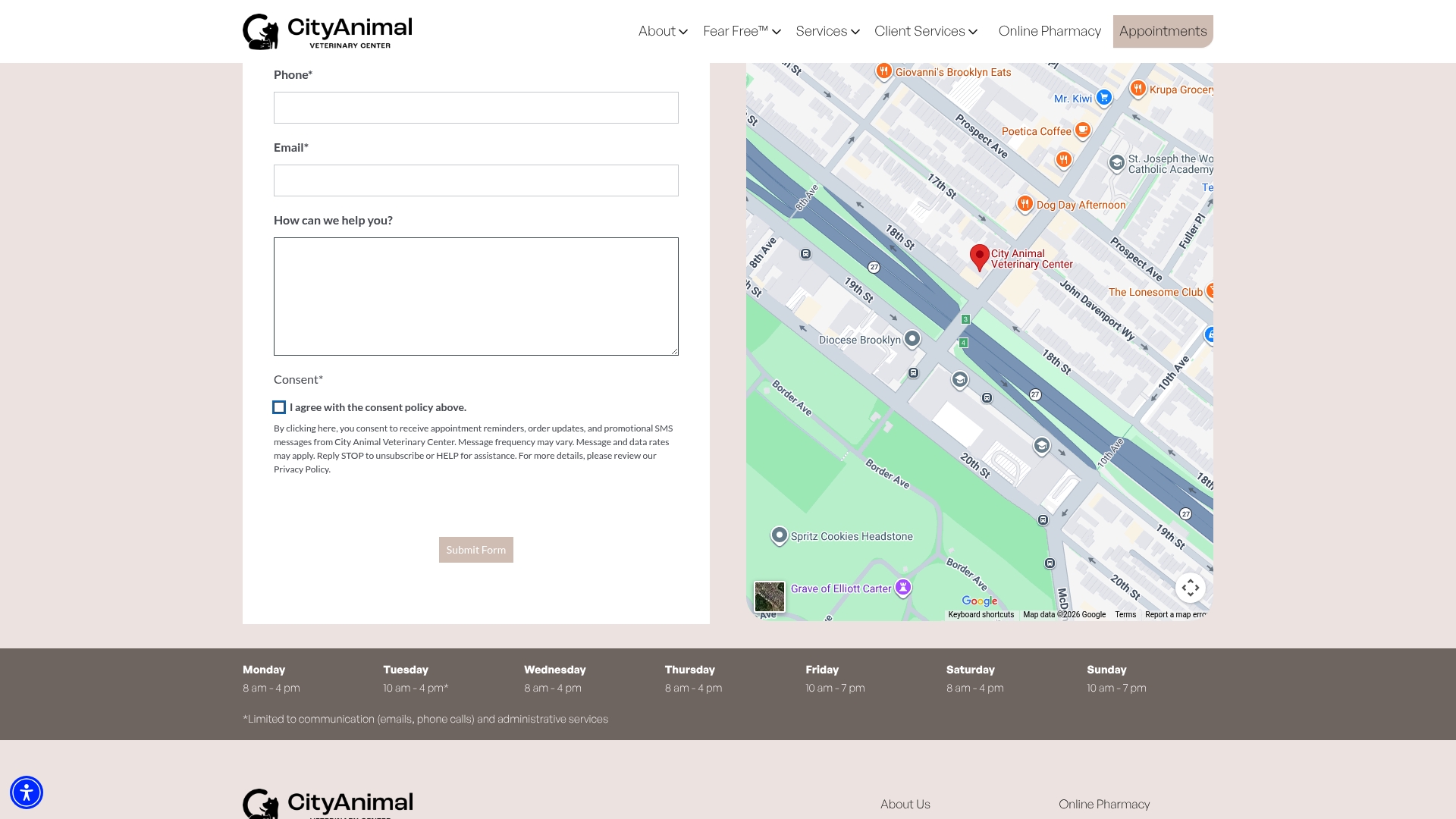
Whether you need a checkup for a pet who seems perfectly fine or an appointment for something that worries you, you can book a wellness exam or contact us and we will help you find the right visit type.
FAQ
Is a wellness visit the same as a vaccine visit?
No. Vaccines are usually part of a wellness visit, but a wellness exam is broader. It includes a full physical exam, weight and dental assessment, parasite prevention and screening, and a conversation about diet and behavior. Vaccines are chosen based on your pet's age, lifestyle and risk.
Can I bring up a symptom during a wellness exam?
Yes, and you should. Mention it when you book so the clinic can allow enough time, since a routine slot may not cover testing. If the symptom is significant, such as persistent vomiting, breathing difficulty or a limp that is not getting better, ask for a sick visit instead of waiting.
My pet seems healthy. Do I really need a yearly exam?
Yes. Animals tend to hide pain and illness, so a pet that looks and acts normal can still have an early problem such as dental disease, a heart murmur or weight changes. Veterinary guidelines call for at least an annual exam for healthy dogs and cats, and more frequent visits for seniors.
Do cats need wellness visits if they live indoors?
Yes. Feline veterinary guidance supports at least annual exams for all cats, because cats can change quickly and often show few outward signs of illness. Indoor cats still need dental checks, weight monitoring, parasite guidance and age-appropriate screening.
Sources
- AAHA: Preventive healthcare for pets
- JAVMA: Twenty-five components of a baseline, best-practice wellness appointment
- Purdue Veterinary Medicine: Pet wellness overview
- ConsumerAffairs: How much does a vet visit cost?
- AVMA: Senior pets guide (2023)
- AAHA/AAFP: Feline life stage guidelines
- AAHA/AVMA: Preventive healthcare guidelines for dogs and cats
- Common owner habits that hurt your dog