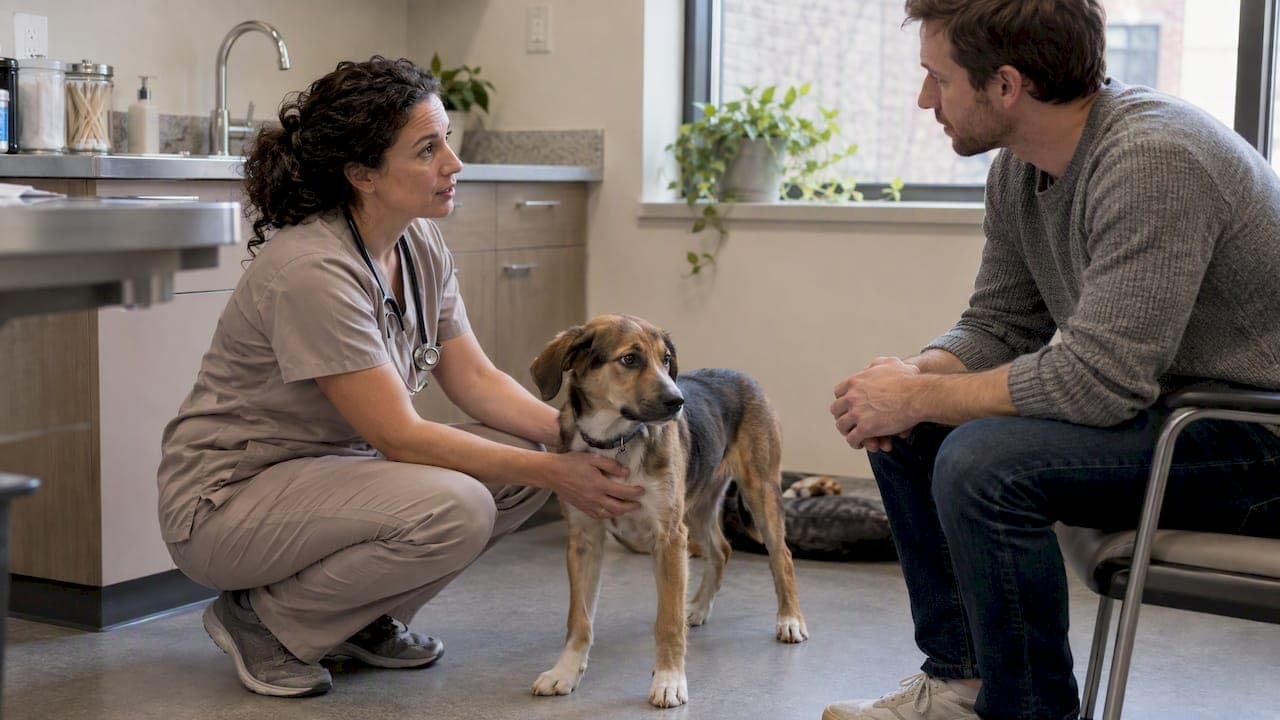
Most small dogs are spayed around 5 to 6 months of age, before the first heat. Large dogs often do better if you wait until they finish growing, commonly somewhere between 9 and 15 months. That is the current guidance in AAHA's spay and neuter recommendations, and it replaces the old rule that every dog should be done at six months. The right date for your dog depends on her expected adult size, her breed, her health and your household.
Below, we explain why the timing differs, what changes when a dog goes through a heat, and how to plan the surgery so it is calm for both of you.
TL;DR
- Dogs expected to weigh under 45 pounds as adults are typically spayed at about 5 to 6 months, before the first heat.
- Dogs expected to be over 45 pounds are often spayed after growth stops, around 9 to 15 months, because early surgery may raise some joint and cancer risks in certain breeds.
- Spaying before the first heat gives the strongest protection against mammary tumors, but a dog does not need a heat cycle for her health.
- Spaying during a heat is possible but usually postponed, because the tissues are more fragile and bleed more easily.
- Book a consult first: your vet can estimate adult size, check health and decide on the date and any add-on procedures.
Table of Contents
- Why there is no single best age
- Spay timing by adult size
- What the research says about waiting
- Spaying before the first heat
- Can you spay a dog in heat?
- What the surgery involves
- Add-ons worth planning for
- Spaying an older dog
- A fear-free approach to surgery day
- Our perspective at City Animal
- Planning your dog's spay with us
- FAQ
- Sources
Why there is no single best age
For decades the advice was simple: spay at six months. The reasoning was sound for the problems vets saw most, namely unplanned litters and mammary cancer. What changed is the research on what sex hormones do while a young dog is still growing.
The AVMA frames the decision as a case-by-case assessment of the individual dog: breed, size, health status and lifestyle. The AAHA life stage guidelines describe the same shift, from a one-size-fits-all standard to a personalized one in which your vet weighs benefits against the risks of removing hormones early in your specific breed.
In practice, that means two questions drive the date:
- How big will she be when she is fully grown?
- Does her breed carry known risks tied to early sterilization?
Spay timing by adult size
AAHA's 2019 guidance splits dogs at about 45 pounds. Use this table as a starting point for a conversation, not a deadline.
| Expected adult weight | Typical timing | Why |
|---|---|---|
| Under 45 lb | About 5 to 6 months, before the first heat | Small breeds finish growing early, so orthopedic concerns are smaller, and the mammary cancer benefit is greatest before a first heat |
| Over 45 lb | Often after growth stops, about 9 to 15 months | Sex hormones help the growth plates close properly, so removing them early can affect joints |
| Breed with known risks | Individualized | Some breeds show higher joint or cancer risk when sterilized young |
One caution on the numbers: some municipal programs use their own cutoffs. Austin's shelter guidelines, for example, divide dogs into small, medium and large at different weights than AAHA does. Both approaches agree on the principle that bigger dogs tend to benefit from waiting, so follow the advice of the vet who will examine your dog.
How to estimate adult size
For a purebred puppy, breed standards and the size of the parents give a good estimate. For a mixed-breed puppy, it is harder. Your vet can use paw size, growth rate over several weekly or monthly weigh-ins and, if you like, a DNA breed test result. If you do not know, a weight check at each puppy visit is useful, and the date can wait until the picture is clearer. Our puppy vaccine schedule already puts you in the clinic every few weeks, which is a natural way to track growth.

What the research says about waiting
Research from UC Davis is behind much of the change. As summarized in their 2024 report, spaying or neutering before 1 year of age can raise the risk of certain joint disorders, such as hip dysplasia and cranial cruciate ligament tears, in some breeds. The same work looked at cancers, including lymphoma, hemangiosarcoma and mast cell tumors, and found elevated risk in some breeds when dogs were sterilized early. The mechanism is the early loss of the hormones that help growth plates close.
Two points keep this in proportion:
- The findings are breed-specific. They do not mean every dog should wait.
- Earlier UC Davis work on German Shepherds also flagged urinary incontinence as a concern in females spayed before age 1, which is one reason we talk about the whole picture and not only orthopedics.
If your dog is a Golden Retriever, Labrador, German Shepherd or another large breed, ask your vet which of these risks apply to her line. If she is a Chihuahua, Maltese or similar, the research points toward the traditional timing.
Spaying before the first heat
The case for acting before a first heat is about mammary tumors. According to the Merck Veterinary Manual, spaying before the first heat cycle provides the strongest protection against mammary tumors, and the likelihood rises once a female has had heats. The same manual notes that first heats occur at widely varying ages, generally between 6 and 24 months, with smaller breeds maturing earlier. Hormones play an important role in the development of these tumors, according to Merck's owner guide.

That creates the real tension for large-breed owners. A big dog may not have her first heat until well past a year, so a plan that waits for growth to finish can still happen before the first heat. For others, the two goals overlap less neatly, and the decision is a judgment call between breed-specific joint risk and mammary risk. This is where a vet who knows your dog earns their keep.
Does she need a heat first?
No. The AVMA states that there is no medical advantage to letting a dog go through a heat cycle before she is spayed. If you hear that it helps her "mature" or is better for her health, that is a myth. Maturity and health needs should guide the date, not a biological event.
Can you spay a dog in heat?
Yes, technically, but many vets prefer not to. During heat the reproductive tissues are more vascular, swollen and fragile, which raises the risk of excessive bleeding compared with surgery during the resting phase (anestrus), as the Merck Veterinary Manual explains.
So if your dog comes into heat before her scheduled date, call the clinic. Typical options are to postpone the surgery until the heat is over, or, in some cases, to proceed with extra precautions if your vet judges it appropriate. Do not cancel the plan altogether: the heat itself brings the usual issues, including bleeding, attracting males and the risk of an accidental litter.
Signs your dog may be in heat
- Swelling of the vulva and bloody discharge
- Frequent urination and marking
- Restlessness or clinginess
- Male dogs suddenly very interested in her
Keep her leashed and away from intact males, including on busy Brooklyn sidewalks and at dog runs, until you have spoken to your vet.
What the surgery involves
The common spay is an ovariohysterectomy, which removes the ovaries and uterus. According to the Merck Veterinary Manual, an ovariectomy, which removes only the ovaries, is also an established and safe option. Both need general anesthesia, and both require several days of quiet recovery so the incision heals.
A typical visit looks like this:
- Pre-surgical consult. Your vet examines her, reviews vaccines and discusses timing. Blood work beforehand lets the team check organ function. We run our own in-house laboratory, so results are not a long wait.
- Fasting instructions. Your clinic will tell you when to stop food and water the night before. Follow their instructions exactly, because they depend on her age and size.
- Surgery day. She receives anesthesia and monitoring during the procedure, then wakes in a recovery area.
- Home recovery. Expect restricted activity, an e-collar or similar protection and incision checks. No running, jumping or rough play for the period your vet specifies.
- Follow-up. A recheck confirms the incision is healing.
Call the clinic promptly if you see swelling, discharge, a gap in the incision, vomiting that continues or a dog who is very lethargic. Those are reasons to be seen, not to wait overnight.
Add-ons worth planning for
Because she will already be under anesthesia, it can make sense to do other small procedures at the same time, so she only needs one anesthetic event.
- Retained baby teeth. The AKC's veterinary advice notes that extracting retained deciduous teeth, common in toy breeds, is easier to do during the spay. Our guide to dog tooth extraction explains when it is needed, and our dental care team can advise.
- Microchipping. If she is not yet chipped, ask about doing it at the same visit. It is part of our wellness exam services.
- Vaccines. Check that her core vaccines are current first. See our overview of the five core vaccines for dogs.
If your puppy still has parasites, deal with that before surgery. Our puppy deworming schedule lays out the early weeks.
Spaying an older dog
An adult or senior dog who was never spayed can still benefit, especially to remove the risk of uterine infection and further heats. The surgery is more involved than in a young dog, and anesthesia planning matters more. A pre-anesthetic exam and blood work become more important with age. Our articles on senior dog wellness exams and anesthesia safety for senior pets cover what to expect and the questions to ask any clinic.
A dog who is pregnant or may be is a separate conversation. If you are unsure, an ultrasound can help; see when to schedule a dog pregnancy ultrasound.
A fear-free approach to surgery day
Spay day does not have to start with a frightened dog. Some things that help, whichever clinic you use:
- Get her used to the carrier or car early, with treats.
- Socialize her gently to handling, clinic visits and new people. Our puppy socialization checklist is a good start.
- Tell the team if she is anxious. Calm pre-visit planning is better than a stressful surprise.
- Set up a quiet, low recovery space at home before you leave.
Our perspective at City Animal
We see the spay question as a conversation, not a calendar date. A six-month-old puppy who will be 12 pounds is a very different patient from a six-month-old who will be 75 pounds, and treating them the same does neither any favors.
Our approach is to begin early, with puppy visits where we can watch her grow, talk about her breed and lifestyle and build trust, so the day she needs surgery is not the first time she has been handled by the team. As a Fear Free practice, we aim to keep those visits low stress, which matters for dogs who would otherwise learn to dread the clinic. For owners with an anxious dog or a tough schedule, a home visit can handle the planning and the check-ups around the procedure, with the surgery itself done at the clinic.
Our general advice: do not choose a date because of what a neighbor did or what the internet says in one line. Choose it from your dog's expected size, breed, health and your household, with a vet who has examined her.
— CAVC
Planning your dog's spay with us
If you live in Brooklyn and are trying to decide when, start with a consult. We will estimate her adult size, review her vaccines, talk through breed-specific considerations and set a date that fits her. Learn more about our surgery services, or if you are new to us, see the new client page to book.
FAQ
What is the best age to spay a dog?
For dogs expected to be under 45 pounds, it is usually 5 to 6 months. For larger dogs, vets often suggest waiting until growth stops, around 9 to 15 months. Your vet can refine this by breed and health.
Should I spay my dog before her first heat?
Spaying before the first heat gives the strongest protection against mammary tumors. For large breeds, though, joint risks may argue for a later date, so talk it through with your vet. A heat cycle is not medically needed first.
Can a dog be spayed while in heat?
It can be done, but many vets wait because the tissues are swollen and bleed more easily. Call your clinic if she comes into heat before surgery, and they will advise whether to wait.
What age do female dogs go into heat?
Usually between 6 and 24 months, with small breeds starting earlier and large breeds later. Watch for swelling and discharge, and keep her away from intact males.
Is there any medical reason to let my dog have one litter or heat first?
No. The AVMA says there is no medical advantage to letting a dog go through a heat before she is spayed.
Sources
- AAHA: When should I spay or neuter my pet?
- AAHA: Canine life stage guidelines, concepts to consider
- AVMA: Spaying and neutering
- UC Davis: When should you neuter or spay your dog
- UC Davis: Early neutering and German Shepherd Dogs
- Merck Veterinary Manual: Reproductive management of the female small animal
- Merck Veterinary Manual: Mammary tumors in dogs
- AKC: What is the best age to neuter or spay your dog?